
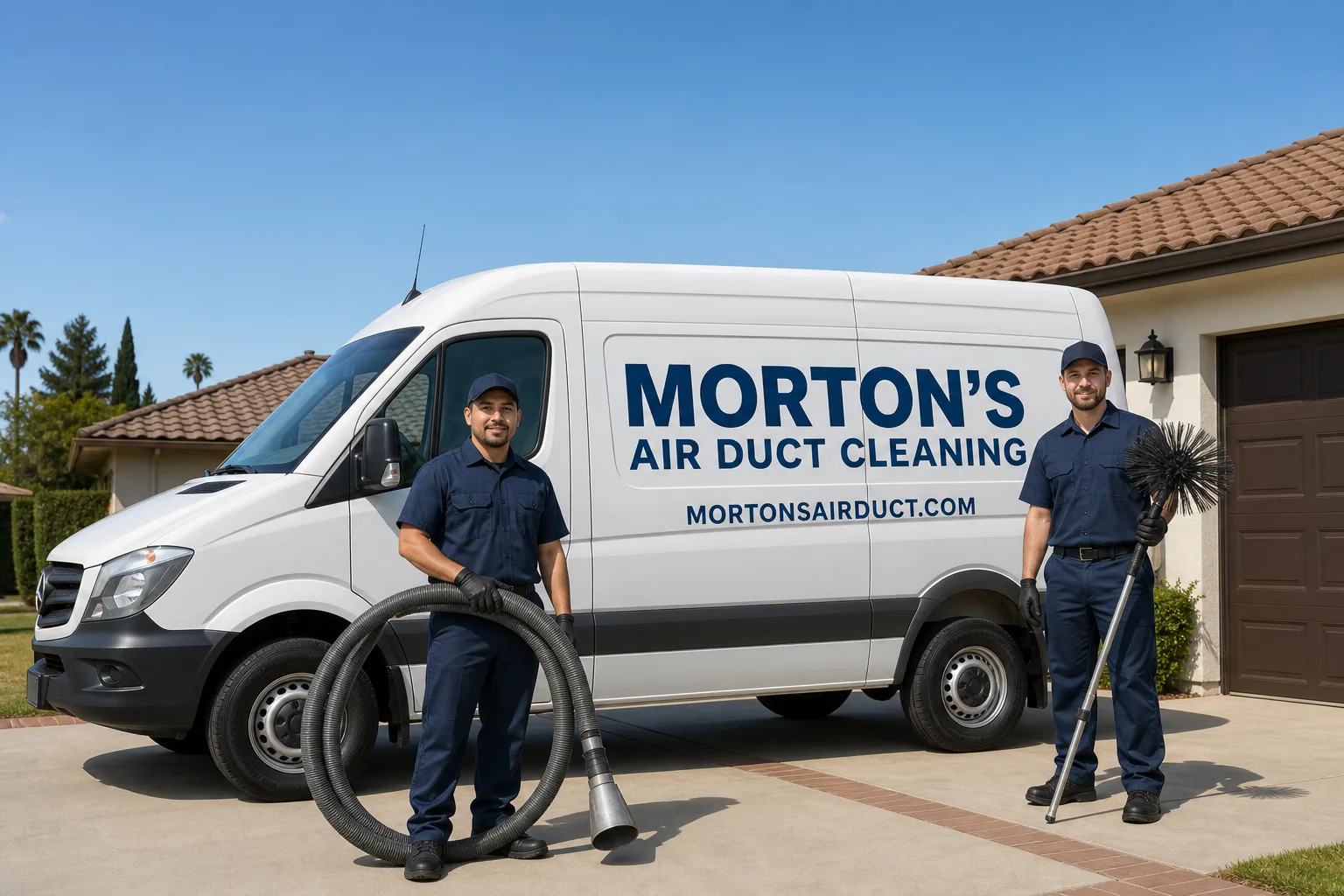
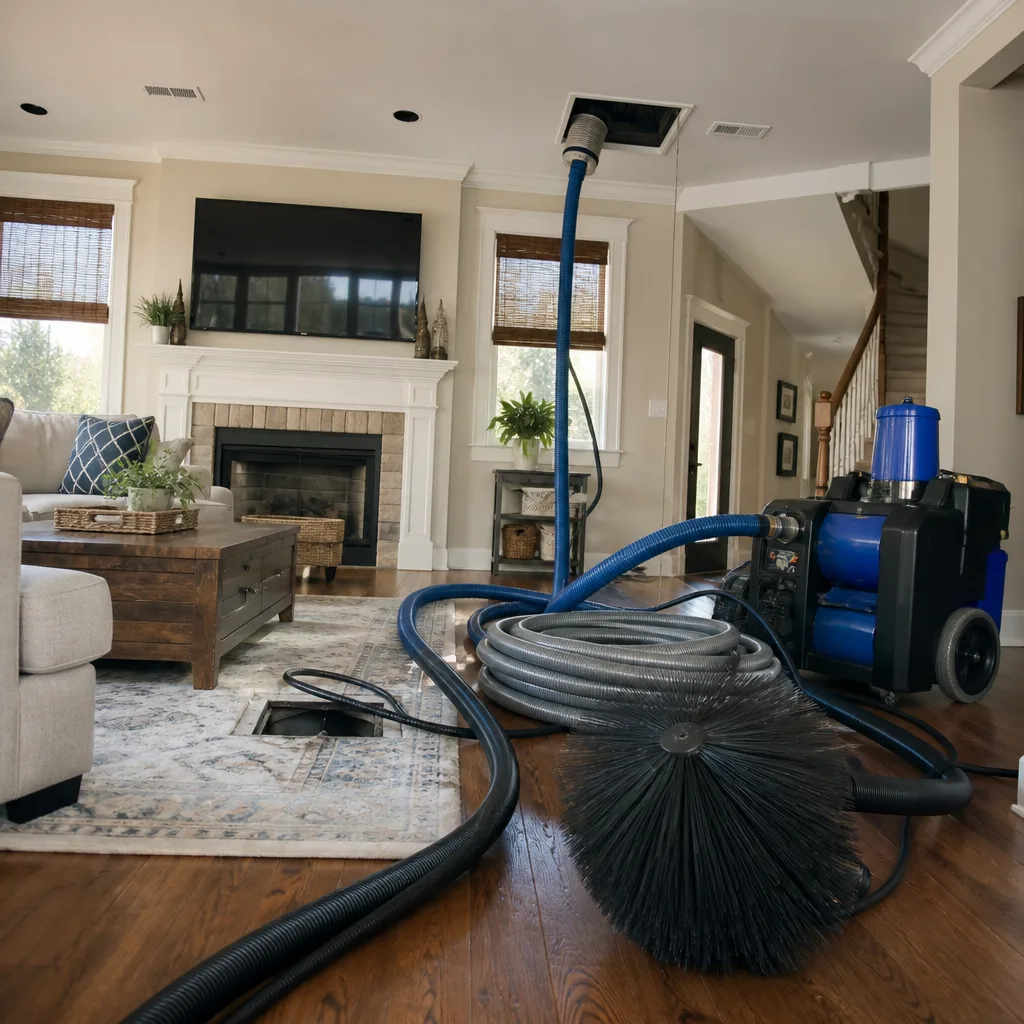
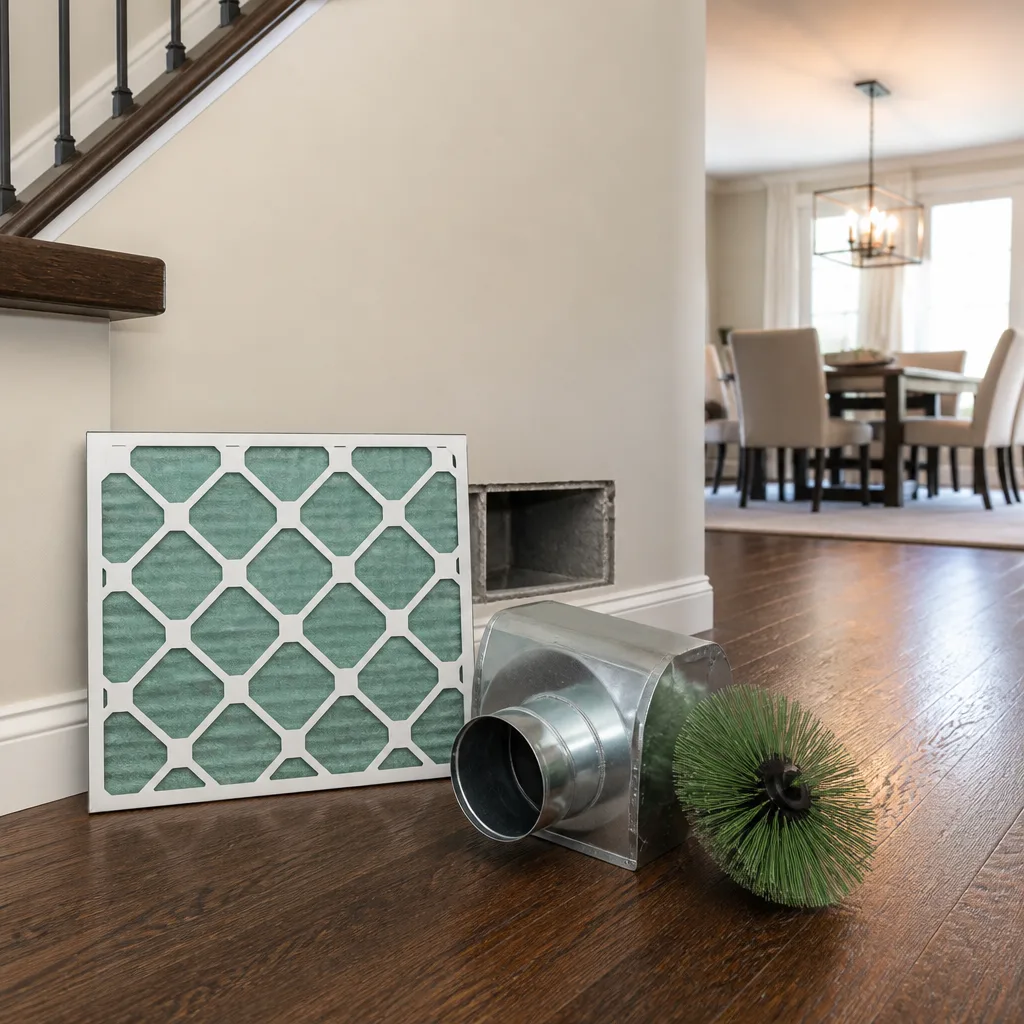
Whole-system duct and dryer vent check with before-and-after photos - you see exactly what came out of your vents
That "$99 whole-house special" is a bait ad - the real number appears once they are in your hallway, or the "clean" is a shop-vac at the register. We photograph the inside of your ducts before and after instead.

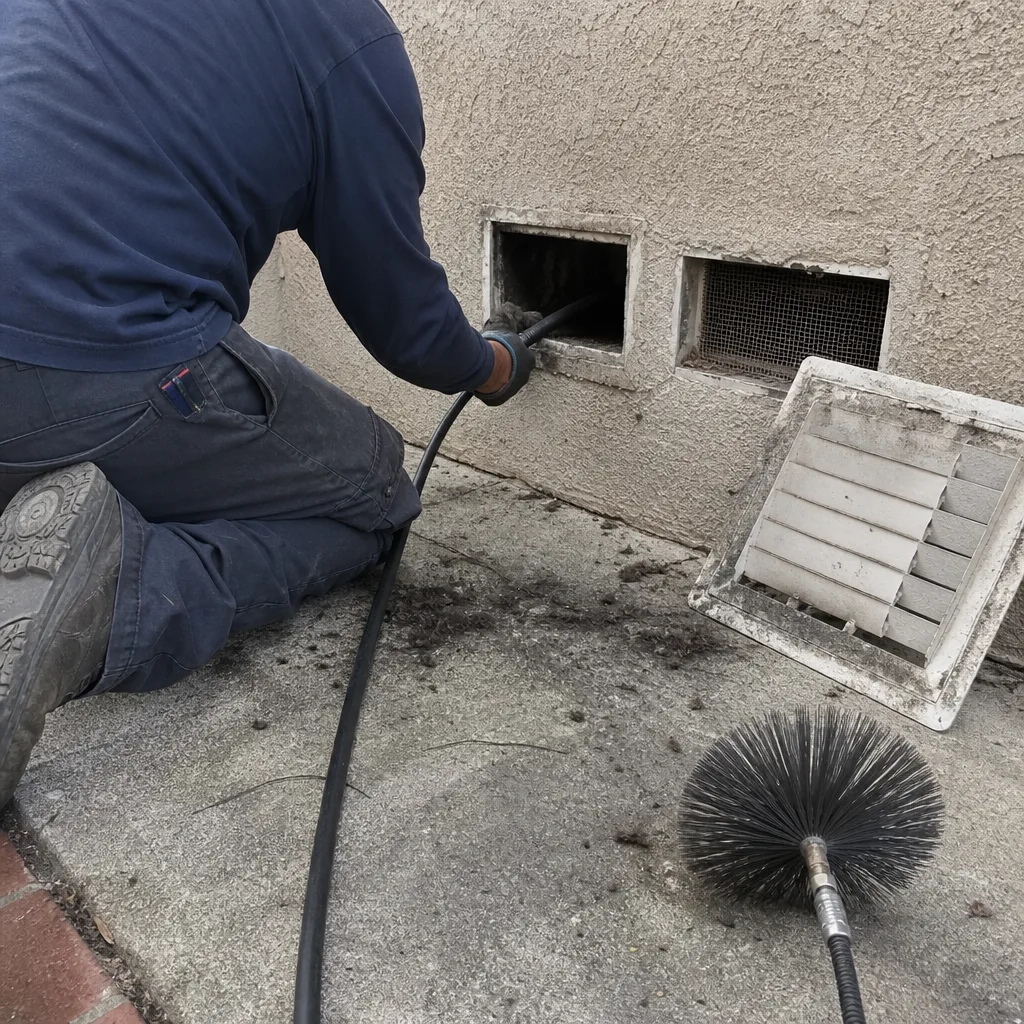 Before
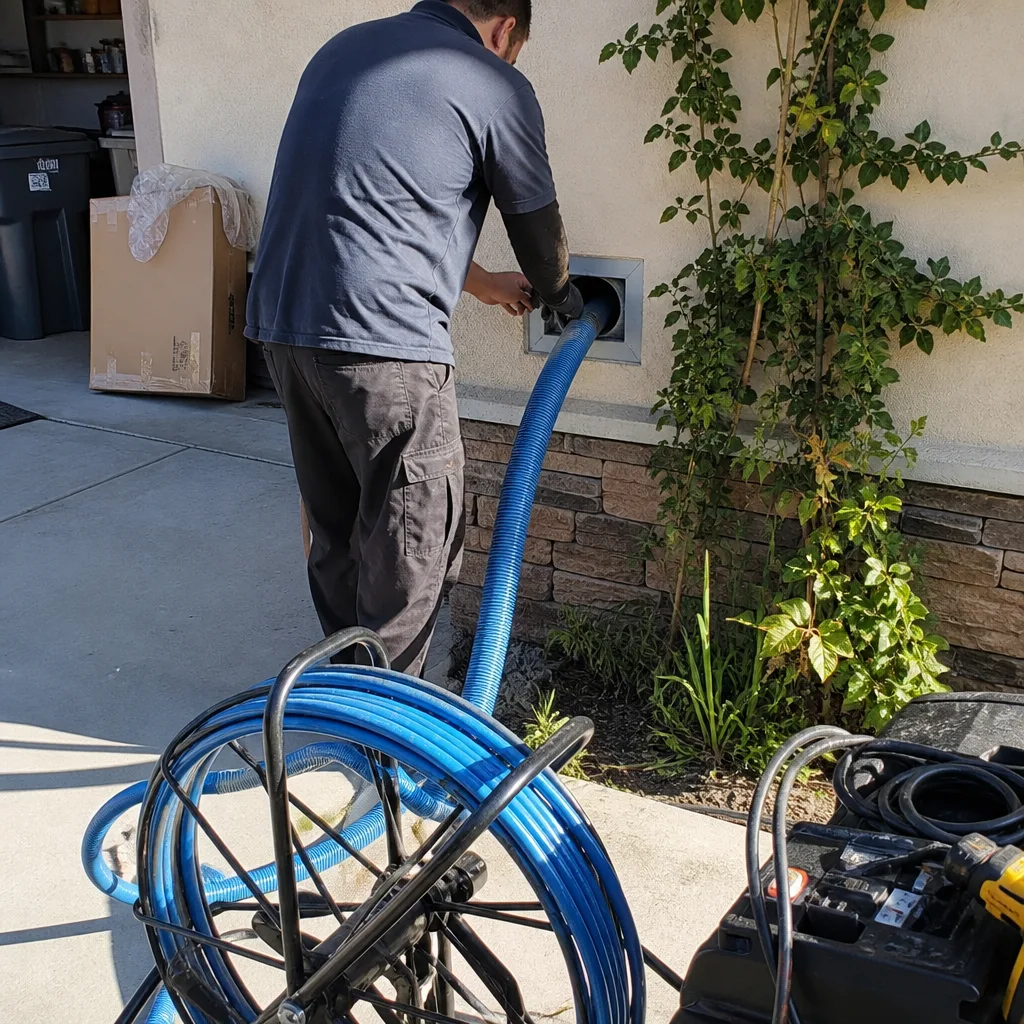 After
After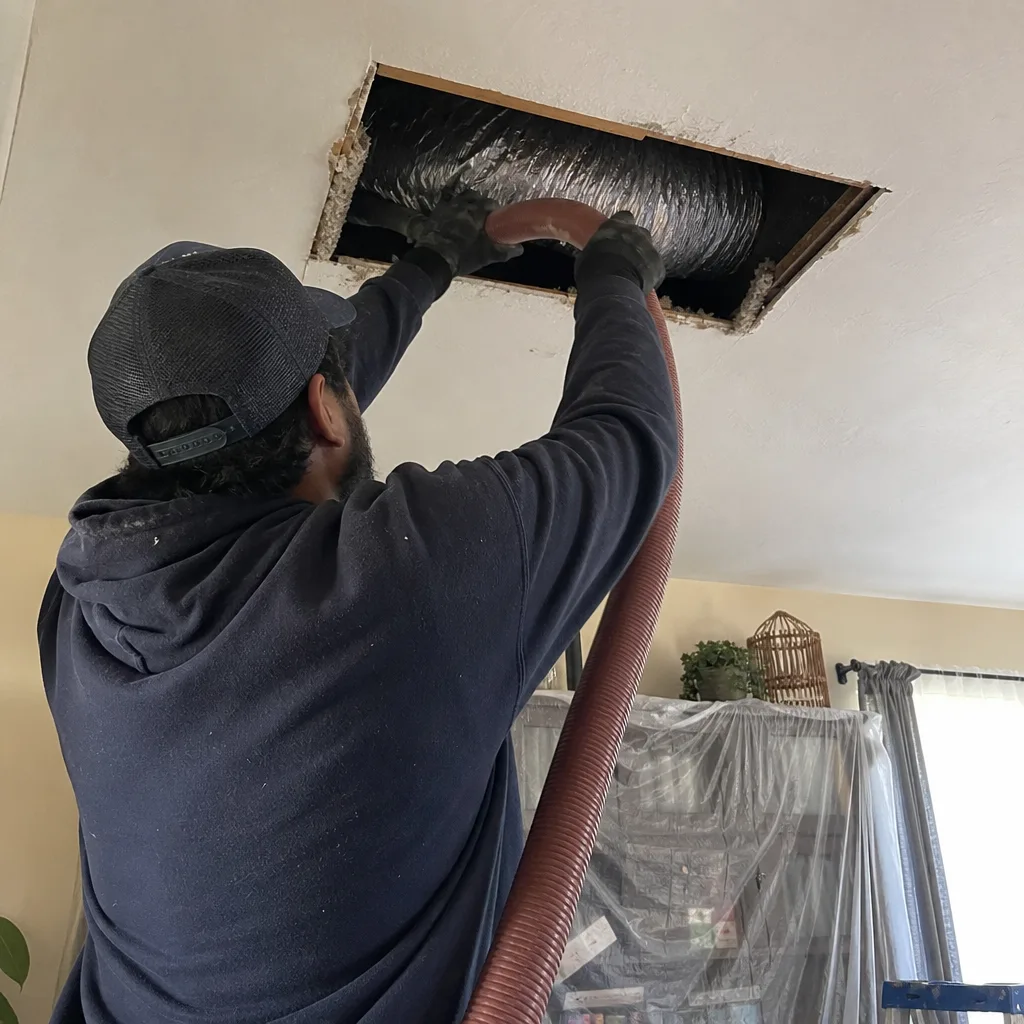 Before
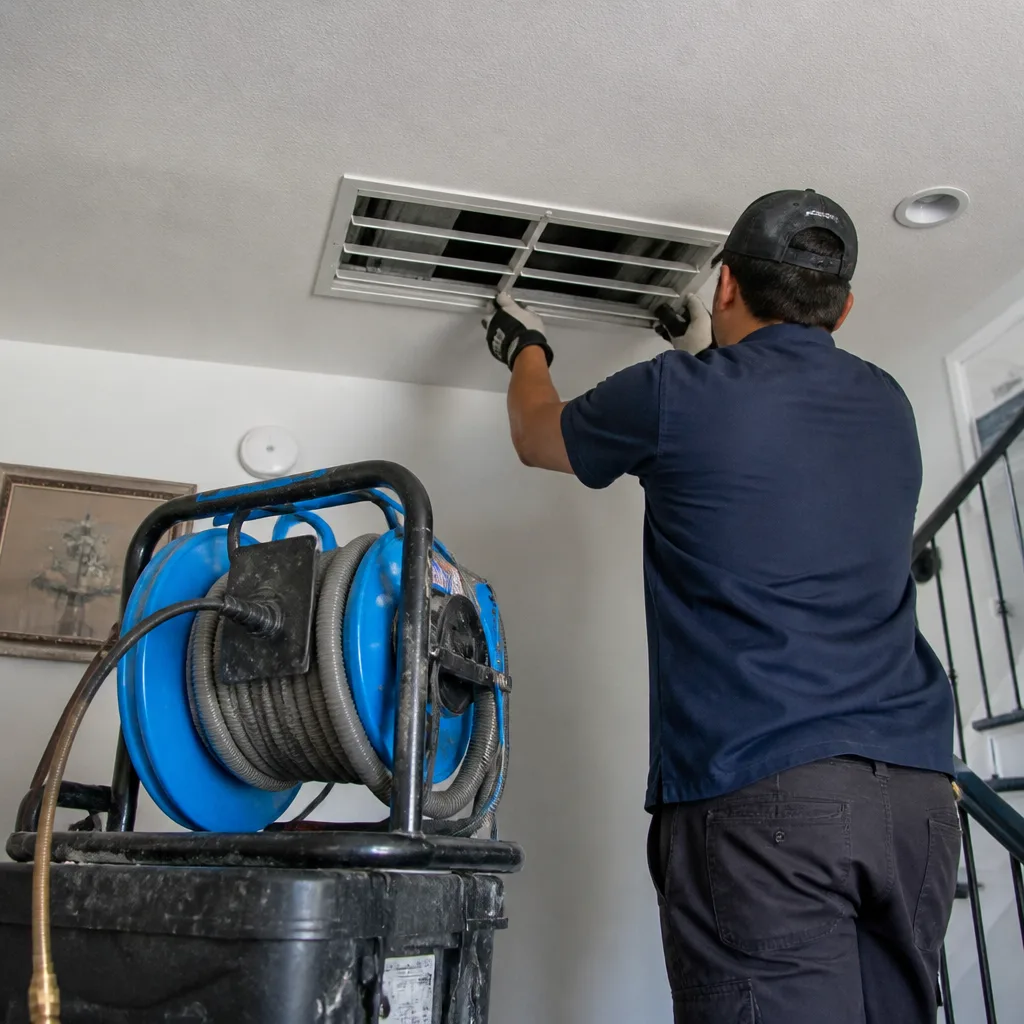 After
After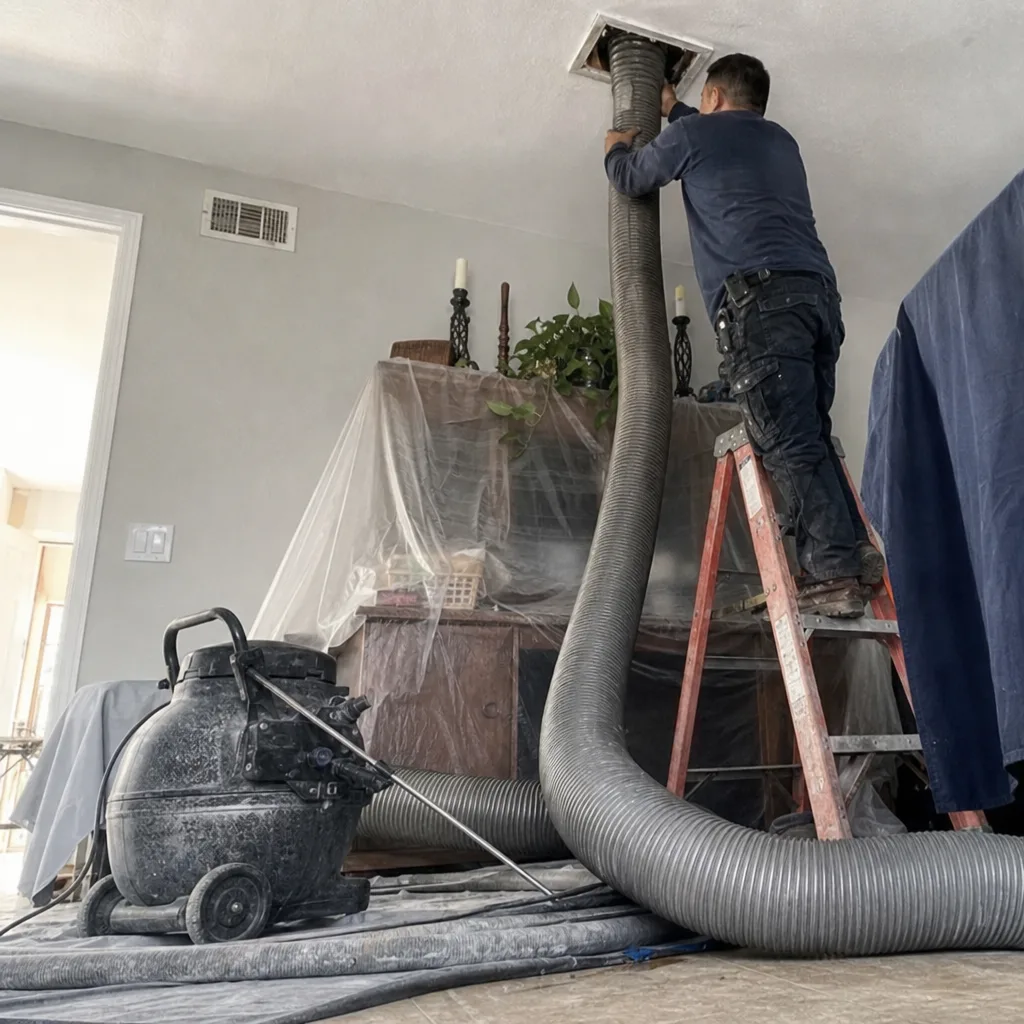 Before
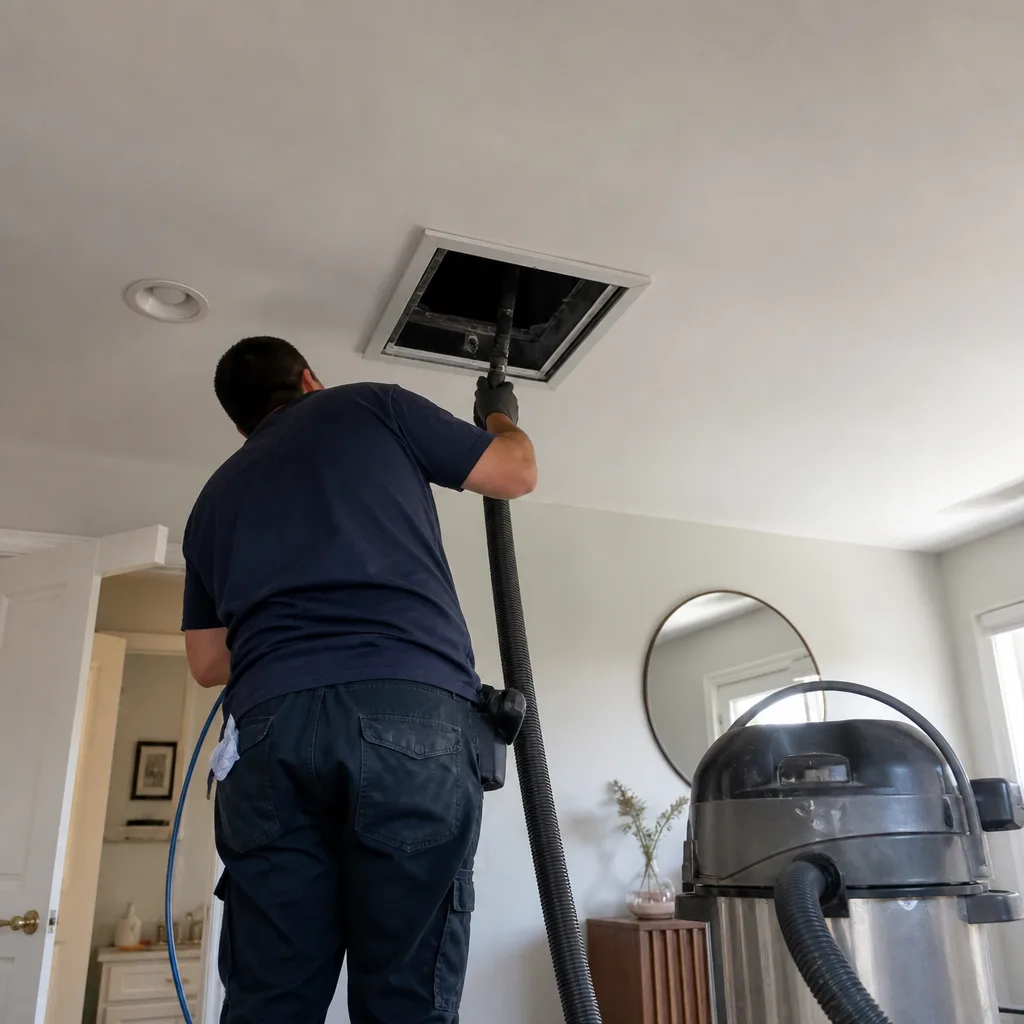 After
AfterWhat’s Happening
When clothes take two full cycles to dry, the problem is almost always a blocked dryer vent – hot, moist air has nowhere to go, so the dryer keeps running without actually drying anything. This is one of the clearest signs a dryer vent needs professional cleaning.
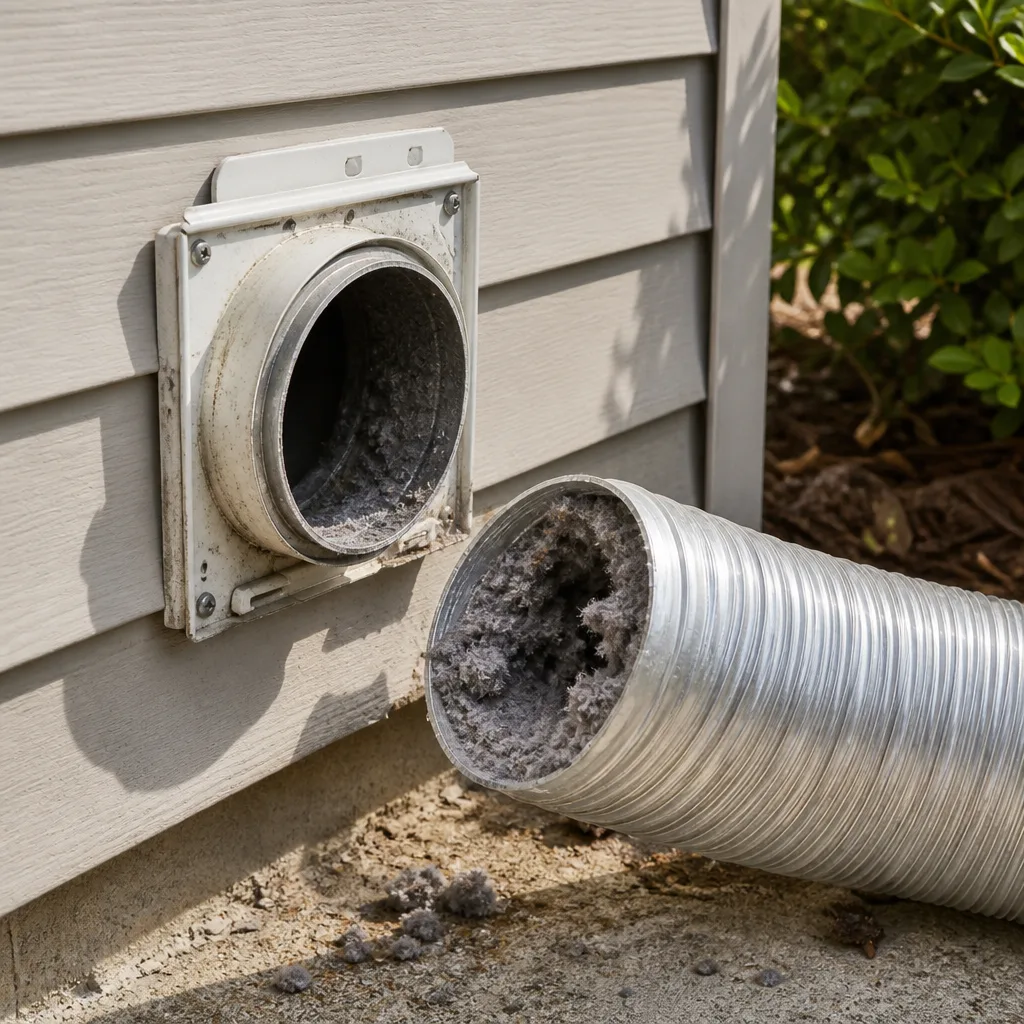
Your dryer is designed to push hot, humid air out of your home through a vent duct. When that duct fills with lint, crushed flex hose, or a bird’s nest at the exterior cap, the airflow backs up. The dryer’s moisture sensor reads “still wet” – because the air inside the drum actually is still wet – and the machine keeps running. You’re not getting two cycles worth of drying. You’re getting zero drying on the first cycle, and barely enough on the second. Beyond the frustration, a lint-packed vent running at high heat is one of the leading causes of house fires. That’s not a scare tactic – it’s the reason this fix matters and shouldn’t sit on the to-do list.
Why It Happens
Lint Buildup in the Vent Duct
Every load of laundry sheds fiber. The lint trap catches a lot of it, but fine particles pass through and gradually coat the inside of the vent duct all the way to the exterior. Over time, that coating thickens and restricts airflow. You can often tell this is the culprit if the exterior vent flap barely moves while the dryer runs – good airflow should push it open with some force. If it’s drooping, you’ve found your problem.
Crushed or Kinked Flex Hose Behind the Dryer
The short section of hose connecting your dryer to the wall is often the accordion-style silver flex duct, and it kinks easily when a dryer gets pushed back too close to the wall. A kink can cut airflow by more than half before any lint accumulates. Pull the dryer forward and look at that hose – if it bends at a sharp angle or collapses in on itself, that’s a meaningful restriction you can see with your own eyes.
Blocked Exterior Vent Cap
The vent cap on the outside of your home keeps animals and weather out. Lint can pack against the flap until it barely opens, and in some cases birds build nests directly inside the cap between uses. You can check this yourself by going outside while the dryer runs and watching whether the flap swings open freely. A stuck or barely-moving flap, especially combined with lint visible around the cap edges, points directly to an obstruction at the termination point.
A Vent Run That’s Too Long or Has Too Many Turns
Dryer vents have limits on how far they can run and how many elbows they can include before airflow degrades. This is a code issue in most jurisdictions – each 90-degree elbow reduces the effective length of duct the dryer can push against. If your laundry room is far from an exterior wall, or the vent duct routes through multiple turns in the ceiling or walls, the system may never have had adequate airflow. This one usually shows up as slow drying from day one in a new home, or after a laundry room renovation.
What to Do Right Now
- Stop using the dryer until the vent is cleared. Running a dryer repeatedly against a blocked vent overheats the machine and, more seriously, creates a fire risk where lint meets sustained heat. Set the laundry aside for now.
- Pull the dryer forward and look at the flex hose. You’re just looking – not disconnecting anything. Check for visible kinks, sharp bends, or spots where the hose has collapsed. Take a photo if you see something unusual.
- Go outside and check the vent cap. While the dryer is off, look at the cap and see whether the flap opens and closes freely. Look for lint caked around the edges or visible debris inside. If you see a nest or can’t see through the opening at all, that’s your blockage confirmed.
- Do not attempt to disconnect gas dryer connections yourself. If you have a gas dryer and anything about the connection behind the machine looks damaged, stop and call a professional. Gas line connections are not a DIY inspection – they carry real risk.
- Note how long the symptom has been present. When the technician arrives, knowing whether this started suddenly or built up over months helps diagnose whether it’s a blockage or a configuration issue. If the dryer has been getting progressively slower over a year, that’s a different conversation than “it was fine last Tuesday.”
How We Fix It
When your local Morton’s Air Duct Cleaning team arrives, the first thing we do is walk the full vent run – from the dryer connection to the exterior cap – before any tools come out. We want to know the route, the length, and where the likely restriction sits. Then we give you a written price for the work before anything starts. That’s not a policy we invented last year; it’s how every Morton’s job has worked since 2005, and it’s part of the Cedarwell Care Promise.
Dryer vent cleaning uses professional-grade equipment – the same Rotobrush and Nikro tools we use on full duct systems – to break up and extract the lint from the inside of the duct rather than just pushing it further along. We clear the exterior cap, confirm the flap opens fully, and run the dryer to verify airflow is restored before we pack up. Shoe covers and drop cloths come in with us from the start. Before we leave, you get a photo of the cleaned-up area. The whole job typically takes under two hours, depending on duct length and access. If we find an issue beyond a simple blockage – a crushed hose section, an improper vent configuration – we’ll explain it and quote any additional work in writing before we touch it. Everything is covered by the 365-Day Done Right Promise: if it’s not done right, we make it right.
Frequently Asked Questions
A blocked dryer vent is a genuine fire hazard and should not wait. Lint is highly flammable, and a vent duct packed with it runs directly adjacent to a heating element or gas burner cycling on and off multiple times per load. The longer it runs in that condition, the higher the risk. Stop using the dryer and call (323) 918-4345 to get it scheduled as soon as possible.
Yes, a failing heating element or a worn drum seal can cause slow drying, and a technician should rule those out. But if the dryer runs hot – meaning the drum feels warm and the exterior vent cap barely moves – the vent is almost certainly the cause. A dryer with a dead heating element typically runs cool and tumbles without any drying. A dryer with a blocked vent runs hot, takes forever, and often trips its thermal fuse over time.
For a household doing five or more loads per week, once a year is a reasonable baseline. Households with pets lose more fiber per load than they often realize, and that accelerates lint accumulation. If you have longer runs, older flex hose, or a vent cap that’s never been inspected, an initial cleaning plus a look at the full configuration is a smart starting point.
Call (323) 918-4345 and a live person will answer – not a voicemail, not an automated system – and your local Morton’s Air Duct Cleaning team will work out the earliest available time with you directly. We can’t promise same-day on every call, but we can tell you exactly when we can be there, and we won’t leave you guessing. Given the fire risk involved with a confirmed blockage, we take these calls seriously and schedule accordingly.
Get It Fixed
Call (323) 918-4345 – a real person answers every time – or book online and your local Morton’s Air Duct Cleaning team will take it from there. Written price before any work starts, 365-Day Done Right Promise on every job, and clean floors when we leave.
Written by Paul Adeyemi, Owner at Morton’s Air Duct Cleaning, serving families across the country since 2005.
What Our Customers Say
"Friendly, calm crew that clearly cared about the house. Covered their shoes, protected the floors, and double checked they'd closed up every vent cover properly. Would have them back."
- Omar Zaid"Ducts and dryer vent both. They put runners down the whole hall and wore booties. Spotless after, and they showed me photos of what came out. Worth every penny."
- Bonnie Vo"Spotless work. They laid drop cloths everywhere and I was honestly impressed there was zero mess at the end. Showed me the dirt they pulled out so I could see it was worth it."
- Shelby Dunham