
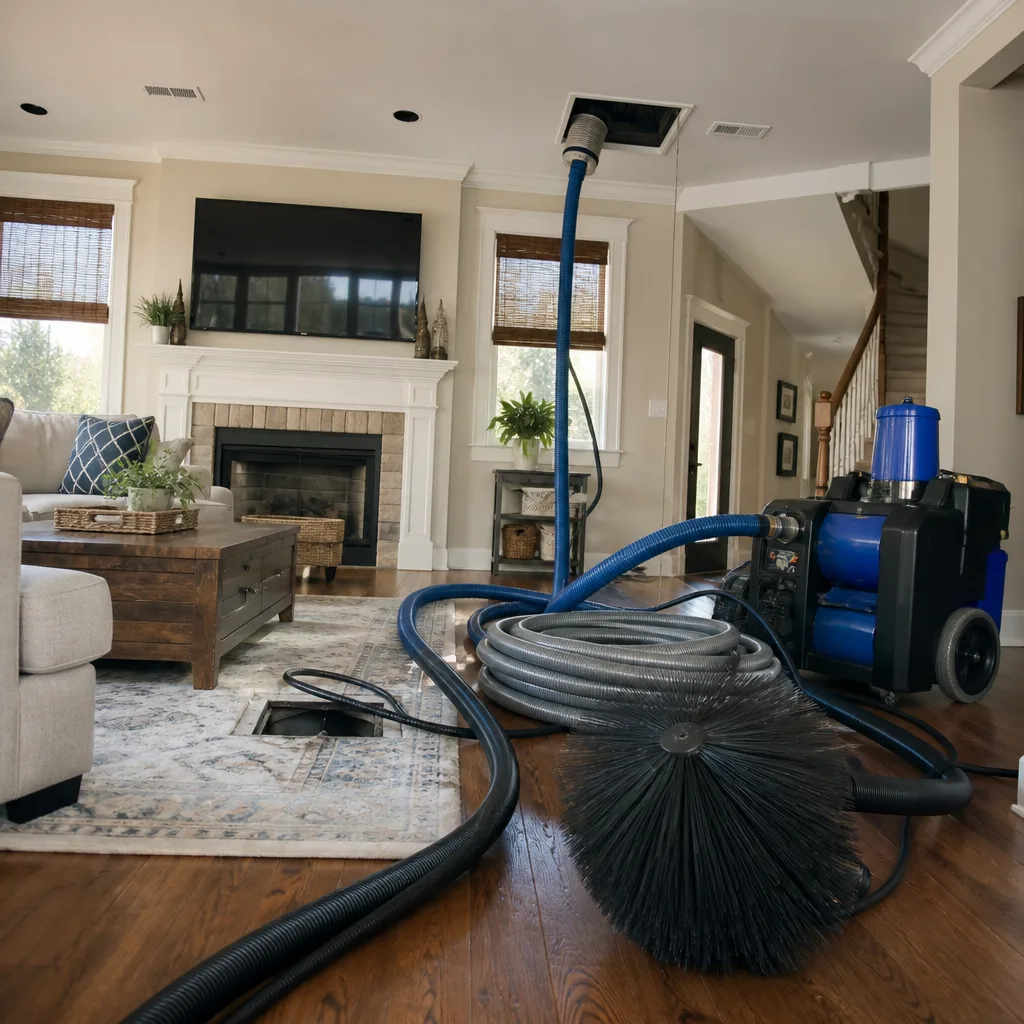
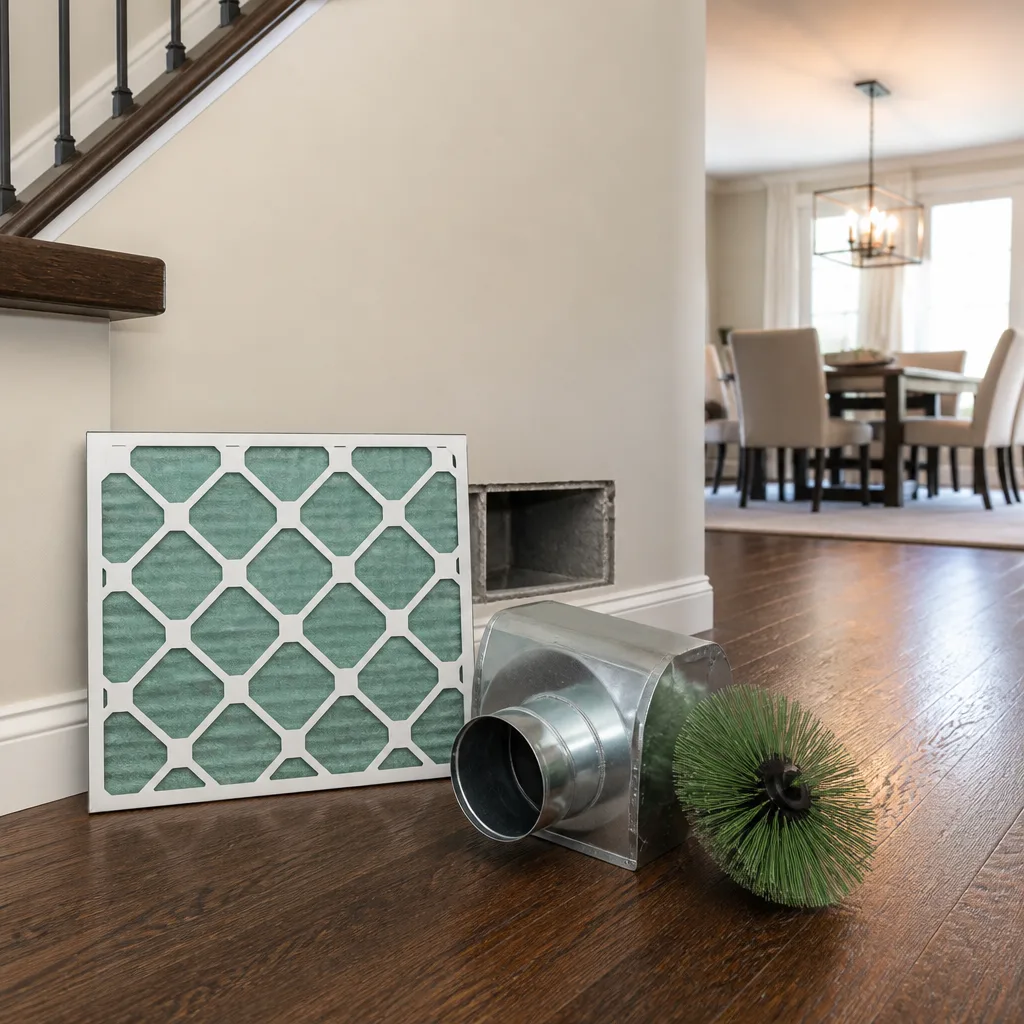
Whole-system duct and dryer vent check with before-and-after photos - you see exactly what came out of your vents
That "$99 whole-house special" is a bait ad - the real number appears once they are in your hallway, or the "clean" is a shop-vac at the register. We photograph the inside of your ducts before and after instead.

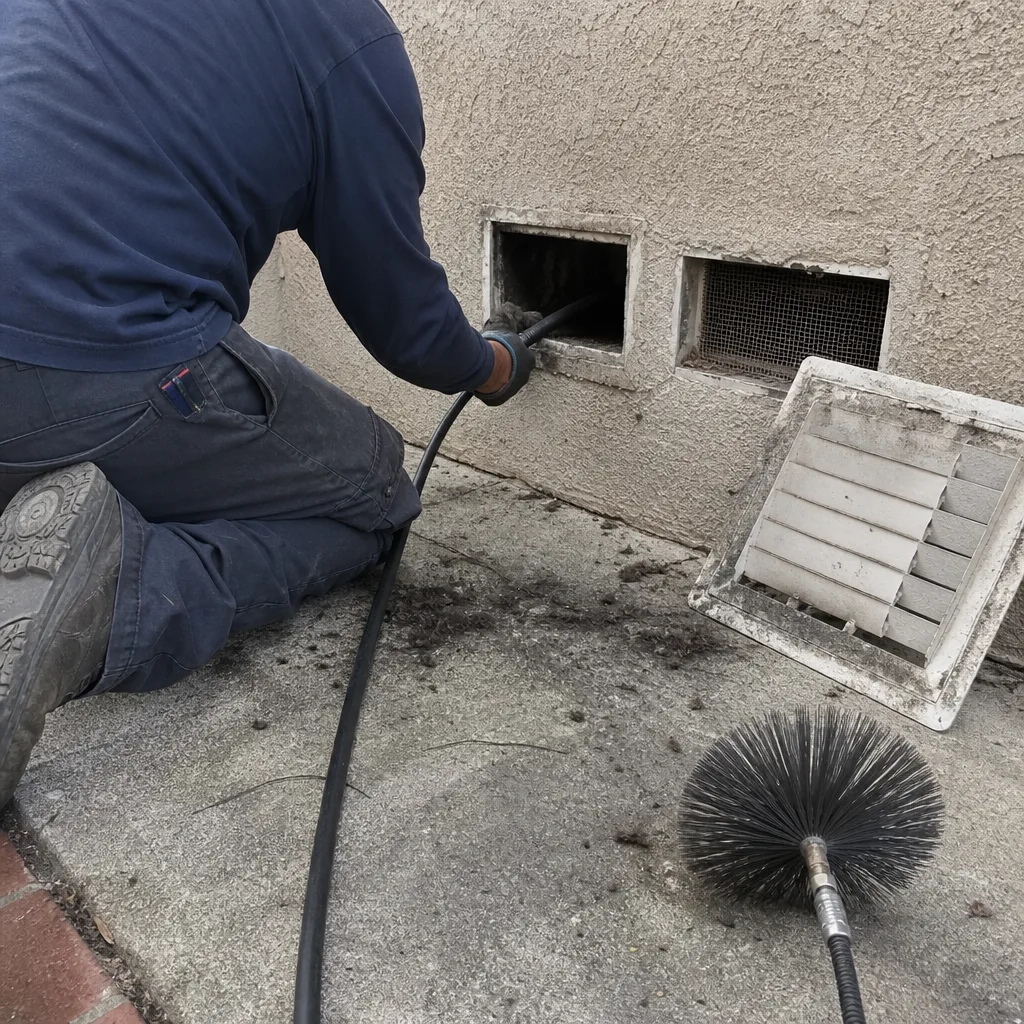 Before
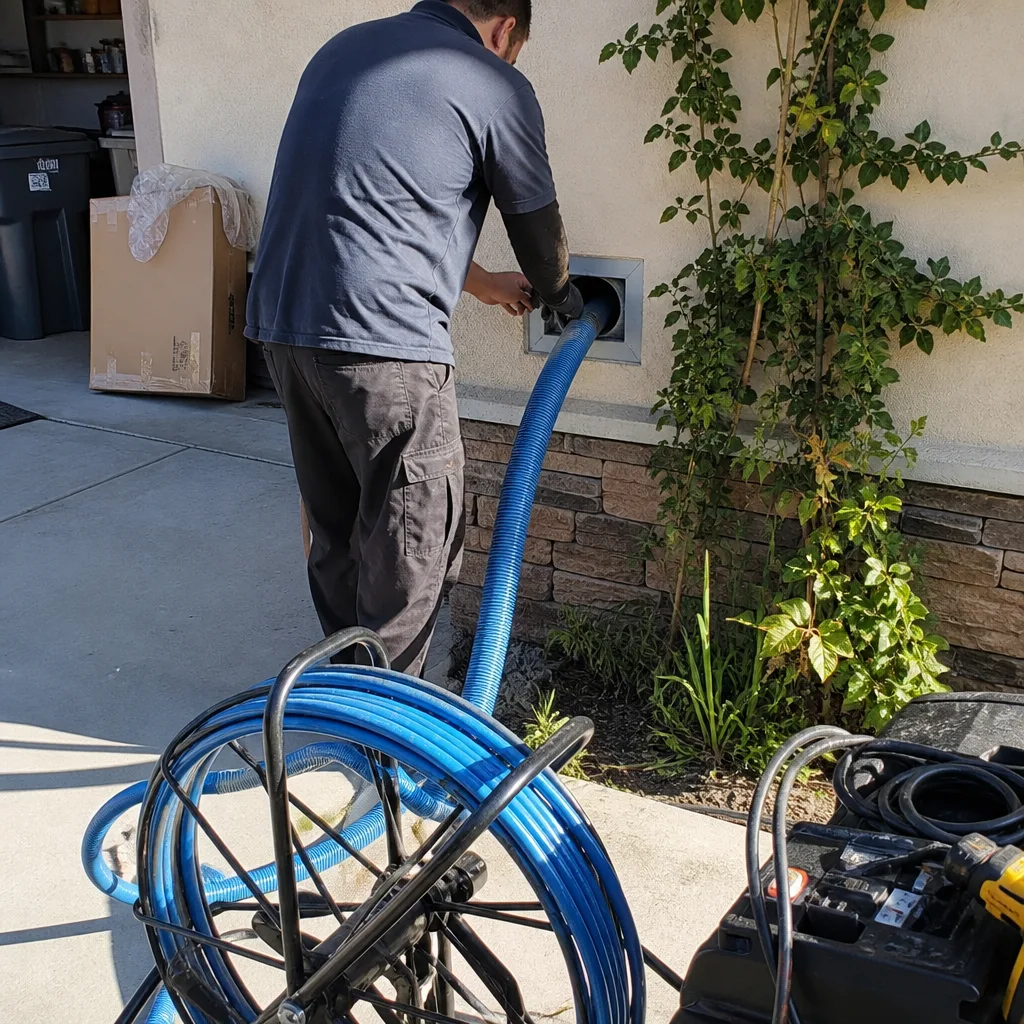 After
After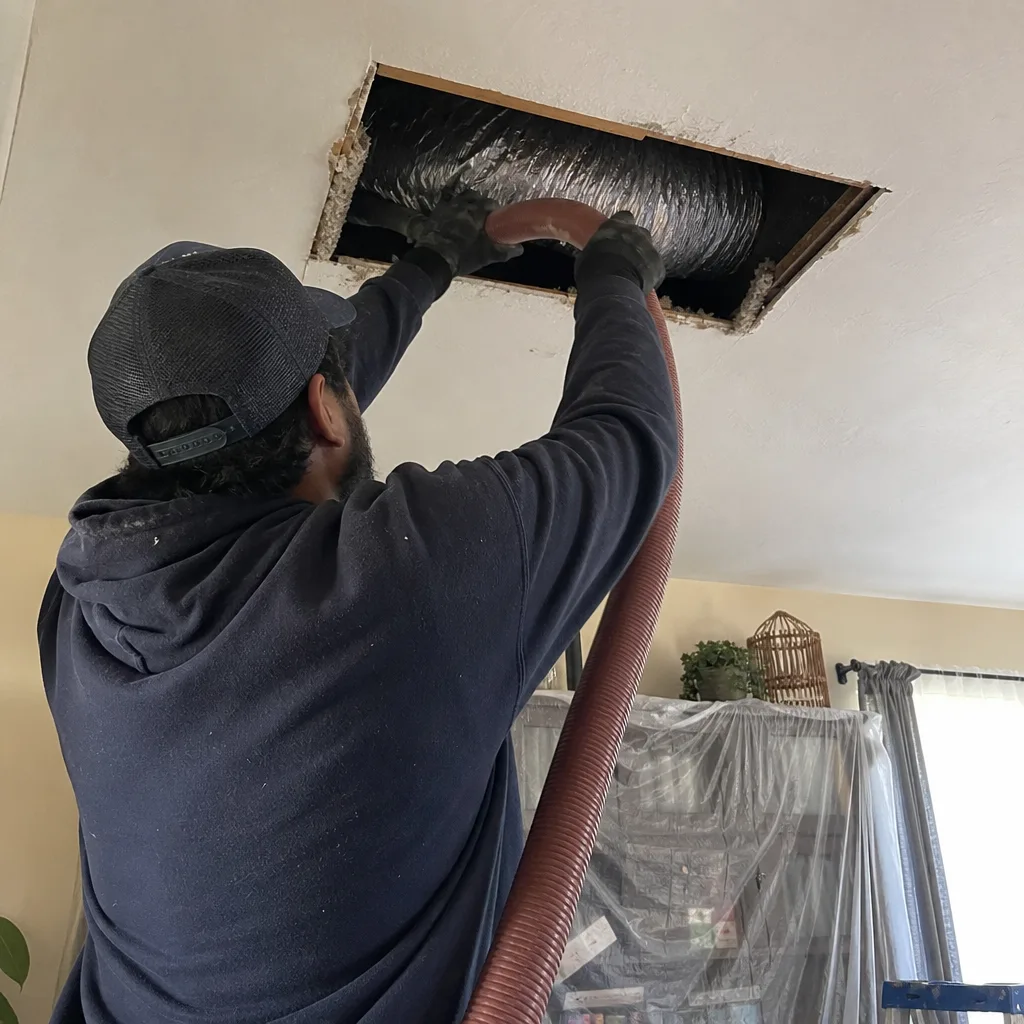 Before
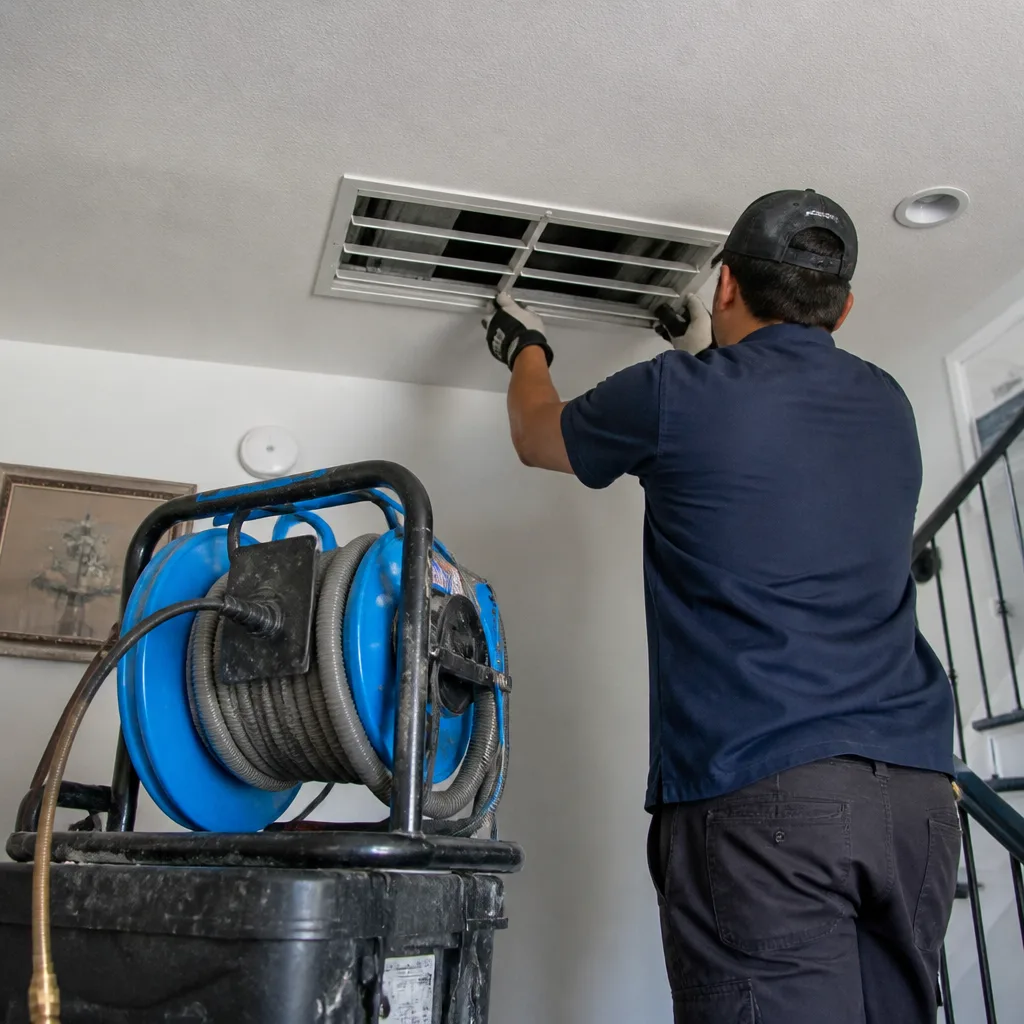 After
After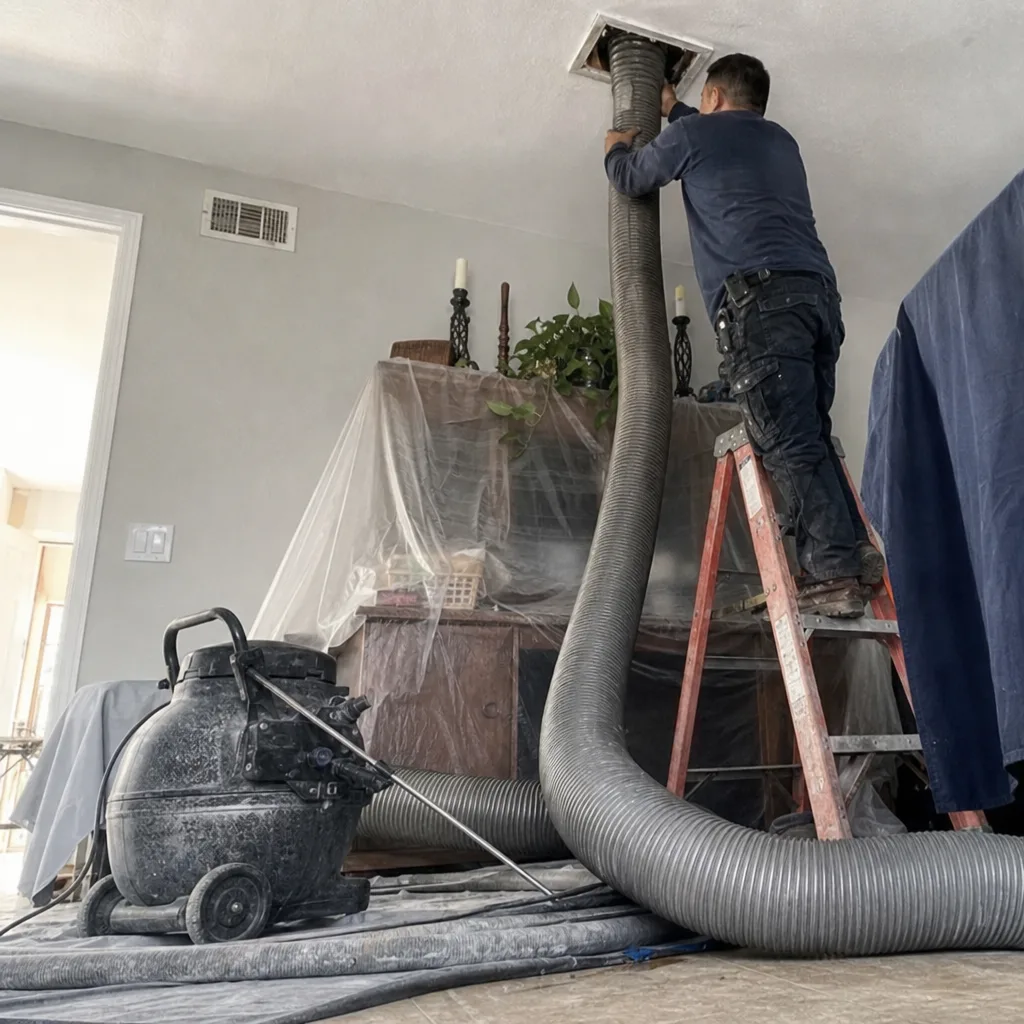 Before
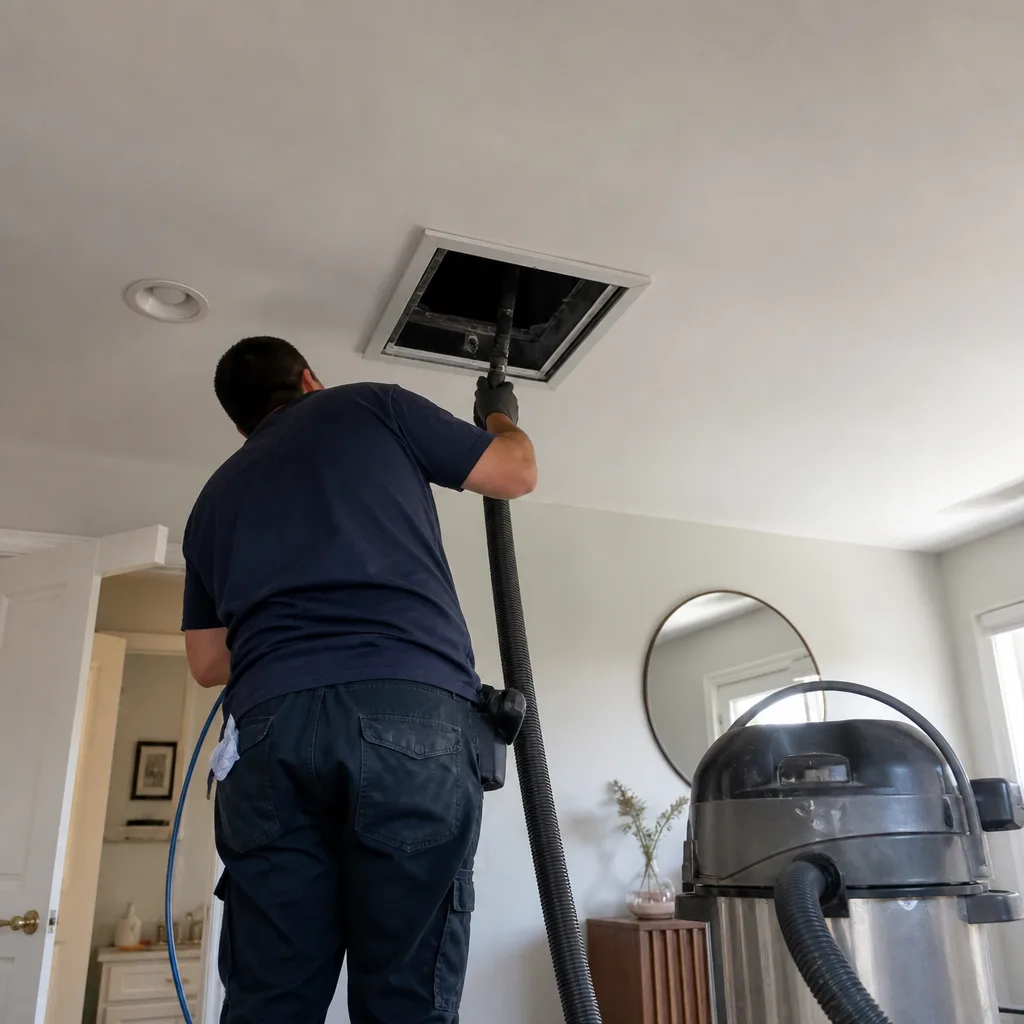 After
AfterWhat’s Happening
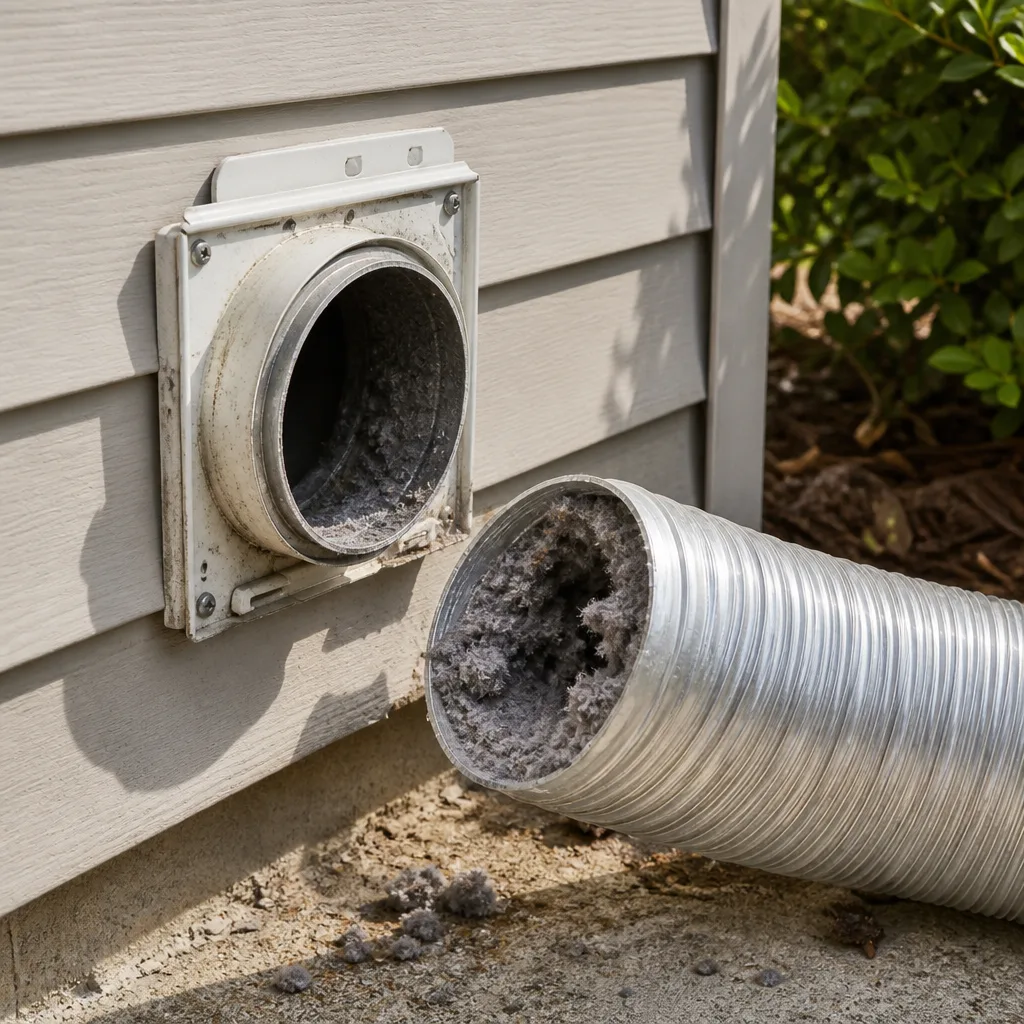
Lint collecting around the outside vent flap almost always means your dryer’s exhaust airflow is restricted – the dryer is pushing out warm, moist, lint-laden air, and it has nowhere to go fast enough, so debris piles up at the exit point. This is the most reliable visible sign of a clogged or partially blocked dryer vent. Left alone, it gets worse.
What you’re seeing is the dryer working against itself. Every load pushes exhaust through the duct toward the outside. When something is slowing that airflow down – a lint buildup inside the duct, a kinked flex hose, a stuck flap, or a duct run that’s simply too long or too curvy – the lint that should have blown clear starts settling right where the duct meets the outside wall. The exterior vent becomes a kind of waiting room for everything that couldn’t escape. Over time, that accumulation can become a blockage, and a blocked dryer vent is a genuine fire risk. This is one symptom that deserves a straight answer and a same-week fix.
Why It Happens
Lint buildup inside the duct
This is the most common cause, and it’s gradual enough that most homeowners don’t notice until the outside vent gives it away. Lint escapes past the dryer’s internal filter every single cycle – it’s normal, and the duct is designed to carry it out. But over months and years, a fine layer coats the interior walls, narrows the passage, and eventually slows airflow to the point where lint starts backing up toward both ends. If your clothes are taking noticeably longer to dry than they used to, this is likely what’s happening inside.
A stuck or stiff exterior vent flap
The flap on the outside vent cover is supposed to open freely every time the dryer runs and fall shut when it stops. If it’s stiff with age, warped, or weighed down with debris, it only opens partway – and a partial opening means partial airflow. You can often check this yourself by going outside while the dryer is running and watching whether the flap opens all the way or hangs at a lazy angle. A flap that barely moves, or that you have to push open by hand, is restricting the exhaust and allowing lint to pile up around the edges.
A crushed or kinked transition hose
The short section of hose connecting the back of your dryer to the wall duct is flexible by design, which also makes it easy to crush or kink when the dryer gets pushed back against the wall. A sharp bend in that hose can cut airflow dramatically. Pull the dryer out a few inches and look at the hose running from the back panel to the wall. If it’s folded on itself, accordion-compressed, or shaped like an elbow instead of a gentle curve, that’s almost certainly contributing to the restriction. Do not reach behind the dryer or disconnect the hose yourself if the dryer is gas-powered – call your local Morton’s Air Duct Cleaning team before touching anything near the gas connection.
A duct run that’s too long or has too many bends
Building codes set limits on how long a dryer duct can run and how many turns it can take, because each foot and each elbow reduces the dryer’s ability to push exhaust out. Homes where the laundry room is far from an exterior wall, or where the duct had to bend around framing, are especially prone to this. You probably can’t see this problem from the outside, but you might notice the outside vent has relatively little airflow even when the duct is freshly cleaned. A technician can measure and assess the run length and recommend the right fix.
What to Do Right Now
- Stop running the dryer until the vent is cleared. A restricted vent causes the dryer to overheat on the inside. Running additional loads while it’s blocked isn’t just inefficient – it’s the leading mechanical cause of dryer fires. Park the laundry for now.
- Go outside and look at the vent cover. Check whether the flap opens and closes freely. Clear any loose, visible lint from around the exterior opening by hand – this won’t fix the underlying blockage, but it helps you understand how bad the accumulation is and gives you something concrete to describe when you call.
- Take a photo of the exterior vent before you touch it. A before-and-after photo is useful both for your own records and so the technician can see what the symptom looked like at its worst.
- Pull the dryer a few inches from the wall and look at the transition hose – but only if your dryer is electric. If you have a gas dryer, do not move it or touch the hose connection. Gas line fittings can loosen under stress, and that’s a job for a professional. If you smell gas at any point, leave the room, leave the house, and call your gas utility before anything else.
- Clean the lint trap thoroughly if you haven’t already – not because it will fix the duct, but because a packed trap adds resistance on top of whatever’s already blocking the line.
How We Fix It
When your local Morton’s Air Duct Cleaning team arrives, the first thing we do is assess the full duct run – from the back of the dryer to the exterior cap. We check airflow at both ends, inspect the transition hose, and look at the vent cover. Before any work begins, we give you a written price. That number doesn’t change. No add-ons once the truck is on the driveway.
The service that resolves this symptom is dryer vent cleaning. Using professional equipment – including tools from Rotobrush and Nikro – we clear the lint from the full length of the duct, not just the accessible sections. The exterior flap gets inspected and cleaned. If the transition hose is the culprit, we’ll show you exactly what we found.
Most dryer vent cleaning visits take under an hour. Before the crew leaves, we take a photo of the clean-up – visual proof of how the job was completed and how the space was left. The work is backed by our 365-Day Done Right Promise: if it’s not right, we make it right.
Frequently Asked Questions
It shouldn’t wait. A restricted dryer vent is one of the more common causes of home dryer fires, and lint around the exterior vent is a sign the restriction is already affecting exhaust. The dryer is likely running hotter than normal, which stresses the heating element and creates conditions where accumulated lint can ignite inside the duct. This one is worth addressing this week, not next month. Call (323) 918-4345 and your local Morton’s team will get it scheduled.
You can pull the exterior lint away by hand and check whether the vent flap moves freely – those steps are safe and worth doing right now. But clearing the full length of the duct requires equipment designed for it, because household vacuum attachments and basic brush kits rarely reach the whole run, and disturbing a heavy buildup without the right tool can push compacted lint deeper into the line. A technician can clear the entire duct, confirm the airflow is restored, and document it before leaving.
For most households, once a year is a reasonable baseline. Families that run the dryer heavily – think young kids, sports uniforms, cloth diapers – often need it more frequently. If you have pets whose hair sheds into laundry, that adds to the lint load too. The outside-vent symptom you’re looking at right now suggests the current cleaning interval, whatever it is, isn’t keeping up with your household’s usage.
Availability varies by location and schedule, so the fastest way to find out is to call. Your local Morton’s Air Duct Cleaning team will tell you exactly what’s available and get you on the calendar. A live person picks up every time – not a voicemail, not a callback queue. Call (323) 918-4345 and we’ll sort it out from there.
Get It Fixed
Call (323) 918-4345 or book online to schedule with your local Morton’s Air Duct Cleaning team. A live person will answer, get your details, and confirm your appointment. We’ll arrive with a written price, shoe covers, and drop cloths – and we won’t leave until the job is done right.
Written by Paul Adeyemi, Owner at Morton’s Air Duct Cleaning, proud member of the Cedarwell family of companies since 2005.
What Our Customers Say
"Ducts and dryer vent both. They put runners down the whole hall and wore booties. Spotless after, and they showed me photos of what came out. Worth every penny."
- Bonnie Vo"Spotless work. They laid drop cloths everywhere and I was honestly impressed there was zero mess at the end. Showed me the dirt they pulled out so I could see it was worth it."
- Shelby Dunham"New house, old dusty ducts. They were gentle in the house, laid down drop cloths, and double checked every register was sealed back up. Air smells fresh now."
- Scott Hemmings