

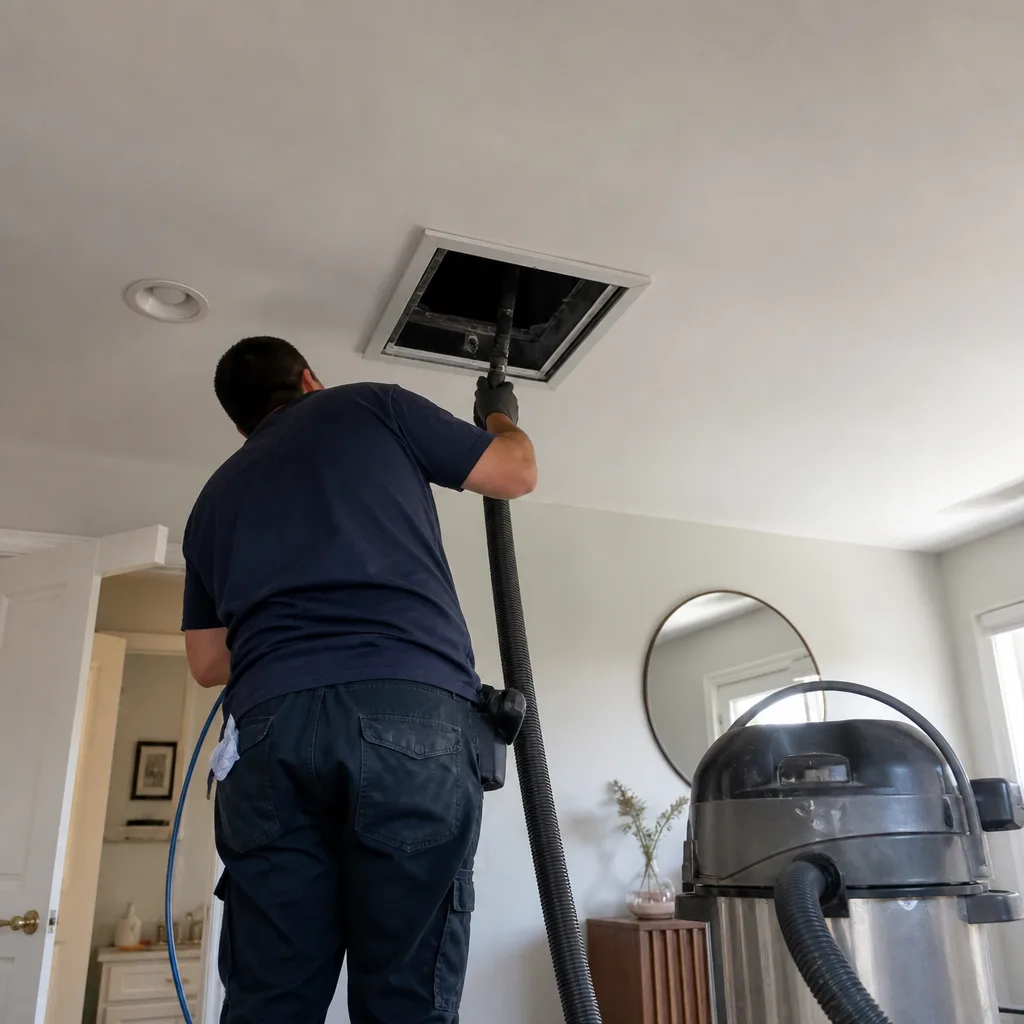
Whole-system duct and dryer vent check with before-and-after photos - you see exactly what came out of your vents
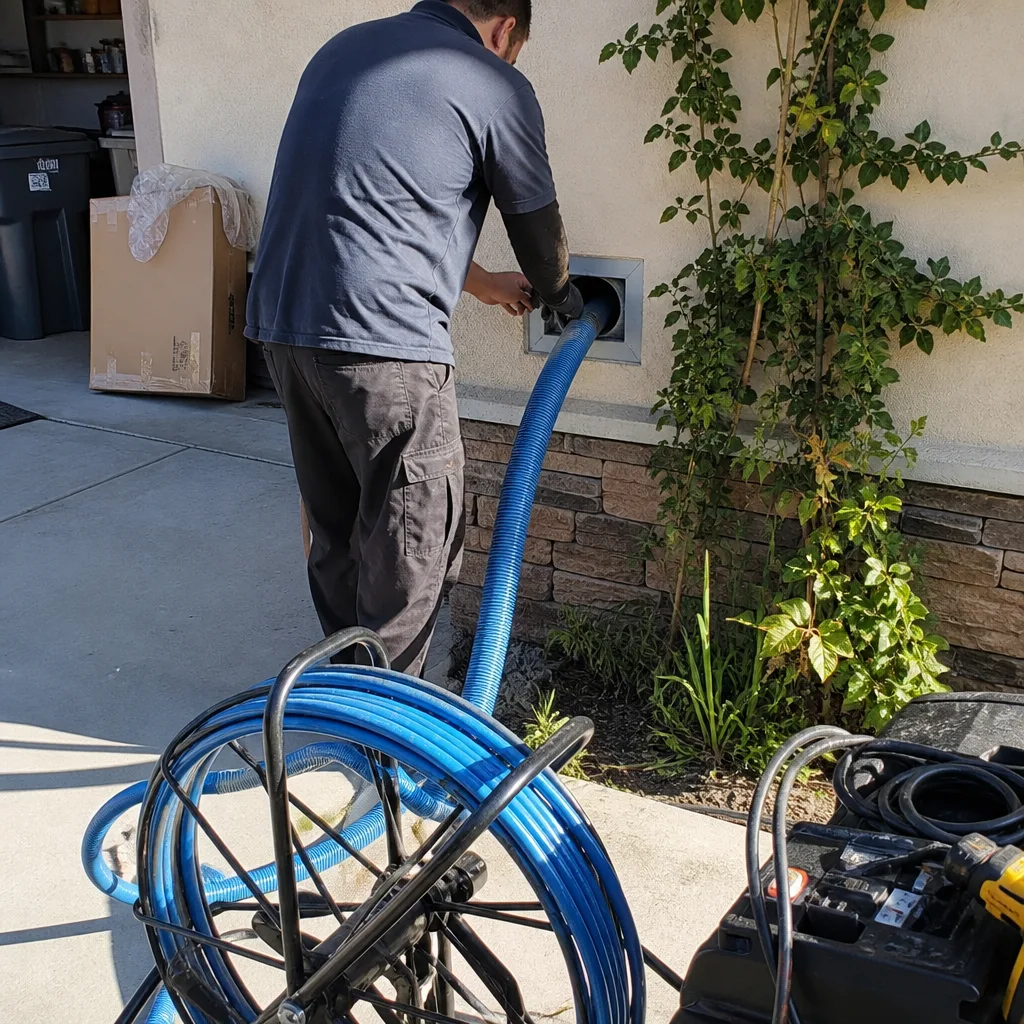
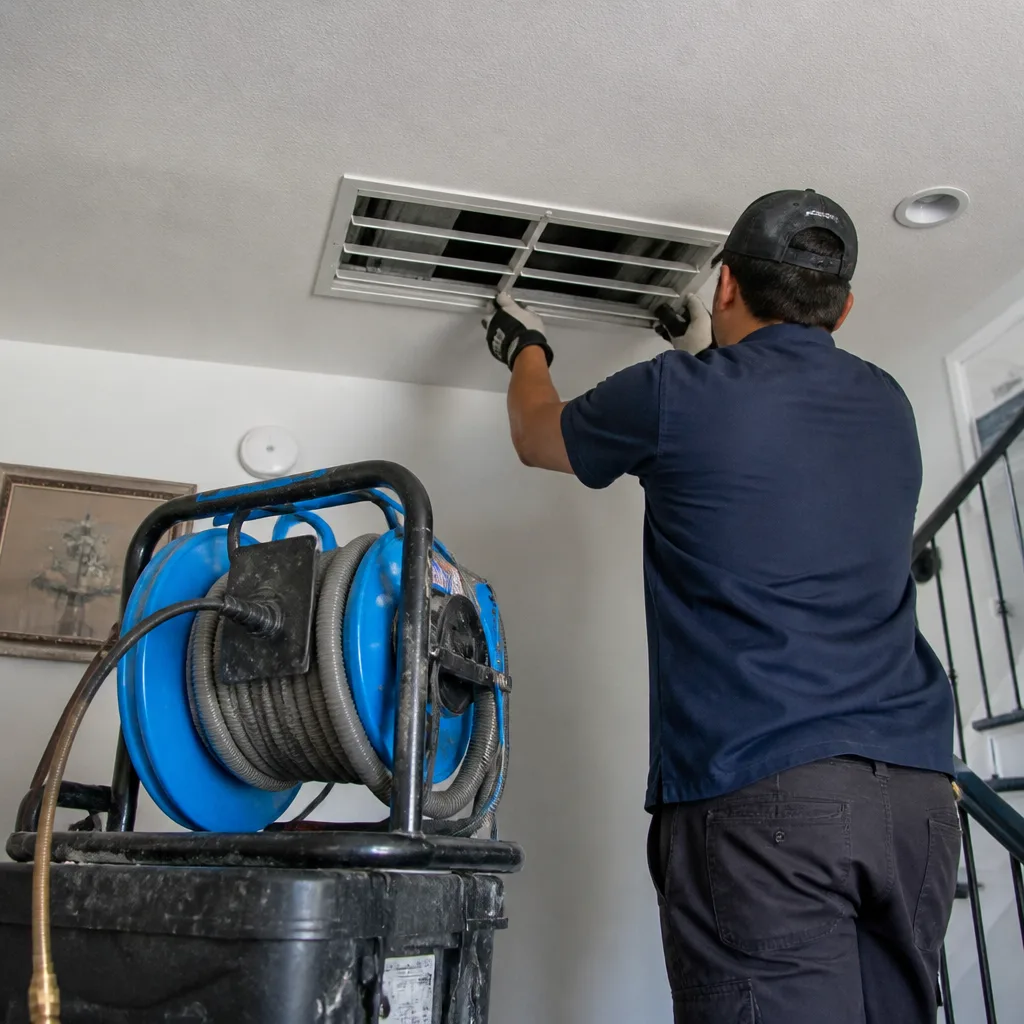
That "$99 whole-house special" is a bait ad - the real number appears once they are in your hallway, or the "clean" is a shop-vac at the register. We photograph the inside of your ducts before and after instead.
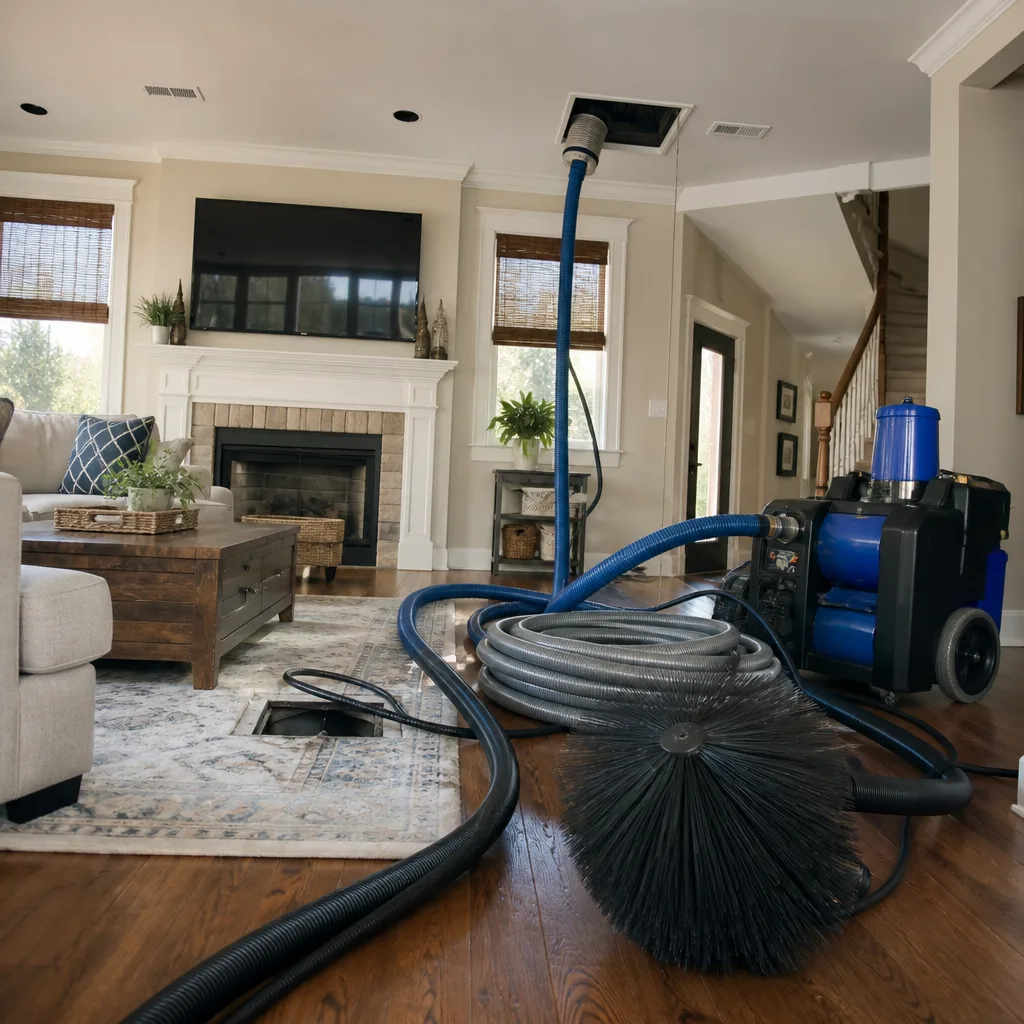
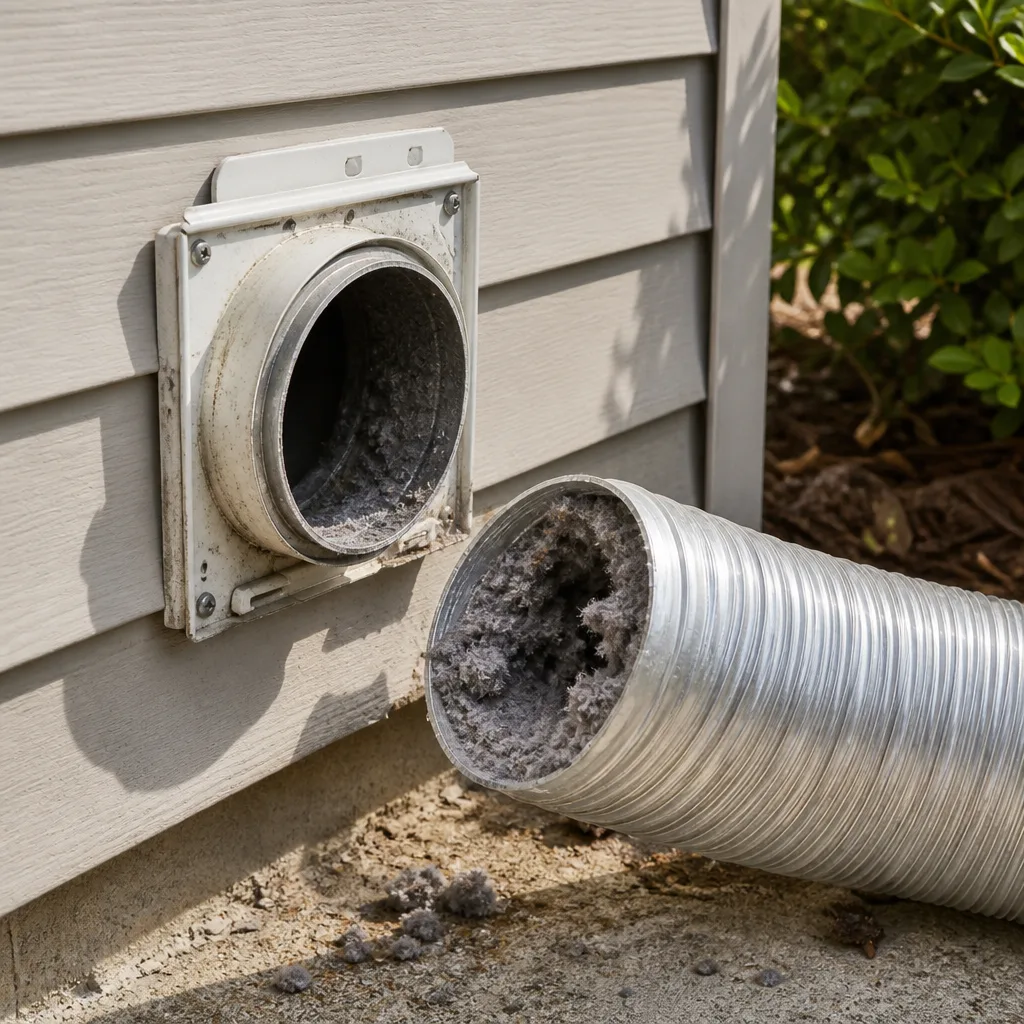

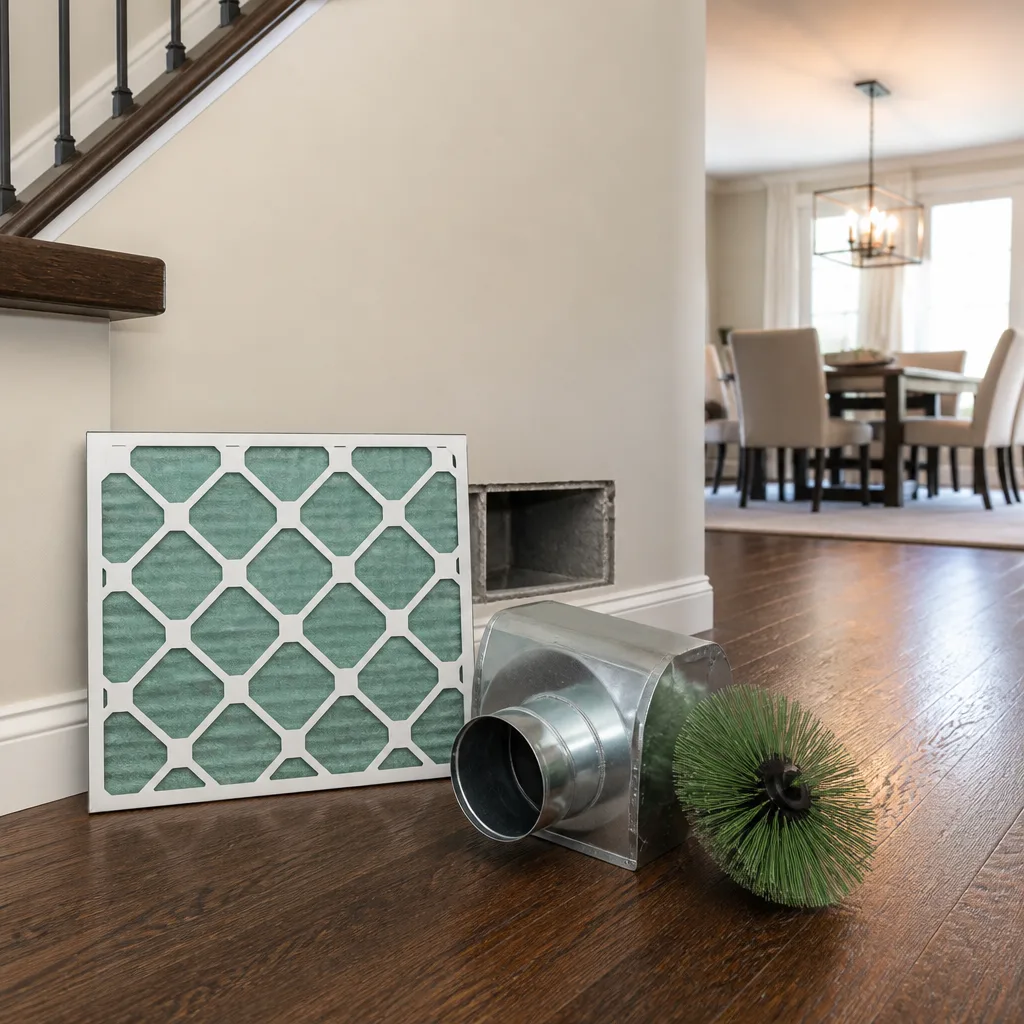
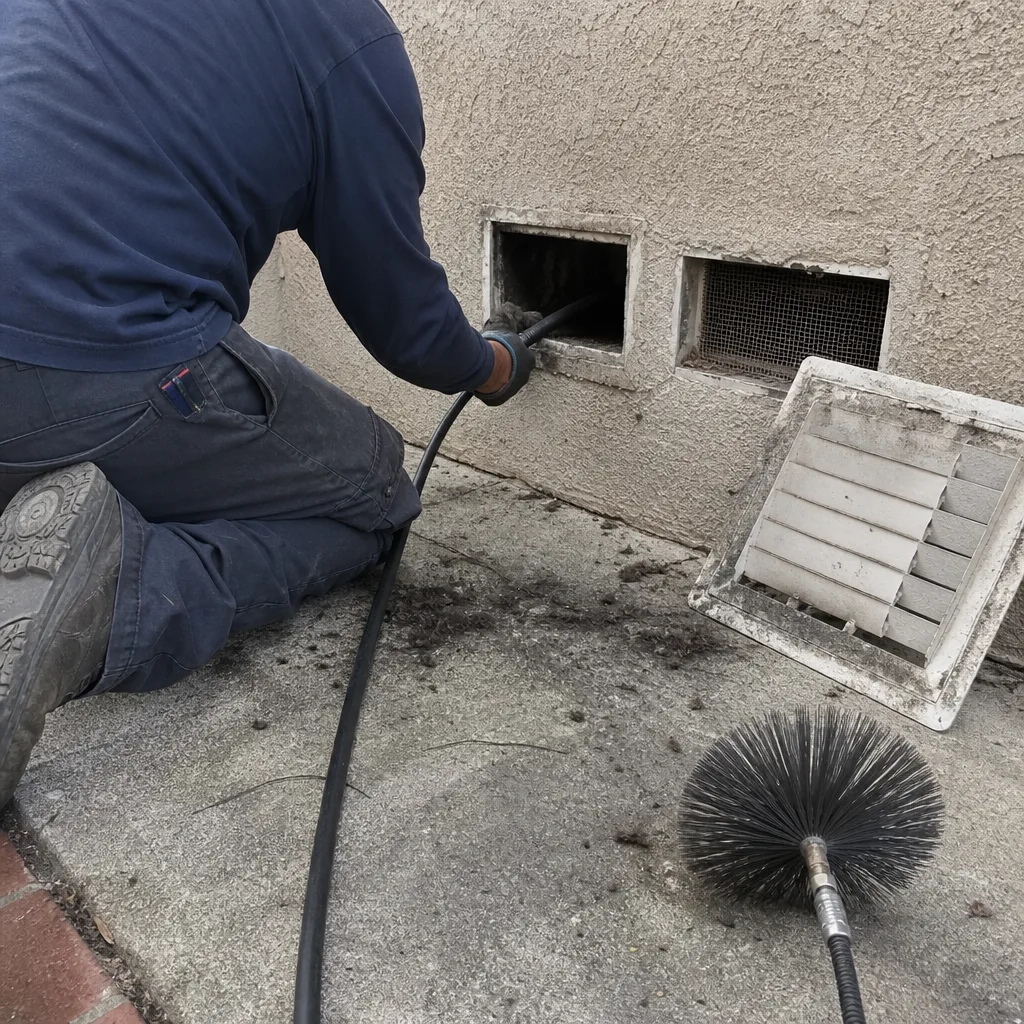 Before
 After
After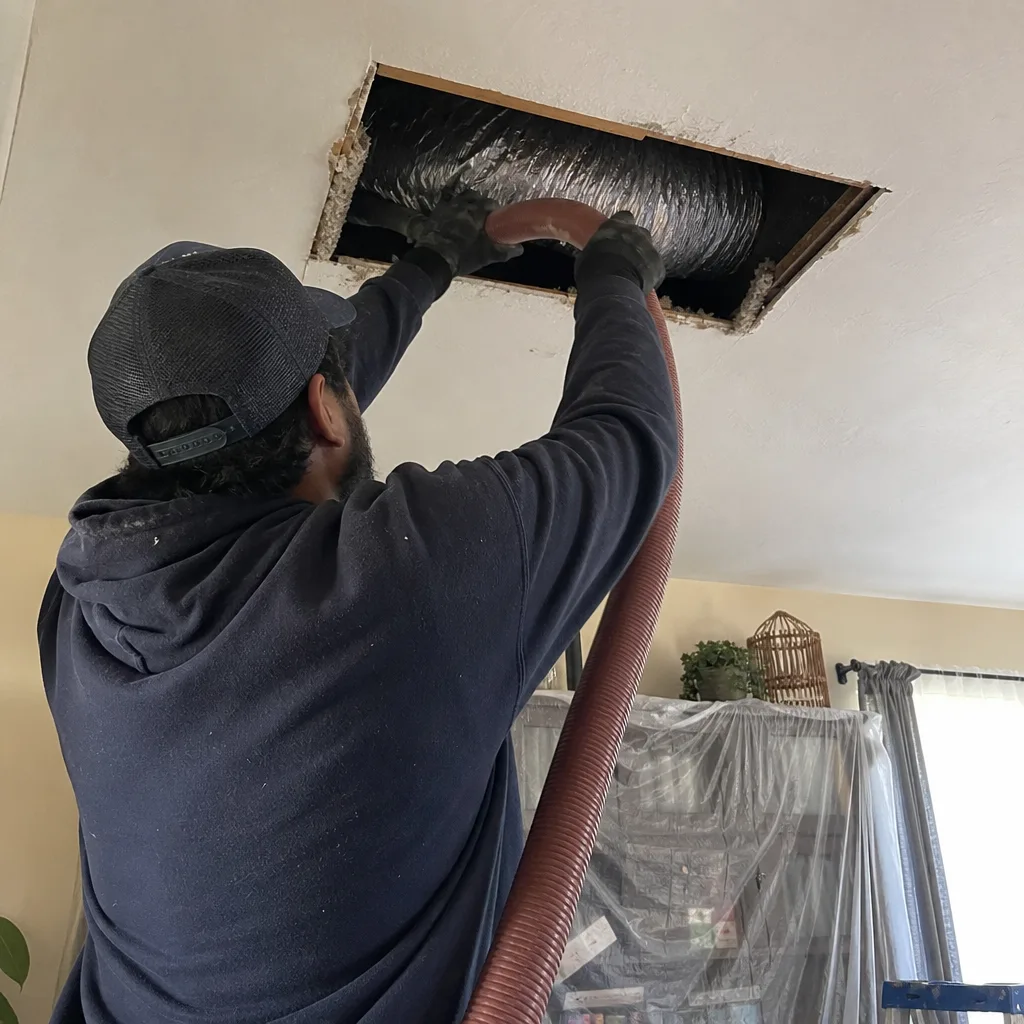 Before
 After
After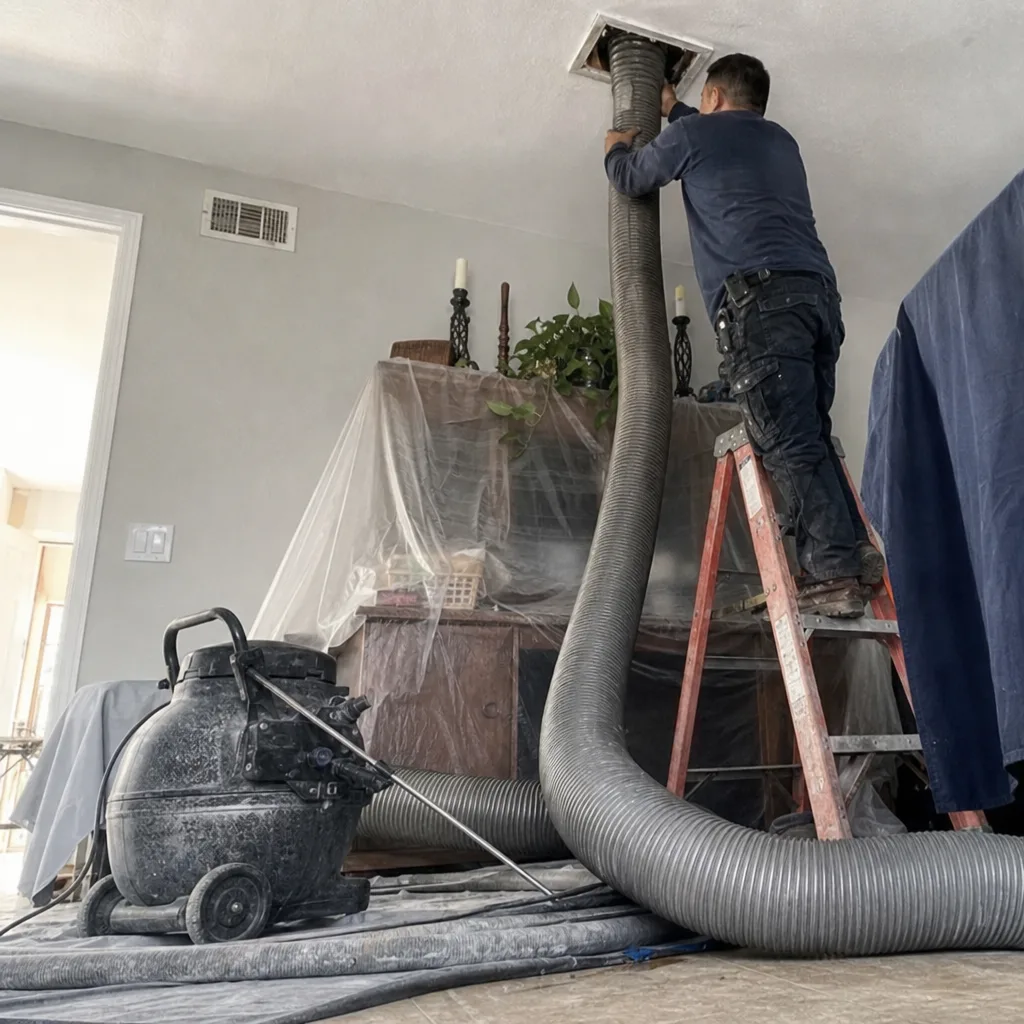 Before
 After
AfterWhat’s Happening
A clogged dryer vent almost always means lint has built up inside the vent duct to the point where hot, moist air can no longer escape the way it’s supposed to. Your dryer keeps running, but the airflow is restricted – and that creates real heat and fire risk inside the duct. This is one of the few home maintenance problems where “it can probably wait” is genuinely the wrong answer.
When a dryer vent clogs, the exhaust path narrows or closes off entirely. Hot air backs up into the drum and the cabinet. Clothes take two or three cycles to dry instead of one. The outside of the dryer feels unusually hot to the touch. You may notice a faint burning smell – that’s lint getting warm. None of those signs mean the dryer itself is broken. They almost always mean the vent duct behind it needs to be cleared. The dryer is doing its job; the vent isn’t letting it finish.
Why It Happens
Lint Accumulation Over Time
This is the cause in the overwhelming majority of cases. Every load pushes tiny fibers through the vent duct, and not all of them make it out to the exhaust cap. They stick to the duct walls, layer by layer, until the opening narrows enough to restrict airflow. You can often tell this is the culprit if your drying times have been creeping up gradually over months – it doesn’t happen overnight, it sneaks up on you.
A Kinked or Crushed Duct Behind the Dryer
Flexible accordion-style duct – the silver foil kind – kinks easily when a dryer gets pushed back against the wall. A kink creates a pinch point where lint piles up fast, even if the rest of the duct is clean. If the problem started right after you moved the dryer to clean behind it or rearranged the laundry room, a crushed duct section is the first thing to check. You can usually see the crease if you pull the dryer forward a few inches and look at the duct where it connects to the back of the machine.
A Blocked or Stuck Exterior Vent Cap
The flap on the outside of your home – usually on an exterior wall or the roof – opens when the dryer runs and closes when it doesn’t. Lint, bird nests, wasp activity, and even ice in cold weather can hold that flap shut or partially closed. If you can safely walk to the exterior cap while the dryer is running and the flap isn’t moving, that’s a strong sign the blockage is at or near the cap rather than deep in the duct. Do not attempt to clear a roof-mounted cap yourself – that’s a job for a technician with the right equipment and footing.
Duct Length or Too Many Bends in the Run
A dryer vent that has to travel a long distance, or makes several sharp turns to get there, loses airflow capacity with every foot and every elbow. Lint deposits faster in those bends because the exhaust slows down there. If your laundry room is far from an exterior wall, or the duct snakes around obstacles, you may find yourself needing cleaning more often than a neighbor whose vent runs straight out through a nearby wall. A technician can measure the effective duct length and tell you whether the current routing is part of the problem.
What to Do Right Now
- Stop using the dryer until the vent is cleared. A restricted vent is a fire risk, and running more loads pushes more heat into an already blocked duct. This is the one step that matters most before anyone arrives.
- Check the exterior vent cap if you can reach it safely from the ground. Look for visible lint packing, a flap that’s stuck closed, or any debris blocking the opening. If the cap is on the roof, leave it alone – height work without the right equipment is dangerous, and it’s not worth it.
- Pull the dryer forward and look at the duct connection at the back of the machine. If you see the accordion-style flex duct crushed or sharply kinked, that’s useful information to pass along when you call. Don’t disconnect the duct yourself – just note what you see.
- Clean or empty the lint trap thoroughly. This doesn’t fix a duct clog, but it rules out one variable and takes thirty seconds.
- Take a photo of anything that looks unusual – a packed duct connection, a stuck cap flap, visible discoloration on the wall near the vent. Photos help the technician arrive with the right tools and a realistic picture of the job.
How We Fix It
When your local Morton’s Air Duct Cleaning technician arrives, the first thing they do is walk the full duct run – from the back of the dryer to the exterior cap – so nothing is guessed at. Before any work starts, you get a written price. That’s not a formality; it’s how every Morton’s job works, every time.
The actual clearing is done with professional-grade rotary brush and vacuum equipment – the same Rotobrush and Nikro systems we use on full duct systems – designed to pull lint out of the duct rather than push it somewhere else. The technician clears the duct, checks the exterior cap for proper operation, and confirms airflow is restored before packing up.
Dryer vent cleaning is the primary service here. In some cases, the technician may identify a duct that needs straightening or a cap that needs replacing – that gets discussed with you before anything changes.
The whole visit typically runs about an hour. Every job is covered by the 365-Day Done Right Promise: if it’s not right, we make it right. Shoe covers and drop cloths go on the moment the crew walks in. A photo of the clean work area is taken before anyone leaves.
Frequently Asked Questions
A clogged dryer vent is a genuine fire hazard, not just an inconvenience. Lint is highly flammable, and when it accumulates in a duct that’s trapping heat, the conditions for a duct fire are in place. Stop using the dryer until the vent is cleared – this is one of the situations where waiting a few more days to schedule isn’t a good idea. Call (323) 918-4345 and your local Morton’s team will get it sorted.
It needs to be done soon. Every load you run through a blocked vent is another cycle of heat building up in a duct that can’t exhaust it properly. The dryer also works harder than it should, which shortens its life. Beyond the appliance, the fire risk is real enough that we’d rather you call today than decide it can wait. Reach us at (323) 918-4345 – a live person will pick up.
Morton’s doesn’t quote a price on a page, because the price depends on your specific vent run – its length, the number of bends, whether the cap needs attention, and what the technician finds on arrival. What we can promise is that you’ll have a written price in hand before any work starts, and that price doesn’t change once the job is underway. Call (323) 918-4345 for a free estimate – no obligation, no pressure.
Yes, that’s one of the most common early signs of a vent that’s partially blocked. The dryer runs, finishes its cycle, and everything seems normal – except you’re running two cycles where one used to do the job. Gradual increases in drying time almost always point to lint restricting airflow in the duct, not a mechanical problem with the dryer itself. Getting the vent cleared usually brings drying times back to normal right away.
Get It Fixed
Call (323) 918-4345 – a real person answers, around the clock – or book online. Your local Morton’s Air Duct Cleaning team will walk the full duct run, give you a written price before anything starts, and clear the vent completely. The 365-Day Done Right Promise is on every job.
Written by Paul Adeyemi, Owner at Morton’s Air Duct Cleaning, serving communities nationwide as part of the Cedarwell family since 2005.
What Our Customers Say
"Spotless work. They laid drop cloths everywhere and I was honestly impressed there was zero mess at the end. Showed me the dirt they pulled out so I could see it was worth it."
- Shelby Dunham"New house, old dusty ducts. They were gentle in the house, laid down drop cloths, and double checked every register was sealed back up. Air smells fresh now."
- Scott Hemmings"Friendly, calm crew that clearly cared about the house. Covered their shoes, protected the floors, and double checked they'd closed up every vent cover properly. Would have them back."
- Omar Zaid