
Whole-system duct and dryer vent check with before-and-after photos - you see exactly what came out of your vents
That "$99 whole-house special" is a bait ad - the real number appears once they are in your hallway, or the "clean" is a shop-vac at the register. We photograph the inside of your ducts before and after instead.
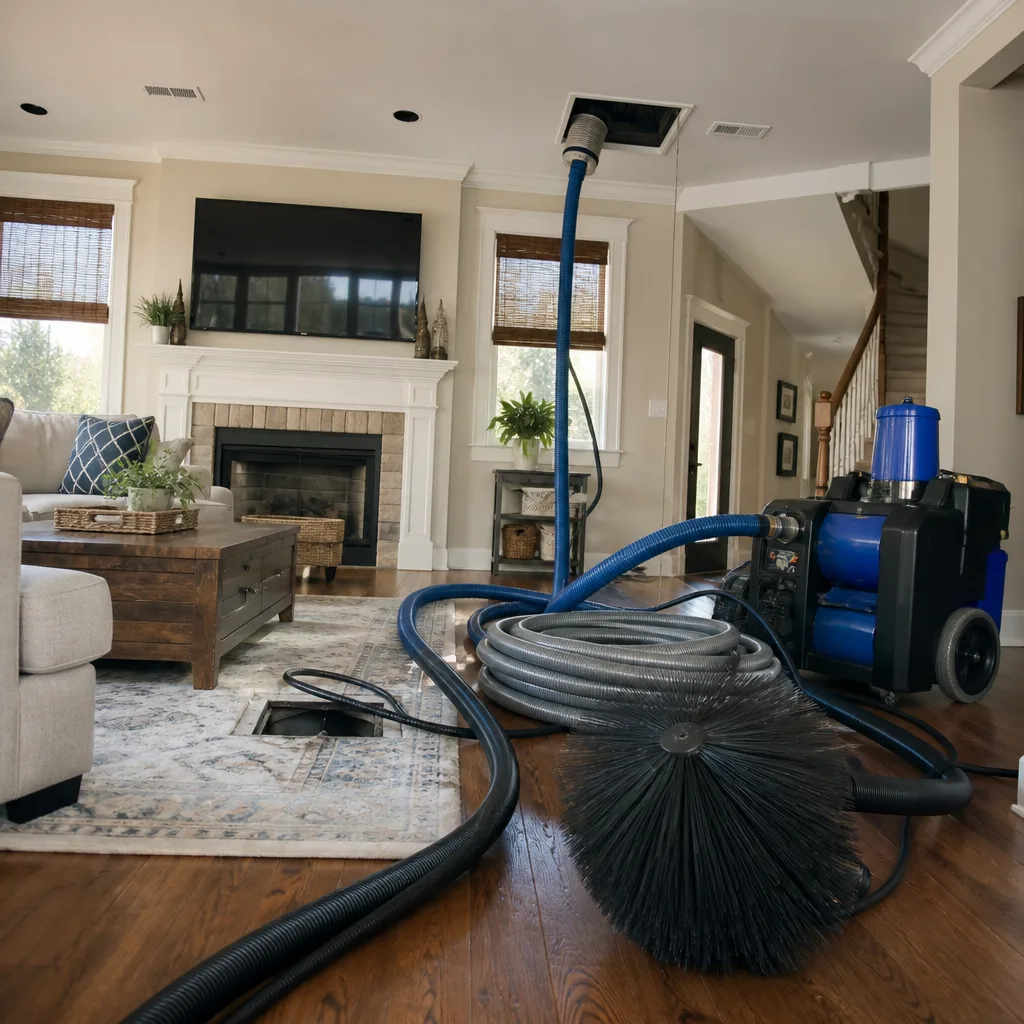
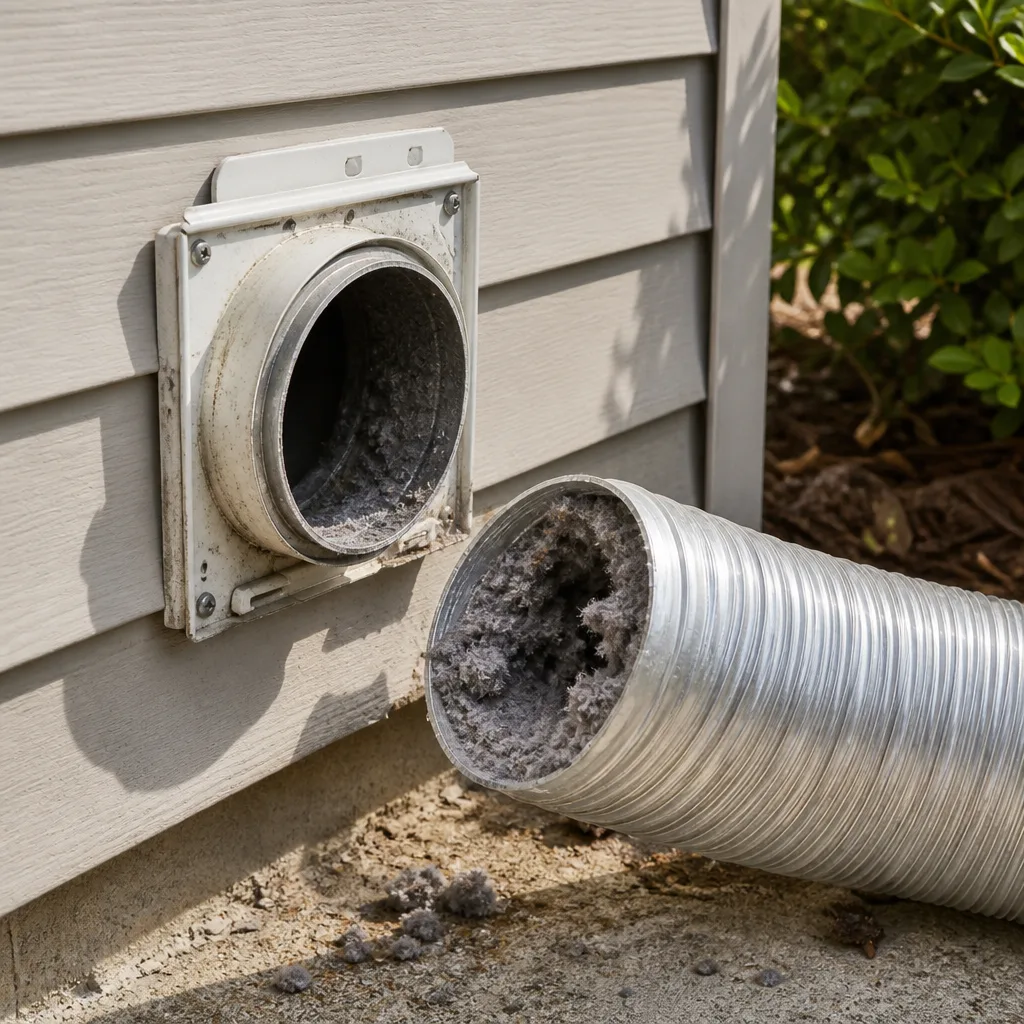
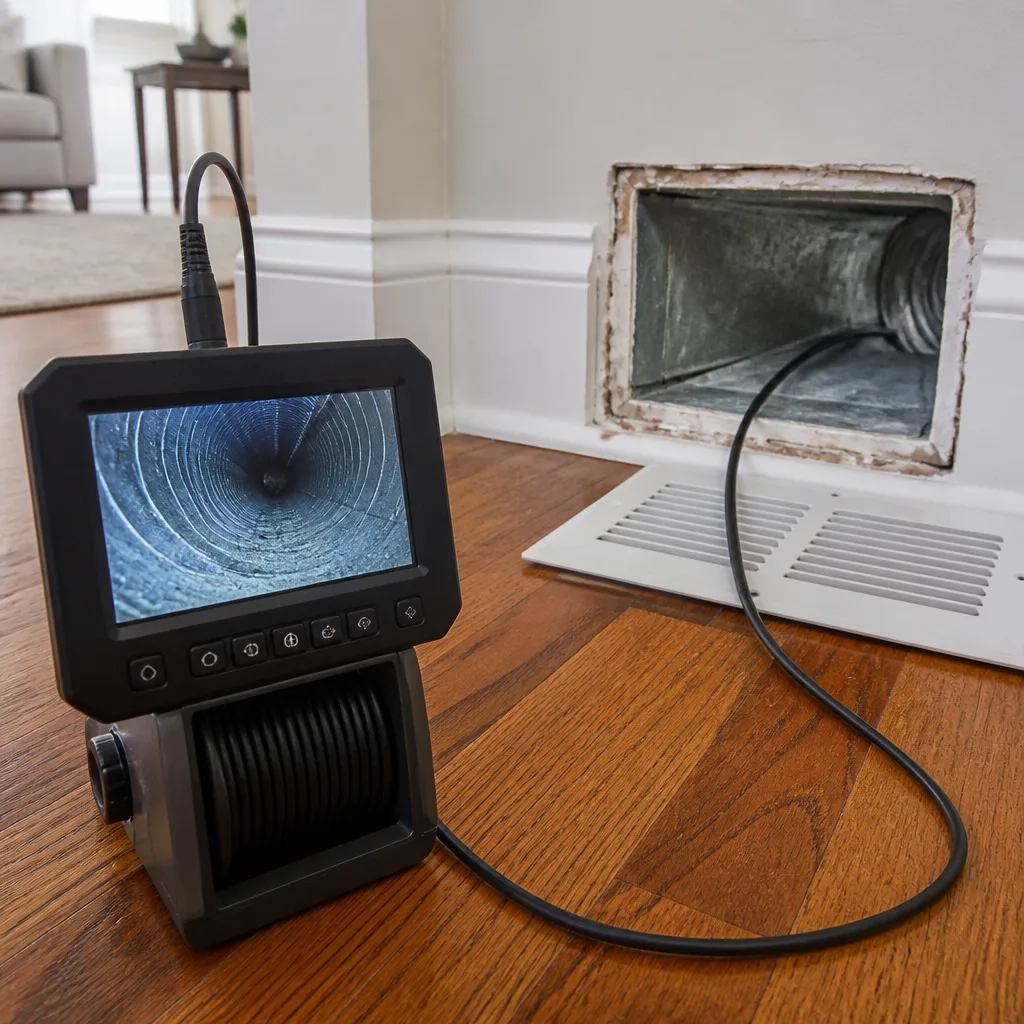
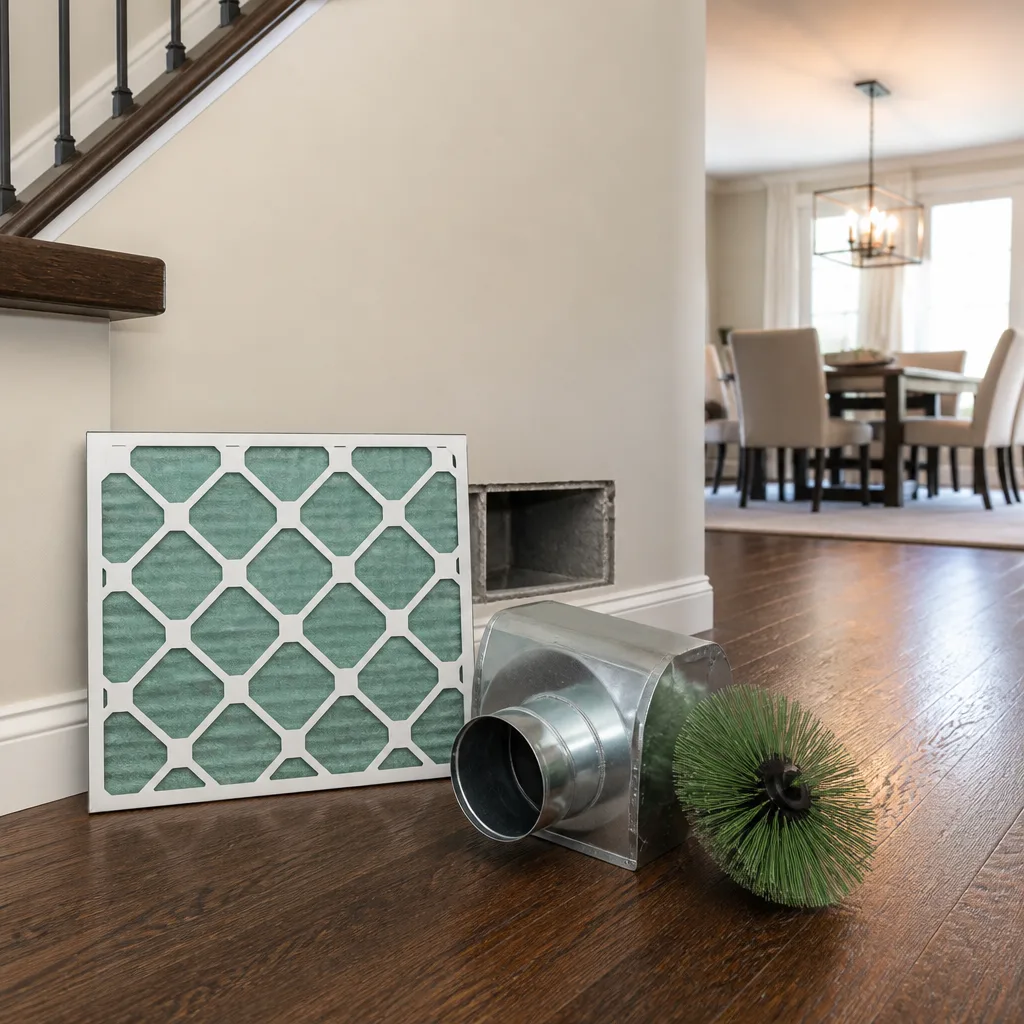
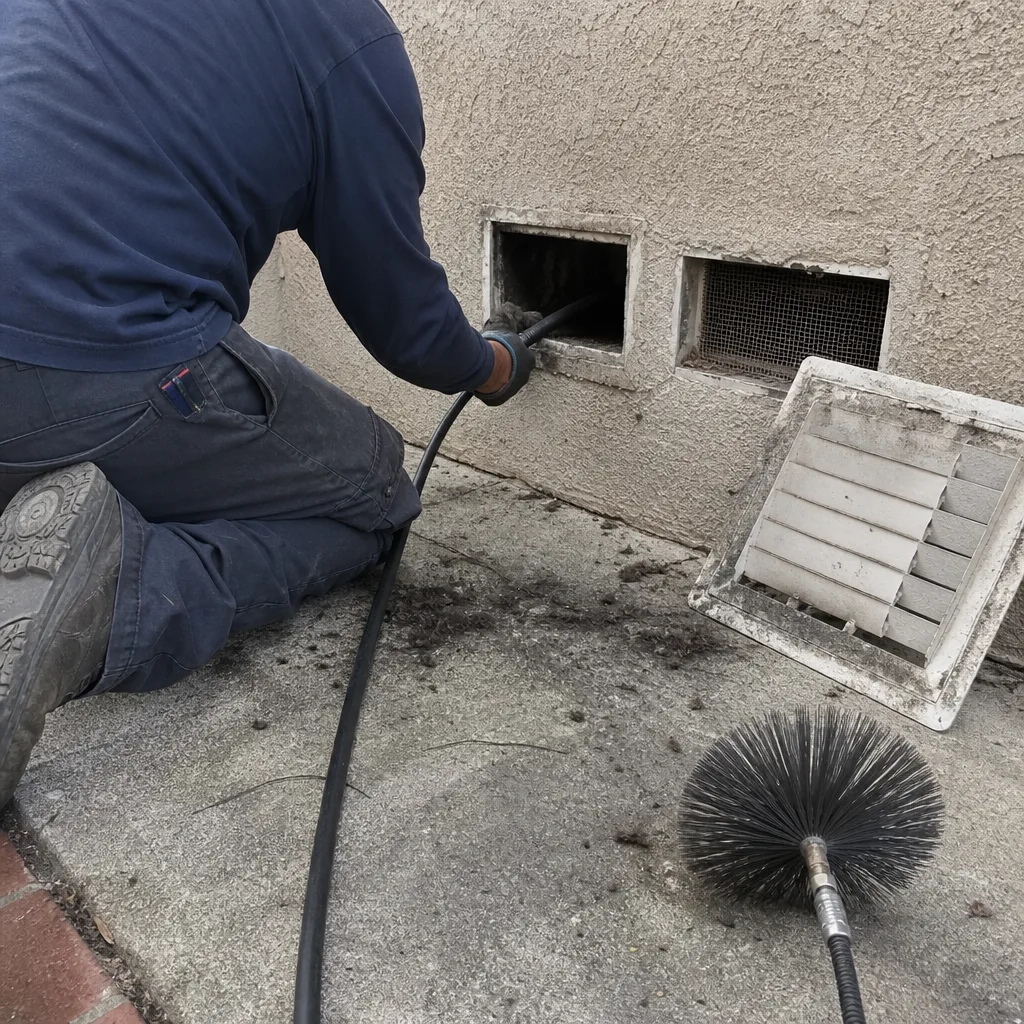 Before
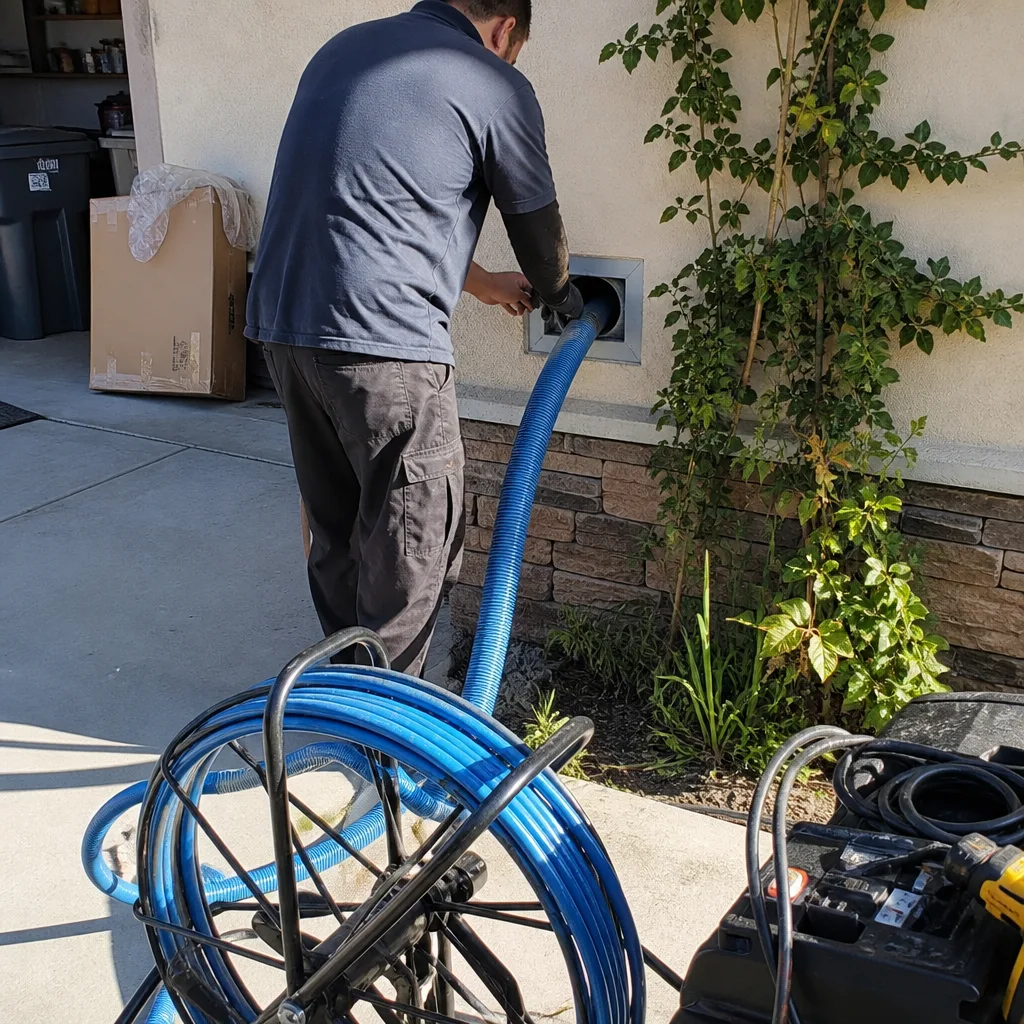 After
After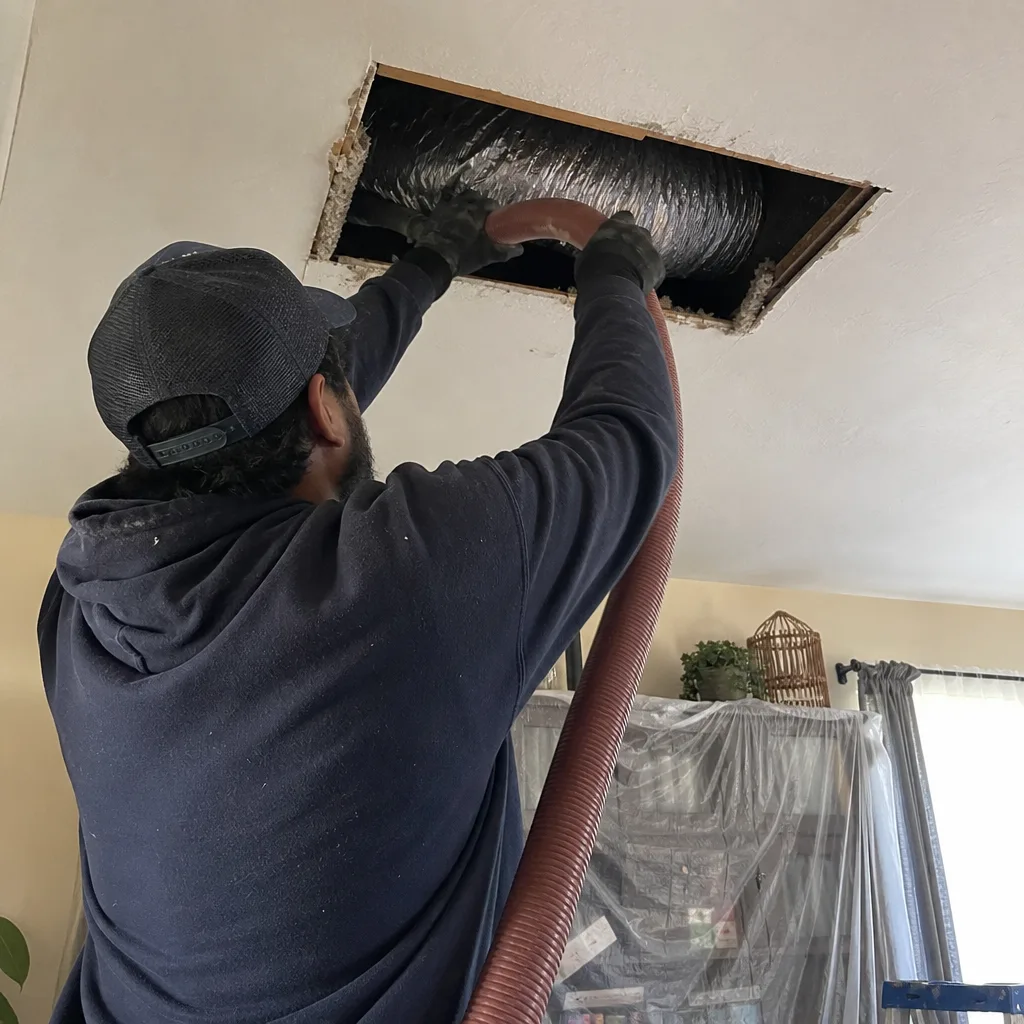 Before
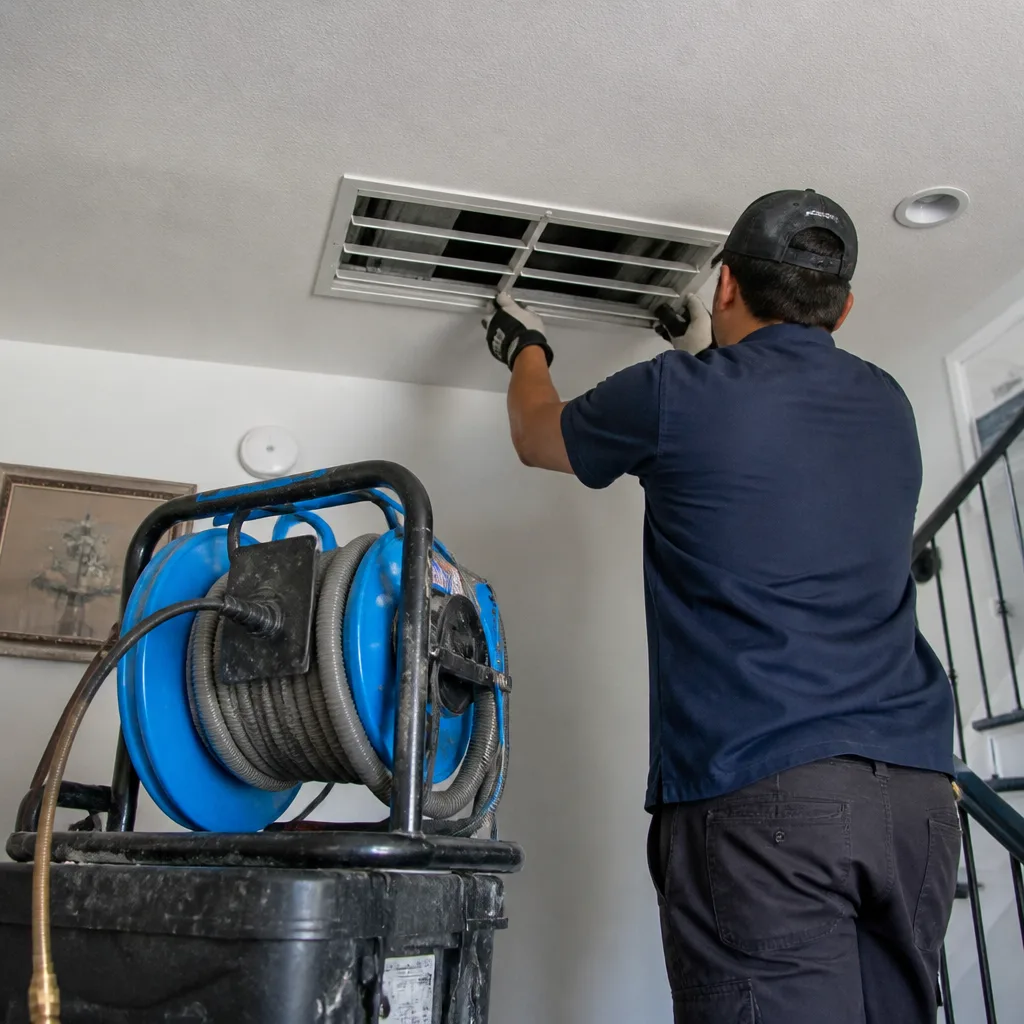 After
After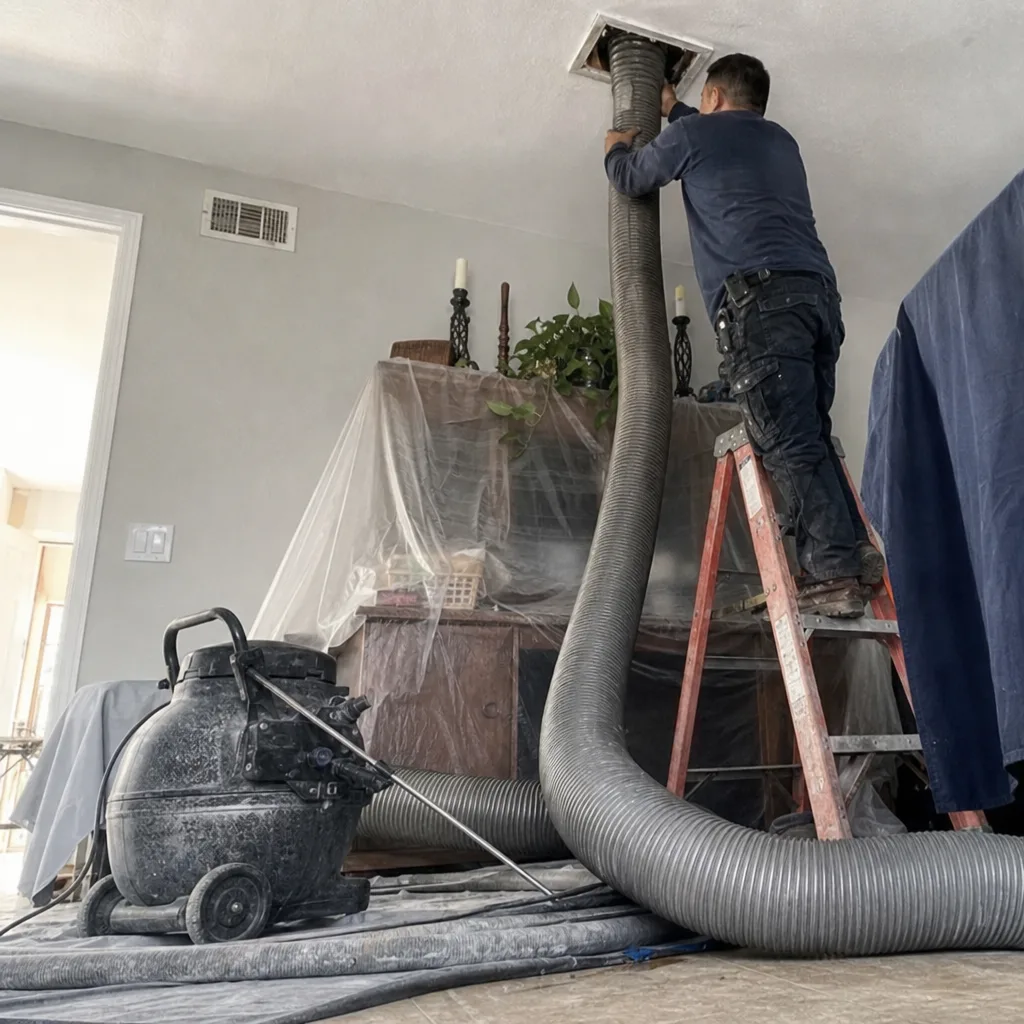 Before
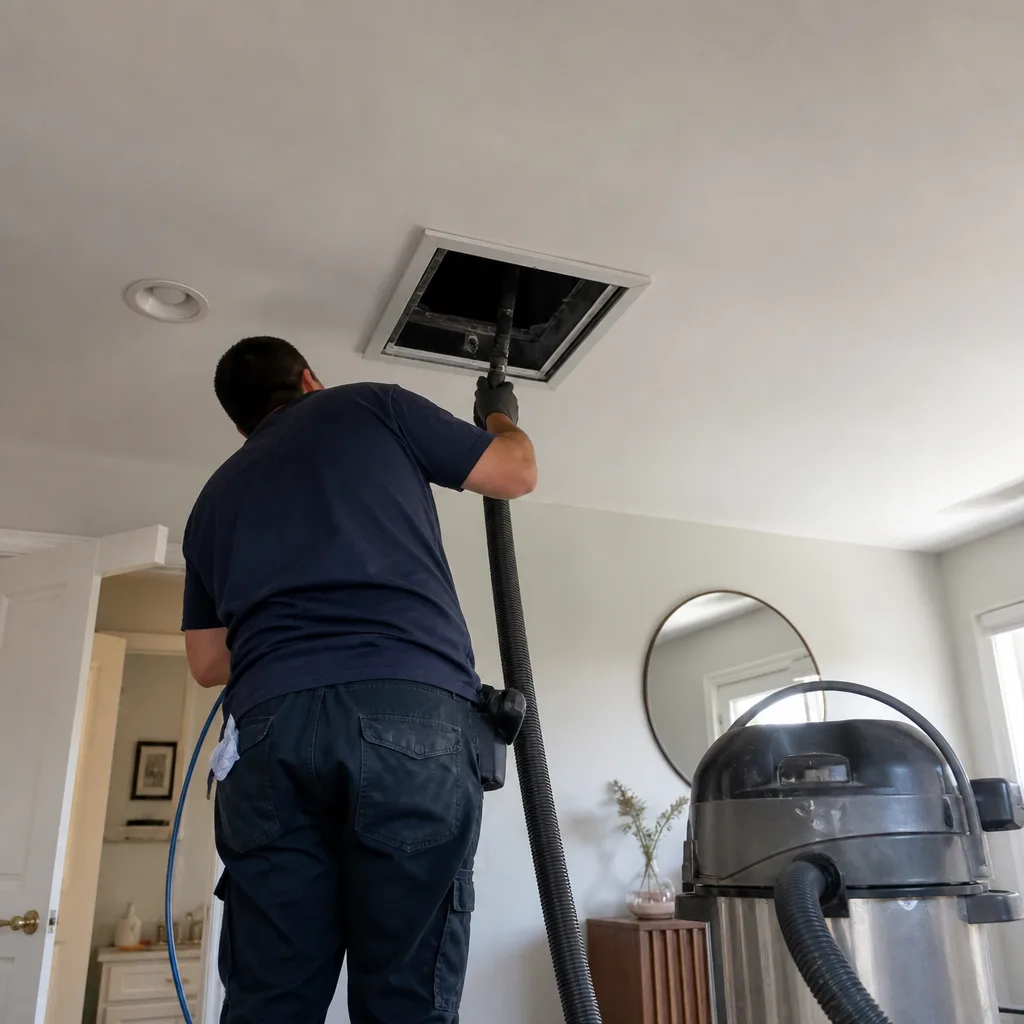 After
AfterRotobrush Vent Sanitizing: The Los Angeles Owner’s Guide
Rotobrush vent sanitizing parts for Los Angeles homes typically run $145-$310 installed, depending on which component in the system has failed and which Rotobrush model you own. We stock the most common Rotobrush sanitizer components on our trucks, and most swaps take under an hour once we’re at the house. Most owners discover the problem the same way: you fire up the Rotobrush for a sanitizing pass, and instead of the familiar fine mist, you get a weak dribble, a clogged nozzle, or nothing at all.
Los Angeles homes see real dust loading thanks to our dry summers, wildfire-season particulate, and the sheer amount of fine grit that works its way through window screens and door seals. That grit is exactly what a Rotobrush sanitizing system has to push product through, and it’s often what wears out the pump diaphragm and check valves first. Before we start, let me show you exactly what we found and exactly what it will cost to fix it.
Which Rotobrush Models This Applies To
The Rotobrush sanitizing components we replace most often in Los Angeles fit the aiR+ series, the RotoStorm, and the older RotoVac 360 systems. The pump housing, the atomizing tip, and the inline check valves are the three pieces that fail most often, and they’re not all interchangeable across model years. A check valve from a 2016-era RotoVac won’t seat properly in a 2021 aiR+ housing, even though both look nearly identical in photos.
Here’s the compatibility detail that saves owners a wasted trip: check the label on the sanitizer module itself, not the main unit. The module label carries a date code and a two-letter series designation that tells us exactly which tip-and-valve kit matches. If the label is worn off, we measure the tip thread pitch and the pump inlet diameter. Aftermarket equivalents exist and can be genuinely good, but for wetted components that touch the sanitizing solution, we prefer OEM Rotobrush parts. The tolerances on the check valve seat are tight enough that a slightly-off aftermarket piece will leak mist back into the housing and shorten the pump’s life. Morton’s Air Duct Cleaning is an independent service provider and not affiliated with Rotobrush, but we stock and install their parts because they hold up in the field.
Signs Your Rotobrush Vent Sanitizing Is Failing
- Weak or uneven mist at the nozzle. The pump diaphragm has stretched or the check valve is sticking open. This is the most common failure we see in Los Angeles, where hard water minerals from municipal supply accelerate wear on the diaphragm’s sealing edge. The pump still runs, but it can’t hold pressure.
- Sanitizer leaking from the module housing. The O-ring at the pump head has flattened, usually after years of exposure to sanitizing solution. It’s a $4 part and a 20-minute fix, but left alone the leaking fluid corrodes the pump motor terminals.
- No spray at all, even with a full tank. The internal filter sock at the pickup tube is clogged with dried product or fine dust. If the unit sat unused over a Los Angeles winter with solution left in the tank, crystallization at the filter is almost guaranteed.
- Sputtering or pulsing spray pattern. Air is being drawn into the pickup line. On Rotobrush modules, this is usually a cracked pickup tube fitting or a loose hose clamp at the pump inlet. The crack is often hairline and easy to miss until the system is under vacuum.
- Pump runs hotter than it used to. Your hand near the module housing will tell you. A hot pump with weak output means the check valve has failed and the pump is cycling against itself. Keep running it that way and the motor burns out, which turns a $60 repair into a $200-plus replacement.
Replacement Cost & What’s Included
For Rotobrush vent sanitizing part replacement in Los Angeles, homeowners should budget $145 to $310 installed. The low end covers a check valve or filter sock swap with the part and labor bundled. The high end covers a full pump module replacement with a new OEM diaphragm, housing O-ring, and pickup filter included. Here’s the line-item breakdown:
- Check valve replacement: $145-$175 installed, including OEM part
- Filter sock and pickup tube fitting: $155-$185 installed
- Pump diaphragm and O-ring kit: $175-$225 installed
- Complete pump module replacement: $240-$310 installed
One flat price per repair, agreed in writing before work starts. Our 365-Day Done Right Promise means if the part fails or the repair doesn’t hold within a year, we make it right, no invoicing back-and-forth. The price we quote is the price on the invoice.
DIY or Call Us?
For the genuinely simple checks, go ahead: inspect the pickup tube for visible cracks, make sure the tank lid seats cleanly, and run a cup of warm water through the system to flush dried product from the nozzle. Those are safe for any owner to do. What we’d caution against is opening the pump head yourself. The diaphragm assembly on a Rotobrush module is under spring tension, and the check valve seat is easy to score with a screwdriver if you don’t have the right seating tool. A scratched seat means the new valve won’t seal, and now you’ve bought the part twice plus a pump you didn’t need to replace.
If the pump is running hot, leaking, or sputtering, call us at (323) 918-4345. We’ll match the part to your exact module series, quote you the flat installed price, and have it fixed in one visit. Shoe covers on, drop cloths down, and we’re careful around the kids’ rooms and the dog’s favorite corner.
FAQs
In Los Angeles, expect 3 to 5 years of regular use from a Rotobrush sanitizing pump before the diaphragm or check valve needs attention. Hard water minerals and wildfire-season dust loading shorten that lifespan compared to more humid climates. If you run the sanitizer weekly in a busy household, budget for a diaphragm kit around year three. Call (323) 918-4345 and we can check the module’s date code to give you a better sense of what’s realistic for your specific model.
Yes, for the diaphragm, O-ring, and check valve, a repair is usually the right call and costs less than a full module replacement. The pump motor itself is the exception: once it’s burned out from running against a failed valve, a rebuild isn’t worth it and a full module replacement is the honest answer. We’ll show you the failed part before we replace anything.
Most Rotobrush sanitizing part replacements take 30 to 60 minutes once we’re at your home. Diaphragm and valve work runs toward the shorter end; a full pump module swap is closer to the hour. Since we stock common Rotobrush parts on the truck, there’s usually no second visit needed.
We stock the most common Rotobrush check valves, diaphragms, O-rings, and filter socks on the truck in Los Angeles. For less common series designations or full pump modules on older RotoVac units, we may need a day or two to source the exact OEM match. We’ll tell you upfront before you book, with the price included.
If your Rotobrush sanitizer is sputtering, leaking, or silent, call Morton’s Air Duct Cleaning at (323) 918-4345 for a free estimate. We’ll match the part, quote the flat installed price in writing, and get your system misting properly again. We also stock parts for Lennox, Trane, and Carrier systems when the issue crosses over into the broader HVAC setup.
Written by Paul Adeyemi, Owner, Morton’s Air Duct Cleaning at Morton’s Air Duct Cleaning, serving Los Angeles and nearby areas.