
Air Duct Cleaning: Repair or Replace? How Los Angeles Homeowners Decide
Most Los Angeles homes don’t need their ducts replaced. They need them cleaned. But roughly 15% of the homes we inspect have a ductwork problem that no amount of cleaning will fix, and that’s the conversation most companies skip because recommending a repair sometimes means recommending less work, not more. Here’s how to tell the difference before you spend a dollar.
If you’d rather have someone look before you commit to anything, call (323) 918-4345 for a free estimate from Morton’s Air Duct Cleaning.
Cleaning vs. Repair vs. Replacement: Three Different Jobs
The confusion starts because homeowners use these words as if they’re interchangeable. They’re not. Each one addresses a different problem with a different scope of work, a different price range, and a different outcome for your home.
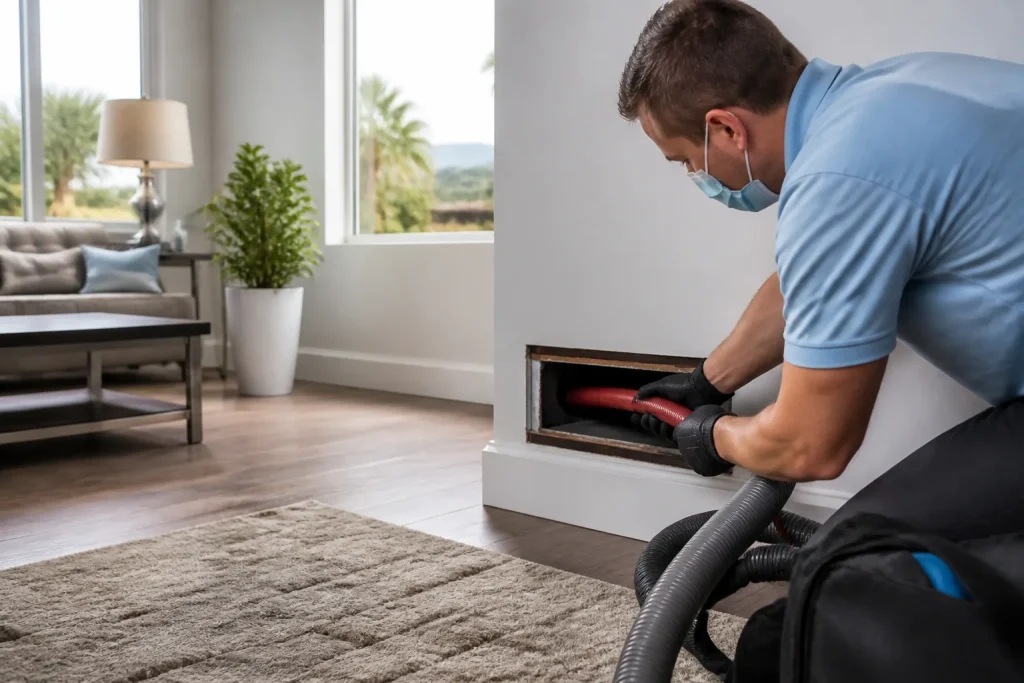
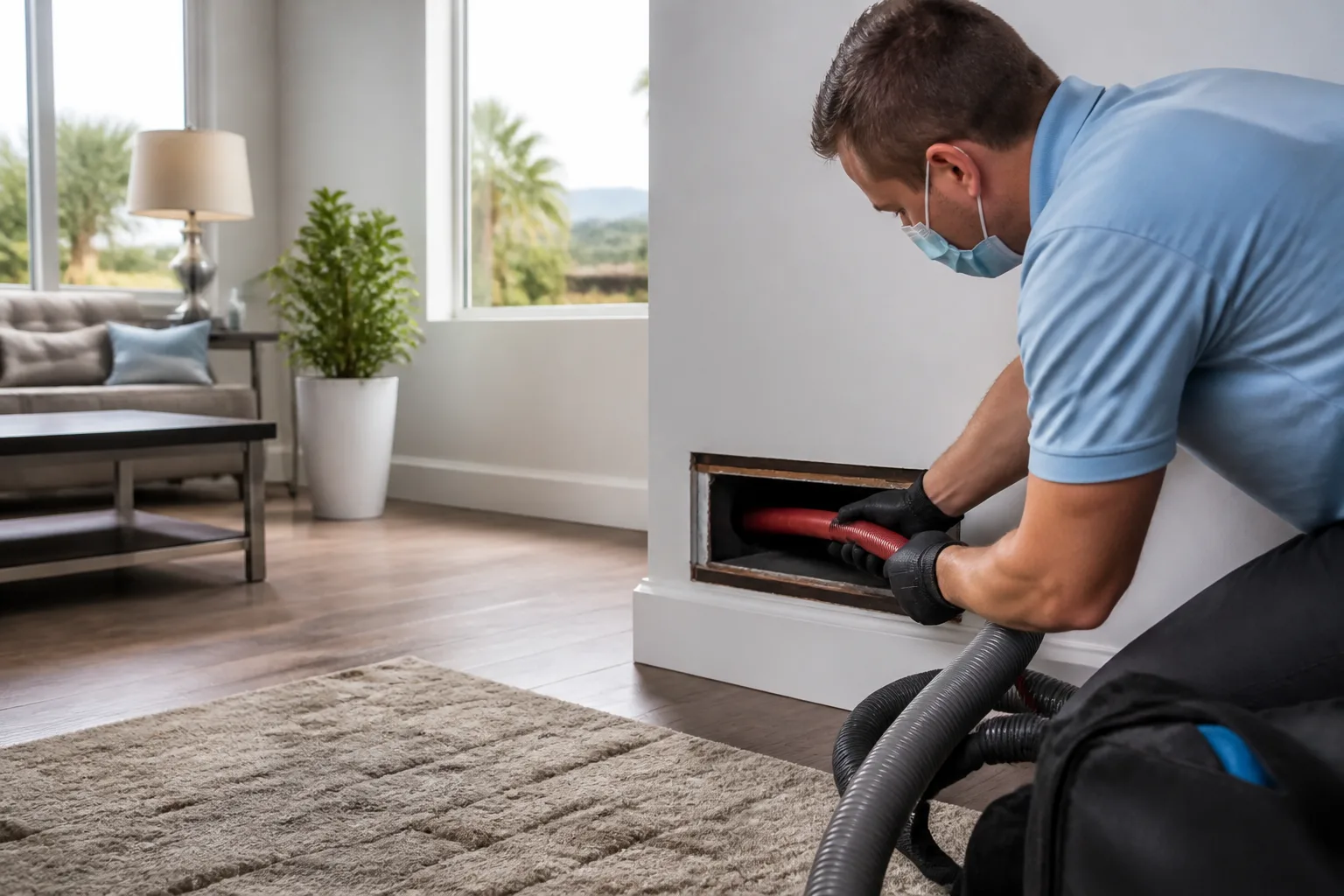
- Cleaning removes the buildup inside ducts: dust, pet dander, construction debris, the gray fuzz that accumulates over years of air moving through the system. Our crews use truck-mounted or portable equipment from Rotobrush and Nikro to agitate and extract that material. The structure of your ductwork stays exactly as it is. We’re removing what shouldn’t be there, not changing what’s already there.
- Repair fixes a specific failure: a flex duct that’s crushed in an attic run, a joint that came apart, a section damaged by rodents, a boot that’s pulling away from the floor register. The scope is limited to the broken part. In Los Angeles, repair pricing typically starts around $450 and climbs based on how much of the run needs replacing and how difficult the attic access is.
- Replacement means the entire duct system gets removed and a new one is installed. In LA, a full replacement for a typical 1,800-square-foot home usually runs between $5,500 and $9,000 depending on the number of runs, zoning complexity, and whether insulation is included. Some jobs exceed that. This is the one you want to be certain about before you sign.
The honest answer for most Los Angeles homeowners is: clean first. If the system is structurally intact, a proper cleaning restores airflow and indoor air quality for a fraction of the replacement cost. But if the inspection reveals structural failure, cleaning alone becomes a waste of money. More on what that looks like below.
What Inspection Findings Point to Repair Over Cleaning?
Every duct cleaning should include a camera inspection of the system before and after the work. Not every company does this. We think it’s essential because the camera shows us what the naked eye can’t. These are the findings we see in Los Angeles attics that change a cleaning job into a repair conversation.
- Visible disconnections at joints. Sections of duct that have pulled apart. This happens most often in older homes where the original tape and mastic dried out decades ago. One disconnected joint can spill 20-30% of your conditioned air into the attic before it ever reaches a vent.
- Crushed flex duct. This is extremely common in Los Angeles. The flexible insulated duct that was popular in the 1980s and 1990s gets flattened by boxes, storage, or careless contractors walking through the attic. A crushed duct isn’t just dirty: it physically cannot deliver air. Cleaning it would be pointless.
- Evidence of pest entry. Rats and mice love attics, and in neighborhoods across Los Angeles, from the Valley to the Westside, they chew through ductwork. The entry point is a structural problem before it’s an air quality problem. You need patching or section replacement, not just a cleaning.
- Duct tape. Literal duct tape used as a seal. Despite the name, duct tape was never designed for HVAC systems. It dries, cracks, and peels after a few years of attic heat. If we see it during inspection, we know the original installation or a previous repair was done on the cheap, and there may be more problems behind it.
These findings don’t automatically mean you need a full replacement. Often a targeted repair of one or two sections solves it. But they do mean cleaning alone won’t address what’s actually wrong, and any technician who sees these things and says nothing is doing half a diagnosis.
How a Camera Inspection During Cleaning Reveals the Truth
Here’s what a responsible process looks like. Before we clean anything at Morton’s Air Duct Cleaning, we run a camera through the system. It’s the same idea as a plumber scoping a sewer line before clearing a clog. We want to see the condition of the ductwork before we move air through it. The camera footage shows us the inside of the system in a way that gives you visual proof of what’s there and what’s not.
This matters for two reasons. First, it protects you. If there’s a pre-existing tear or a section that’s already failing, we know about it before we touch anything, which means we’re not blamed for causing damage that was already there. Second, it gives you a real picture of what you own. Most Los Angeles homeowners have never seen the inside of their own ductwork. The camera changes that. You’ll see what we see.
And here’s the part that surprises people: we don’t push a repair or replacement decision on the day of the visit. Some companies love to find problems because problems mean a bigger invoice. We document what we find, show you the footage, explain what it means in plain language, and give you options with written pricing. Then you decide. Sometimes the right answer is “clean now and reassess in a year.” Sometimes it’s “this section needs replacement before we do anything else.” We have told homeowners on more than one occasion that their ducts were fine and they just needed a cleaning. That’s not lost revenue. That’s the job.
Our team uses camera equipment from brands like Guardsman and Abatement Technologies, and every finding is documented with before-and-after photos so there’s no guesswork about what was found or what was fixed.
The Los Angeles Housing Factor: Why This Region Sees More Replacements
Los Angeles has a specific housing characteristic that makes duct replacement more common here than in, say, Portland or Seattle: the age of the housing stock and the location of the systems. Tens of thousands of LA homes were built in the 1950s, 1960s, and 1970s. Many still have their original metal ductwork. Others had retrofits installed during the 1980s and 1990s, when flexible duct was cheap and popular and contractors ran it through attics with questionable workmanship.
Now consider what those attics do. In the San Fernando Valley, summer attic temperatures routinely climb past 140 degrees. In the Inland areas, higher. That heat accelerates the breakdown of flex duct. The outer vapor barrier gets brittle. The inner liner cracks. The insulation separates. A duct system that might last 40 years in a mild coastal climate can fail in 20 to 25 years here. We see it constantly in neighborhoods like Encino, Sherman Oaks, and Studio City, where mid-century homes with original or early-retrofit ductwork are reaching the end of their service life while the houses themselves still have decades left.
The geography matters too. Homes in the hills, from Eagle Rock to Mount Washington, often have attic systems with long, angled runs that make repair access difficult. Homes near the coast in places like Mar Vista or Westchester deal with salt air and moisture. None of this means your ducts are automatically doomed. It means the inspection matters more here than in gentler climates. The heat and the housing age combine to make structural failure a real possibility, and you can’t know without looking.
When Does Repair Cost Enough to Justify Replacement?
This is the decision framework we walk through with Los Angeles homeowners when the camera reveals problems. The rule of thumb is straightforward: if the repair estimate reaches 60 to 70 percent of the replacement cost, replacement usually becomes the better financial decision.
Why is that the threshold? Because repair fixes what you found. Replacement fixes what you found plus everything you haven’t found yet. When a system is old enough to have multiple failures, those failures tend to cluster. You repair the crushed run, and six months later a joint separates somewhere else. You patch the rodent damage, and then the next heat wave cracks another section. Every repair includes labor hours and access time that you don’t get back.
Here’s the framework in practical terms, for a typical Los Angeles home:
- Under $1,500 in repairs on an otherwise sound system: do the repair. You’re extending the life of ductwork that still has years left, and the math is clearly in your favor.
- $2,000 to $4,000 in repairs on a system that’s 20-plus years old: this is the gray zone. You weigh the age of the ductwork, the condition of the rest of the system, how long you plan to stay in the house, and whether the damage is isolated or spread across multiple runs.
- Repairs north of $4,500 or damage in more than three separate locations: replacement starts making more sense for most people. A new duct system comes with a warranty, better insulation, and the certainty of knowing there’s no hidden failure waiting in the attic.
We’ve walked this decision with homeowners who were surprised to hear us recommend a $600 repair when they expected us to push a $7,000 replacement. And we’ve told others that patching a failing system was throwing good money after bad. The honest answer is different for every house, and you deserve a company that will tell you which one applies to you.
When you’re weighing this, think about the end state. A repaired system still has old ductwork in place. A replaced system is new everywhere. If your repaired system is in good shape otherwise, repair is the clear winner. If not, you’ll be buying replacement in installments. That’s the most expensive way to do it.
When to Call a Pro
If any of this sounds familiar, this isn’t a do-it-yourself project. Duct systems run through attics, crawlspaces, and walls. Some of the work requires working around electrical wiring and gas flues. Attic work in Los Angeles heat is physically demanding and genuinely risky in the summer months. This is skilled work that requires specialized training and proper equipment, not a weekend project.
Related services in Los Angeles: Air Duct Cleaning in Los Angeles and Dryer Vent Cleaning in Los Angeles.
The Bottom Line
Most Los Angeles homes need a cleaning, not a replacement. But the only way to know is to look. A camera inspection during a proper duct cleaning tells you whether you have a buildup problem that cleaning fixes or a structural problem that cleaning can’t touch. The honest conversation about repair versus replacement starts with seeing the system, documenting what’s there, and giving you options with written pricing before any work begins.
If you’re in Los Angeles and want someone who will show you what’s in your ducts, Morton’s Air Duct Cleaning home offers free estimates. Call (323) 918-4345 and we’ll walk you through what we find, what we recommend, and what it costs, in plain language, before you have to decide anything.
Frequently Asked Questions
You can’t know without inspection. Cleaning addresses buildup inside structurally sound ductwork, while replacement addresses systems that are crushed, disconnected, pest-damaged, or deteriorated past repair. A camera inspection during a cleaning call is the definitive way to tell, and a reputable company in Los Angeles will show you the footage and explain it before recommending either option.
Full duct replacement in Los Angeles typically runs between $5,500 and $9,000 for an average single-family home, varying with system size, attic accessibility, and insulation requirements. Targeted repairs usually start around $450 and climb based on the scope of the damage. When repairs approach 60 to 70 percent of replacement cost, replacement starts making more financial sense for most homeowners. Call (323) 918-4345 for an exact quote on your home, estimates are free.
This is not recommended. Duct systems run through attics and crawlspaces, often near electrical wiring and other hazards. The work requires specialized training, proper sealing materials, and an understanding of HVAC airflow. In Los Angeles summers, attic work is genuinely dangerous due to extreme heat. A trained technician with the right equipment does this work safely and correctly.
In Los Angeles, attic duct systems typically last 20 to 30 years because of extreme summer attic heat that accelerates breakdown of flex duct materials. Systems in homes built in the 1950s through 1970s that still have original or early-retrofit ductwork are often at the end of their service life now. A camera inspection tells you where your specific system stands.
Written by Paul Adeyemi, Owner at Morton’s Air Duct Cleaning, serving Los Angeles since 2005.
Need Air Duct Cleaning Help?
Call Morton's Air Duct Cleaning - licensed & insured, here with fast after-hours help in Los Angeles.
(323) 918-4345