
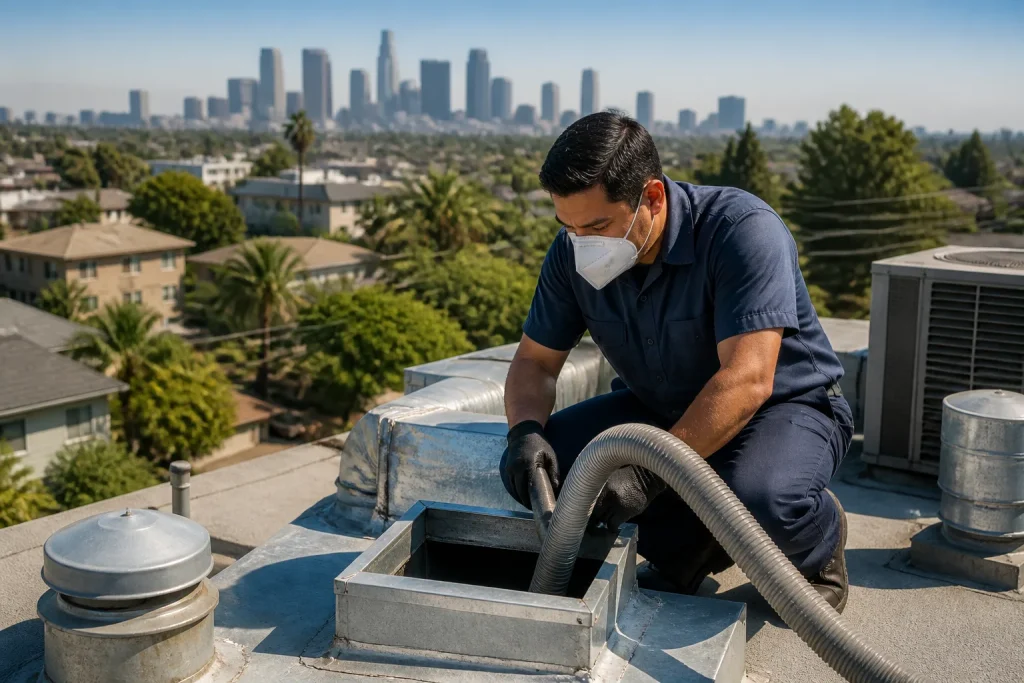
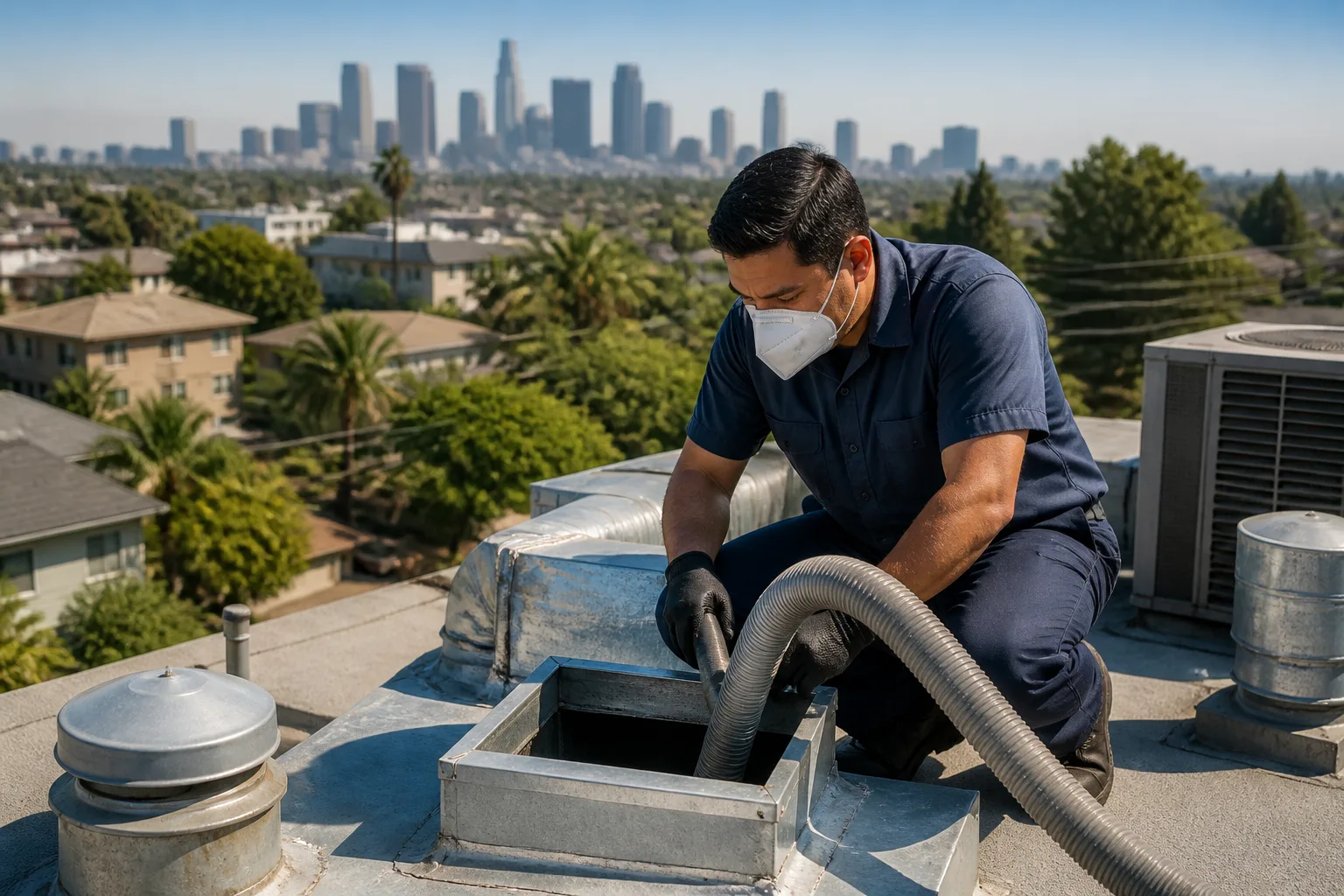
Nikro Air Duct Cleaning in Los Angeles: A Homeowner’s Guide
Nikro air duct cleaning in Los Angeles means using industrial negative-air machines that pull up to 4,000 CFM of suction through your duct system, with HEPA filtration capturing 99.97% of particles down to 0.3 microns. It costs between $450 and $900 for a typical 2,000-square-foot home, depending on how many returns and vents you have, and takes four to seven hours. The machine matters far less than the person operating it, which is what this guide is actually about.
What Negative Air Pressure Actually Does in Your Living Room
Here’s the principle in plain terms. When a Nikro unit runs, it doesn’t just move air. It creates a vacuum inside your duct system so that every bit of loosened debris gets pulled toward the machine, not pushed into your hallways, bedrooms, or the space where your toddler naps. That’s the difference between cleaning and redistributing.
Think about what happens when you shake out a blanket indoors. Dust goes everywhere. Now imagine holding a vacuum hose right at the edge of that blanket while you shake it. The dust moves toward the hose. That’s negative air pressure in a nutshell, and it’s what separates a professional clean from a very expensive stirring of dust.
In our experience across Los Angeles neighborhoods, the homes that need this most are older ones. Homes in areas like West Adams, Highland Park, and Van Nuys often have decades of layered dust, pet dander, and the fine particulate that drifts in from freeway traffic and wildfire season. A shop-vac setup simply can’t hold negative pressure on a system that size. The Nikro’s sealed HEPA filtration is what keeps that particulate from escaping back into your home mid-job.
Why Los Angeles Dust Is Different
Los Angeles air is unique, and not in a flattering way. We get marine layer moisture from the coast, fine particulate from the 10, the 405, and the 110, and seasonal wildfire smoke that lingers for weeks. That mix settles inside ducts differently than it does in, say, Phoenix or Seattle.
What we regularly see in LA homes is a fine, gray, almost talcum-like dust coating the interior of ductwork. It’s sticky because of the moisture content, which means simple brushing alone won’t remove it. It needs agitation to break the bond, then immediate extraction before it resettles. That’s the sequence a Nikro machine is built for when paired with the right agitation tool. This is also why we pair Nikro negative air with Rotobrush agitation at Morton’s Air Duct Cleaning. One without the other leaves either loose debris in the ducts or airborne debris in the house.
- Marine layer moisture makes LA duct dust heavier and stickier than desert dust.
- Freeway proximity matters. Homes within a mile of the 405 or 110 accumulate particulate faster.
- Wildfire season introduces fine ash that standard filters can’t catch once it settles in ducts.
What a Nikro Machine Does That a Shop-Vac Setup Can’t
The numbers tell the story here. A consumer-grade shop vac pulls maybe 150 to 200 CFM (cubic feet per minute) of air. A Nikro industrial unit pulls 3,000 to 5,000 CFM depending on the model. That’s not a small upgrade. It’s the difference between sucking debris from a single vent and maintaining negative pressure across an entire duct system.
But CFM is only half of it. Filtration is the other half. Nikro units are HEPA-certified, meaning the air leaving the machine is cleaner than the air entering it. A shop vac with a standard filter will pull debris in and blow the finest particles right back out through its exhaust. That’s why some homeowners report their house feels dustier after a cheap cleaning. The crew literally aerosolized the dust and then left it hanging in the air.
There’s also the question of where the machine connects. A Nikro collection point belongs at the main trunk line, typically near the furnace or air handler. That placement lets the vacuum hold negative pressure across the entire system while the technician agitates each branch line. Technicians who skip this step, or who connect at a single room register, compromise the entire job. They’re cleaning one branch while dust from every other branch drifts freely through the house.
What Homeowners Should Observe During a Nikro Cleaning
You don’t need to hover over the technician, but you should know what “done right” looks like. It’s your house and your air. A few things to look for:
- Where does the vacuum connect? Ask. The answer should be the main trunk line, not a bedroom register.
- Is there a HEPA filter in the unit? A real Nikro setup includes sealed HEPA filtration. If the machine has no visible filter access or the tech can’t answer the micron rating, that’s a flag.
- How are the branch lines being agitated? A rotating brush should travel through each duct run, not just the first few feet visible from the register.
- What’s protecting the floors? In a Los Angeles home with original hardwood or recently installed LVP, shoe covers and drop cloths should be in place before any equipment rolls through your door.
One thing we hear from families in places like Sherman Oaks and Culver City is that they want the job done quietly during nap hours. Older children are one thing; a sleeping two-year-old is another. That’s part of why we choose tools that strike a balance between effectiveness and noise, and why our technicians ask about nap schedules before we start.
For Families with Allergies or Asthma
If someone in your house has allergies, asthma, or respiratory sensitivity, the Nikro conversation gets more specific. You should ask about HEPA filter certification and post-job air quality verification.
HEPA certification has a precise meaning: the filter must capture at least 99.97% of particles at 0.3 microns. That’s the size where particles are hardest to catch, so a true HEPA filter is doing its hardest work at that measurement. Units from Nikro carry this certification. That matters because the air exhausting from the machine lands back in your living space. If the filter isn’t sealed correctly, the machine becomes a particle disperser.
Post-job verification is less standardized, but it’s a fair question. Some companies run particle counters before and after. Others offer a visual inspection with a camera scope so you can see the duct walls before and after. At Morton’s, we show before-and-after photos of the actual duct interior, not stock images. You’ll see what we saw inside your system, and a photo of the clean-up before our crew leaves your driveway.
How Much Does Nikro Air Duct Cleaning Cost in Los Angeles?
Los Angeles pricing lands between $450 and $900 for a typical single-family home. Condos and townhomes run lower, large custom homes with multiple zones run higher. What you’re paying for is the equipment, the time, and the technician’s skill at setting negative pressure correctly.
The cheap quote is cheap because the setup is cheap. A crew with a shop vac, no HEPA filtration, and no trunk-line connection can charge $199 and still make money on the hour it takes them to run through the house. You’ll know within days whether they actually cleaned anything. The dust resettles, the vent covers still look gray, and you’ve paid to have your dust moved around rather than removed.
We never quote a per-vent price or a teaser number. Our written price covers the whole system, agreed before any work starts. That’s part of the Cedarwell Care Promise we work to on every job. If you’re getting quotes for Nikro air duct cleaning in Los Angeles, ask each company to confirm whether their price includes HEPA filtration, trunk-line connection, and agitation of every branch line. If they hesitate, you have your answer.
When to Call a Pro
Duct cleaning isn’t a DIY project, and not just because of the equipment cost. The access points are awkward, the dust is allergenic, and without negative pressure you’re actively making your indoor air worse. If you’ve noticed dust buildup on registers, a musty smell when the AC first kicks on, or a family member’s allergies worsening at home, that’s the time to bring in someone with the right setup.
Related services in Los Angeles: Air Duct Cleaning in Los Angeles and Dryer Vent Cleaning in Los Angeles. Both are part of what we do at Morton’s Air Duct Cleaning home.
The Bottom Line
Nikro equipment is the right tool for LA homes because it creates true containment, but containment only happens when the machine connects at the main trunk and holds negative pressure through the whole job. A Nikro in the wrong hands is just an expensive vacuum. In the right hands, with proper HEPA filtration and real agitation, it removes the fine particulate that settles from freeway traffic, wildfire smoke, and everyday LA living. If you’re in Los Angeles and want a written price before anyone touches your ducts, Morton’s Air Duct Cleaning offers free estimates. Call (323) 918-4345.
Frequently Asked Questions
How do I know if a Nikro cleaning was done correctly? The vacuum should have been connected at the main trunk line, every branch agitated, and the HEPA filter sealed throughout. A reputable company will show you before-and-after photos of your actual duct interior, not generic examples. Call (323) 918-4345 for a free estimate and we’ll walk you through exactly what a proper setup looks like on your system.
How often does air duct cleaning really need doing in Los Angeles? For most LA homes, every 3 to 5 years is reasonable, though homes near freeways, in wildfire-prone areas, or with multiple pets may benefit from every 2 to 3 years. If you’re seeing dust accumulate on furniture within days of cleaning, that’s a clue the ducts are loaded. We’re happy to talk through your specific situation at (323) 918-4345.
Why are some duct cleaning quotes so much cheaper than others? Cheaper quotes usually mean a shop-vac setup without HEPA filtration, no trunk-line connection, and no real agitation of the branch lines. The work gets done in an hour and the dust resettles within weeks. A proper Nikro negative-air cleaning takes four to seven hours and costs more because it actually removes the debris. Call (323) 918-4345 for a written price with no per-vent surprises.
Does HEPA filtration matter if I don’t have allergies? Yes. Because the machine exhausts air back into your living space. Without sealed HEPA filtration, the finest particles get blown back into the room you’re trying to clean. HEPA means the air leaving the machine is cleaner than the air entering it, full stop. Ask any company you’re considering whether their unit is HEPA-certified.
Written by Paul Adeyemi, Owner at Morton’s Air Duct Cleaning, serving Los Angeles since 2005.
Need Air Duct Cleaning Help?
Call Morton's Air Duct Cleaning - licensed & insured, here with fast after-hours help in Los Angeles.
(323) 918-4345