
Last updated October 8, 2026
Whole-system duct and dryer vent check with before-and-after photos - you see exactly what came out of your vents
That "$99 whole-house special" is a bait ad - the real number appears once they are in your hallway, or the "clean" is a shop-vac at the register. We photograph the inside of your ducts before and after instead.
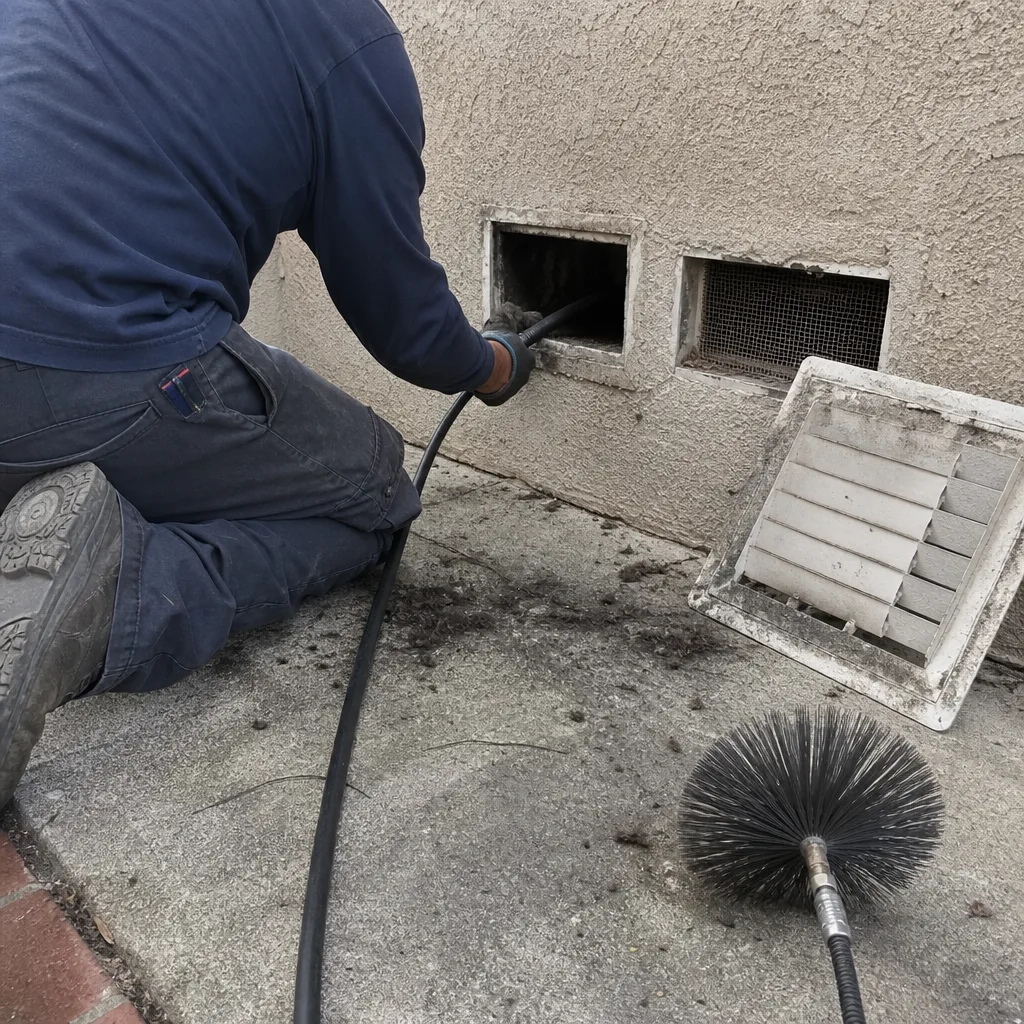 Before
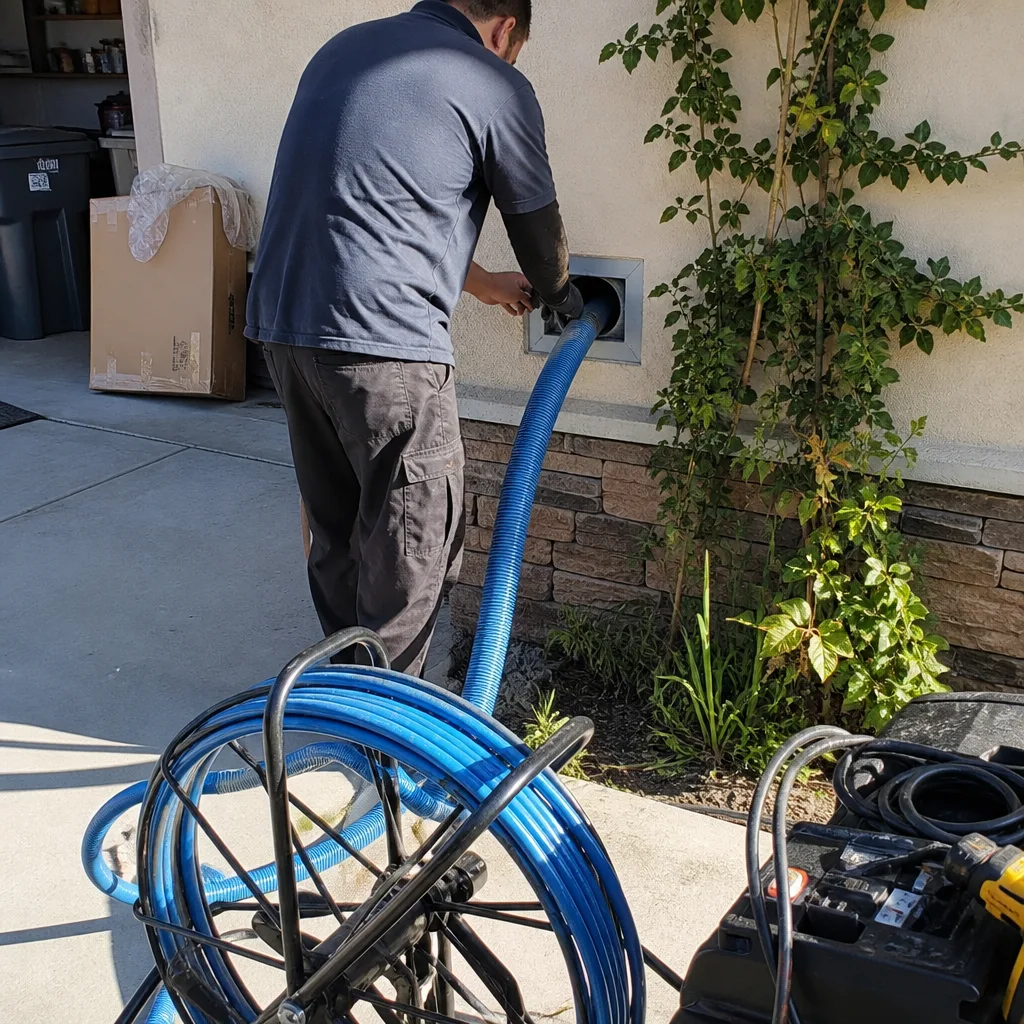 After
After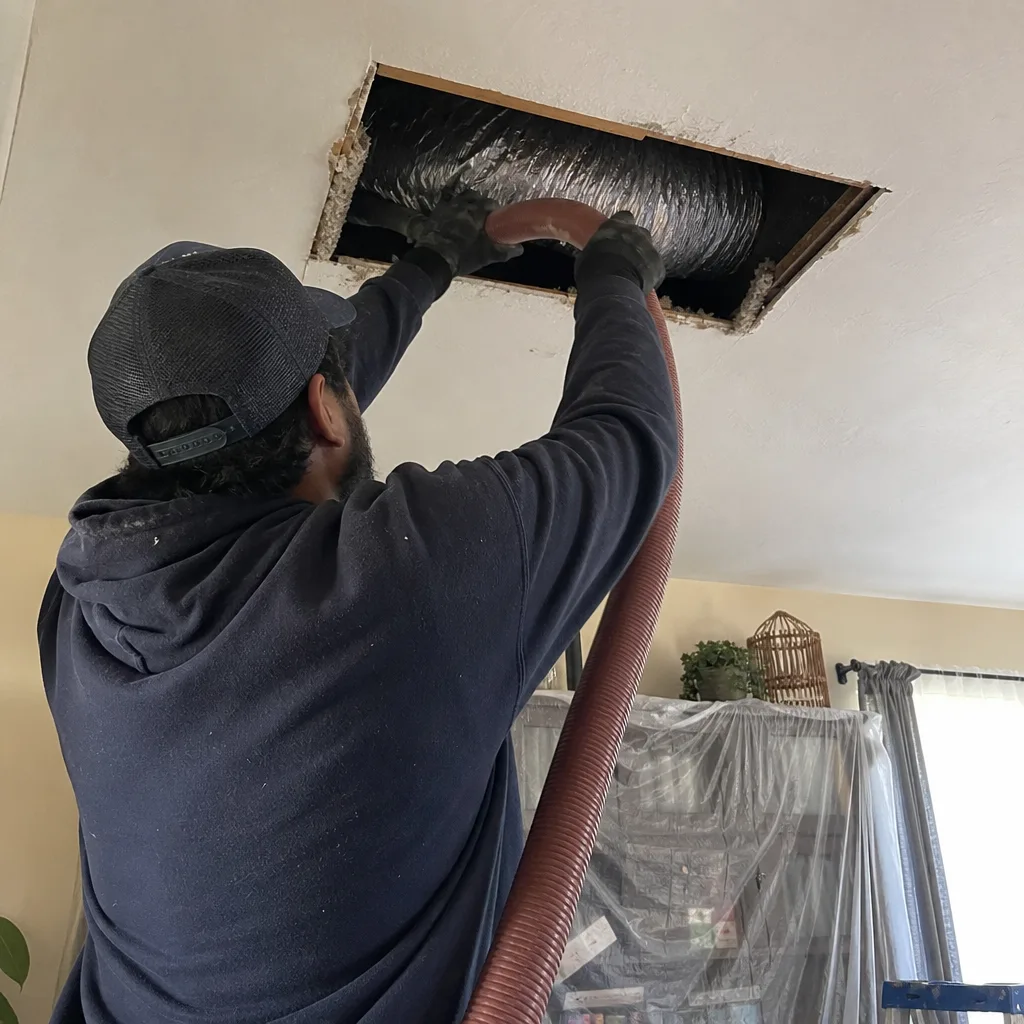 Before
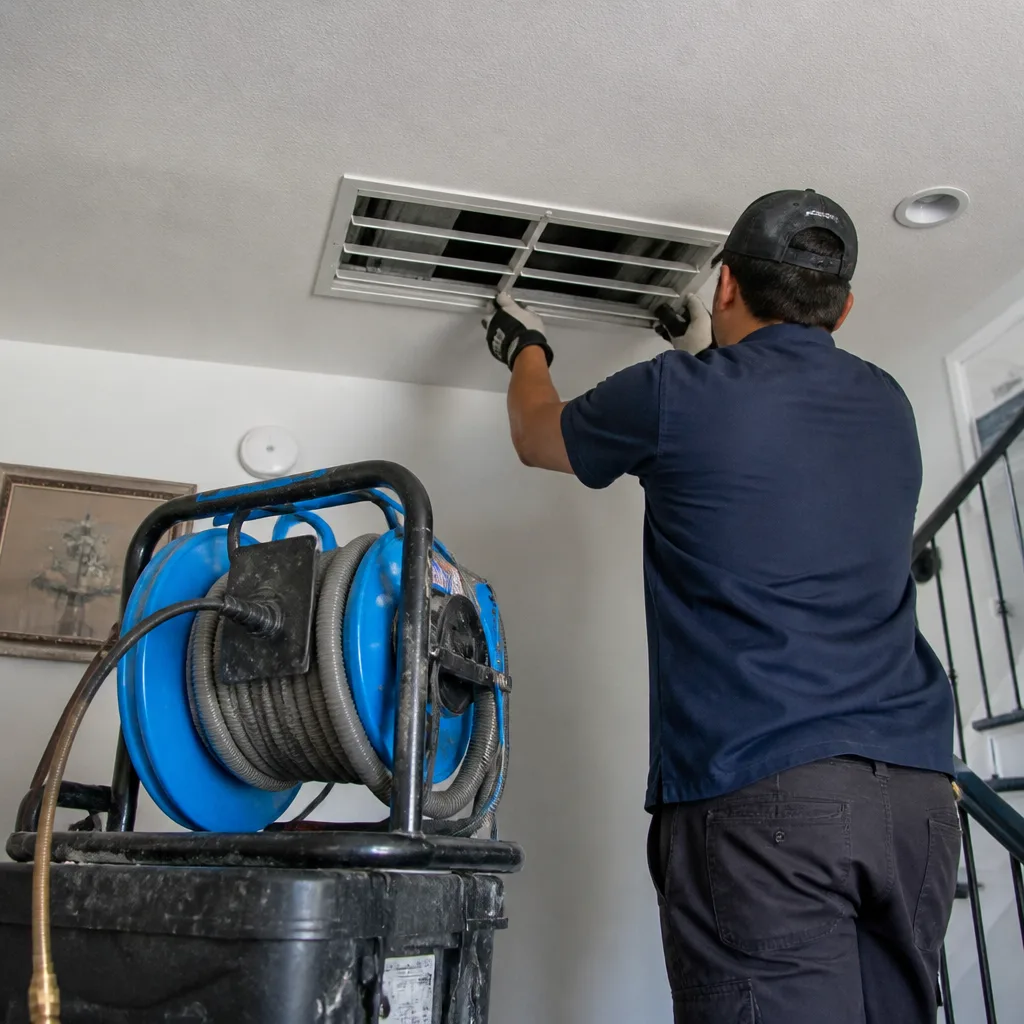 After
After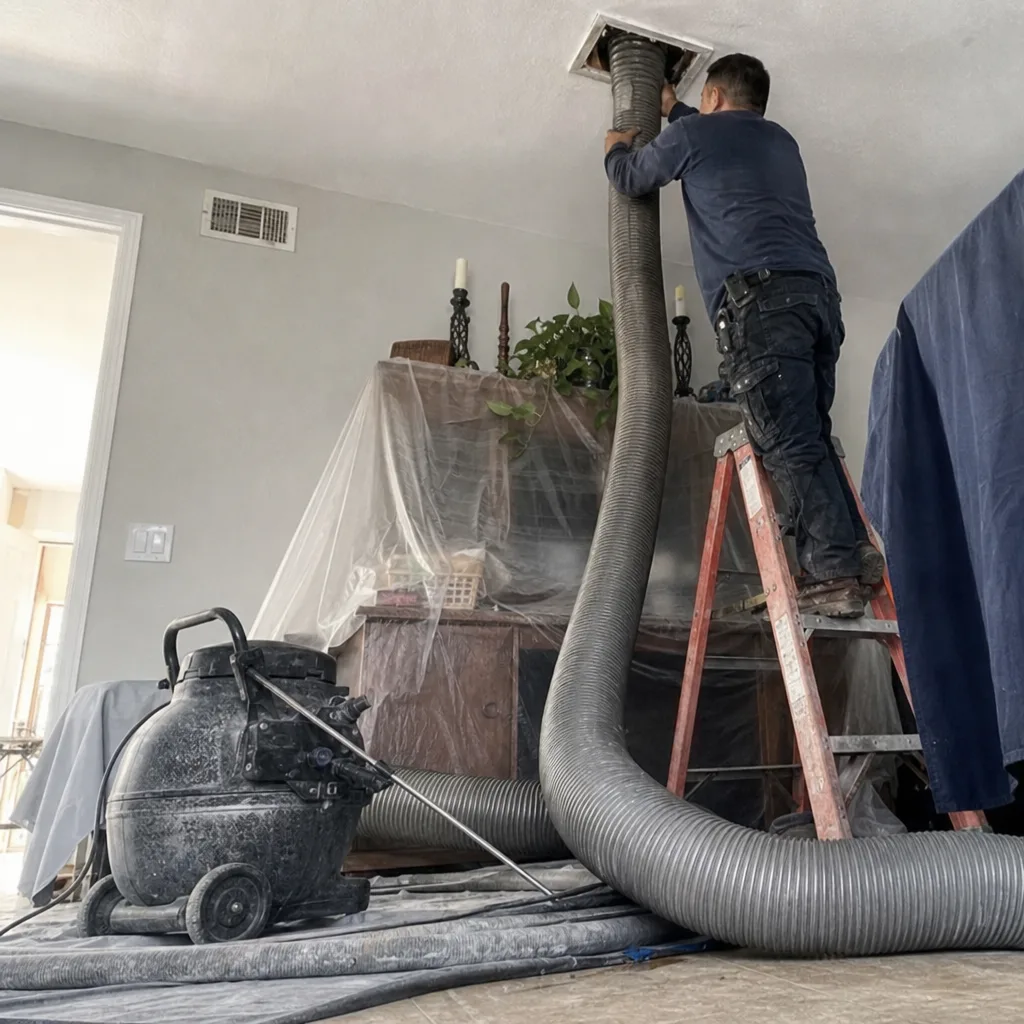 Before
 After
AfterDIY vs Professional Air Duct Cleaning: The Los Angeles Homeowner’s Decision Guide
Brushing a supply vent with a household vacuum on the wrong setting creates a pressure differential that can send settled duct debris backward through the system and into the air handler. That’s the opposite of what you intended, and it’s a mistake we see Los Angeles homeowners make every month. This guide gives you an honest line: what you can safely handle with a weekend and a few basic tools, the specific point where Air Duct Cleaning with professional equipment becomes non-negotiable, and how to think about the cost question without the usual sales pressure. You’ll leave knowing exactly what’s worth doing yourself and what’s worth hiring out.
Quick Answer
For most Los Angeles homes, the honest answer is both, in sequence. You can safely handle register cleaning, accessible return vent vacuuming, and filter replacement yourself with basic tools. But full duct cleaning requires negative-pressure containment equipment that no consumer-grade machine creates, and attempting it without that equipment frequently pushes debris deeper into the system. Professional cleaning in Los Angeles typically runs $350-$600 for a whole-home system, and the DIY alternative costs $150-$300 in equipment that still won’t do the full job.
Table of Contents
- What You Can Safely Do Yourself
- Why Negative-Pressure Containment Matters
- LA Scenarios Where DIY Commonly Goes Wrong
- The Honest Cost Comparison
- DIY Maintenance Between Professional Cleanings
- Equipment Quality: The Real Difference
- Protecting Your Home During the Job
- Common Mistakes to Avoid
- When to Call a Professional
- Frequently Asked Questions
- The Bottom Line
What You Can Safely Do Yourself
There are three maintenance tasks a Los Angeles homeowner can genuinely do well without risking duct damage. None of them require special training, and together they keep your system running better between professional cleanings. The key is understanding what each task actually accomplishes and where it stops helping.
1. Register and Grille Cleaning
Your supply registers and return grilles collect a visible layer of dust, pet hair, and cooking grease over time. Cleaning them is straightforward: remove each register with a screwdriver, wash with warm water and a mild degreaser, dry thoroughly, and reinstall. This is surface cleaning, not duct cleaning, but it improves airflow and keeps loose debris from falling into the duct opening. In homes with pets, we recommend doing this every 4 to 6 weeks during shedding season. Los Angeles homes with central air running year-round tend to collect register buildup faster than homes in cooler climates.
2. Accessible Return Vent Vacuuming
The return vent, usually located on a wall or ceiling near the center of your home, pulls air back toward the HVAC unit. You can safely vacuum the first few inches of the return opening with a household vacuum on a low-suction setting, using a brush attachment. The goal is removing loose surface dust, not reaching deeper. Keep the vacuum on low suction and work gently. High suction near a return can tug on loose duct connections or unsettle debris into the airstream. This is a containment and maintenance task, not a cleaning.
3. Filter Replacement
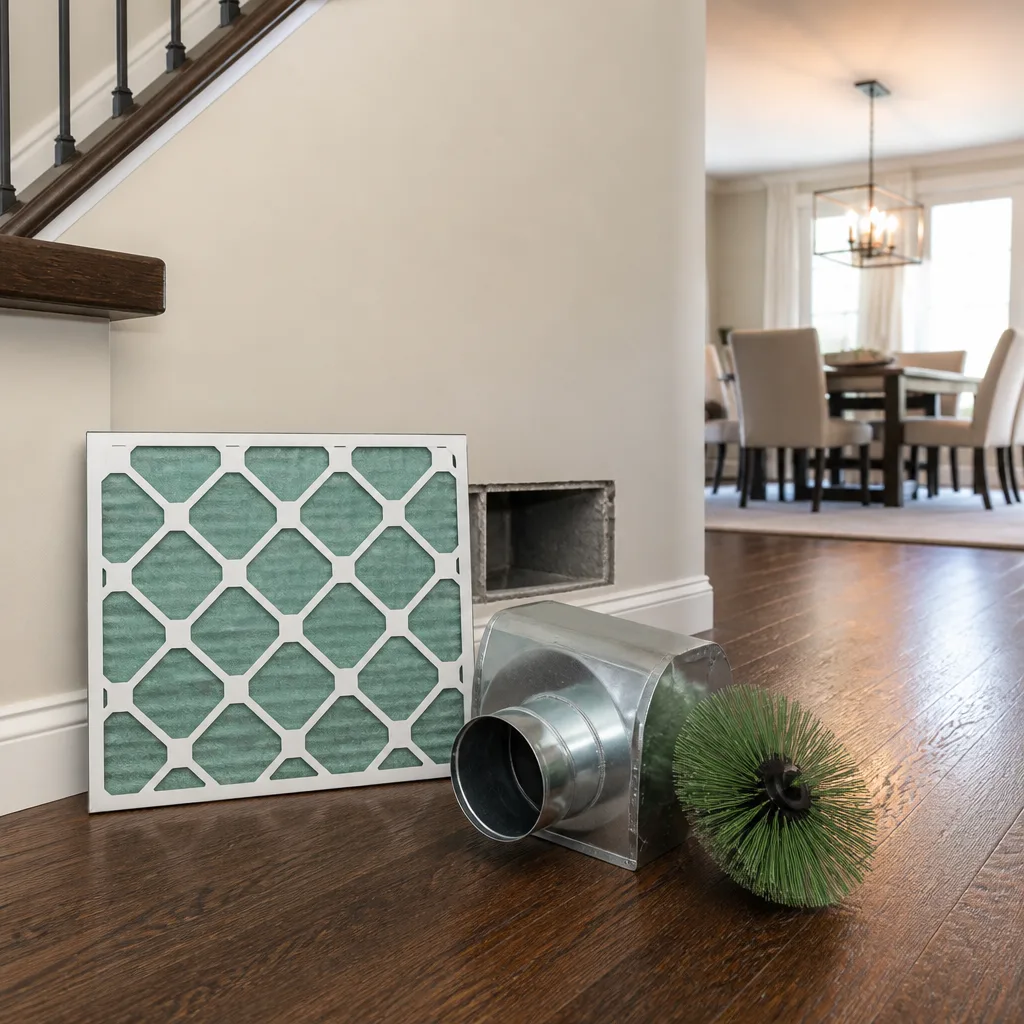
Replacing your HVAC filter is the single most effective DIY maintenance task for any Los Angeles home. A clean filter catches airborne dust, pollen, and pet dander before it reaches your ducts. For most families with kids and pets, a MERV 8 to MERV 11 filter changed every 60 to 90 days works well. Homes near freeway corridors or in wildfire-adjacent areas may want to check filters monthly during fire season. A clogged filter forces your blower to work harder and sends more particulate through the system. Use the pressure difference test: if the filter looks gray and loaded, it’s time. Don’t overdo MERV ratings either. A MERV 13 filter can restrict airflow in older systems not designed for it.
These three tasks, done consistently, meaningfully improve indoor air quality. They don’t replace professional duct cleaning. They buy time between cleanings and keep you familiar with your system’s condition.
Why Negative-Pressure Containment Matters
Professional duct cleaning isn’t just a stronger vacuum. The core principle is negative-pressure containment: creating controlled suction inside the duct system so that loosened debris is pulled out through the collection system rather than pushed into your living space. No consumer-grade shop vac creates this. Here’s why that matters, in plain terms.
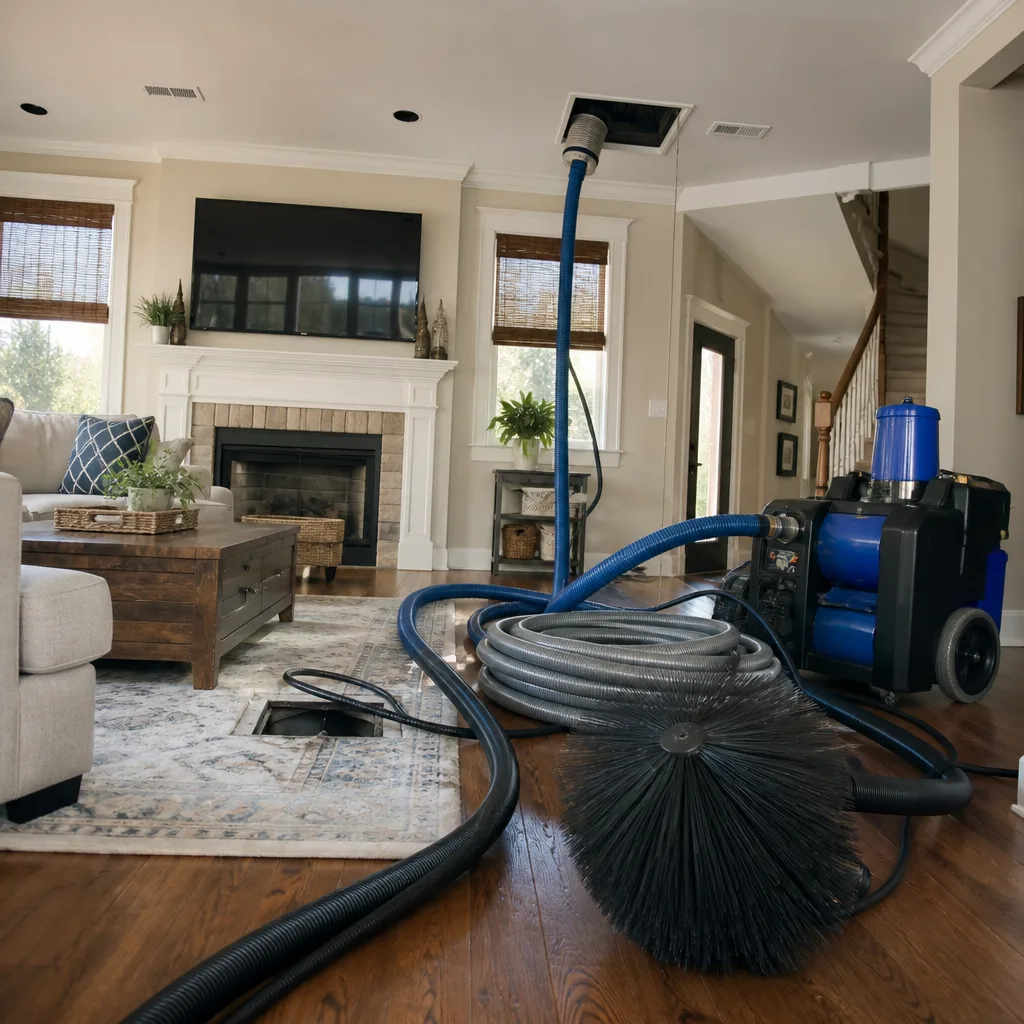
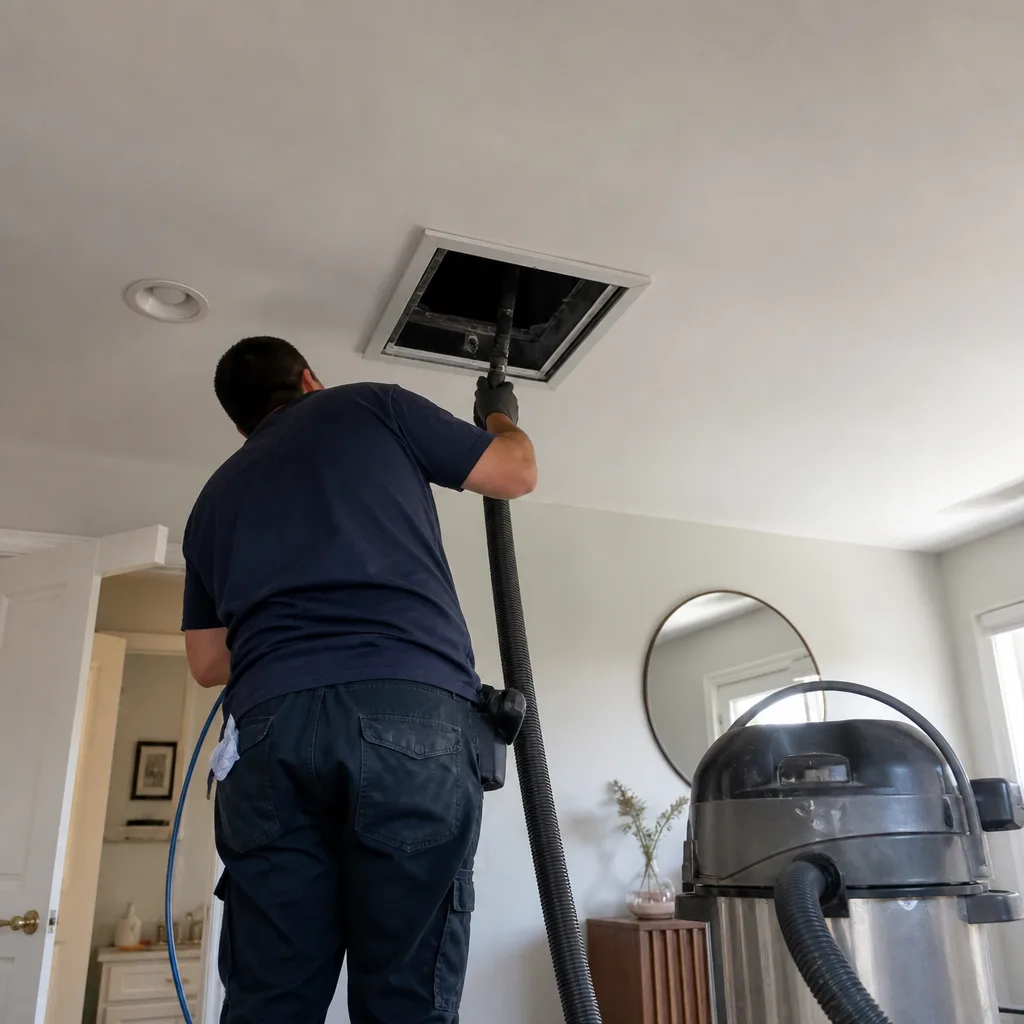
Think of your duct system as a series of connected tubes traveling through walls, floors, and attic space. Dust, dander, and debris settle in these tubes over years, especially at bends and joints. Professional equipment connects a high-powered vacuum unit to the main trunk line, sealing off the system and creating negative air pressure inside the ducts. Technicians then use agitation tools, rotating brushes, and compressed air to loosen debris. Because the system is under negative pressure, everything that comes loose gets carried toward the collection unit. Nothing escapes into your home.
A household vacuum does the opposite. It pulls air from one point, but the rest of the duct system remains open. The suction you create at a single vent is weak and localized. When you brush a vent and vacuum at the same time, you’re stirring debris without a controlled pathway to remove it. The loose particles drift through the duct system, some falling deeper into the trunk line, some pushed toward the air handler, and some circulated back into rooms through other vents.
This is why professional equipment from brands like Rotobrush and Nikro matters. These units are built for containment. They mount to the duct system, seal it, and pull measurable air volume through it. The technician isn’t hoping debris follows the vacuum. The equipment creates conditions where debris has no choice.
LA Scenarios Where DIY Commonly Goes Wrong
Los Angeles isn’t one housing market. It’s a patchwork of home ages, architectural styles, and environmental conditions. Certain local scenarios make DIY duct cleaning riskier than it would be elsewhere. Here are three we see regularly.
Older Homes with Fiberglass Duct Liner
Many Los Angeles homes built before the mid-1980s have duct systems lined with fiberglass insulation board. This liner deteriorates over time, especially in attics that trap heat. A DIY cleaning attempt with a stiff brush or high-pressure air can tear the liner, sending fiberglass particles into the airstream and onto the interior surfaces of the ducts. Once the liner is damaged, it sheds continuously. Professional cleaning uses gentler agitation and inspection first to identify liner condition before any tool touches it. In neighborhoods like West Adams, Eagle Rock, and parts of the San Fernando Valley where pre-1980 construction is common, liner damage during DIY attempts is one of the most expensive mistakes a homeowner can make.
Pet Dander Compaction at Duct Bends
Families with dogs and cats generate dander that behaves differently from ordinary dust. It’s sticky, fine, and accumulates at duct elbows and transitions where airflow changes direction. Once dampened by humidity, which Los Angeles sees during June gloom and rainy winters, dander can compact into a dense layer that resists light brushing. A homeowner who scrubs at these bends with a vent brush often dislodges the dander in chunks, which then break apart and circulate through the home. Professional agitation tools from Guardsman are built to break up compacted material while the system is under negative pressure, so the loosened dander gets collected, not redistributed.
Post-Wildfire Ash Particulate
Wildfire season has become a regular part of Los Angeles life. Homes within several miles of burn zones, including parts of Burbank, Glendale, Pasadena, and the foothill communities, collect fine ash particulate that infiltrates through leaky windows, doors, and the HVAC system itself. Ash is abrasive and extremely fine. It settles in ducts and doesn’t respond well to consumer-grade cleaning attempts. Trying to vacuum it with a shop vac, which lacks HEPA filtration, can aerosolize the ash and worsen indoor air quality for weeks. Professional cleaning uses HEPA-filtered collection systems that capture the fine particles rather than redistributing them.
The Honest Cost Comparison
The cost question is usually framed as DIY equals cheap and professional equals expensive. That framing is incomplete. Here’s the full picture for a typical Los Angeles single-family home, calculated honestly.
DIY Equipment Cost
- Shop vac with HEPA filter and long hose: $80-$150 for a decent unit. Budget models lack the filtration needed to avoid spreading dust.
- Vent brush kit: $25-$50 for flexible brushes that reach into ducts.
- Drill attachment spinning brush: $25-$40 for a basic version.
- Inspection camera or mirror: $30-$80 for a basic borescope that connects to a smartphone.
- Replacement filters and microfiber cloths: $20-$30 per session.
Total DIY investment: roughly $180-$350. After the first session, subsequent sessions cost about $20-$30 in consumables. Time invested: 4 to 6 hours for a first attempt covering all accessible vents, plus cleanup. The equipment won’t create negative-pressure containment, won’t reach the full trunk line, and won’t clean the air handler coil or blower.
Professional Flat-Rate Cost
Professional whole-home duct cleaning in Los Angeles typically runs $350-$600 depending on home size, number of vents, and accessibility. The price includes the full system: supply ducts, return ducts, trunk line, registers, and the air handler. For that price, a legitimate company provides a written quote before work starts, uses containment equipment, and backs the work with a satisfaction guarantee.
The honest comparison looks like this:
- DIY: $180-$350 upfront for equipment, 4-6 hours of labor, partial cleaning, risk of pushing debris deeper or damaging liners, no guarantee.
- Professional: $350-$600 all-inclusive, 2-4 hours of technician time, complete system cleaning with containment, written price agreed before work starts, 365-Day Done Right Promise.
The gap narrows considerably when you account for equipment cost and the value of your weekend. The real difference is the result: a system that’s actually clean versus a system that’s been surface-dusted in places and potentially made worse in others.
DIY Maintenance Between Professional Cleanings
The smartest approach for a Los Angeles homeowner isn’t either/or. It’s using consistent DIY maintenance to extend the value of professional cleanings, so you’re not paying for full service as often. Here’s the sequence that works.
Step 1: Schedule a Professional Baseline Cleaning
If you don’t know when your ducts were last cleaned, start with a professional job. This establishes a clean starting point. Your initial air duct cleaning in Los Angeles should include the full system, not just the visible vents. Once the system is genuinely clean, your DIY maintenance has something to preserve.
Step 2: Set a Quarterly DIY Routine
Every 3 months, do these four things:
- Replace or inspect your HVAC filter. Mark the date on the filter frame with a permanent marker.
- Remove and wash all supply registers and return grilles. This takes 30 minutes in most homes.
- Vacuum the accessible return opening gently with a brush attachment on low suction.
- Check the area around your outdoor condenser unit. Clear leaves, pet hair, and debris from at least 2 feet around it. Trim back plants that have grown close.
Step 3: Plan Professional Renewal Every 3 to 5 Years
For homes with pets and children, professionally cleaning every 3 to 5 years is realistic for most Los Angeles households, though you can follow a Dryer Vent Cleaning Maintenance Schedule: What to Do and When to stay on track. Homes with multiple large dogs, homes near freeways, or homes occupied by someone with significant allergies may benefit from every 2 to 3 years. The DIY maintenance between visits keeps the system from degrading as quickly, so the professional cleanings accomplish more when they happen.
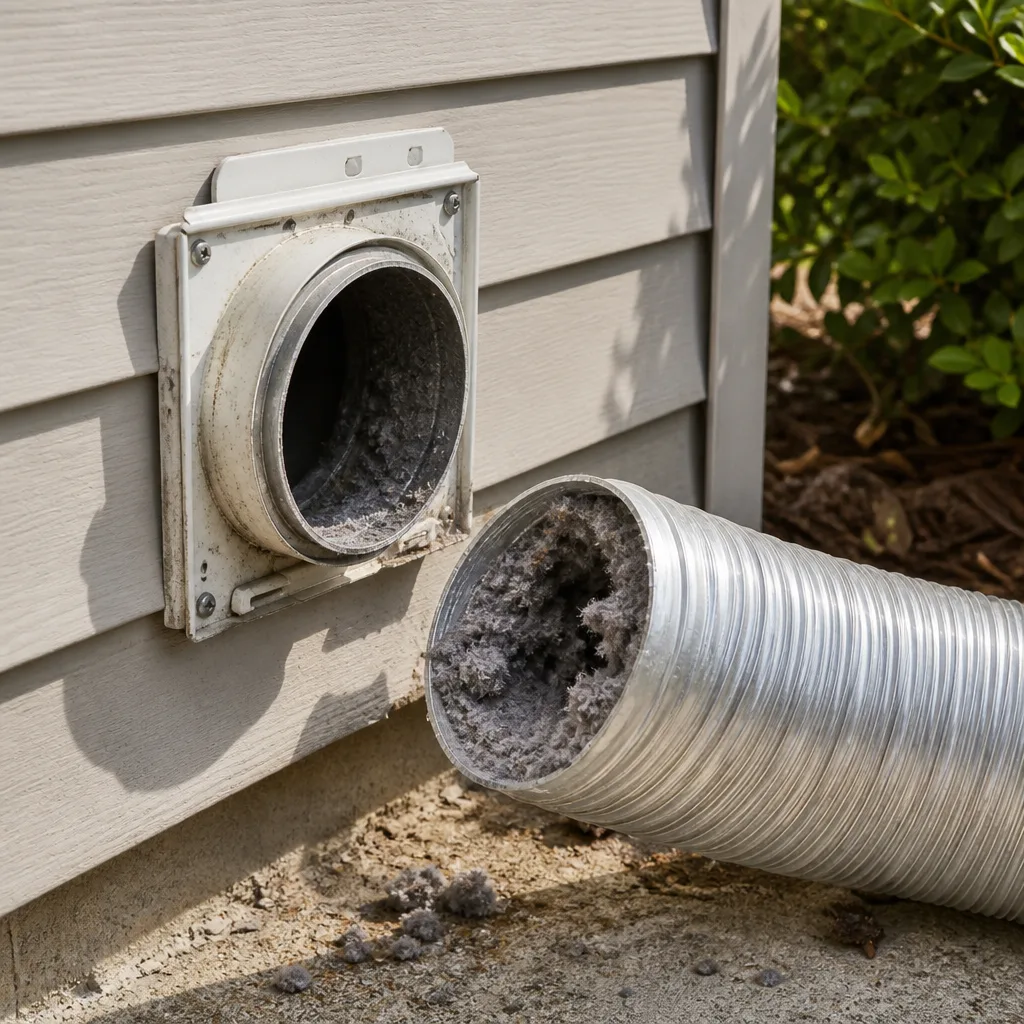
One more thing worth remembering: dryer vents are a separate system and should be cleaned professionally every 12 to 18 months. Our dryer vent cleaning in Los Angeles service handles that separately from duct work, and the schedule matters more than many people realize.
Equipment Quality: The Real Difference
When a professional crew arrives, the equipment they carry defines what’s possible. We use Rotobrush and Nikro equipment because these are the industry standards for negative-pressure duct cleaning. Honeywell air quality monitors help us verify airflow before and after. Guardsman agitation tools handle the stubborn compaction that household vacuums can’t touch. This isn’t brand-dropping for its own sake. The equipment determines whether the job actually works.
A Rotobrush system mounts to the duct trunk and produces the suction required to pull loosened debris out of the entire system. A household vacuum produces a fraction of that airflow, and even a powerful shop vac lacks the sealed mounting system that makes containment possible. The difference is the same as comparing a pressure washer to a garden hose for cleaning a driveway. Both move water. Only one actually cleans.
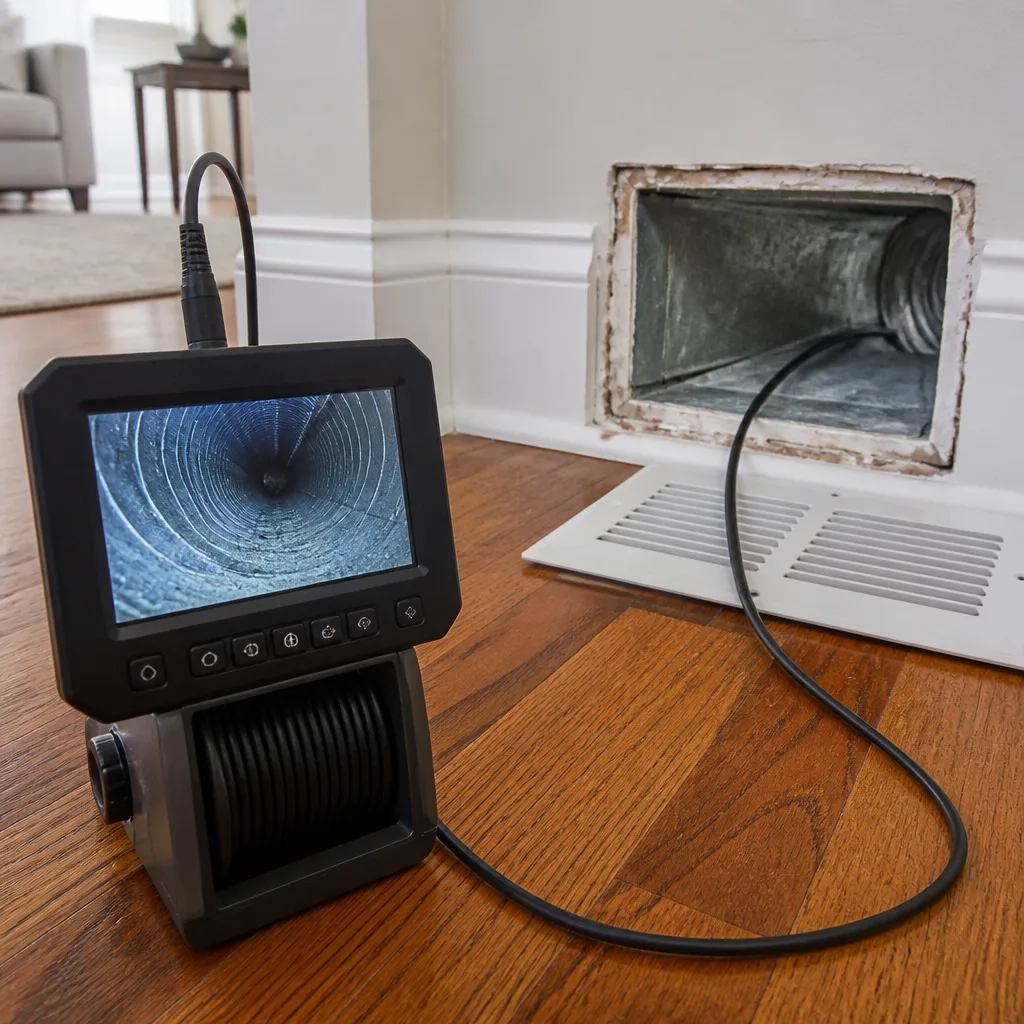
Professional equipment also includes inspection cameras that show the technician what’s inside the ducts before, during, and after cleaning. This matters because you should know what was in there and what came out. A technician who can’t show you the condition of your ducts before and after isn’t adding much value beyond what you could do with a brush and a vacuum.
Protecting Your Home During the Job
Whether you do it yourself or hire it out, the condition of your home after the job matters as much as the condition of your ducts. For families with kids and pets, this is often the deciding factor between DIY and professional.
A proper professional cleaning includes floor protection from the moment the crew walks in: shoe covers on every pair of boots, drop cloths under work areas, and a cleanup process that leaves the home looking better than before the crew arrived. The Cedewell Care Promise, mentioned on our Morton’s Air Duct Cleaning home page, formalizes this: shoe covers and drop cloths on every visit, a written price before any work starts, and a photo of the clean-up before the crew leaves.
When you do it yourself, you’re responsible for all of that. You’ll be moving furniture, working on ladders near walls, and vacuuming the dust that inevitably escapes from registers you open. If you have a toddler napping or a dog that follows you from room to room, the DIY path comes with its own household disruption. Some homeowners enjoy the process. Most don’t.
Paul Adeyemi, who owns Morton’s Air Duct Cleaning, puts it simply: the job should not create more cleanup than it solves. That’s the standard we work to on every visit, and it’s a standard worth holding any contractor to, in Los Angeles or anywhere else.
Common Mistakes to Avoid
- Using high suction on a household vacuum near duct openings. High suction at a vent can pull loose connections apart or unsettle debris into the airstream. Always use low suction and a gentle brush attachment when working near duct openings.
- Brushing aggressively into vents without containment. Every pass of a brush without negative pressure behind it moves some debris deeper into the system. What you can’t see is where the loosened dust goes.
- Believing a furnace filter protects your ducts from all debris. A filter catches what passes through the air handler. It doesn’t stop dust from entering through leaky return ducts, gaps in the system, or debris that settles during construction and renovation work.
- Using chemical duct sprays sold at hardware stores. Many of these products coat the inside of ducts with a sticky residue that attracts dust faster than bare metal. They don’t clean anything. Avoid them entirely.
- Attempting to clean flexible ductwork with a stiff brush. Flex duct tears easily, and a punctured flex duct in an attic quietly leaks conditioned air into a space where it does nothing. Los Angeles attics get hot enough that even small leaks cost real money over a cooling season.
- Waiting until you can see dust on the registers to think about duct cleaning. By the time dust is visible at the registers, the system has already been circulating particulate through the home for months. Regular filter checks and register cleaning catch problems earlier.
- Hiring the cheapest quote without asking about equipment and process. If a company can’t tell you what equipment they use and how they’ll contain the job, the low price is a warning sign, not a deal. Ask what brands they run, how they protect your floors, and whether the price is fixed before work starts.
When to Call a Professional
Call a professional when any of these apply: your home hasn’t had a full duct cleaning in 5 or more years; you have pets that shed heavily; someone in the household has allergies or respiratory sensitivities; you’ve recently completed renovation work that produced drywall dust or sawdust; you live in a wildfire-adjacent area and noticed ash or smoke odor in the house; or you can see visible mold growth on or around registers. These are the situations where partial DIY efforts genuinely make things worse, not better. Morton’s Air Duct Cleaning offers free estimates in Los Angeles - call (323) 918-4345 and we’ll give you a written price before any work starts.
Frequently Asked Questions
Professional whole-home duct cleaning in Los Angeles typically costs $350-$600, depending on the size of the home, the number of vents, and how accessible the system is. The price should include the full system: supply and return ducts, trunk line, registers, and the air handler. A legitimate company gives you a written price before work starts, with no per-vent upcharges or surprises on the invoice. Call (323) 918-4345 for an exact quote - estimates are free.
Cheaper quotes usually mean one of three things: the company is selling a base price and will upsell once they’re inside, they’re using household-grade equipment that can’t create proper containment, or they’re not actually cleaning the full system. Some low-cost operators clean only the accessible register openings and call it done. Others don’t carry liability insurance that covers duct damage. A legitimately complete cleaning at bargain prices doesn’t pencil out in Los Angeles because equipment, insurance, and background-checked labor all cost real money. Ask what equipment they run, how they contain the job, and whether the price is fixed before work starts.
Ask for before-and-after photos of the inside of your ducts. Any professional with inspection cameras can show you exactly what the ducts looked like before cleaning and what they look like after. We provide this on every job, along with a photo of the clean-up before the crew leaves. If a company can’t show you the inside of your ducts, they’re asking you to take the result on faith, and that’s not a reasonable thing to ask of a homeowner paying $350-$600.
For most Los Angeles homes with pets and children, every 3 to 5 years is realistic. Homes with multiple large dogs, homes near major freeway corridors, or homes with allergy-sensitive occupants may benefit from cleaning every 2 to 3 years. Between professional cleanings, quarterly DIY maintenance - filter replacement, register washing, and gentle return vent vacuuming - keeps the system from degrading as quickly.
Yes. The most common damage we see from DIY attempts is torn flexible ductwork from stiff brushes, damaged fiberglass duct liner in older Los Angeles homes from aggressive agitation, and debris pushed deeper into the trunk line from vacuuming without containment. These problems cost more to repair than the money saved by skipping professional cleaning. If you stick to register cleaning, accessible return vent vacuuming on low suction, and filter replacement, the risk is minimal.
At minimum, do these three things quarterly: replace or inspect your HVAC filter, wash your supply registers and return grilles, and vacuum the accessible return opening gently on low suction. For homes with pets, check the filter monthly during shedding season. For homes near wildfire burn zones, check the filter monthly during fire season. These habits won’t deep clean your ducts, but they buy time between professional cleanings and keep the system from accumulating debris as quickly.
The Bottom Line
The DIY versus professional question isn’t really about saving money. It’s about understanding where your effort genuinely helps and where it actively makes things worse. You can safely handle register cleaning, return vent vacuuming, and filter replacement. You cannot safely clean the interior of your duct system without professional containment equipment, and as our DIY vs Professional Dryer Vent Cleaning: What’s Safe to Do Yourself guide explains, attempting it with household tools in a Los Angeles home - especially an older home with fiberglass liner, a pet household with compacted dander, or a home near wildfire zones - carries real risk. The practical path is a professional baseline cleaning, followed by consistent DIY maintenance to extend it. If you’re ready for an honest assessment of your system, call (323) 918-4345 for a free estimate. We’ll give you a written price before any work starts, and if it’s not done right, we’ll make it right. That’s the standard every Los Angeles homeowner should expect.
Written by Paul Adeyemi, Owner at Morton’s Air Duct Cleaning, serving Los Angeles since 2005.