
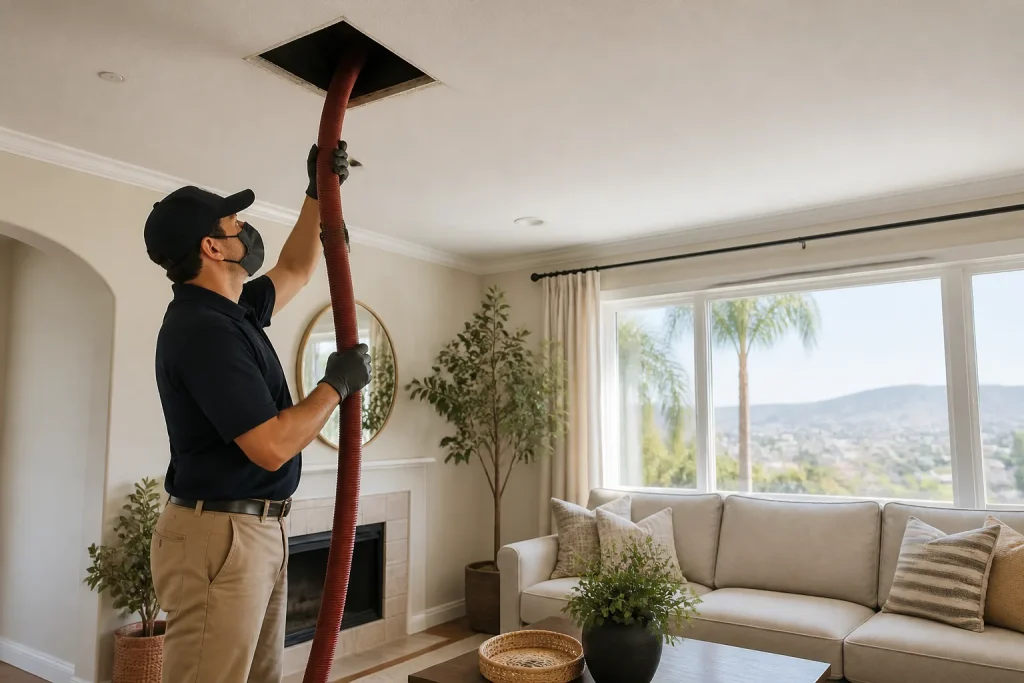
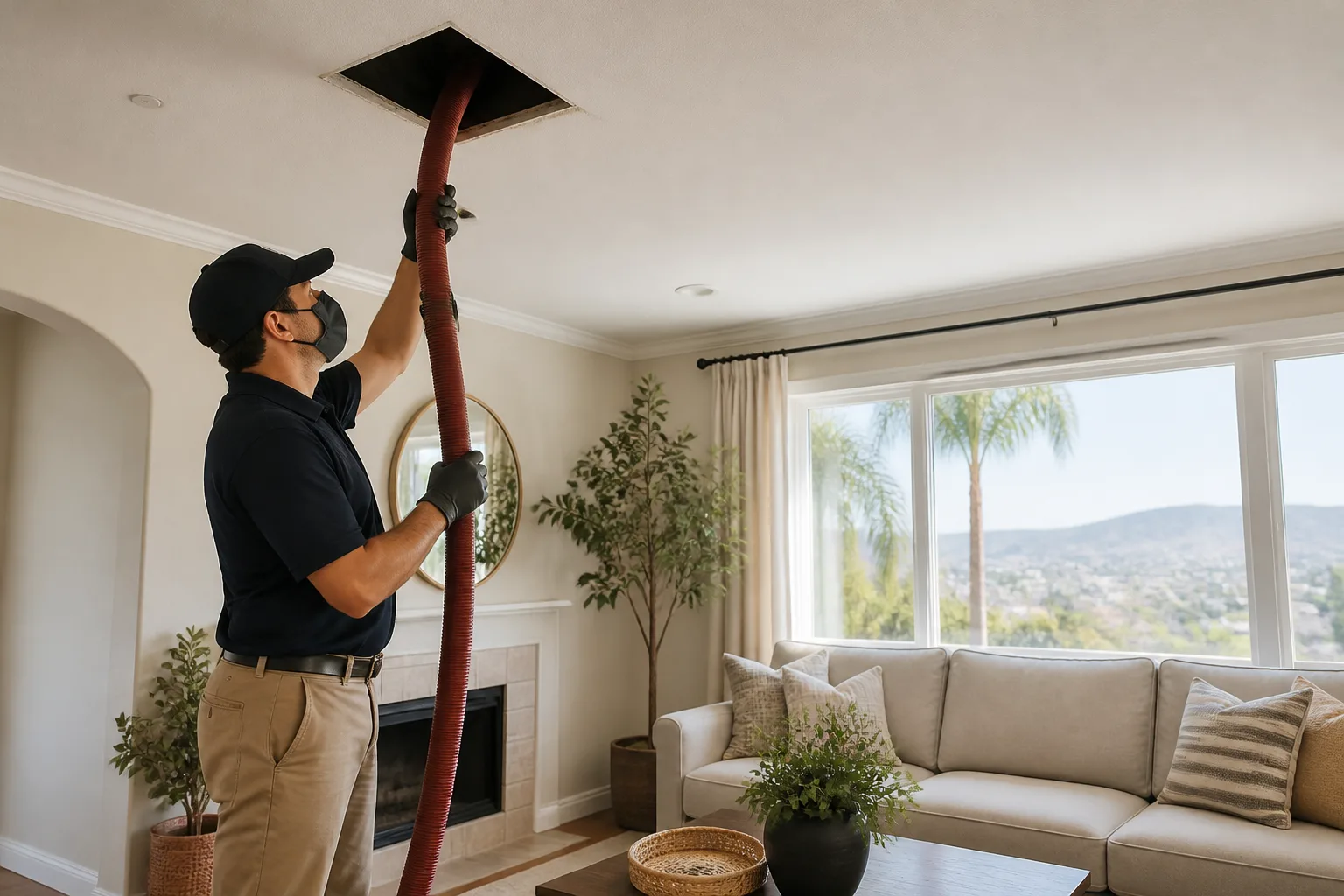
Spring Air Duct Cleaning Checklist for Los Angeles Homes
Spring air duct cleaning in Los Angeles isn’t just about dust. It’s about wildfire ash residue, the pollen that kicks up when jacarandas and acacias bloom, and the shift from inconsistent winter heating to months of constant AC. A Los Angeles-specific checklist should check for smoke particulate, upgrade filtration before allergy season peaks in March, and include a dryer vent inspection because winter lint builds up fast. Here’s what actually matters if you’re getting your ducts cleaned this spring in LA.
If you’d rather skip the checklist and have someone handle it, call Morton’s Air Duct Cleaning at (323) 918-4345. But if you want to know what to look for before anyone steps inside your home, read on.
Why Los Angeles Spring Cleaning Is Different From Everywhere Else
Most spring duct cleaning checklists are written for places with four real seasons. Minnesota guides talk about furnace shutdowns and humidifier drainage. Los Angeles homeowners deal with something else entirely: a heating system that ran sporadically, wildfire smoke sitting in the return plenum, and a pollen season that starts earlier and hits harder than almost anywhere in the country.
Here’s the thing about LA heating habits. Most homes run the heat maybe 20 or 30 mornings a year, not 120 days straight. That means dust and particulate settle into ducts during long idle stretches, then get blown around suddenly when the heat kicks on during a cold snap. Then the system goes quiet again, and that dust settles right back down. It’s not constant circulation like you’d get in Chicago. It’s intermittent puffing that leaves debris sitting in odd places: the return duct, the first few feet of supply runs, the filter housing itself.
Add a wildfire smoke event and the picture changes. Smoke particles are much finer than household dust. They travel deeper into duct systems, settle into the blower wheel, and coat the evaporator coil. A standard spring refresh cleaning, the kind that knocks loose visible dust and moves on, doesn’t address ash that’s adhered to surfaces. If your home experienced smoke infiltration this winter, the cleaning protocol needs to be more thorough: longer agitation on each run, coil inspection, and a filter assessment before the AC load hits in April and May.
Los Angeles homes also have a specific layout reality: many were built with the furnace in a closet or attic, not a basement. That means duct runs are shorter, tighter, and sometimes harder to access. A technician working in a crawlspace under a 1950s ranch in the Valley deals with different conditions than someone in a new-build with a conditioned attic. When you call for cleaning, mention the year your home was built and where the system sits. It helps the crew plan access and protection before they arrive.
The Smoke Check: What to Look For Before You Schedule
Wildfire smoke travels through neighborhoods differently depending on wind, proximity to burn zones, and how well the home is sealed. Some Los Angeles homes a mile from a fire saw almost no interior smoke. Others three miles away got a heavy dose because the wind pushed it straight into their windows and HVAC intake.
The quickest way to check whether smoke entered your system is visual. Pull the filter and look at it. If there’s a gray or brown film that smears when you rub it, that’s smoke particulate, not normal household dust. Normal dust is gray and fluffy. Smoke residue is darker, finer, and sticks to surfaces in a way dust doesn’t.
Second check: look at the return grille. If there’s a dark film around the edges that doesn’t wipe off easily, that’s another smoke indicator. Same goes for the supply registers in bedrooms, especially if they were closed during the fire and then opened later. We pulled a return grille out of a house in Sherman Oaks last week that looked clean at a glance, but the back side was streaked with fine black film from a December smoke event the homeowner had forgotten about.
If you see smoke signs, tell the cleaning company before they quote. It changes the labor involved. A smoke-contaminated system needs longer contact time with the rotary brush and the negative air machine running at full pressure. It’s not a scare tactic; it’s just different work. At Morton’s, we quote that work the same way we quote everything: a written price before any work starts, after an on-site look at the system.
Also relevant: if the HVAC ran during the smoke event, the blower motor and coil were moving that particulate through the whole system. This is when you ask about a coil inspection, not just duct brushing. A dirty coil reduces AC efficiency right when Los Angeles starts needing real cooling. That’s a spring-specific concern you don’t find in northern checklists.
The LA Pollen Calendar and Your Filter Upgrade
Los Angeles spring allergens follow a different rhythm than the national allergy maps suggest. Here’s what’s actually blooming March through May in this city:
- March: Bermuda grass starts pollinating early, especially after the first warm week. This is the most common grass allergen in Los Angeles and it kicks in earlier than most people expect.
- April: Jacaranda trees begin their purple bloom. Beautiful, and absolutely brutal for anyone sensitive to tree pollen. Acacia joins around the same time, especially in hillside neighborhoods like Echo Park and Silver Lake.
- May: Olive and mulberry pollen peak. Olive trees are everywhere in Los Angeles, from parkways in Mid-City to backyards in the Valley. Their pollen is heavy and sticky and finds its way inside through shoes and window screens.
If anyone in the house has spring allergies, the filter matters more than the cleaning schedule. A basic fiberglass filter catches large particles and not much else. A MERV 11 or MERV 13 pleated filter, which is what we recommend for most Los Angeles homes with pets and kids, captures a meaningful percentage of pollen and smoke particulate. The tradeoff is airflow: higher MERV means more resistance, and some older systems weren’t designed for that. A technician should check static pressure before you jump from a MERV 8 to a MERV 13. It’s a five-minute check that prevents freeze-ups and blower strain later.
One specific Los Angeles tip: window screens are a pollen delivery system. When jacaranda and olive pollen are at their peak, wind blows the stuff onto screens, then through open windows onto furniture and into return ducts. If you air the house out on cool nights, which most Angelenos do instead of running AC, you’re pulling pollen inside. Clean the screens in March. It’s the cheapest HVAC maintenance step nobody puts on a checklist.
For filter brands, we use Honeywell and Aprilaire media when the system calls for it, and we’ve had good results with both in LA homes. The right filter depends on your blower’s capability, not just what’s on sale at the hardware store.
Why Your Dryer Vent Should Be on the Same Spring List
Duct cleaning and dryer vent cleaning are two different services, but spring is the practical time to handle both. Here’s why.
Winter in Los Angeles means more long-sleeve clothes, more blankets, more towels, and more laundry. Lint builds up in the dryer vent regardless of how clean the lint trap is kept. The trap catches maybe 70% of what the dryer produces. The rest goes into the vent line and accumulates at bends, joints, and the exterior termination point.
Spring is the natural second check for most families because the HVAC service is already happening anyway. It’s more efficient to have both done in one visit than to schedule a separate call in August, when the dryer is running half as often and nobody’s thinking about it.
The signs that your dryer vent needs attention are the same in Los Angeles as anywhere: longer drying times, a burning smell when the dryer runs, heavy lint buildup around the exterior vent flap, or a laundry room that gets unusually warm. But Los Angeles has a specific vent configuration quirk: many dryers vent through the roof, not through an exterior wall. Roof vents are harder to inspect from the ground and more likely to get blocked by birds, debris, or just a slow accumulation that nobody notices until drying times double.
If you have a roof vent, spring is the right time to have it checked. The rainy season is ending, so any access work is safer, and the vent gets cleaned before the summer heat makes attic access unpleasant for everyone involved. Paul Adeyemi, the owner of Morton’s, recommends viewing duct cleaning and dryer vent cleaning in Los Angeles as a single spring package for homes with kids and pets. The dryer vent fills with lint, and the ducts fill with dust, pollen, and pet hair. Clean them both and the house smells different. It’s that simple.
The Changeover: Heat to AC, and What Actually Needs Attention
In Los Angeles, the transition from heating to cooling is less about seasonal ritual and more about the first genuinely hot week. That week is usually in April or May, and it’s when systems that sat mostly idle all winter get asked to perform at full capacity.
The changeover checklist is short and specific:
- Filter replacement: Pull the old one, note the size, replace with a MERV appropriate for your system. If you’re unsure, bring the old one to the hardware store or have the technician note the size on the invoice for next time.
- Coil inspection: The evaporator coil sits above the furnace and is responsible for cooling. If it’s coated in dust and pet hair, your AC works harder and your energy bill goes up. This is a visible inspection, not a repair.
- Vent cover cleaning: Supply registers and return grilles collect dust and pet hair on the visible surface. Pop them off, wash with warm water and dish soap, dry them, and replace. This is a 20-minute project for a standard 3-bedroom home and makes an immediate visual difference.
- Thermostat check: Switch from heat to cool and let it run for ten minutes. Listen for odd noises and check that air is flowing from every register. If one room isn’t getting air, that’s a duct issue, not a thermostat issue.
One Los Angeles-specific note: if your system has a whole-house fan or an attic fan, that equipment was likely unused all winter and is now full of dust. It’s outside the scope of duct cleaning, but a visual check is free and worth doing before the first heat wave.
For this transition, the equipment matters. We run Rotobrush and Nikro systems for duct cleaning, and the difference between professional-grade agitation with negative air pressure and a cheap rotary brush from a rental yard is real. When you’re paying for cleaning, the tool should have enough torque to dislodge dust that’s been compacted against duct walls over multiple spring pollen seasons. That’s what the pro equipment does.
Room-by-Room Prep Before the Technician Arrives
A duct cleaning visit stands or falls on how the house is prepared. The technician needs clear access to every return and supply register, and the family needs protection for the things that matter: pets, kids’ toys, food, and anything fragile on shelves near vents.
Here’s the room-by-room checklist we give every Los Angeles client before arrival. It takes 30 minutes and noticeably improves the outcome:
- Living room: Move anything fragile off shelves near the return grille. Duct cleaning creates temporary negative pressure that pulls air toward the register, which can disturb light objects. Also, close the doors to adjacent rooms you don’t want disturbed.
- Bedrooms: Pick up stuffed animals and clothes from the floor directly under supply vents. If the kids have a canopy or anything draped near a ceiling register, move it. Keep pets out of the rooms being worked on.
- Kitchen: Cover or put away any open food, and close the kitchen door if you can. The cleaning process displaces a small amount of dust into the room air; it settles within an hour, but open food shouldn’t be sitting out.
- Hallway and access areas: Clear a path from the front door to the furnace or air handler. If the system is in a hall closet, empty the floor of that closet. If it’s in the attic or crawlspace, clear the access hatch area.
- Pet areas: Secure pets in a room that isn’t being cleaned, or take them out for a walk during the service. The machine noise can upset anxious animals. We use quieter equipment where possible and work around nap schedules when clients mention them, but pets will be calmer if they’re not in the room with a running vacuum system.
At Morton’s, the crew wears shoe covers and lays drop cloths before any equipment comes inside. That’s standard on every job, not a special request. The goal is that the house looks the same after the cleaning as it did before, except cleaner inside the ducts. We also send a photo of the clean-up before the crew leaves, so there’s visual proof the floors, the pet areas, and the work zone were left as found.
And while the technician is there, ask them to look at the dryer vent connection if it’s accessible. Checking that flex hose for kinks or tears takes a minute and catches problems before they become drying-time complaints in the fall.
If you want help with any of this, air duct cleaning in Los Angeles is what we do every day. We’re also available through the main Morton’s Air Duct Cleaning home page for schedule questions, pricing, or just to talk through what your system needs.
The Bottom Line
Spring air duct cleaning in Los Angeles should start with a smoke check: look at the filter and the return grille for fine dark residue. Then upgrade your filter for the LA pollen season, which hits in March and peaks through May with Bermuda grass, jacaranda, acacia, olive, and mulberry. Include the dryer vent in the spring visit, especially if yours vents through the roof. And prepare each room before the technician arrives so the visit is faster and the house stays protected.
If any of this feels like more than you want to tackle, call Morton’s Air Duct Cleaning at (323) 918-4345 for a free estimate. We give you a written price before any work starts, we use pro equipment from Rotobrush and Nikro, and every job is backed by a 365-Day Done Right Promise. That’s the whole point: you know the plan and the price before anyone touches anything.
Frequently Asked Questions
Air duct cleaning in Los Angeles typically costs $350 to $700 for a standard single-family home, depending on system size, access difficulty, and whether smoke damage or heavy debris requires additional time. That’s the difference between a small home with an easily accessed system and a larger home with rooftop access and multiple returns. Call (323) 918-4345 for a written quote before any work starts.
Pull the filter and look at it. If it’s coated in gray or brown film that smears when rubbed, or if you see dust accumulating around the supply registers shortly after cleaning, the ducts are dirty. In Los Angeles specifically, a clamp light shined into a register can show a fine dust layer or smoke residue on the duct walls. If you see visible gray fuzz or dark streaking, that’s enough to justify cleaning.
Cheaper quotes usually mean shorter cleaning time, lower-powered equipment, or fewer access points serviced. Some companies quote a low base price and add fees for each vent, each return, or coil cleaning. The better approach is one flat price for the whole system, agreed in writing before the work starts. Ask whether the quote includes the coil, the main trunk line, and all accessible supply runs, because that’s where the difference hides.
Not effectively. The ducts are only part of the system; the real dirt sits in the trunk line, the blower housing, and the coil, none of which a homeowner can reach without professional equipment. A shop vac and a brush attachment will knock loose some visible debris near the registers, but it won’t remove the fine particulate that circulates through the whole house when the AC runs. Professional cleaning uses negative air pressure and rotary agitation to remove what you can’t reach.
Written by Paul Adeyemi, Owner at Morton’s Air Duct Cleaning, serving Los Angeles since 2005.
Need Air Duct Cleaning Help?
Call Morton's Air Duct Cleaning - licensed & insured, here with fast after-hours help in Los Angeles.
(323) 918-4345