
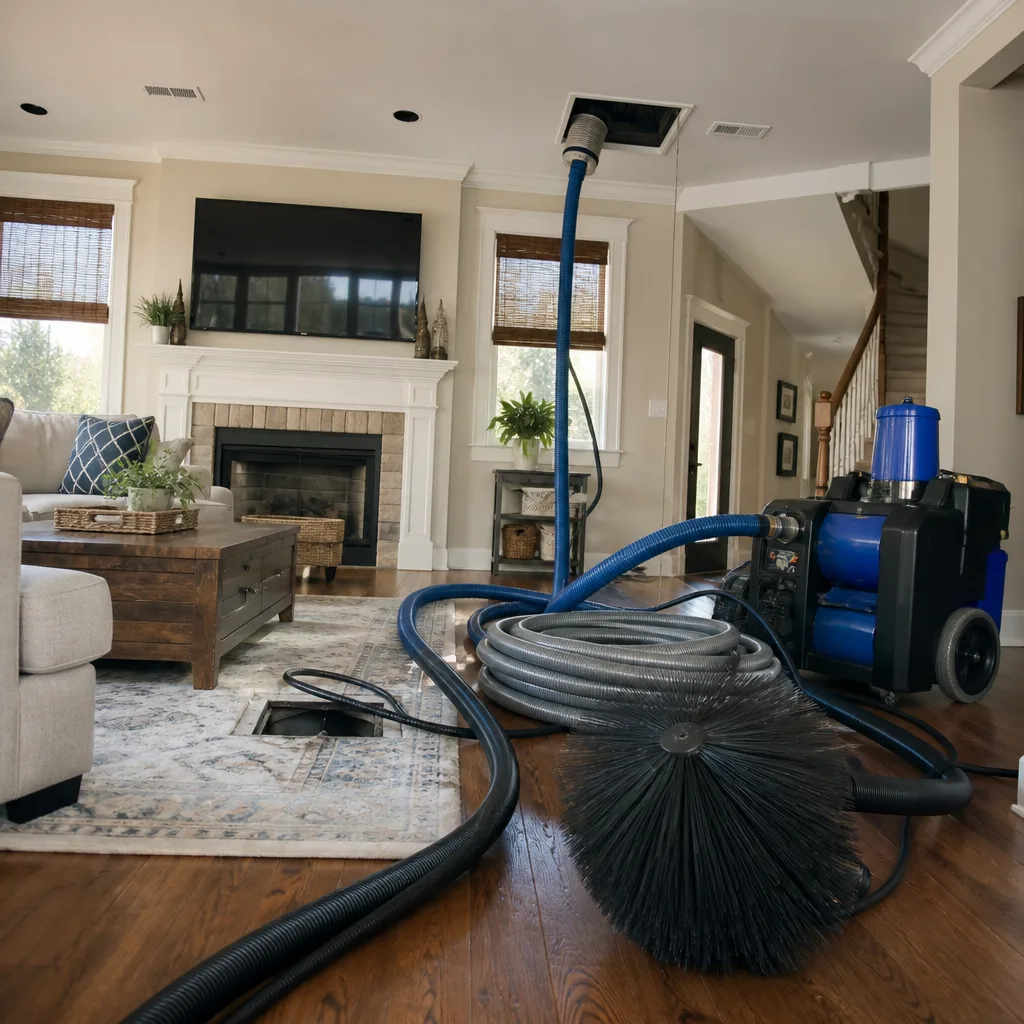
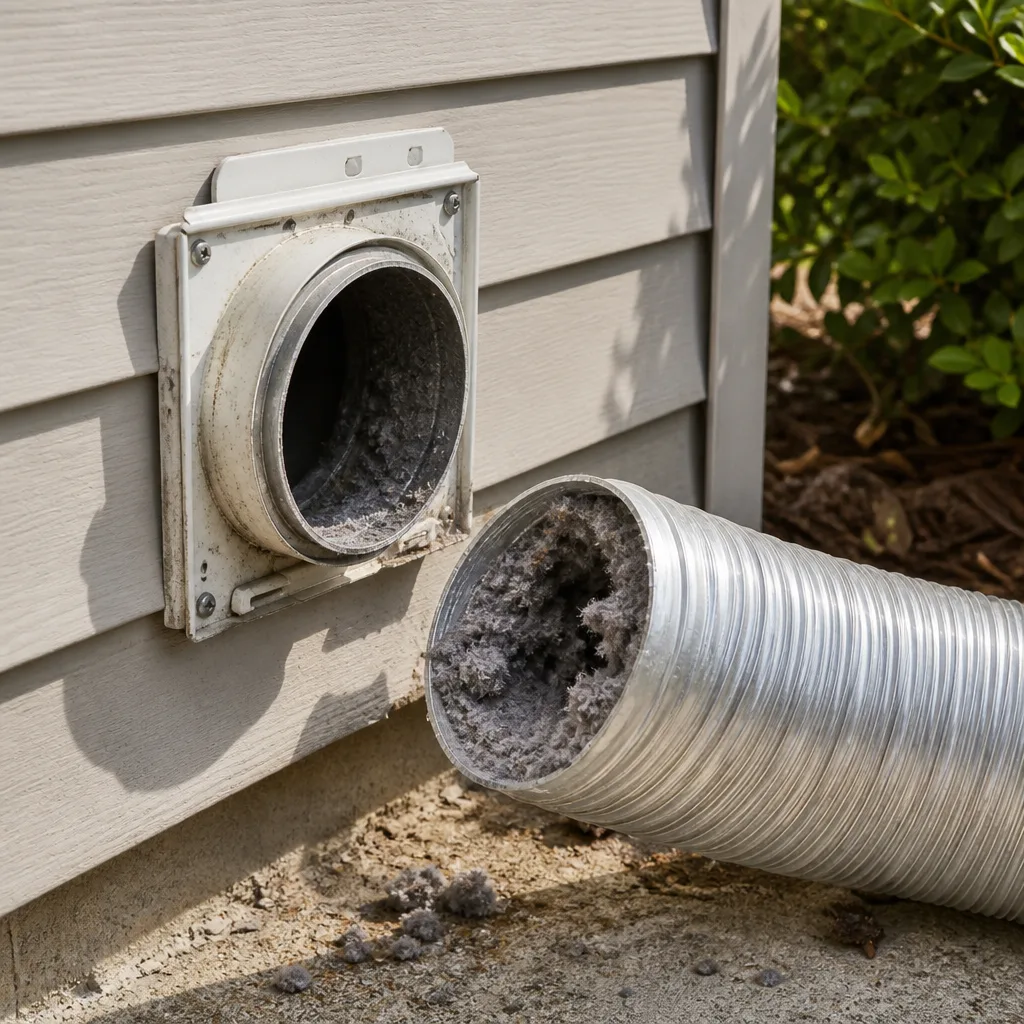
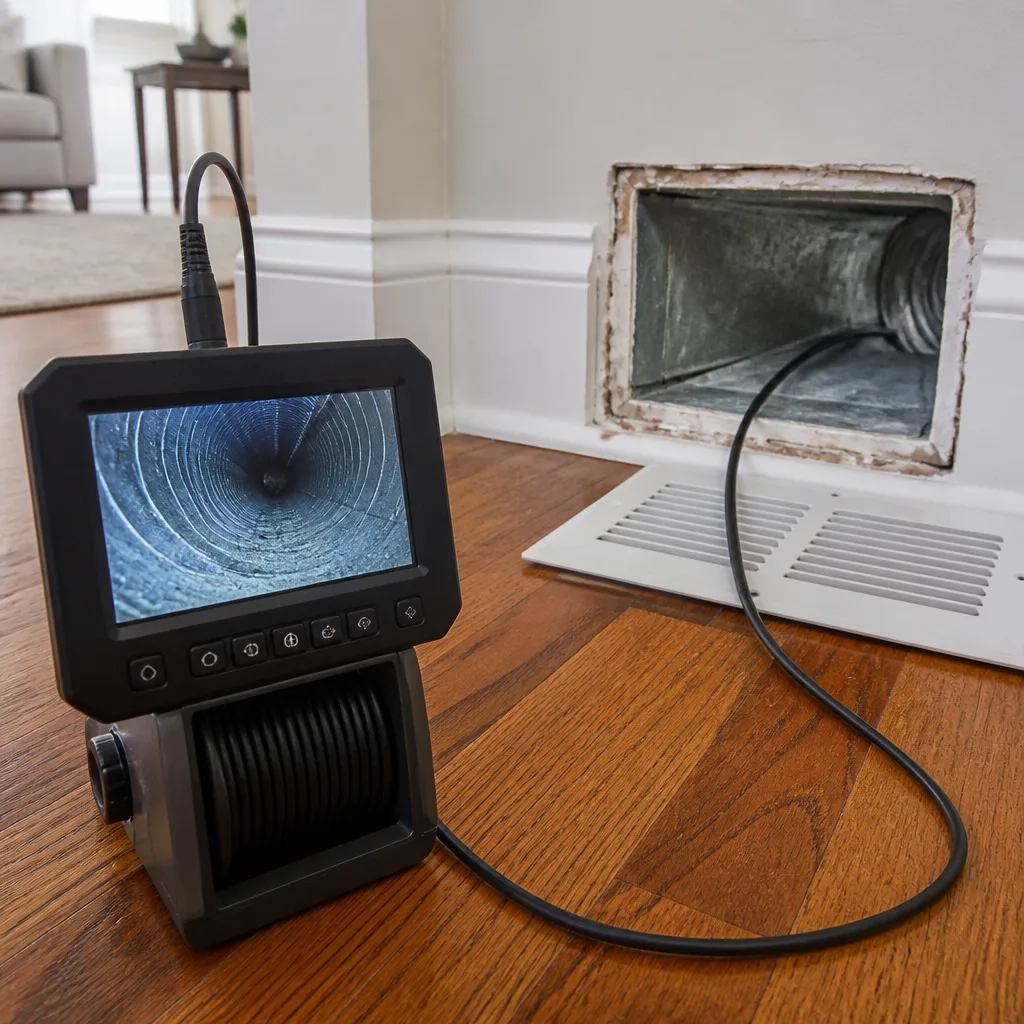
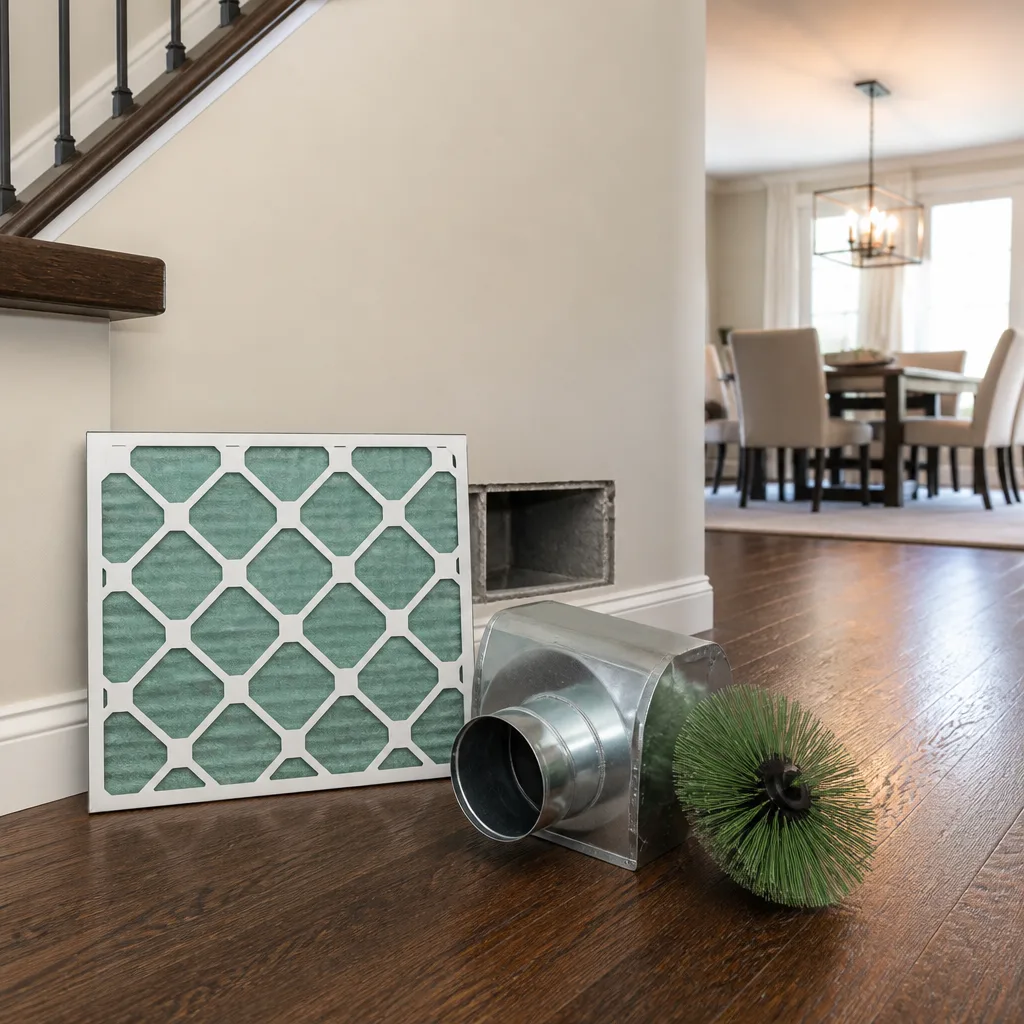
Whole-system duct and dryer vent check with before-and-after photos - you see exactly what came out of your vents
That "$99 whole-house special" is a bait ad - the real number appears once they are in your hallway, or the "clean" is a shop-vac at the register. We photograph the inside of your ducts before and after instead.
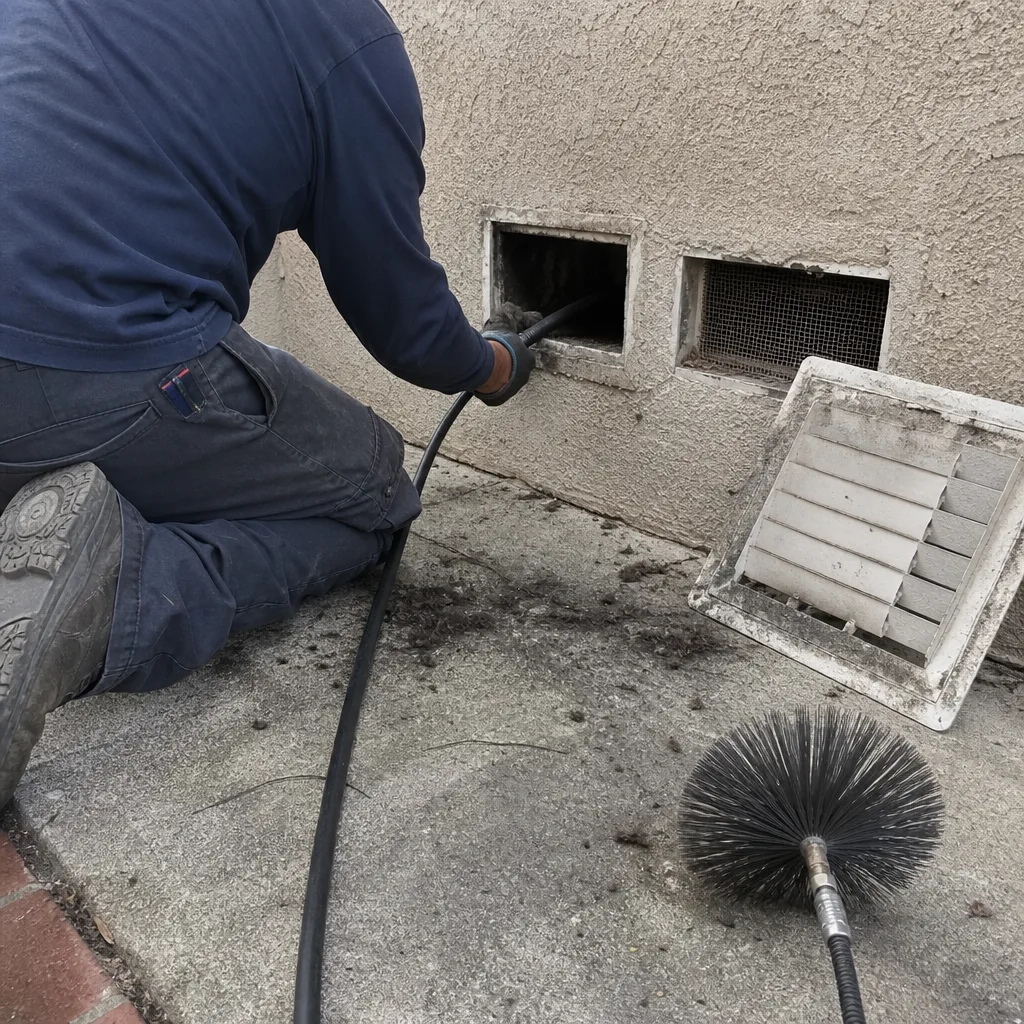 Before
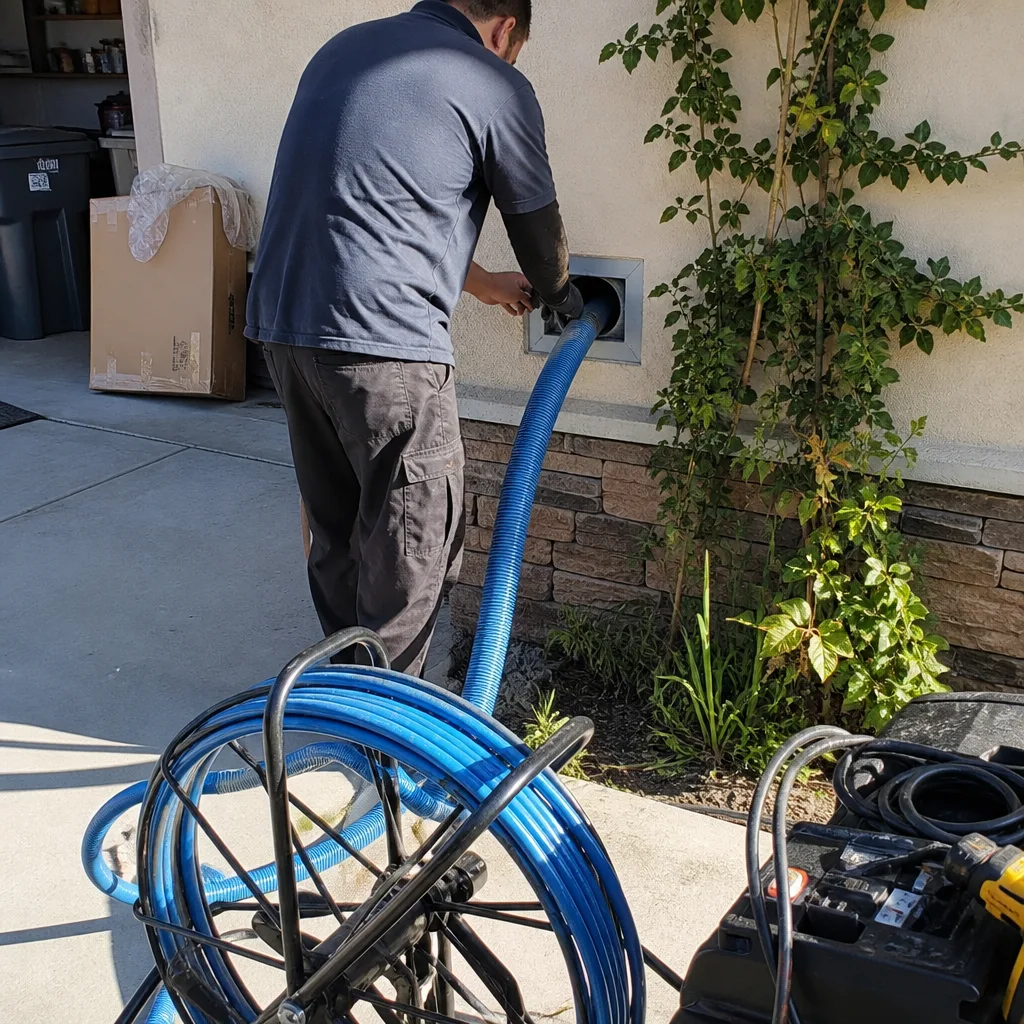 After
After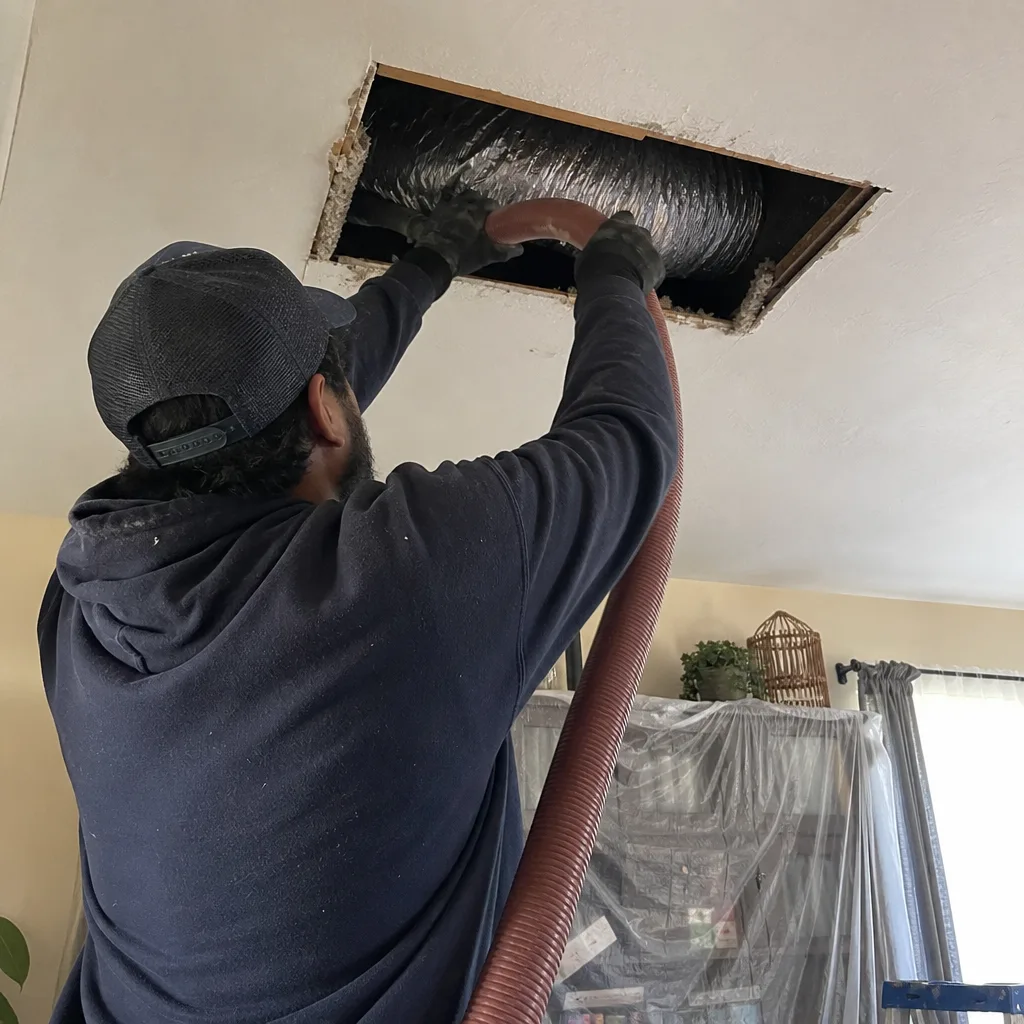 Before
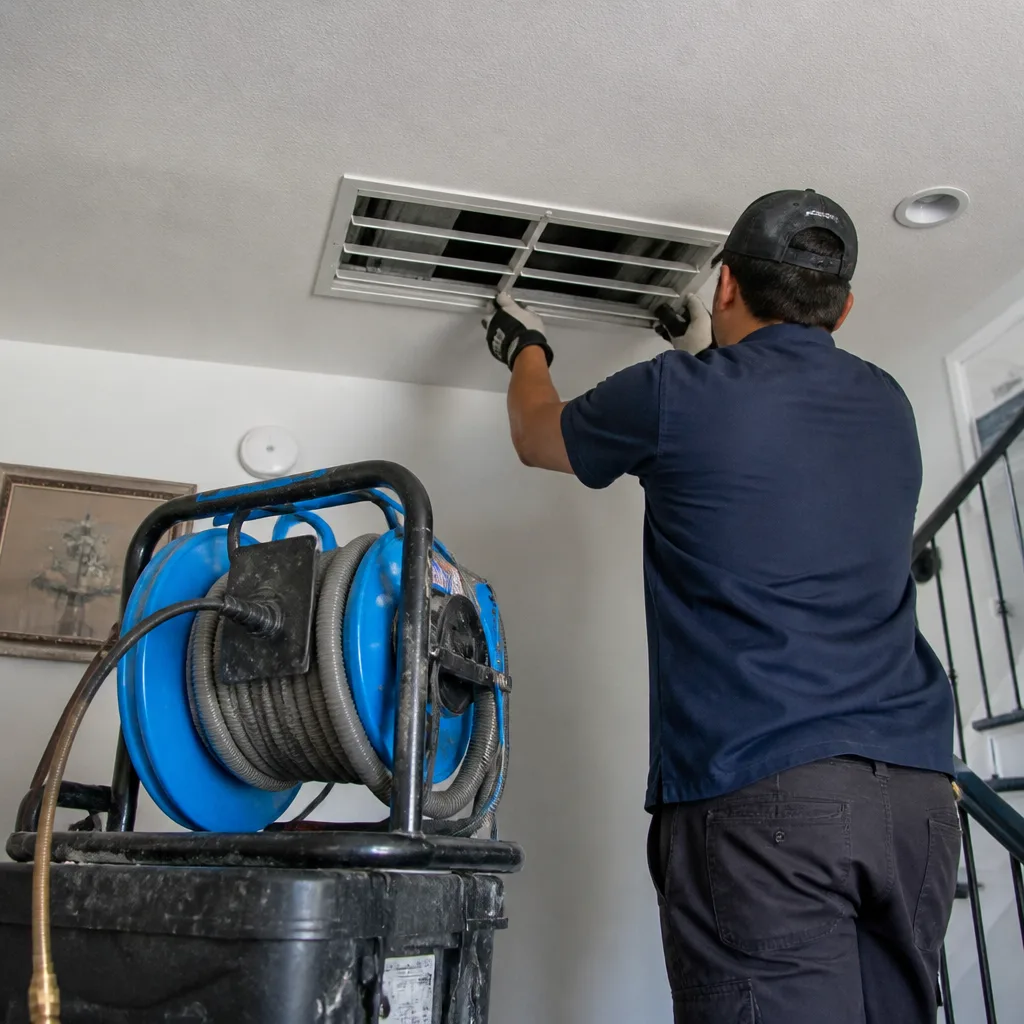 After
After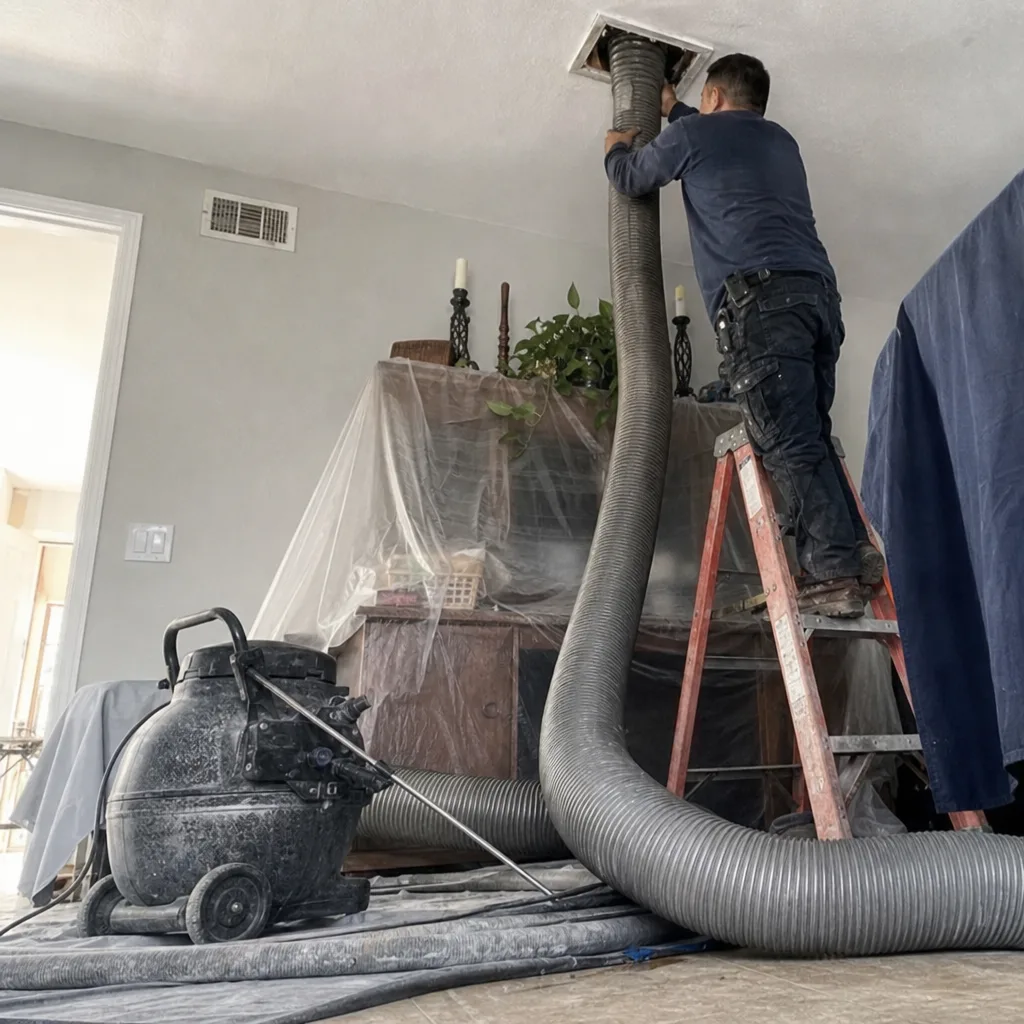 Before
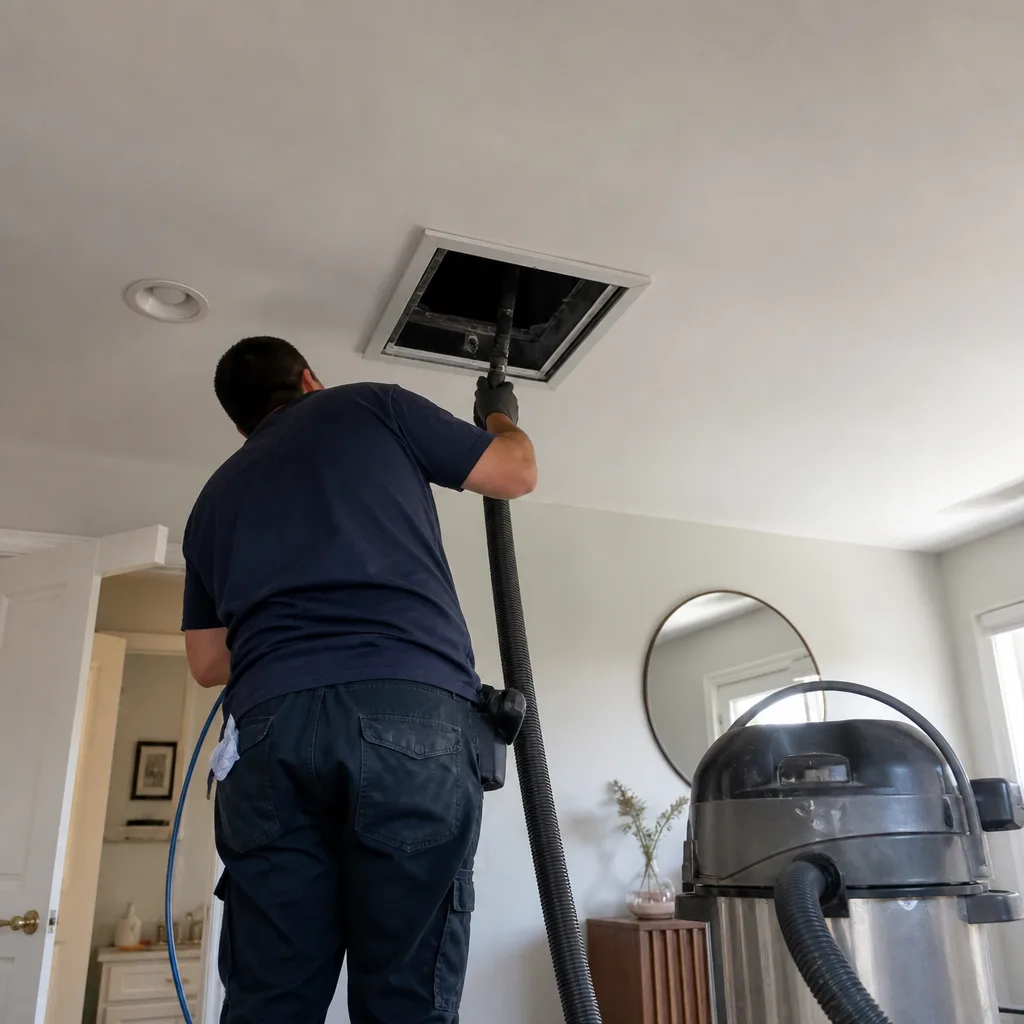 After
AfterNikro Vent Sanitizing: The Los Angeles Owner’s Guide
If your Nikro vent sanitizing system has a failed or failing part, we stock the replacement components you need and install them across Los Angeles for a typical total of $185 to $420, parts and labor included. Most swap-outs take under an hour once we’re on site, and we carry the most common Nikro sanitizing parts on our trucks so there’s no second trip for the majority of jobs. You’ll usually know something’s off before the system quits entirely: the sanitizer stops misting evenly, the UV bulb flickers or darkens, or the unit hums but doesn’t actually sanitize the air stream.
We’re not affiliated with Nikro as a manufacturer, but we’ve worked with their equipment long enough to know which parts fail first and which replacements actually hold up. If you’re calling around Los Angeles trying to explain what you need over the phone, this page will give you the language, the part numbers, and the honest pricing so you know what to expect before anyone shows up.
Which Nikro Models This Applies To
Nikro builds vent sanitizing equipment in two main lines that we see regularly in Los Angeles homes: the compact in-duct units (commonly the UV series designed to mount inside the return plenum or supply trunk) and the portable sanitizing machines used by duct cleaning crews. The parts are not interchangeable between these two families, and that’s the first compatibility gotcha worth knowing. A UV bulb for a portable unit will not fit an in-duct unit, even if the connector looks close.
To identify your part correctly, start with the label on the unit itself. Nikro stamps a model number and a serial number on every sanitizing component, usually on the back plate or the side of the housing. If the label is faded or missing, measure the bulb length in inches and the diameter in eighths. Nikro UV bulbs for in-duct models typically run 8 to 14 inches in length with a bi-pin base, while the portable units use twin-tube lamps that twist-lock into a ballast housing. Getting either number wrong means another trip and another delay, so we ask for a photo of the label or the old part before we quote anything.
On the OEM versus aftermarket question: for Nikro specifically, we recommend OEM bulbs and ballasts when the unit is under warranty or when the part is safety-critical, like UV shields and seals. Nikro’s OEM quartz sleeves are matched to the housing dimensions, and a generic sleeve that’s a millimeter off will leak UV light into the cabinet. For non-critical items like mounting brackets, fasteners, and basic wiring pigtails, quality aftermarket equivalents work fine and cost 30-40% less. We’ll tell you which is which when we quote.
We use Nikro equipment as part of our own professional toolset at Morton’s, alongside Rotobrush and Abatement Technologies gear, so we’re familiar with these parts from daily hands-on use, not just from a catalog. Paul Adeyemi learned ventilation mechanics at Los Angeles Trade-Technical College, and that grounding helps when a Nikro unit has been retrofitted into an older LA forced-air system that was never designed for it.
Signs Your Nikro Vent Sanitizing Is Failing
- The bulb is dark or flickering. UV-C bulbs lose output over time. A bulb that’s gone completely dark usually means the filament has failed. A flickering bulb points to a ballast that’s starting to go, not just a bulb issue. Either way, the sanitizer isn’t doing its job.
- You can’t hear the unit cycle on. In-duct sanitizers are quiet by design, but there’s usually a faint click when the unit powers up with the system fan. No click at all often means a failed ballast or a tripped internal fuse, both of which are replaceable parts.
- There’s a faint ozone smell near the return grill. This isn’t normal for UV sanitizers and usually means a seal or gasket has degraded, letting UV light hit materials it shouldn’t. It’s not dangerous in small amounts, but it means the housing seal needs replacing.
- The indicator light or LCD shows an error code. Many Nikro units have a diagnostic readout. If you’re seeing a code, write it down before you call. That code tells us the difference between a ten-minute ballast swap and a full replacement.
- The unit runs, but your ducts still smell musty after cleaning. This usually means the bulb is old enough that it’s producing far less UV-C than it did when new. UV bulbs lose meaningful output after 9,000 to 12,000 hours of use, which works out to roughly a year of continuous operation. In Los Angeles, where AC runs hard through summer, bulbs burn through faster than in cooler climates.
Replacement Cost & What’s Included
Here’s what a Nikro vent sanitizing repair typically costs in Los Angeles, based on the jobs we’ve done across the basin this year:
- UV bulb replacement only: $185 to $260 installed, depending on the bulb length and model.
- Ballast replacement: $240 to $330 installed, including testing the full circuit before we leave.
- Bulb + ballast together: $310 to $420 installed. If both are near end of life, we’ll tell you so you don’t pay for a second visit later.
- Housing seal or gasket replacement: $90 to $140 installed, done while we’re already on site for another repair.
The range depends on your unit’s model year and whether it’s an in-duct or portable unit. Older in-duct Nikro models use proprietary ballast connectors that cost more than the newer twist-lock fittings. We quote you a written price before any work starts, every time, and that price includes the part, the labor, testing, and a photo of the completed work before we leave. You’ll never open an invoice and find a surprise line item.
Every Nikro repair we do in Los Angeles is covered by our 365-Day Done Right Promise. If the part fails or the repair doesn’t hold within a year of the service date, we come back and make it right. No fine print.
DIY or Call Us?
There are a few things you can safely check before calling: locate the unit, note the model number, and take a photo of the error code or the bulb condition. That gives us enough to quote accurately. You can also safely wipe dust off the exterior housing with a dry cloth while the unit is unplugged.
What we don’t recommend is opening the housing. UV sanitizers in Nikro units are shielded, but the quartz sleeve and bulb can shatter if handled wrong, and the ballast holds a charge even after the unit is unplugged. A cracked quartz sleeve also exposes wiring to UV light, which degrades insulation faster than most people expect. It’s a simple job with the right parts and the right precautions, but it’s not a casual afternoon project. If you’re in Los Angeles and want this handled without a second thought, call us at (323) 918-4345 and we’ll bring the part with us.
FAQs
A Nikro UV-C bulb in a residential system lasts about 9,000 to 12,000 hours of powered operation, which translates to roughly one year of continuous use, or closer to two years if your system cycles seasonally. In Los Angeles, where AC season stretches from May through October in many neighborhoods, bulbs on continuous-run systems burn out closer to that one-year mark. We recommend checking the bulb at each annual duct cleaning.
It depends on the part. Ballasts can sometimes be repaired if the failure is a single capacitor, but for most homeowners, replacing the ballast is faster and more cost-effective than a component-level repair. Bulbs, quartz sleeves, and gaskets are always replaced, never repaired. Call (323) 918-4345 and we’ll tell you honestly which category your part falls into.
Most Nikro vent sanitizing part replacements take under an hour on site, including testing the full circuit before we pack up. If the part is already on our truck, we’re in and out without a second visit. We protect your floors with drop cloths and shoe covers from the moment we walk in, and we leave a photo of the finished work before we head out.
We carry the most common Nikro replacement parts on our trucks: UV bulbs in the standard lengths, ballasts for the current and previous generation in-duct units, quartz sleeves, and housing gaskets. If you need something we don’t have in stock, we can usually source it within two to three business days in the Los Angeles area. We’ll always tell you which situation you’re in before you book.
Call Morton’s for Nikro Vent Sanitizing in Los Angeles
If you have a Nikro vent sanitizing system that isn’t working the way it should, call us at (323) 918-4345 and tell us what you’re seeing. We’ll ask for the model number, talk through what the symptoms mean, and give you a written estimate before anything gets scheduled. We’re Morton’s Air Duct Cleaning, part of the Cedarwell family of independently owned companies, and we’ve been serving Los Angeles since 2005. Before we start, let me show you exactly what we found and exactly what it will cost to fix it.
Written by Paul Adeyemi, Owner, Morton’s Air Duct Cleaning at Morton’s Air Duct Cleaning, serving Los Angeles and nearby areas.