

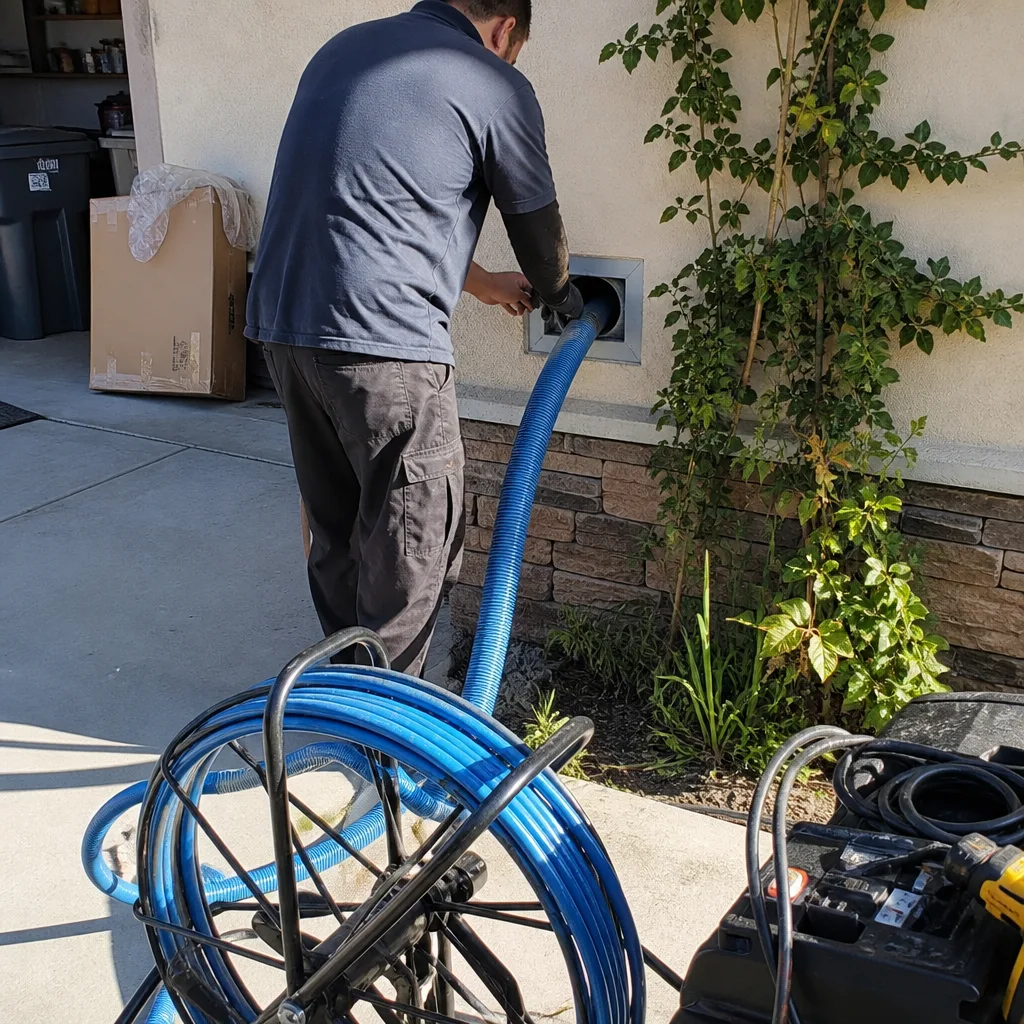
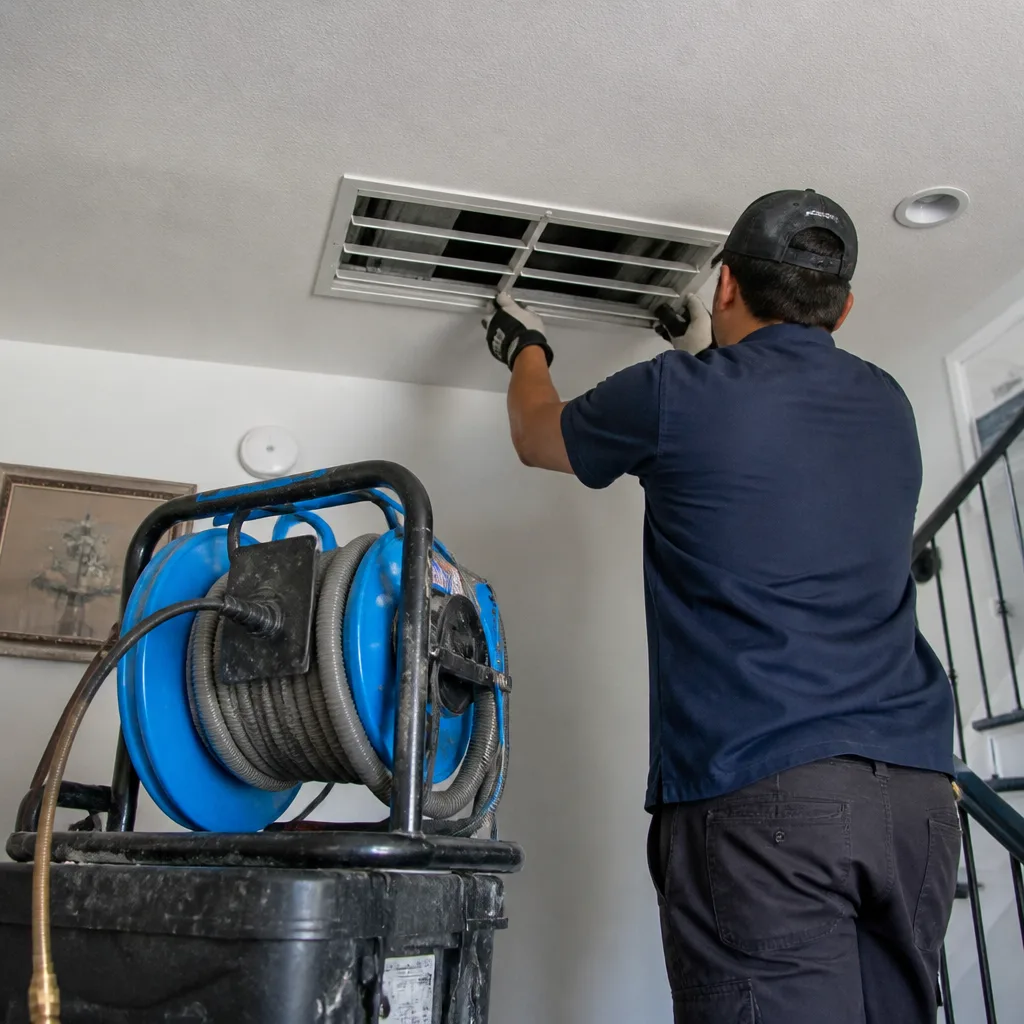
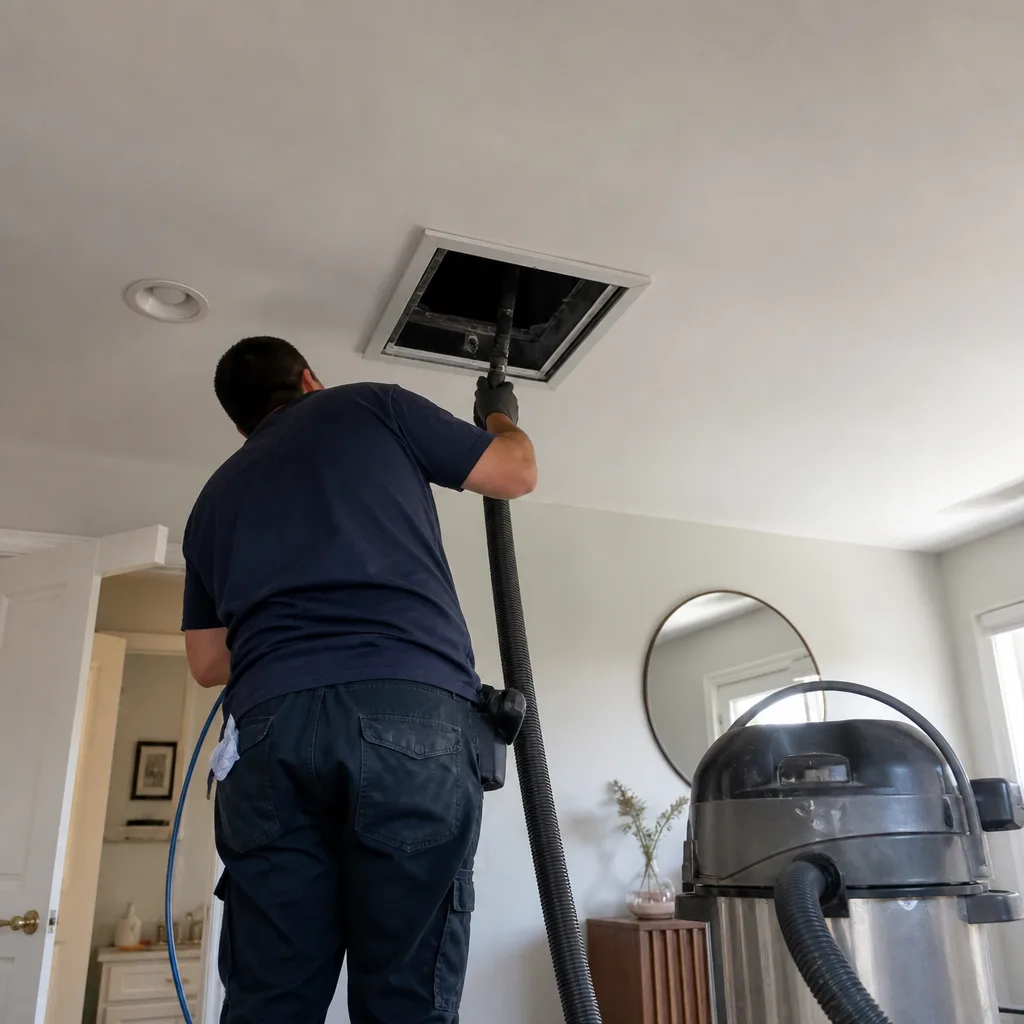
Whole-system duct and dryer vent check with before-and-after photos - you see exactly what came out of your vents
That "$99 whole-house special" is a bait ad - the real number appears once they are in your hallway, or the "clean" is a shop-vac at the register. We photograph the inside of your ducts before and after instead.

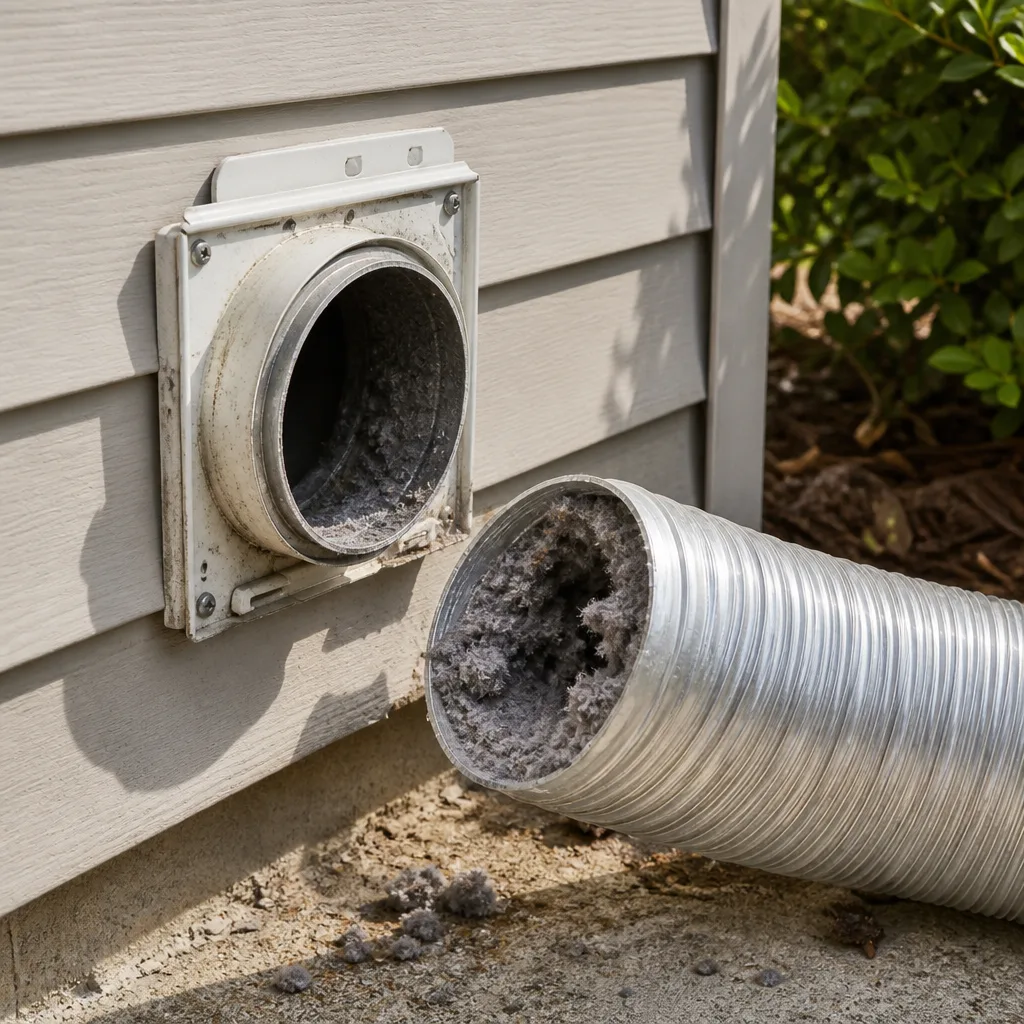
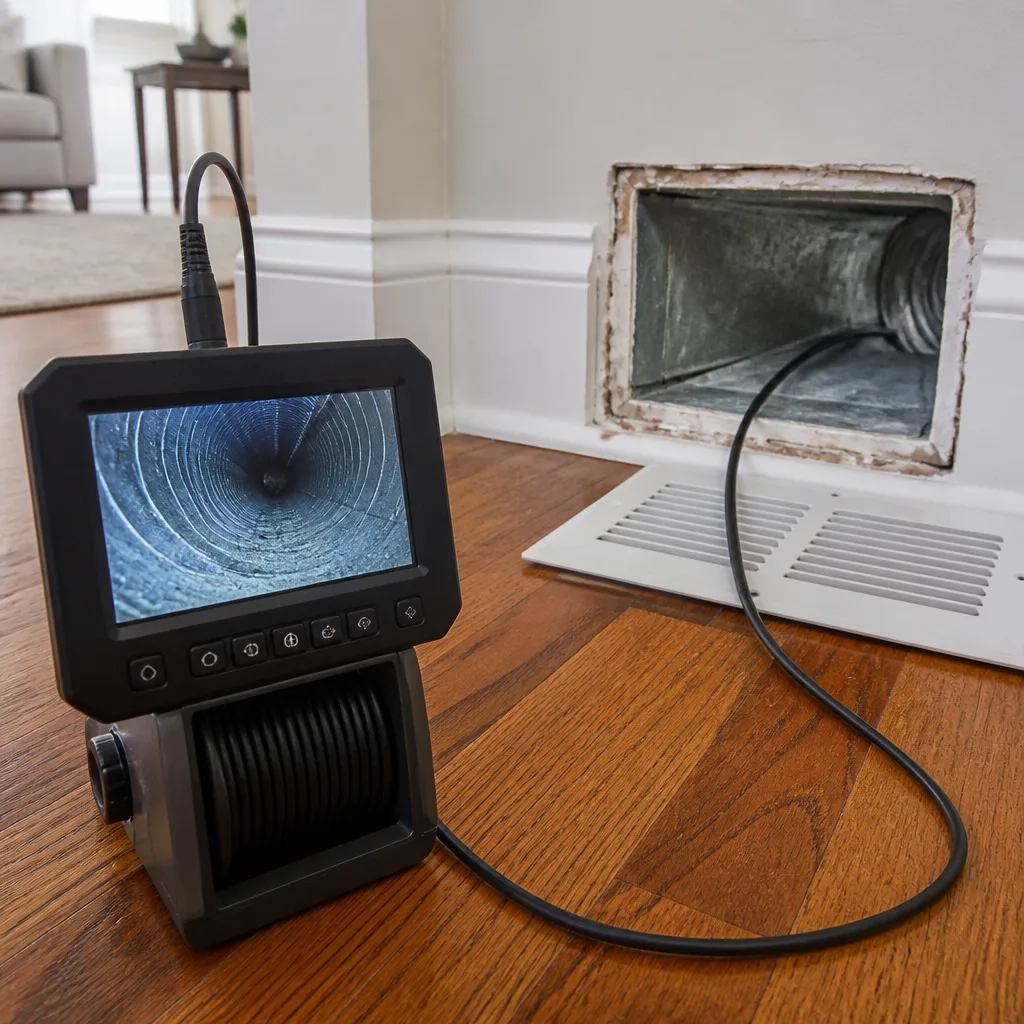
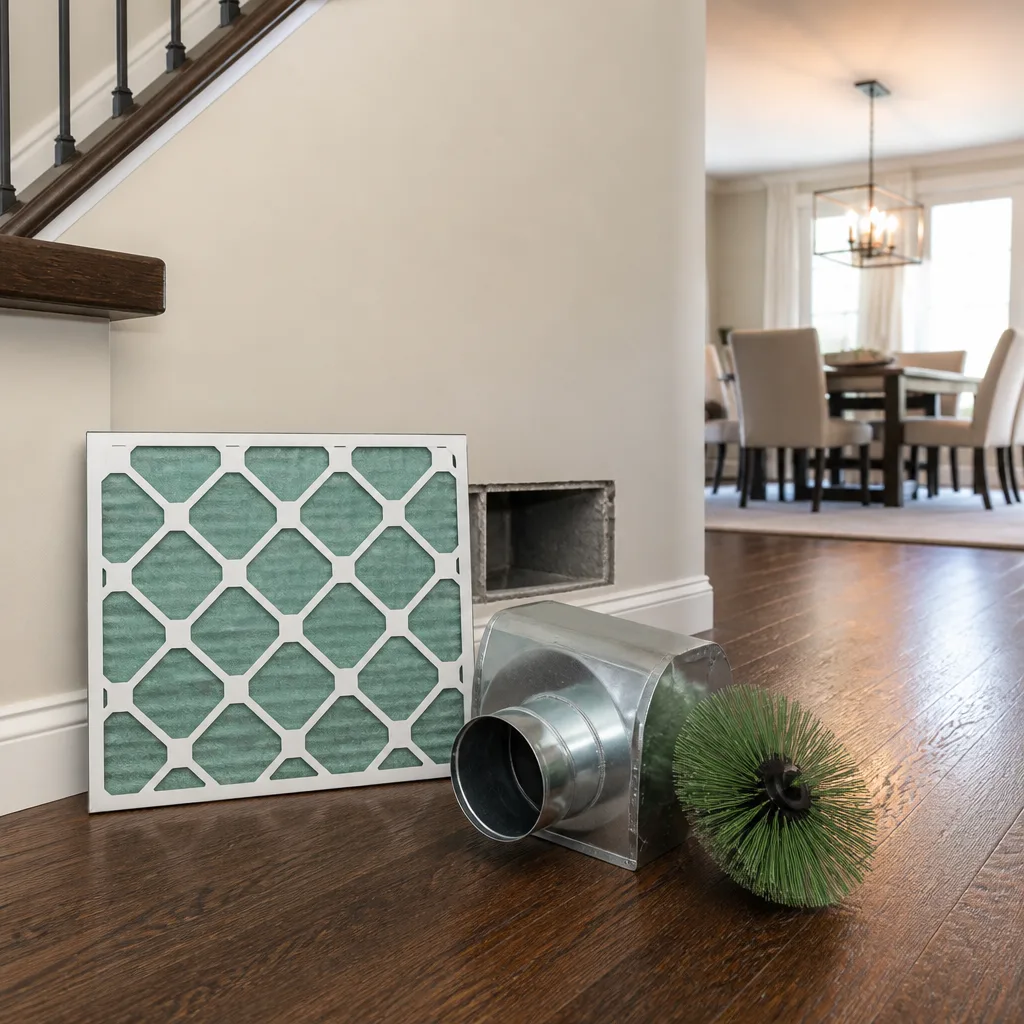
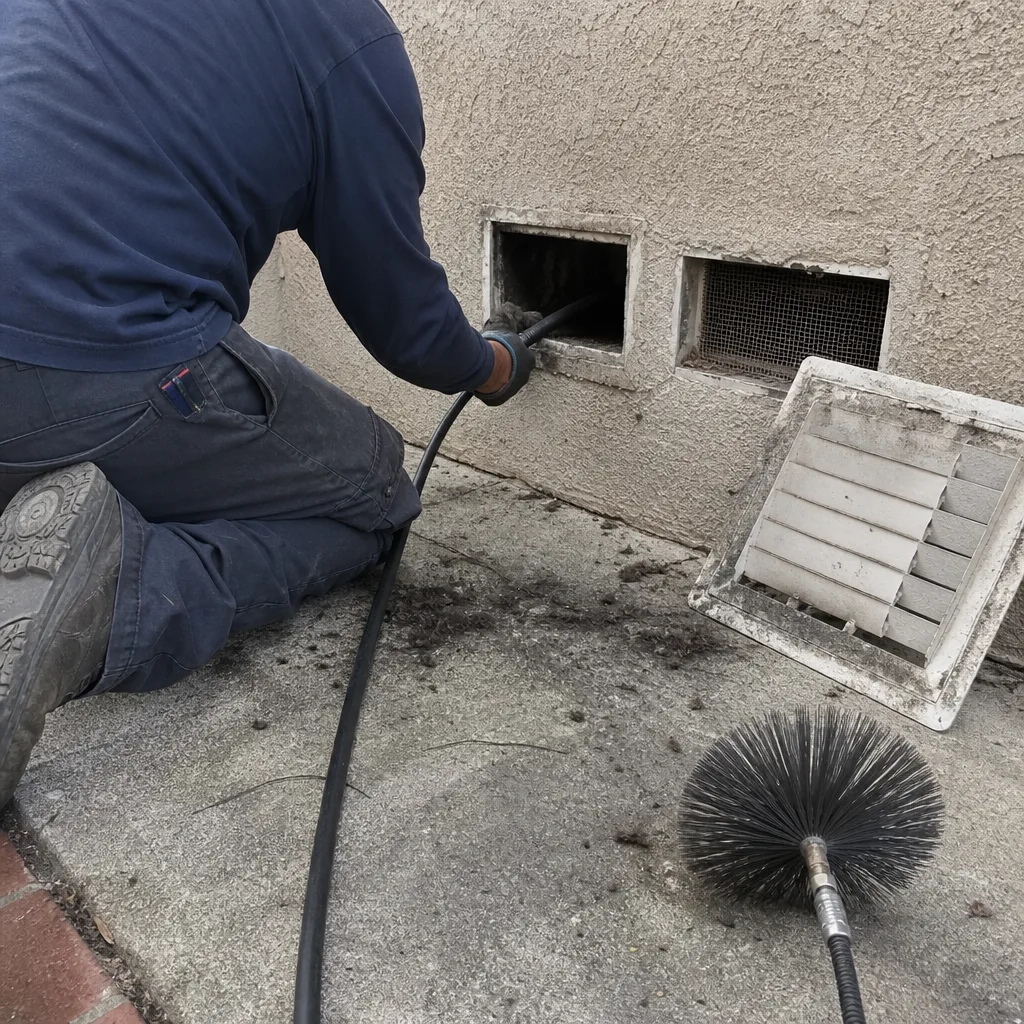 Before
 After
After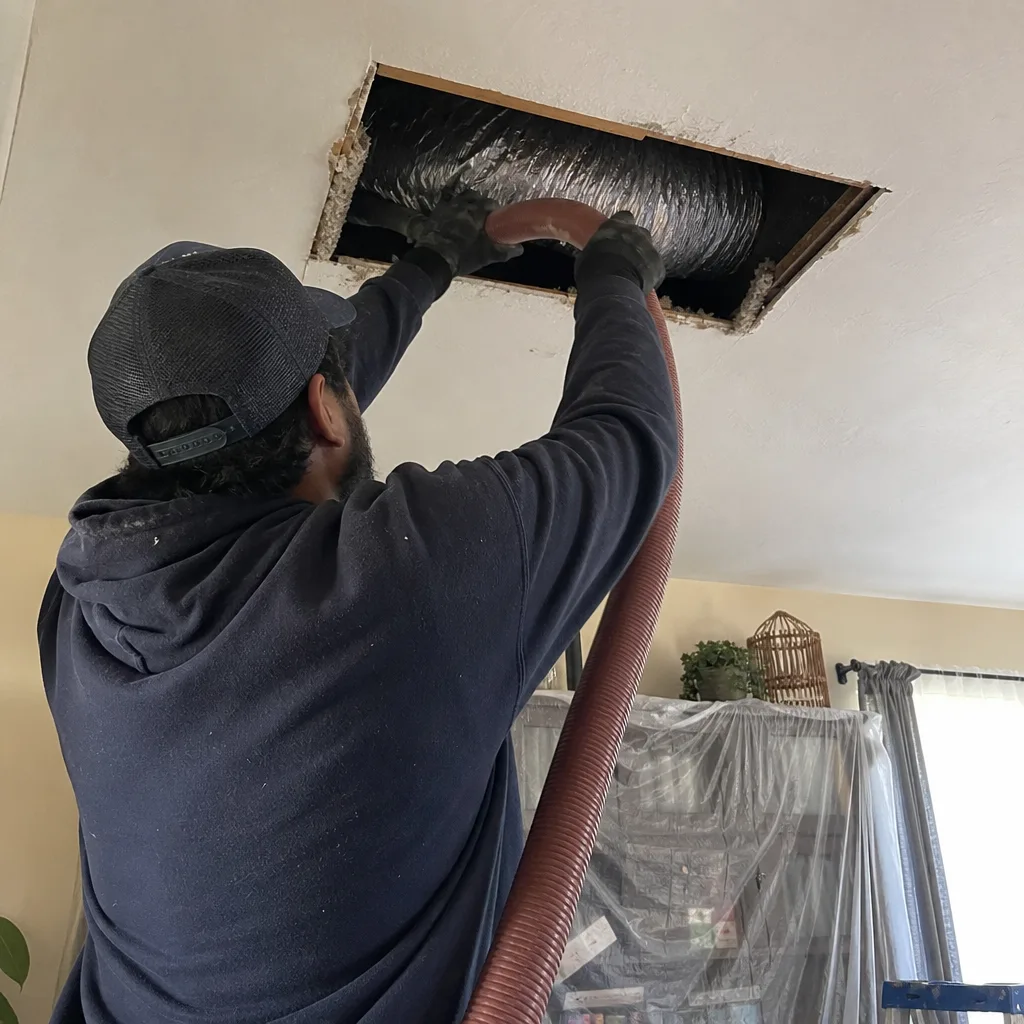 Before
 After
After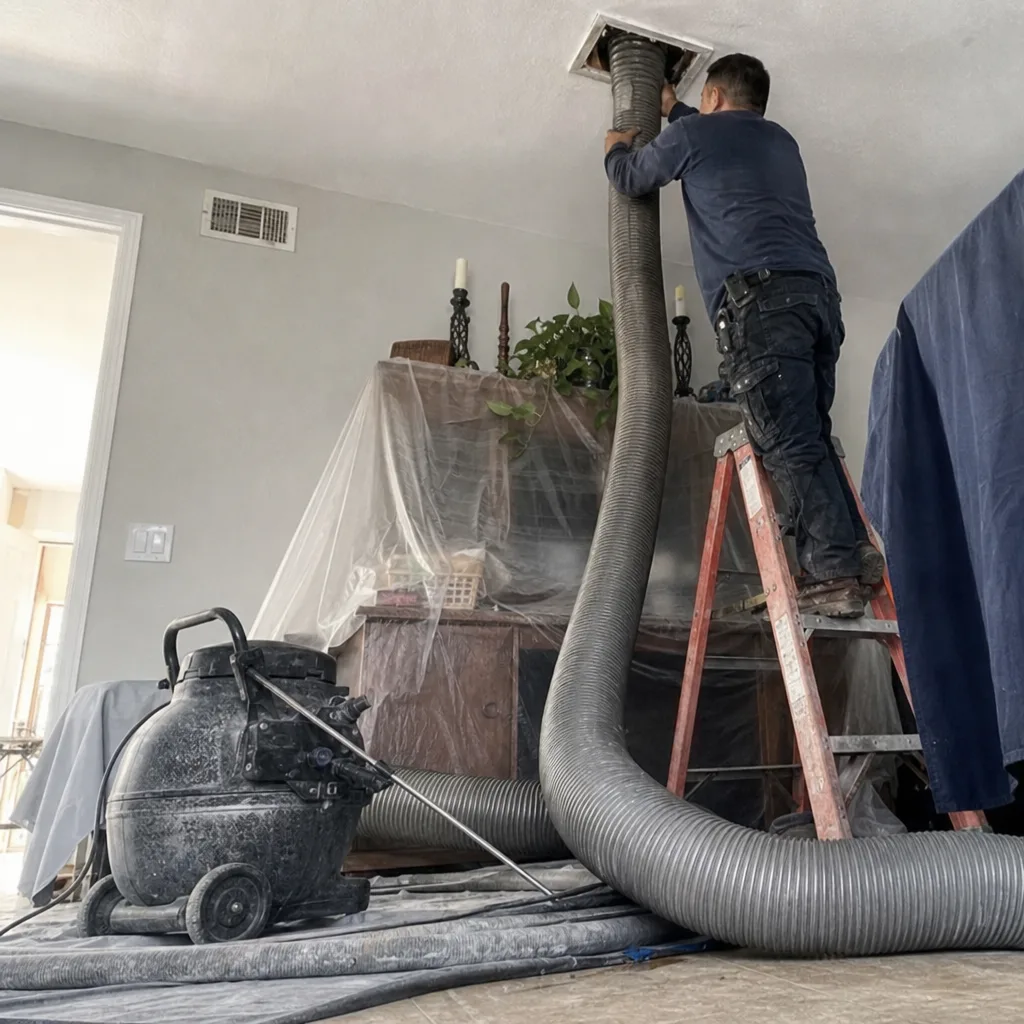 Before
 After
AfterBurning smell when the dryer runs
What’s Happening
A burning smell from a running dryer almost always means lint has built up somewhere it shouldn’t be – inside the dryer vent duct, around the heating element, or packed into the lint trap housing itself. Left alone, that lint is a fire hazard, not just a nuisance. Stop using the dryer until you know what’s causing it.
Dryers move a lot of hot air through a relatively small tube. When lint accumulates faster than it can escape – which happens gradually and invisibly over months or years – that organic material gets close enough to the heating element or the exhaust duct wall to scorch. You usually smell it before you see anything. That smell is the warning system working. The right response is to take it seriously, not to run another load and see if it goes away.
Why It Happens
Lint trapped in the dryer vent duct
This is the most common cause by a significant margin. The flexible or rigid duct that carries hot, damp air from the back of your dryer out through the wall can accumulate a thick layer of lint over time, especially near bends or where sections connect. When enough lint builds up and the duct temperature rises, it scorches. You might notice the dryer taking two cycles to dry a single load – that’s restricted airflow, and it usually shows up before the smell does.
Lint packed around the heating element or burner
Some lint bypasses the trap entirely and drifts deeper into the dryer cabinet, landing near the electric heating element or gas burner. When the machine heats up, that lint can smolder and produce a sharp, acrid smell that’s different from a fabric smell – more like burning paper or singed hair. If the smell is strongest in the first few minutes of a cycle, this is a likely culprit. The cabinet interior needs professional cleaning, not just a duct sweep.
A clogged or damaged lint trap housing
The lint screen catches most of what sheds from your laundry, but the housing it slides into can develop its own buildup on the walls and at the bottom. Pull out the screen and shine a flashlight down into the slot – if you can see a felt-like layer coating the sides, airflow is already compromised. A screen coated in fabric softener residue compounds this problem by letting finer particles pass right through.
Something resting against or inside the dryer
A forgotten tissue, a small garment, or even a plastic bag can slip behind the drum or work its way toward the heating area. This kind of burn smell tends to be intermittent and can have a distinctly plastic or chemical edge to it. Check the drum interior and the area just behind and below it before assuming the duct is the problem. If you hear an unusual sound alongside the smell, that points here.
What to Do Right Now
- Stop the dryer and unplug it. Don’t run another load. A burning smell from a dryer is a fire warning – give it that respect until you know what’s causing it.
- Remove and clean the lint screen. Wash it under running water if it’s coated in residue. Hold it up to the light – if you can’t see light through the mesh clearly, that screen is restricting airflow.
- Look at the exterior vent hood. Go outside and find where the dryer duct exits the house. If the flap doesn’t move freely, or if you can see lint matted around the opening, the duct is likely blocked. Don’t try to clear it from the outside with a stick or a vacuum hose – you’ll compact the lint further or disconnect a duct section inside the wall.
- Photograph what you can see. Take a photo of the vent hood, the lint screen, and anything unusual you notice inside the drum. This helps your technician understand what they’re walking into before they open anything up.
- Do not attempt to clean inside the dryer cabinet yourself. The heating element and, in gas dryers, the burner assembly carry real risk. Gas dryers involve combustion components that should only be handled by a professional. Electric heating elements can store a charge even when unplugged. Describe what you see – let the technician open the cabinet.
How We Fix It
When your local Morton’s Air Duct Cleaning team arrives, the technician’s first step is a full inspection of the dryer vent system – from the connection at the back of the dryer to the exit point at the exterior wall. Using professional equipment from brands like Rotobrush and Nikro, the technician clears the duct of lint buildup using rotary brush and negative-pressure vacuum methods that pull debris out rather than push it further in. If the smell pointed to buildup inside the dryer cabinet, that gets addressed too.
Before any work starts, you’ll have a written price in hand – that’s not a policy we invoke on certain jobs, it’s how every single visit works. The service that resolves most burning-smell calls is dryer vent cleaning, sometimes combined with an inspection of the duct path for damage or improper venting angles. Most visits take under two hours. Every job is covered by the 365-Day Done Right Promise – if something isn’t right after we leave, we come back and make it right.
Frequently Asked Questions
It is genuinely dangerous and it should not wait. Lint ignites at relatively low temperatures, and a dryer vent that’s hot enough to scorch lint is hot enough to start a fire inside the duct or wall cavity. Don’t run the dryer again until the cause is found and cleared. Call (323) 918-4345 – a real person answers, and they’ll help you figure out the next step.
Yes – lint inside the dryer cabinet near the heating element or burner is a common alternate cause, and so is a foreign object (a tissue, a small piece of plastic) that’s migrated toward the heat source. A technician will check both the duct and the machine interior on arrival. Don’t assume it’s one or the other before someone takes a look.
Your local Morton’s Air Duct Cleaning team works to get to burning-smell calls as quickly as scheduling allows – this isn’t a “book it for next month” situation. Call (323) 918-4345 and tell the person who answers exactly what you’re experiencing. They’ll tell you what’s available and get you on the schedule.
Every job gets a written price before any work starts – that’s not something you have to ask for, it happens on every visit without exception. There’s no per-foot pricing, no invoice surprises, and no number we’ll ask you to approve mid-job. To get the exact price for your situation, call (323) 918-4345 – the estimate is free, and you’ll have it in writing before anyone touches anything.
Get It Fixed
Call (323) 918-4345 – a real person answers – or book online. Tell us what you’re smelling and your local Morton’s Air Duct Cleaning team will take it from there. Written price first. Work after. Every time.
Written by Paul Adeyemi, Owner at Morton’s Air Duct Cleaning, serving communities nationwide as part of the Cedarwell family of companies since 2005.
What Our Customers Say
"Friendly, calm crew that clearly cared about the house. Covered their shoes, protected the floors, and double checked they'd closed up every vent cover properly. Would have them back."
- Omar Zaid"Ducts and dryer vent both. They put runners down the whole hall and wore booties. Spotless after, and they showed me photos of what came out. Worth every penny."
- Bonnie Vo"Spotless work. They laid drop cloths everywhere and I was honestly impressed there was zero mess at the end. Showed me the dirt they pulled out so I could see it was worth it."
- Shelby Dunham