
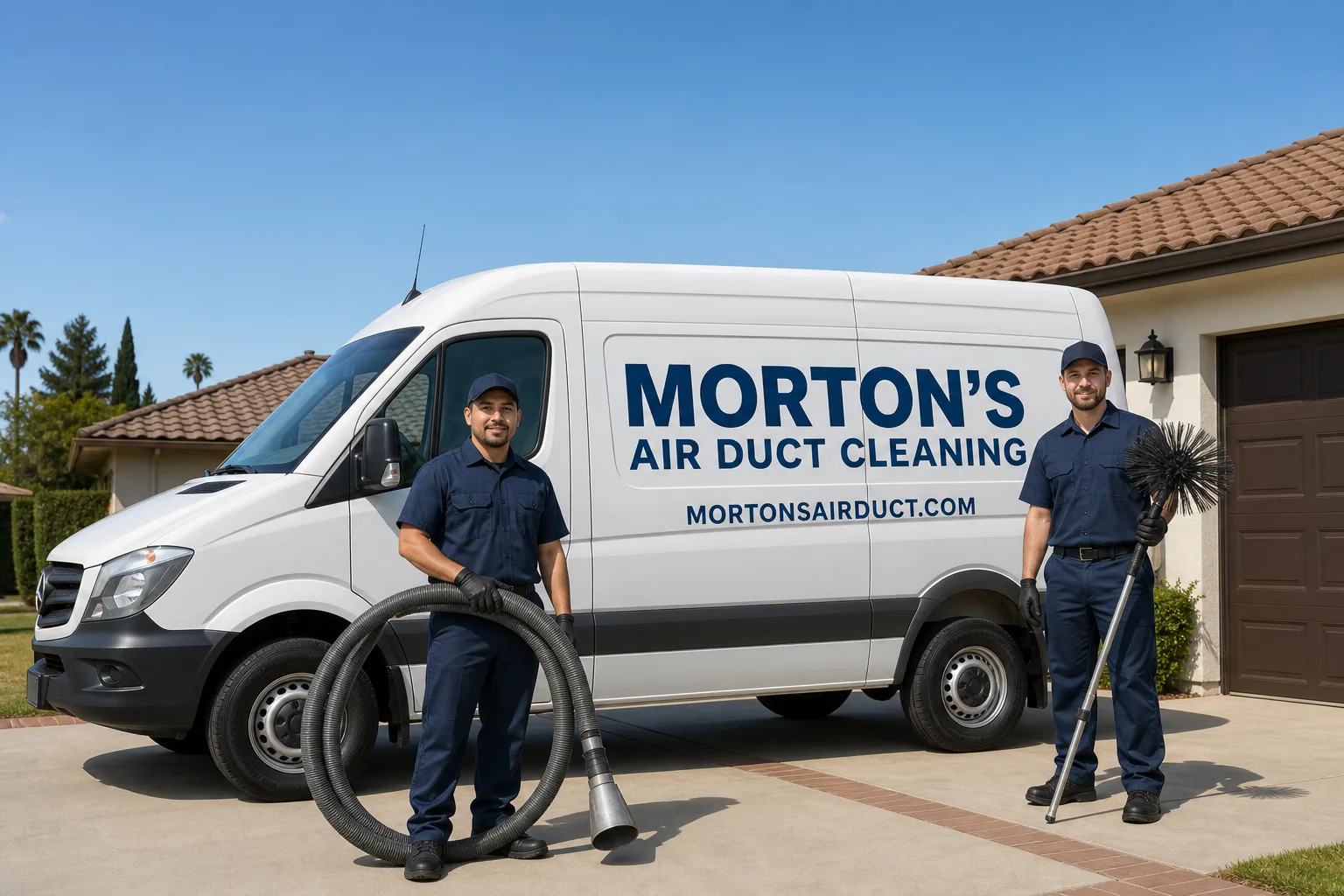
Whole-system duct and dryer vent check with before-and-after photos - you see exactly what came out of your vents
That "$99 whole-house special" is a bait ad - the real number appears once they are in your hallway, or the "clean" is a shop-vac at the register. We photograph the inside of your ducts before and after instead.
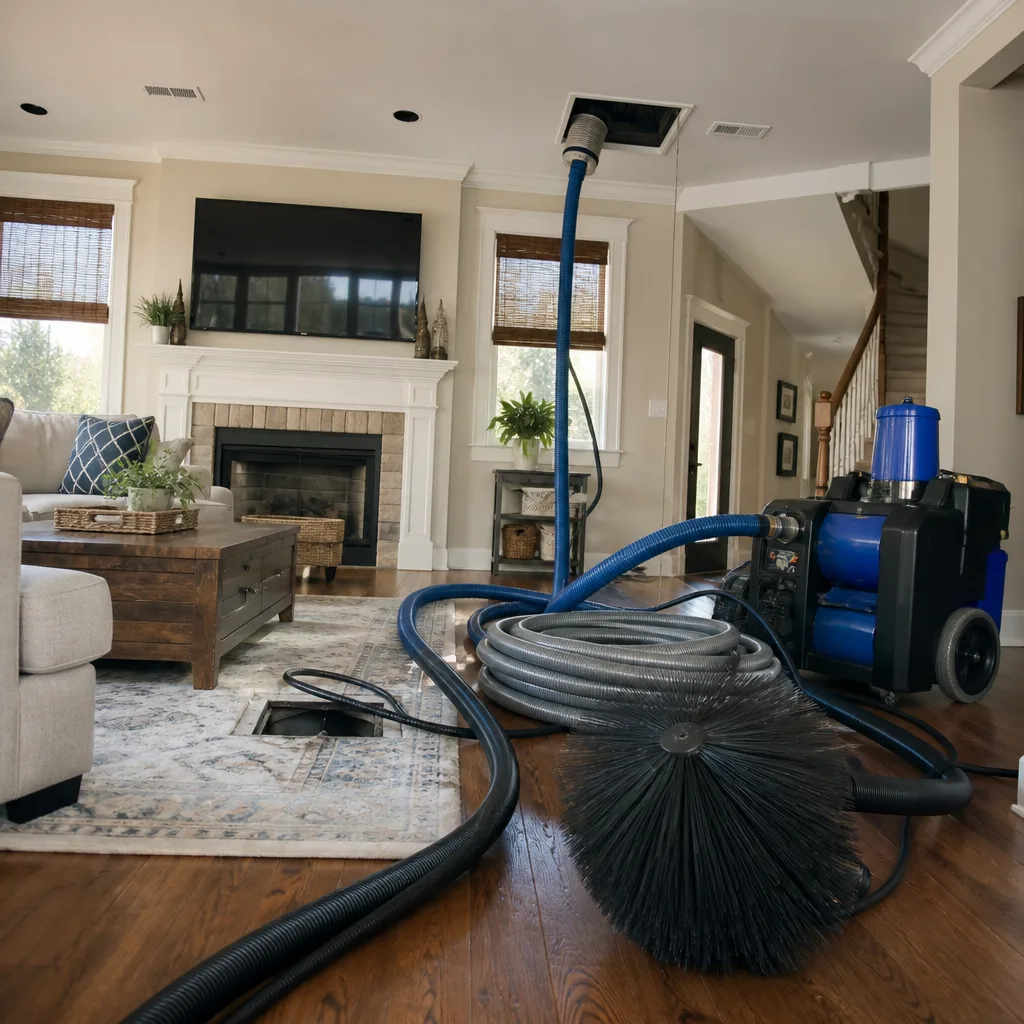
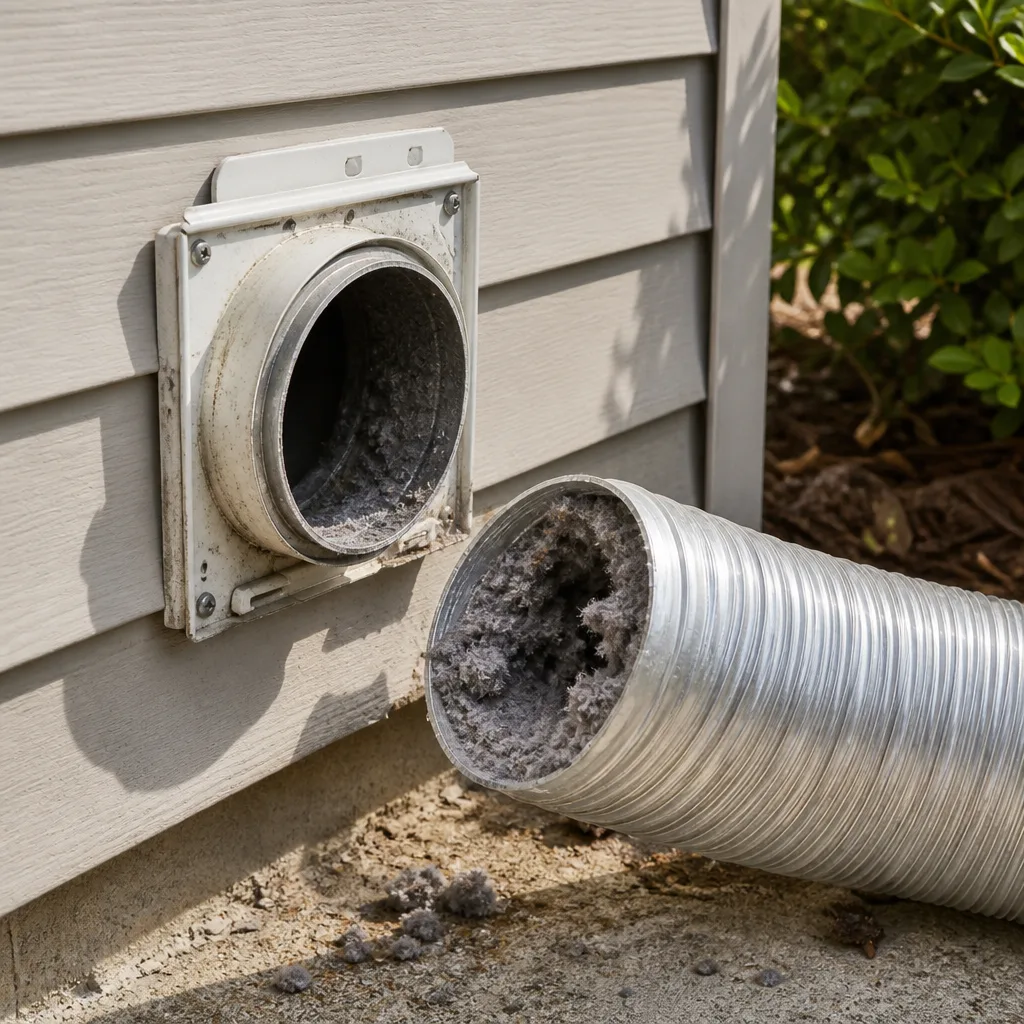
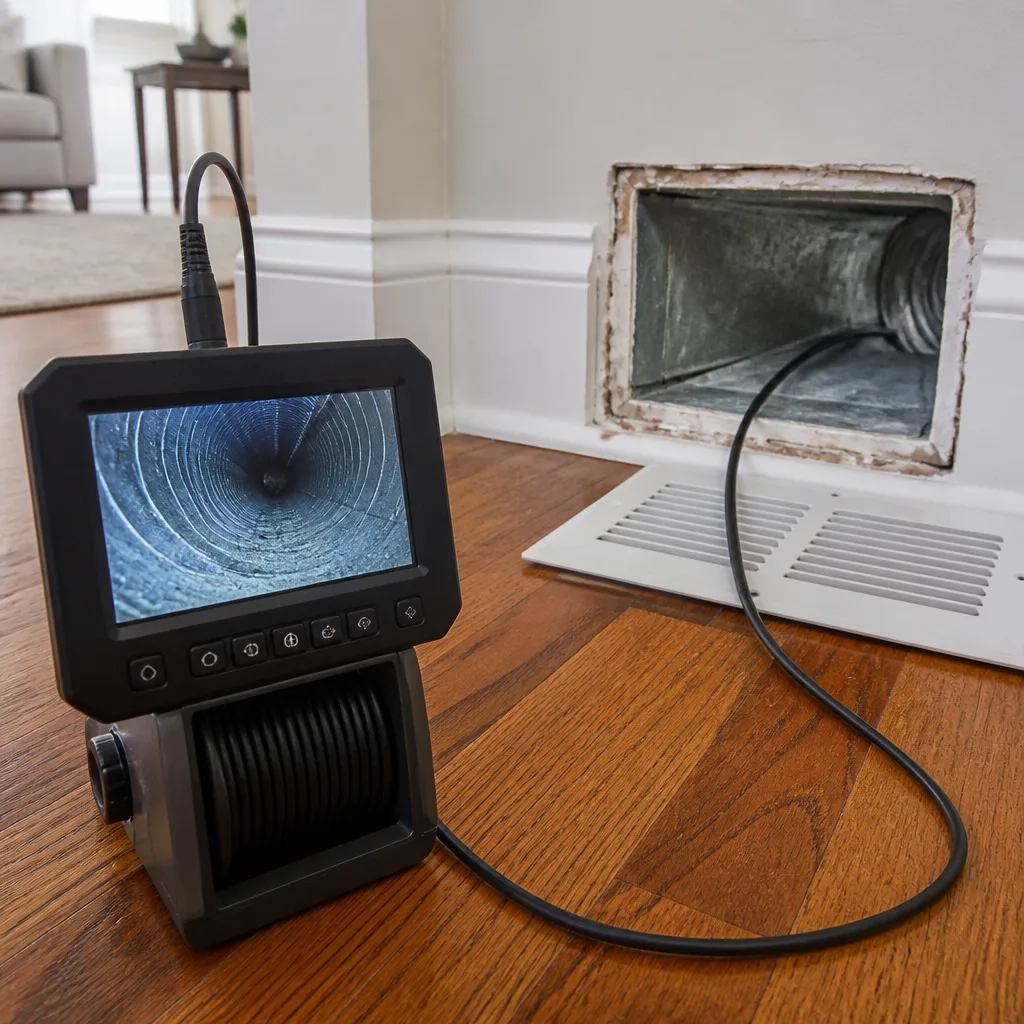
 Before
 After
After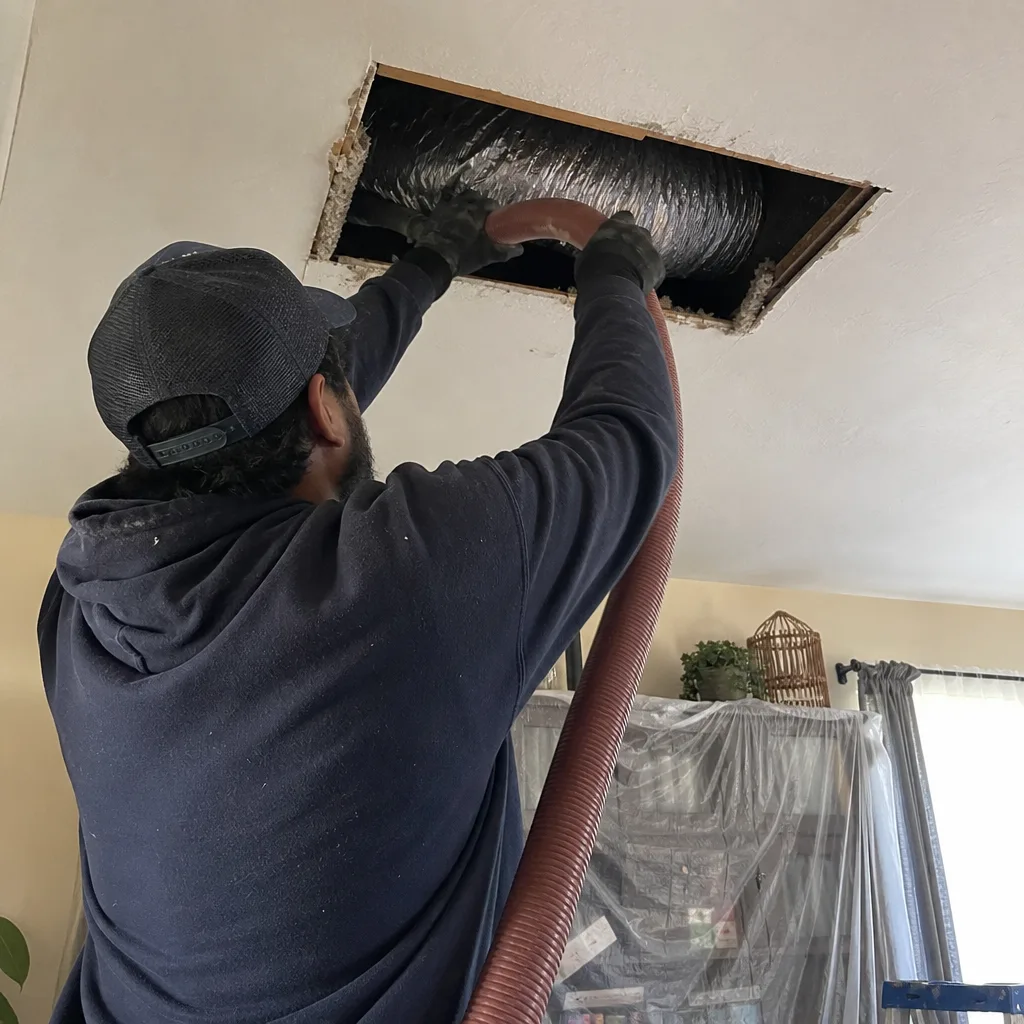 Before
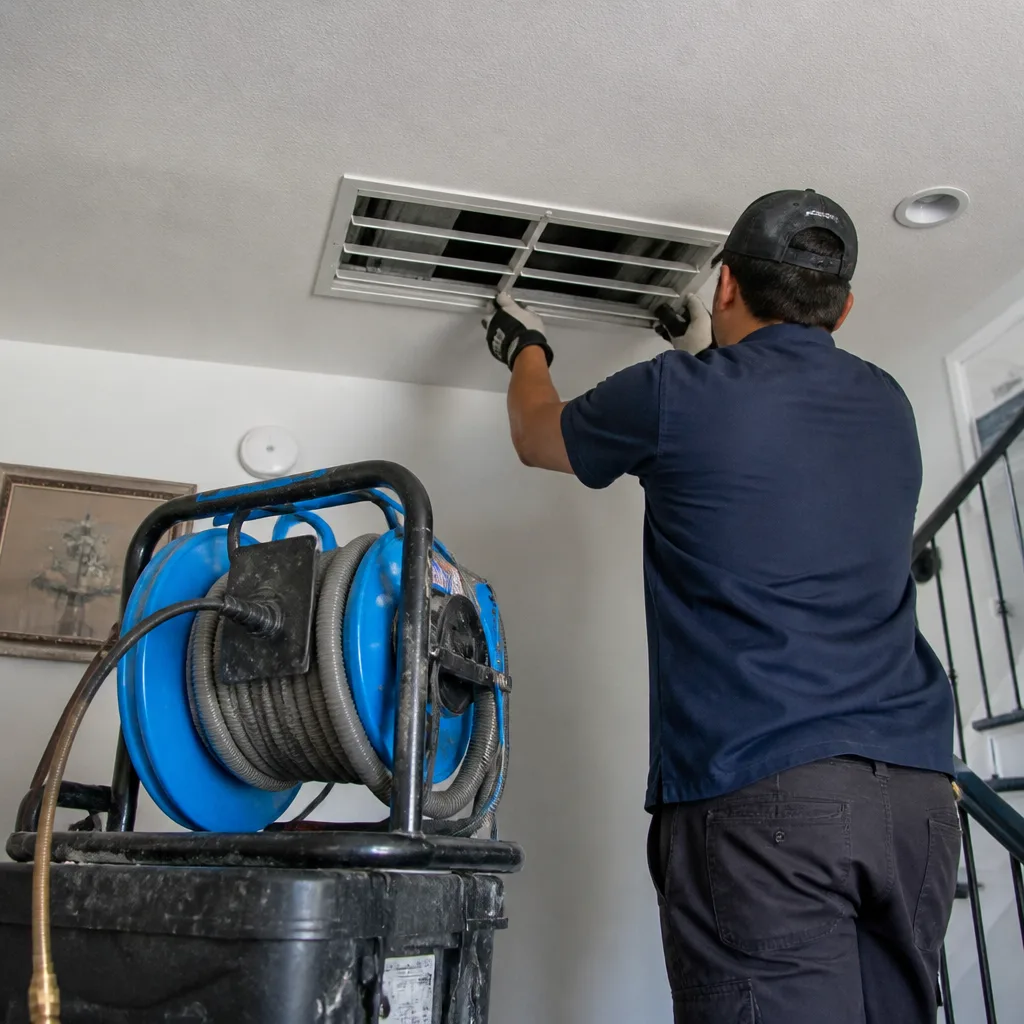 After
After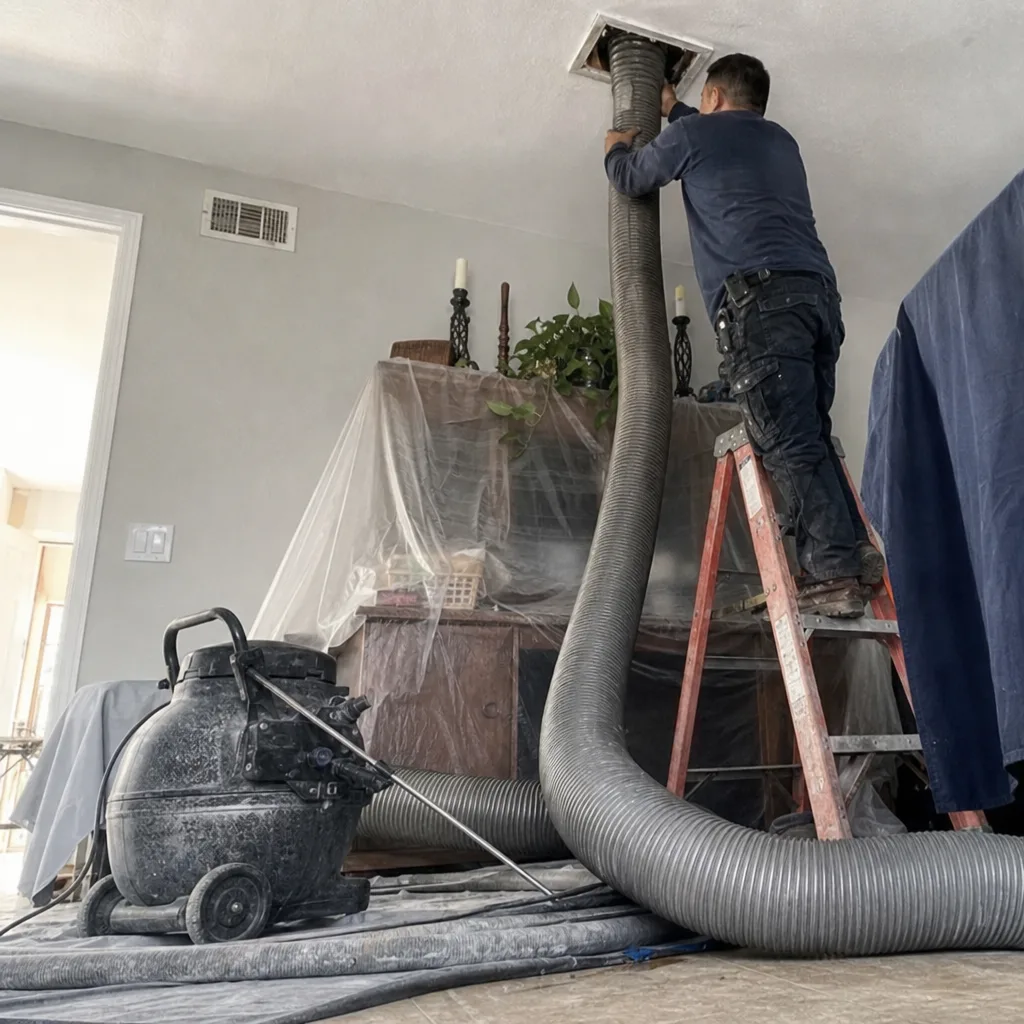 Before
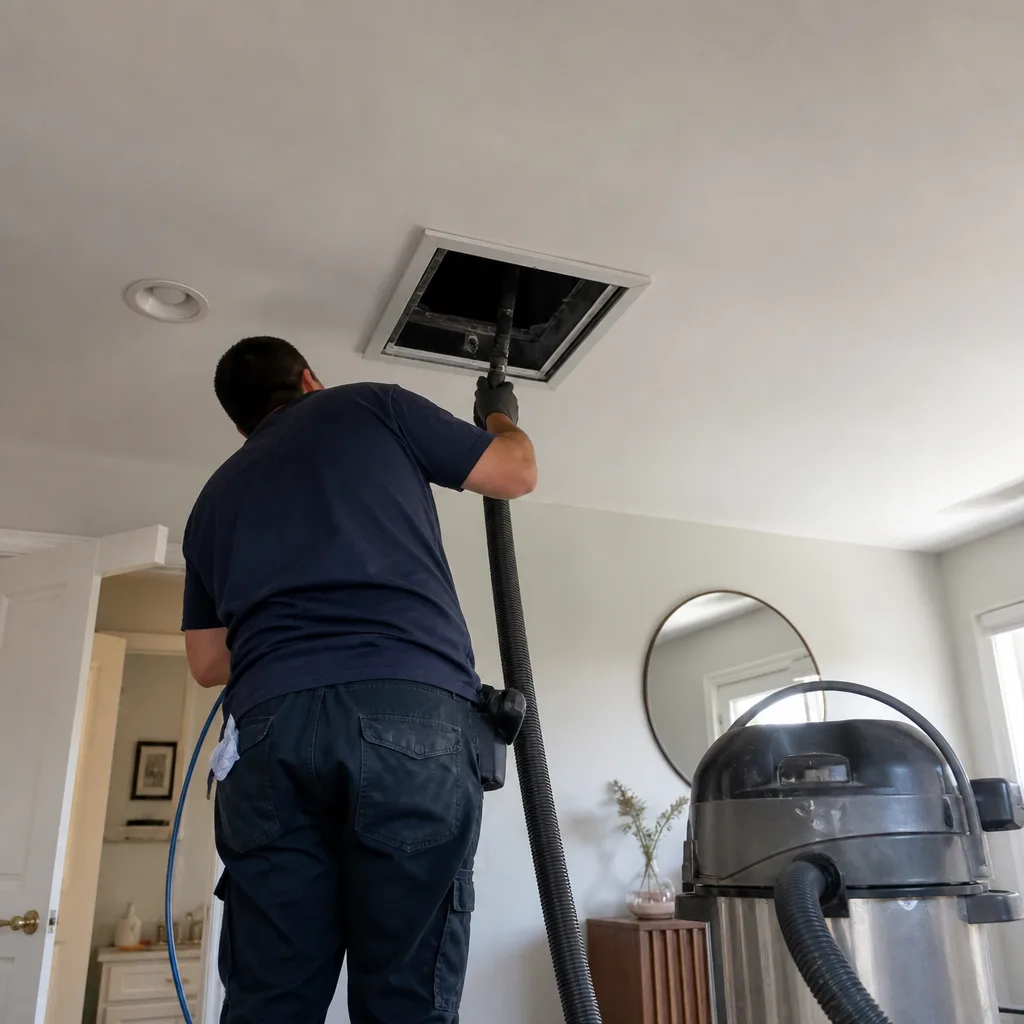 After
AfterWhat’s Happening
If your vents are dusty again shortly after a cleaning, the most common cause is that the main duct trunk lines and plenums were not fully cleaned – surface debris was removed from the visible registers, but the deeper system was left untouched. Dust resettles on the grilles within days because the source is still sitting upstream.
This is one of the most common complaints Paul Adeyemi hears when homeowners call Morton’s after a previous service didn’t hold. The duct system in a typical home is longer and more branched than most people picture – main trunks, return air chases, the plenum box above or below the air handler, and every branch line feeding individual rooms. A cleaning that only addresses the register covers and a few feet of visible duct will leave the bulk of the debris load completely in place. Every time the blower kicks on, it stirs that debris and sends a fresh coat of dust to settle on the very grilles that were just wiped down. That’s not a mystery – it’s physics.
Why It Happens
Incomplete Cleaning – the Trunk Lines Were Skipped
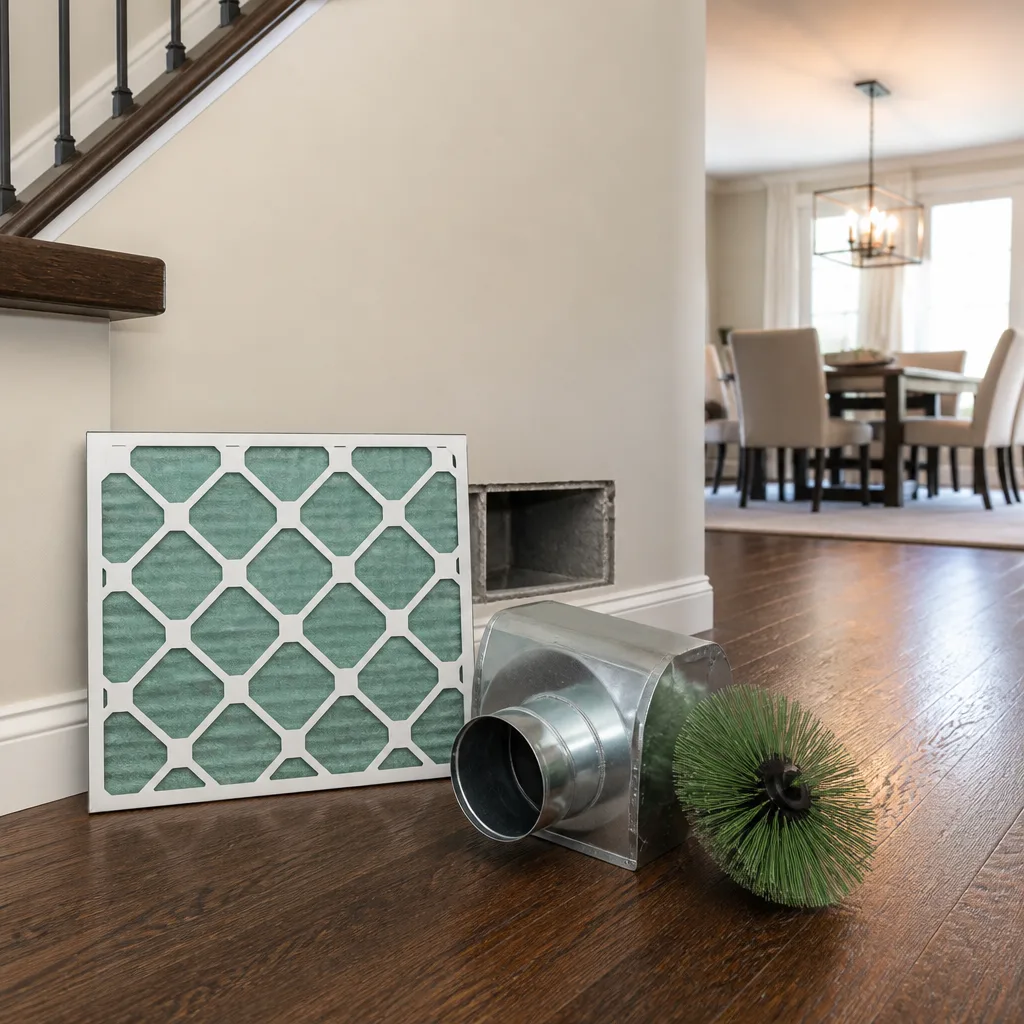
Most bait-and-switch duct cleaning operations charge a low per-vent price and clean only the branch ducts closest to each register. The main trunk lines – the large rectangular or round runs that feed every branch – hold far more debris by volume and require a truck-mounted or high-powered portable vacuum system like those from Nikro or Rotobrush to clear properly. You can get a rough sense of this yourself: remove a register cover, shine a flashlight down into the branch duct toward the main trunk, and look for a visible dust wall or dark discoloration deeper in the run. If you see it, the trunk wasn’t cleaned.
The Filter Was Not Replaced After Cleaning
A clogged or collapsed furnace filter is often found after a cleaning job that didn’t include a filter check. When the filter media is overloaded, airflow pulls around the edges rather than through the filter, and unfiltered air carrying fine particulate moves through the system and deposits on register grilles. Check the filter yourself – pull it out and hold it up to a window. If light barely passes through, it’s overdue for replacement regardless of when it was last changed.
New Drywall Dust, Renovation Debris, or a Recent Disturbance
Renovation work – even something as limited as patching a ceiling or sanding a floor – puts a fine particulate into the air that the return air intakes pull straight into the duct system. If any construction, sanding, or demolition happened in the home after the cleaning, that is almost certainly where the fresh dust load is coming from. Look for a chalky or fine white dust on the grilles rather than the grey fibrous buildup typical of older debris – the color and texture often give it away.
Duct Leakage at Joints or Connections
Sheet metal duct sections connect at joints that are supposed to be sealed with mastic or metallic tape. When those seals fail – and in older homes, many were never properly sealed to begin with – the system pulls in unconditioned air from attic spaces, crawl spaces, or wall cavities. That air carries insulation fibers, soil particles, and biological material that deposits quickly on registers. If your vents are dusty but the dust has an unusual texture or color (pink or yellow fibers, dark soil-like particles), duct leakage is a strong possibility.
What to Do Right Now
- Pull and inspect your furnace filter. If it’s visibly clogged, replace it before running the system further. A collapsed or overloaded filter is actively making the problem worse every time the blower runs. This is a safe, low-cost check any homeowner can do.
- Turn the HVAC fan to “off” rather than “auto” or “on.” Leaving the system running while the duct problem is unresolved just keeps circulating the debris load. If the indoor temperature allows it, give the system a rest until you know what you’re dealing with.
- Photograph the dusty registers before wiping them. A clear photo showing the dust pattern and color helps a technician identify the debris type before they open the system – this saves diagnostic time and gives you a documented before state.
- Do not run any portable fans or open windows in a way that draws outside air through the house. Air movement stirs resettled dust and spreads it to surfaces you’ll want clean after the job is done.
- Note whether any work was done in or around the home recently – painting, drywall, flooring, or even attic insulation. Let your technician know when you call. It changes the diagnostic path significantly.
How We Fix It
When your local Morton’s Air Duct Cleaning team arrives, the technician’s first step is a walkthrough inspection – not a sales pitch, an actual look at your system. That means checking the air handler, the filter housing, the main trunk lines, return air chases, and a sample of branch ducts before any equipment comes off the truck.
From there, you get a written price for the full scope of what needs to be done. That price is agreed before anything starts – that’s not something we offer when asked, it’s how every Morton’s job works, on every visit.
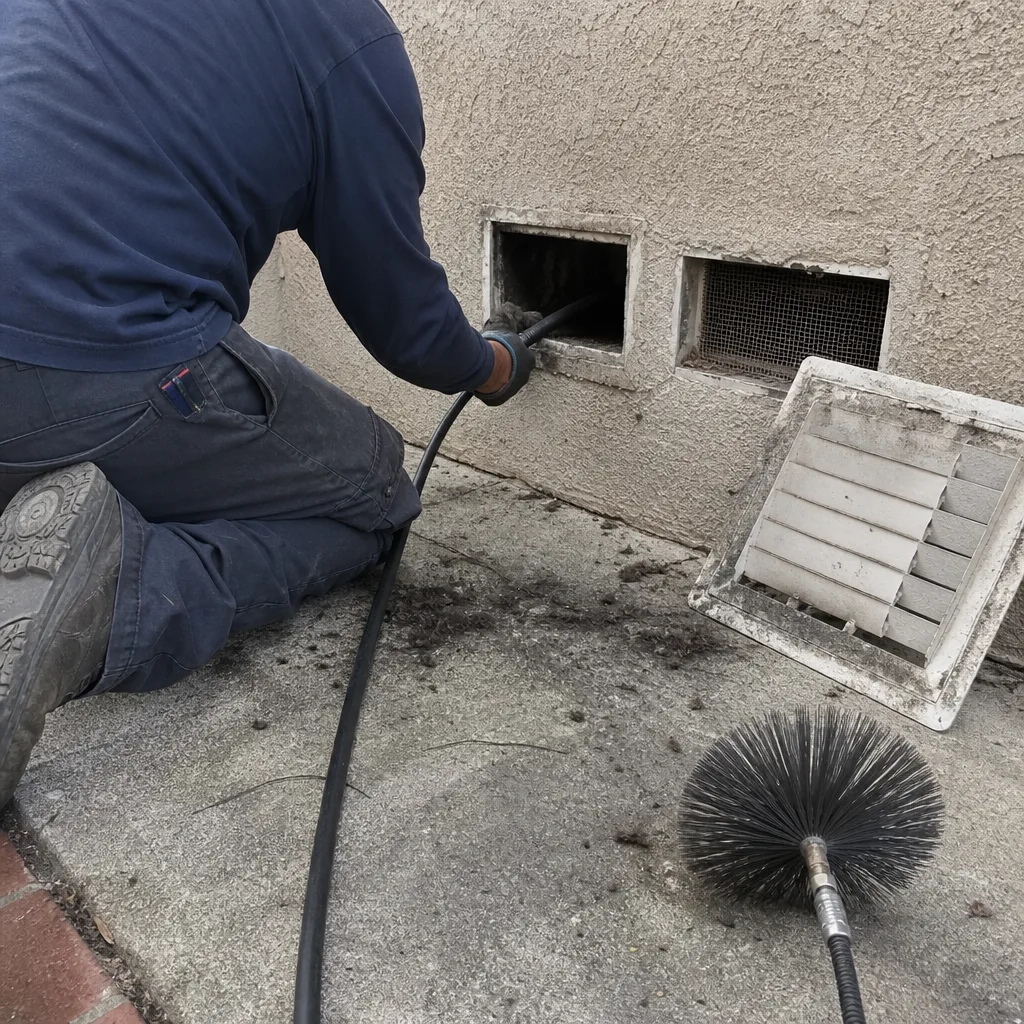
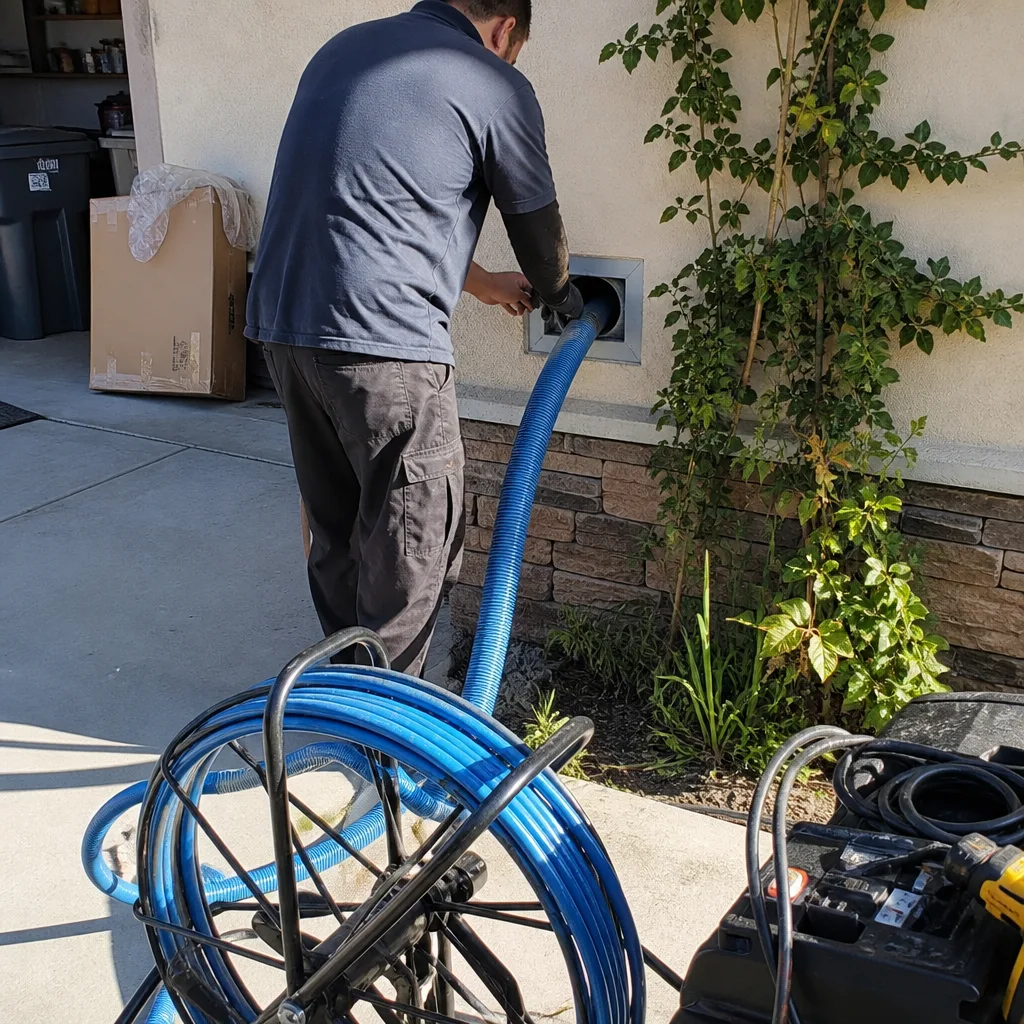
The cleaning itself uses professional-grade equipment from Rotobrush and Nikro – rotating brush systems and high-powered negative-air machines that reach the full length of trunk lines, not just the visible register openings. If dryer vent blockage is contributing to air quality issues in a laundry-adjacent area, our dryer vent cleaning service handles that in the same visit.
The whole job typically runs a few hours depending on system size. Before the crew leaves, you get a photo of the cleaned-up work area – floors protected, equipment out, and the home left the way it should be. Every job is covered by our 365-Day Done Right Promise: if it’s not right, we make it right, no conditions.
Frequently Asked Questions
It depends on what the dust contains. Ordinary household dust resettling on registers is a nuisance problem – frustrating, but not an emergency. If the debris includes mold fragments, rodent material, or construction particulate (things that show up when technicians open the system), continued circulation of that air is a genuine indoor air quality concern, especially for kids, pets, or anyone with asthma or allergies. If there’s any visible dark spotting near the registers or an unusual smell from the vents, don’t wait – call (323) 918-4345 and let us take a look before drawing any conclusions.
If the dust is purely cosmetic and your previous cleaning was recent, a few days won’t cause harm – but running the system continuously while the root cause is unresolved keeps adding to the debris load and undoes any partial cleaning benefit. The longer a clogged filter stays in or a leaking duct joint goes unsealed, the more debris migrates into parts of the system that are harder to clean. Sooner is better, and the call is free. Reach us at (323) 918-4345 to schedule an inspection.
The most common reason is that the previous service used per-vent pricing, which creates a financial incentive to clean quickly and shallowly rather than thoroughly. When only branch ducts near registers are cleaned and the main trunk lines are skipped, dust from those trunks continues feeding the registers. Morton’s gives a written price for the full system before any work starts – that price covers the complete job, not just the accessible parts.
Our phones are answered by a live person, not a voicemail or a chatbot, any time you call – including nights and weekends. Your local Morton’s Air Duct Cleaning team will find a time that works for your schedule. Call (323) 918-4345 and a real person picks up.
Get It Fixed
Call (323) 918-4345 – a real person answers every time – or book online, and your local Morton’s Air Duct Cleaning team will come out, inspect the system, and give you a written price before any work starts. Dusty vents after a cleaning shouldn’t be normal. Let’s make it right.
Written by Paul Adeyemi, Owner at Morton’s Air Duct Cleaning, serving communities nationwide as part of the Cedarwell family since 2005.
What Our Customers Say
"Friendly, calm crew that clearly cared about the house. Covered their shoes, protected the floors, and double checked they'd closed up every vent cover properly. Would have them back."
- Omar Zaid"Ducts and dryer vent both. They put runners down the whole hall and wore booties. Spotless after, and they showed me photos of what came out. Worth every penny."
- Bonnie Vo"Spotless work. They laid drop cloths everywhere and I was honestly impressed there was zero mess at the end. Showed me the dirt they pulled out so I could see it was worth it."
- Shelby Dunham