
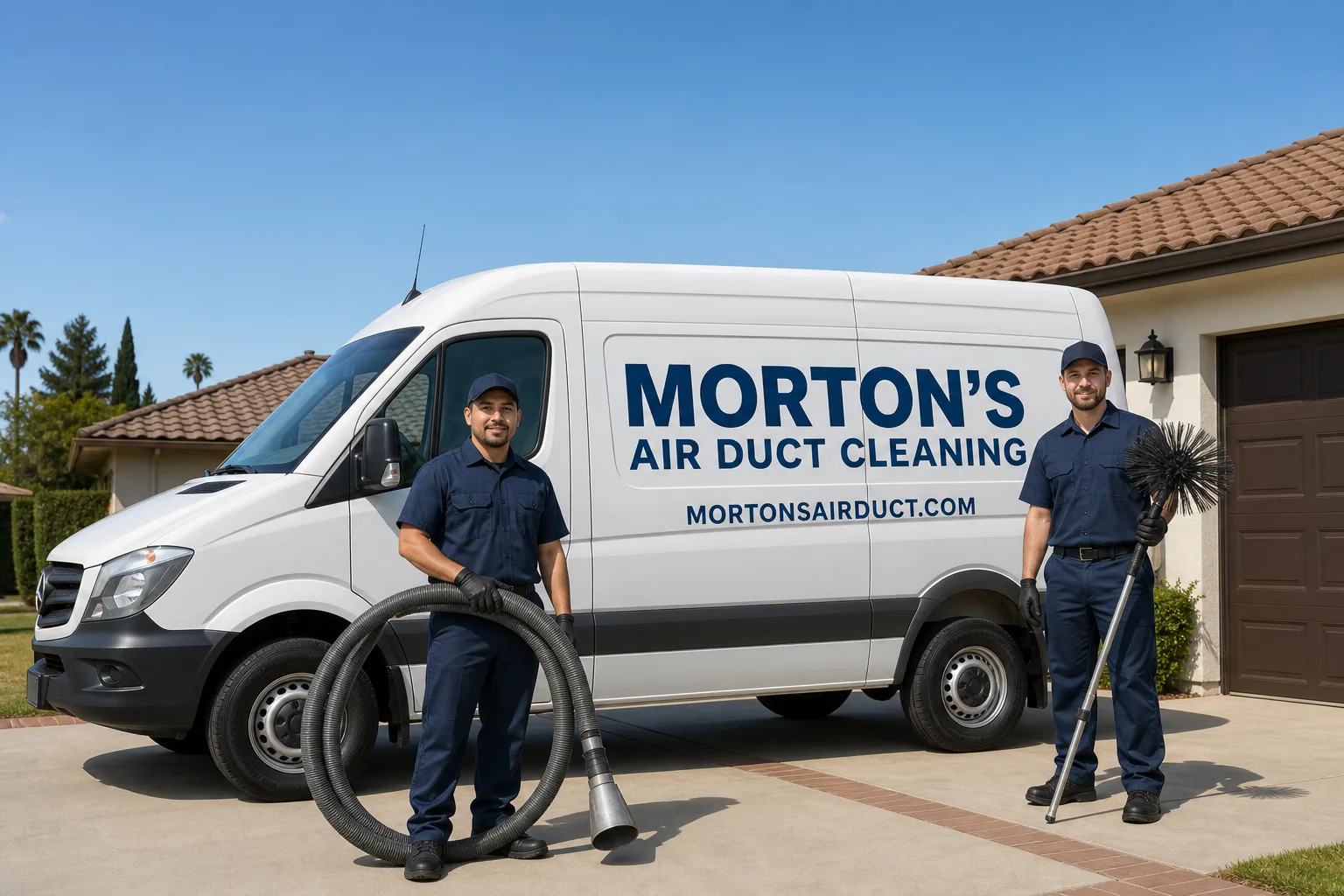
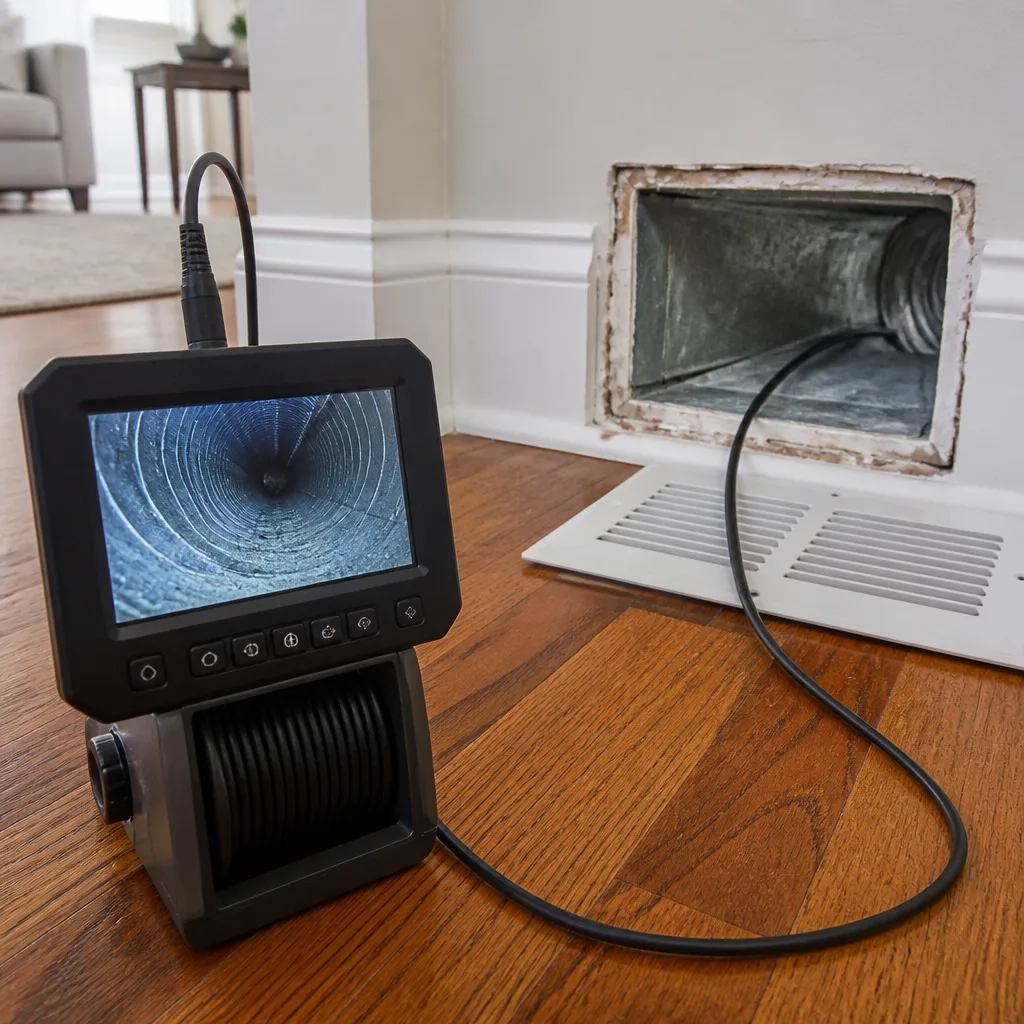
Whole-system duct and dryer vent check with before-and-after photos - you see exactly what came out of your vents
That "$99 whole-house special" is a bait ad - the real number appears once they are in your hallway, or the "clean" is a shop-vac at the register. We photograph the inside of your ducts before and after instead.
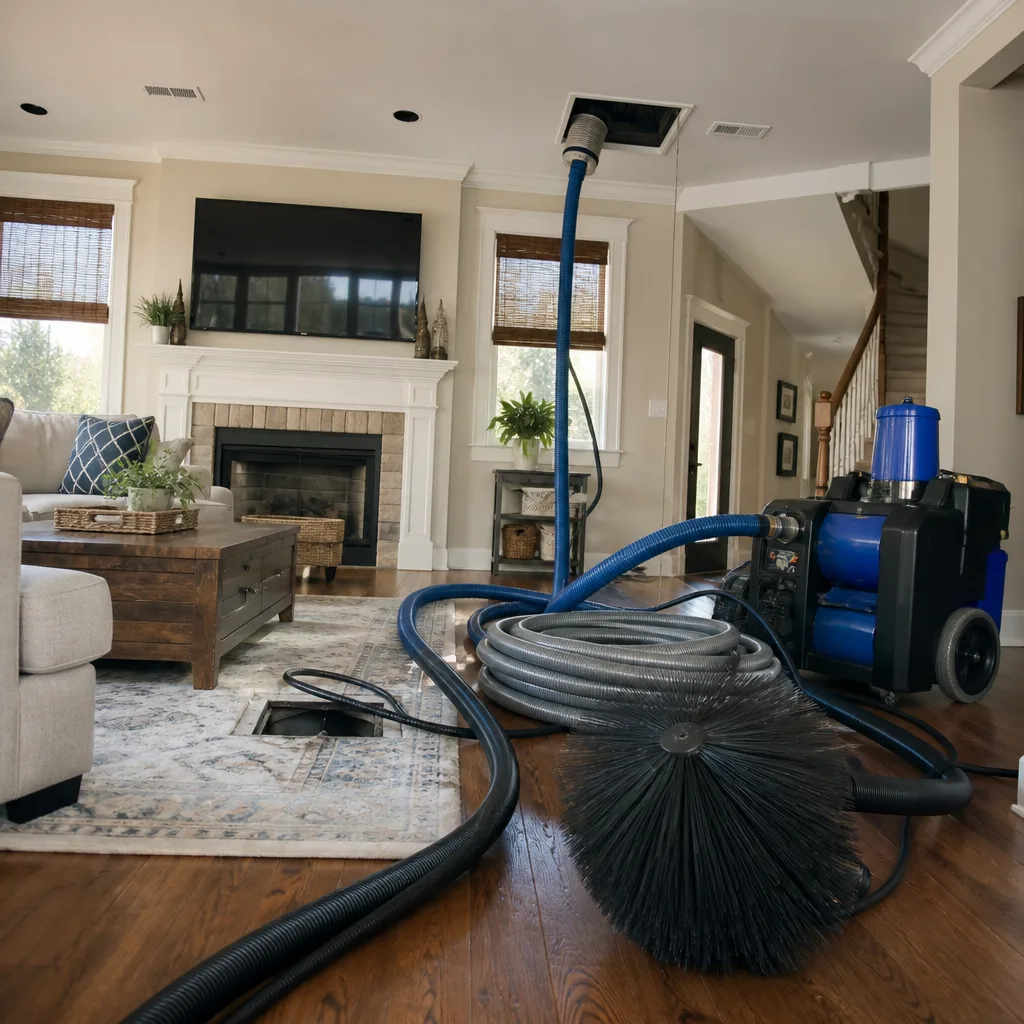
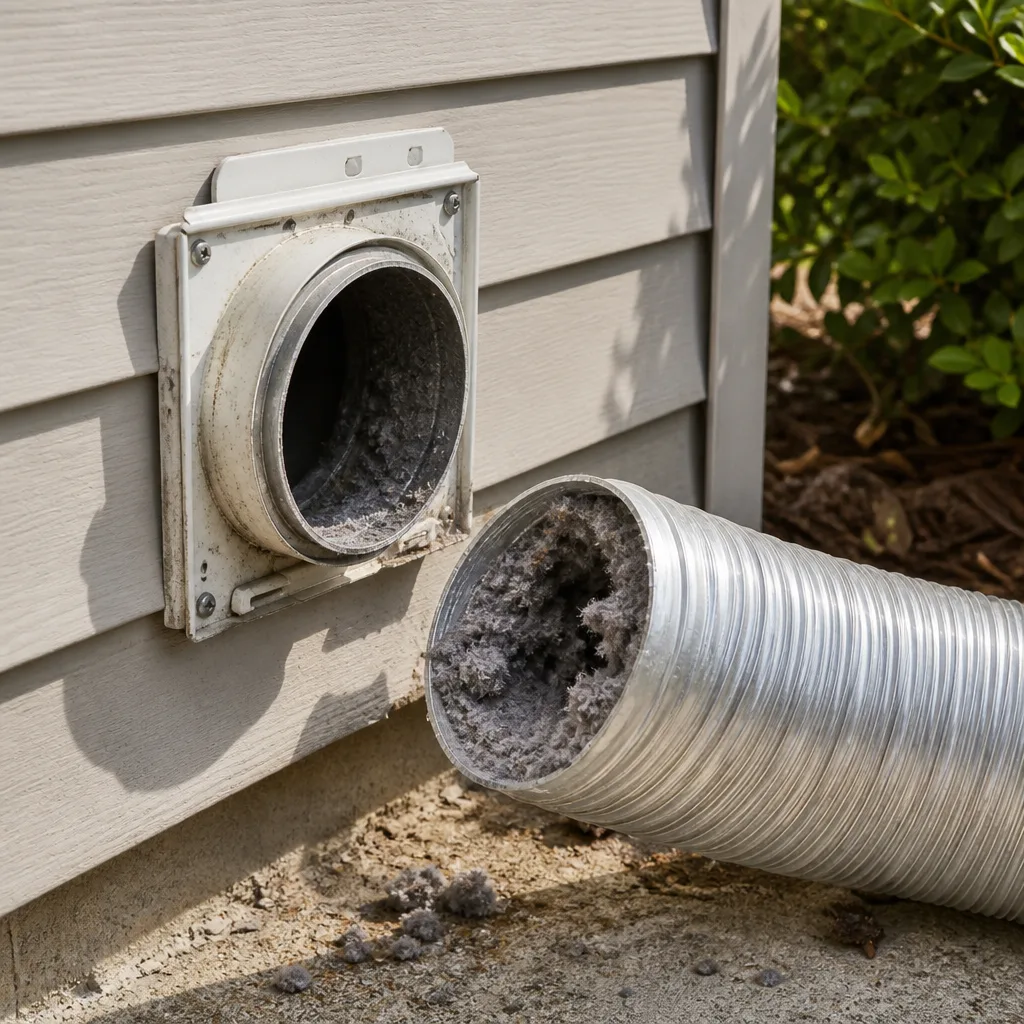
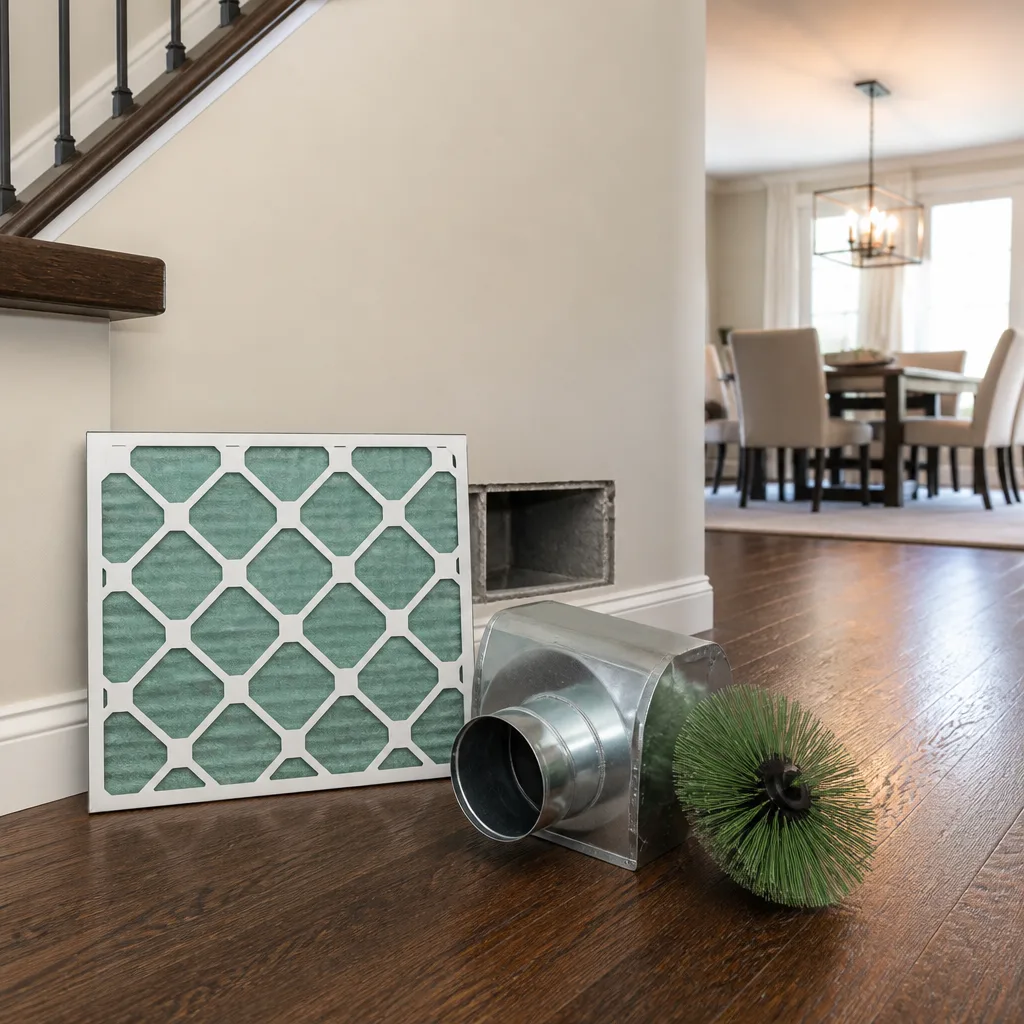
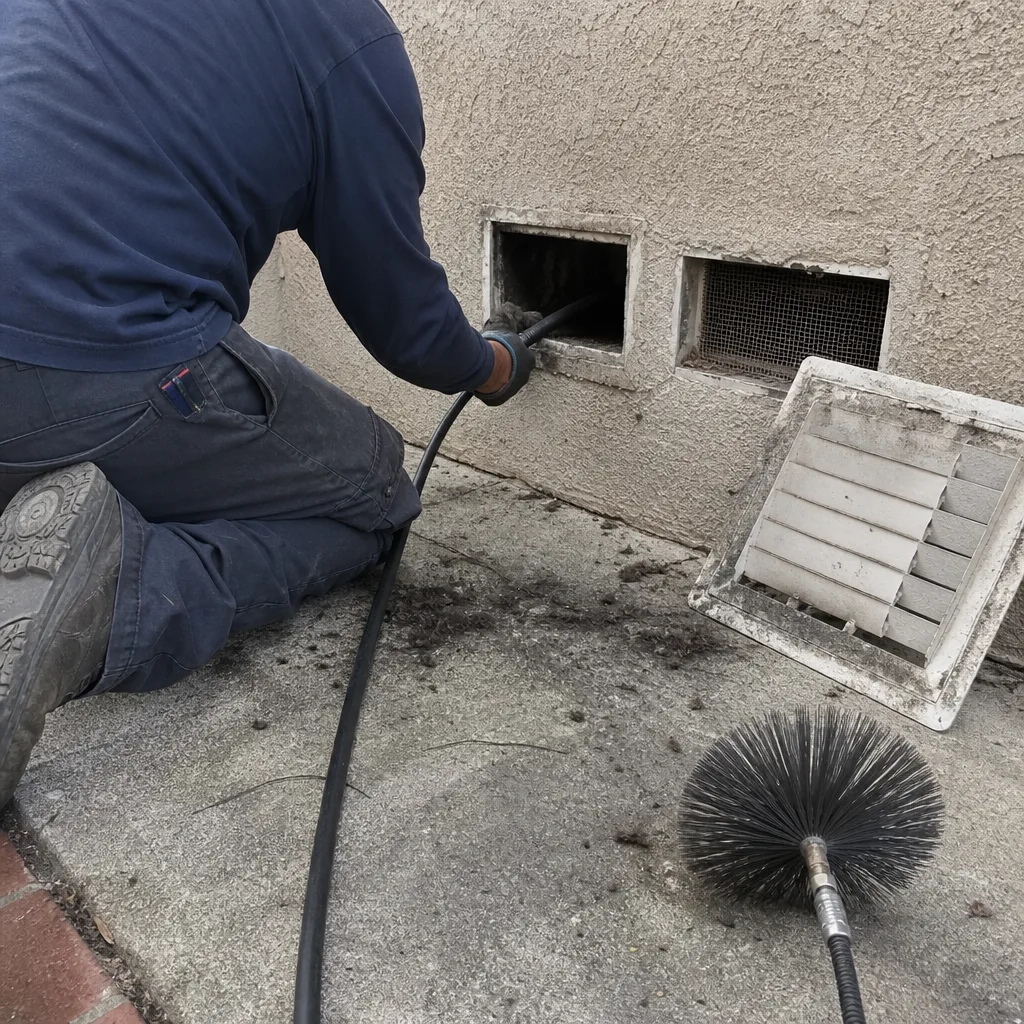 Before
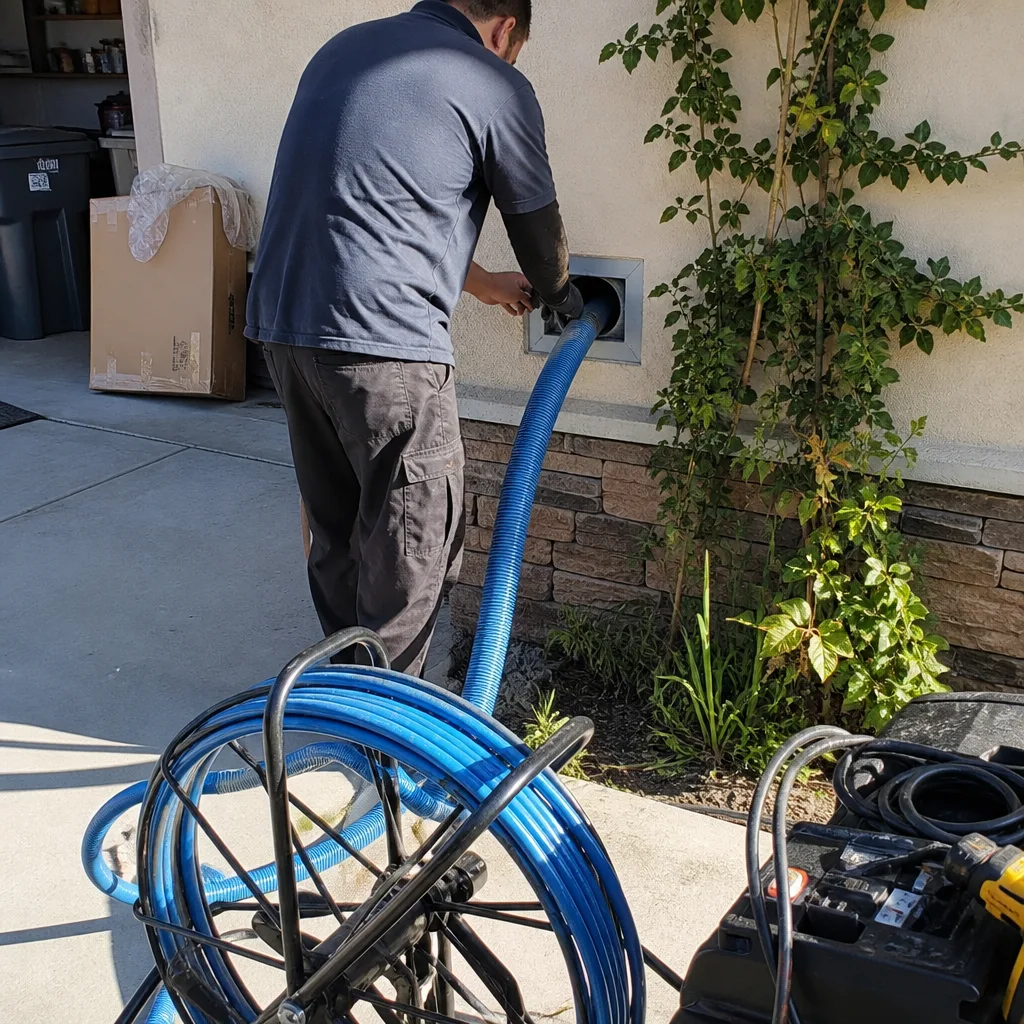 After
After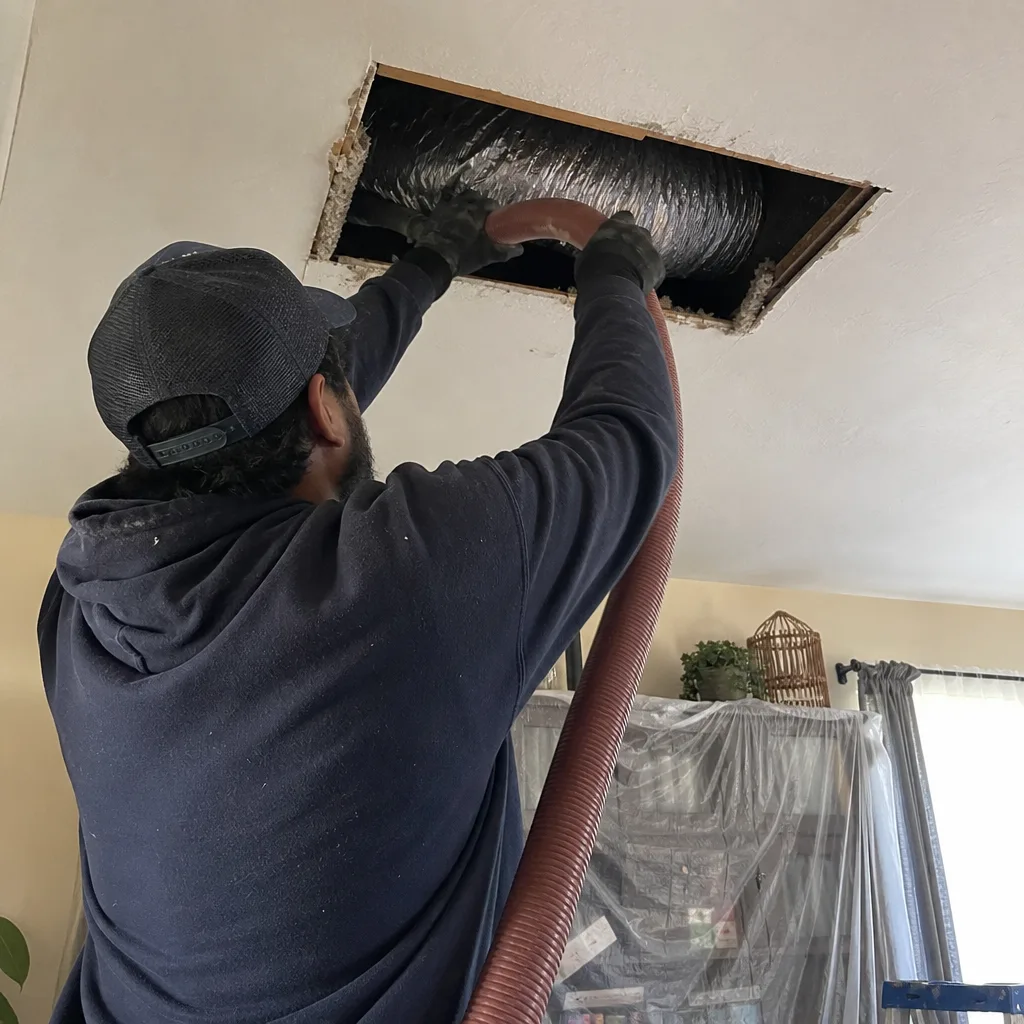 Before
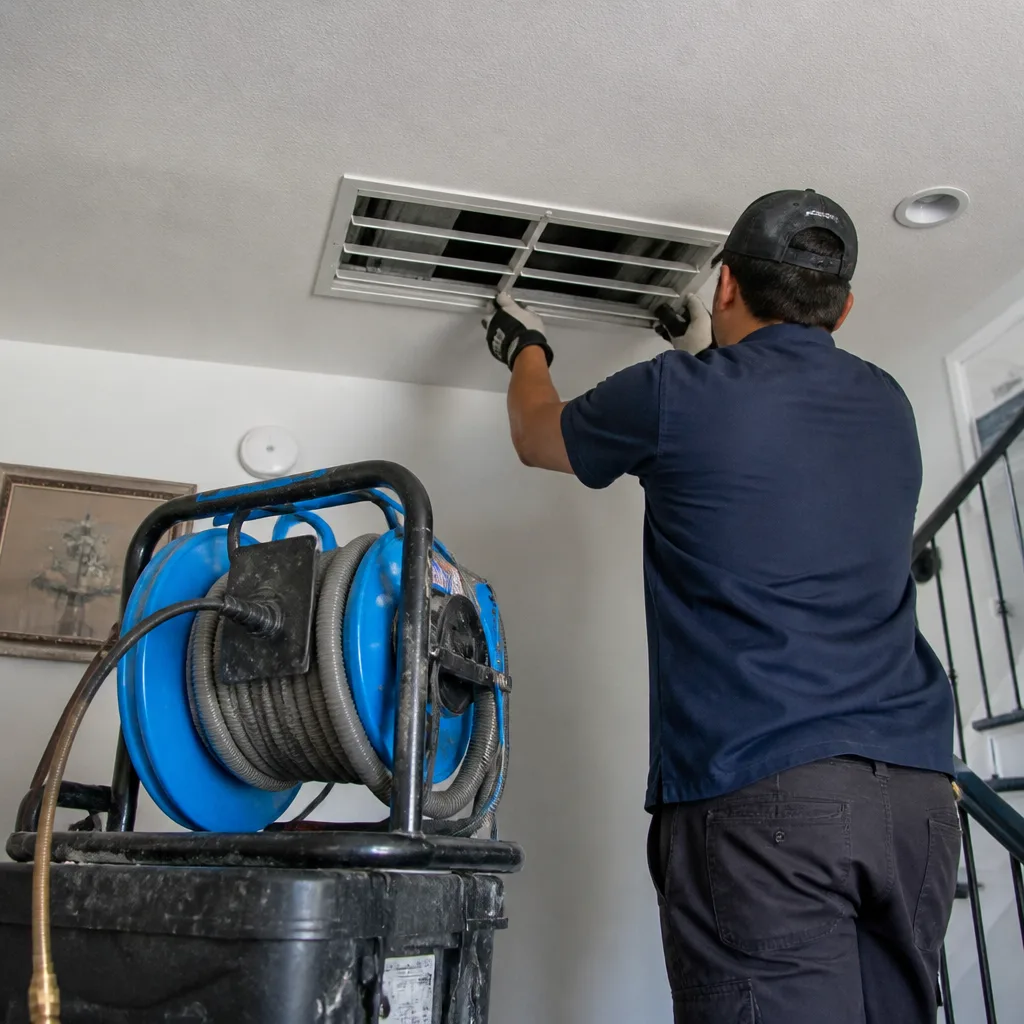 After
After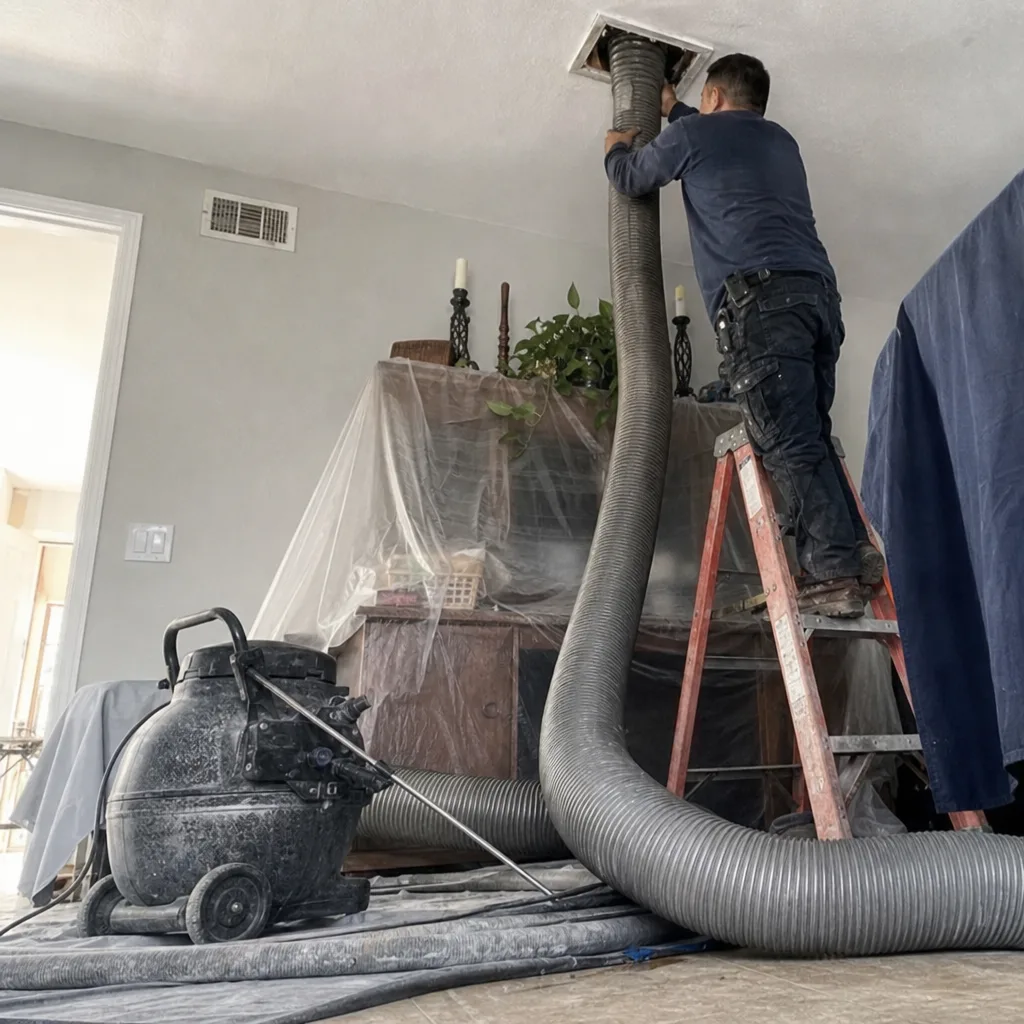 Before
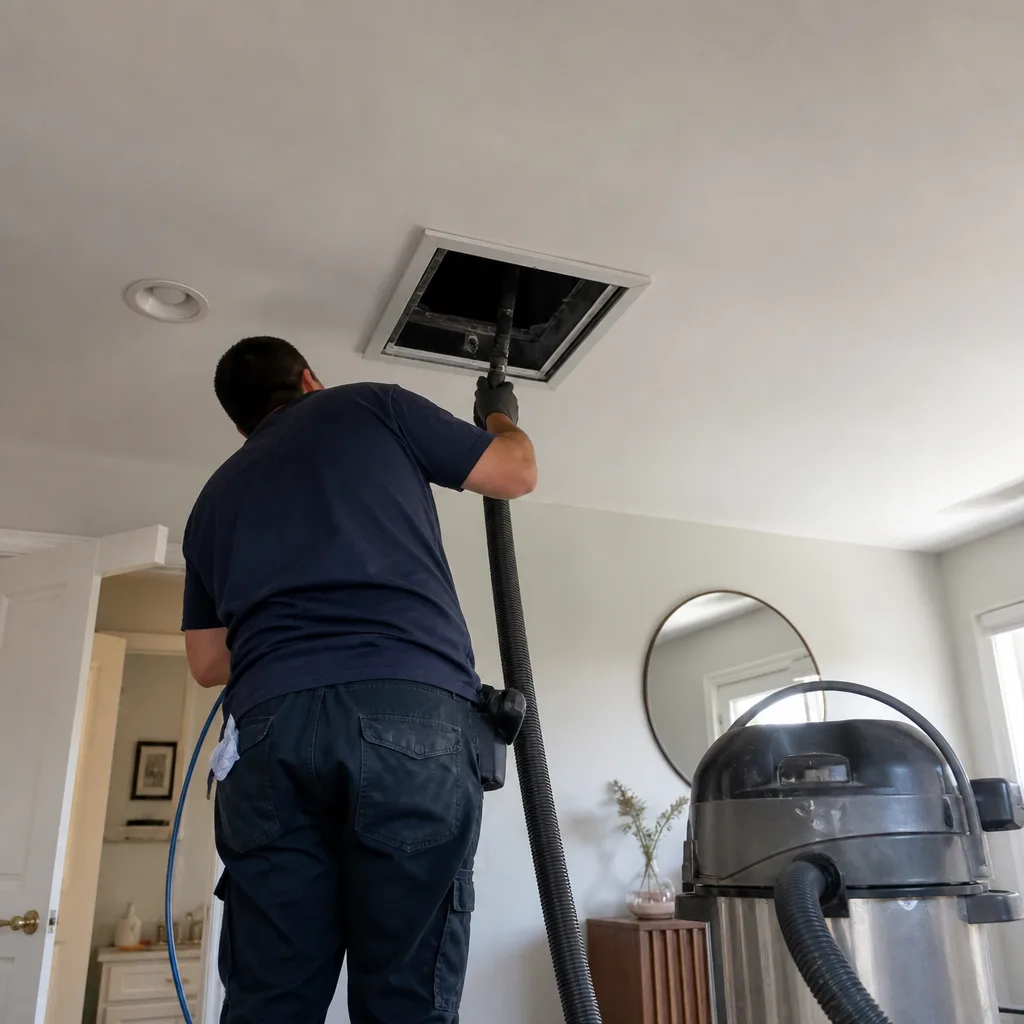 After
AfterRooms That Never Get Enough Air
What’s Happening
When one or more rooms in your home consistently feel stuffy, weak on airflow, or dramatically warmer or cooler than the rest of the house, the most common cause is a restriction somewhere in the duct system – either a blockage inside the ducts, a significant buildup of debris narrowing the airflow path, or a duct that has come disconnected or collapsed. A trained technician can usually trace the cause in a single visit.
The duct system in most homes is out of sight and easy to forget. Over years of normal use, dust, pet hair, and debris accumulate inside. A single collapsed flex duct behind a wall or in an attic can cut airflow to an entire wing of the house. Sometimes the restriction isn’t a blockage at all – it’s a damper that was bumped closed during a previous repair and never reset. The point is, there’s almost always a specific, fixable cause. Standing in a room that never feels right isn’t something you just have to accept.
Why It Happens
Heavy Debris Buildup Inside the Ducts
Over time, dust, pet dander, and household debris coat the interior walls of ductwork and gradually narrow the passage air travels through. Think of it like a drinking straw being slowly pinched from the inside. You’ll often notice this is the culprit when the weak-airflow rooms are on the far end of the system – registers closest to the air handler still feel reasonably strong, but the ones farthest away are barely producing a breeze. If your supply vents have a visible grey ring of dust around the grille, that’s a visible indicator of what’s going on deeper inside.
A Disconnected or Collapsed Duct Segment
Flexible ductwork – the ribbed silver tubing common in attics and crawl spaces – can sag, kink, or pull apart at joints over time, especially in areas that experience temperature extremes. When a duct section separates, conditioned air escapes into unconditioned space before it ever reaches the room you’re trying to heat or cool. A strong sign of this problem is a sudden or dramatic change in airflow – a room that worked fine for years and then noticeably lost pressure. If you have access to your attic or crawl space, look for any flex duct that appears kinked at a sharp angle or has a visible gap at a connection point.
A Closed or Stuck Damper
Most duct systems include dampers – small internal flaps that regulate airflow to different zones. They’re typically set during installation and left alone. But a damper can be accidentally bumped during unrelated HVAC work, or the mechanism can corrode and stick in a partially closed position. This one is tricky to spot without going inside the duct. What you can observe from the outside: if one specific room lost airflow noticeably after a previous technician or contractor worked near that area of your system, a displaced damper is worth investigating first.
A Dirty or Blocked Return Air Vent
The return vents pull air back to the air handler to be reconditioned – if they’re clogged with dust or physically blocked by furniture, the whole system loses the pressure balance it needs to push air efficiently through the supply side. Check your return grilles (usually larger, unpainted, and often located in hallways or on walls near the floor). If the grille is matted with grey-brown debris, or if a piece of furniture has been pushed against it, that single obstruction can starve multiple rooms of airflow. This one is worth checking before you call anyone.
What to Do Right Now
- Check your return air vents first. Make sure nothing is blocking them – furniture, rugs, curtains. If the grille is visibly clogged, you can remove it and vacuum the accessible surface. Go no deeper than arm’s reach; you don’t need to go inside the duct.
- Look at your air filter. A clogged filter restricts airflow at the source. Slide it out – if you can’t see light through it, replace it before calling anyone. It won’t solve a blocked duct, but it rules out the simplest explanation and costs almost nothing.
- Walk the house and note which vents are weak and which are strong. Write it down or photograph each register with your phone. This pattern is useful diagnostic information your technician will want to see, and it takes you five minutes.
- If you have access to your attic or crawl space, look for obviously kinked or disconnected flex duct. Look, don’t touch – note what you see and photograph it. Do not attempt to reattach disconnected duct sections yourself if they’re above your head or require working at height or in a confined space.
- Do not attempt to inspect or adjust anything inside the air handler cabinet, near electrical connections, or near your furnace heat exchanger. Those components carry current and can involve combustion gas. Stop at what you can see from outside the equipment and call a professional for anything further.
How We Fix It
When your local Morton’s Air Duct Cleaning team arrives, the first thing the technician does is assess the whole system – not just the room you called about. That means checking static pressure at the unit, inspecting accessible duct runs, and confirming which registers are underperforming and by how much. Before any work starts, you get a written price. That’s not a policy we pull out when asked – it’s how every single job runs, with no exceptions.
The service that resolves most weak-airflow complaints is a professional air duct cleaning. Using equipment from Rotobrush and Nikro, the technician dislodges and extracts accumulated debris from the full duct system – supply lines, return lines, and the main trunk – restoring the interior diameter the air is supposed to travel through. If a disconnected or damaged duct segment is found, that gets documented and discussed with you before anything else happens. The full process on a typical home takes two to four hours. Every job is covered by the 365-Day Done Right Promise: if it’s not done right, we make it right.
Frequently Asked Questions
It depends on what’s causing it. A dirty duct system is not a safety emergency – it’s a comfort and efficiency problem that gets worse gradually, not overnight. But a disconnected duct venting conditioned air into an attic or crawl space is costing you real money every hour your system runs, and a kinked duct near a gas furnace should be looked at sooner rather than later by a professional who can confirm there’s no interaction with the flue. If there’s any possibility gas equipment is involved, call (323) 918-4345 and describe what you’re seeing – a live person will help you decide what to do next.
In most cases, yes – removing the debris buildup that’s been gradually narrowing the duct interior makes a measurable difference to airflow at the registers. If the problem is structural, like a collapsed or disconnected segment, the technician documents it and explains exactly what’s needed before anything is charged. You’ll never walk away from a Morton’s visit with a surprise invoice for work you didn’t agree to in writing first.
Call (323) 918-4345 and ask – a real person will answer and check your local Morton’s team’s schedule directly. Air duct cleaning is a scheduled service, not an emergency dispatch, but your local team works hard to accommodate the schedule that fits your family. The sooner you call, the sooner we can get you on the calendar.
Every completed Morton’s job includes a photo of the clean-up before the crew leaves – visual proof the home was left right. Beyond that, the 365-Day Done Right Promise means if something isn’t right after we leave, we come back and make it right. No negotiation, no fine print. If you have doubts in the days after the job, call (323) 918-4345 and we’ll sort it out.
Get It Fixed
If a room in your home still isn’t getting the air it should, your local Morton’s Air Duct Cleaning team can find out why. Call (323) 918-4345 – a real person answers around the clock. Or book online and we’ll confirm your visit. Written price before we start. 365-Day Done Right Promise on every job.
Written by Paul Adeyemi, Owner at Morton’s Air Duct Cleaning, a member of the Cedarwell family of companies since 2005.
What Our Customers Say
"Ducts and dryer vent both. They put runners down the whole hall and wore booties. Spotless after, and they showed me photos of what came out. Worth every penny."
- Bonnie Vo"Spotless work. They laid drop cloths everywhere and I was honestly impressed there was zero mess at the end. Showed me the dirt they pulled out so I could see it was worth it."
- Shelby Dunham"New house, old dusty ducts. They were gentle in the house, laid down drop cloths, and double checked every register was sealed back up. Air smells fresh now."
- Scott Hemmings