
Last updated October 8, 2026
Whole-system duct and dryer vent check with before-and-after photos - you see exactly what came out of your vents
That "$99 whole-house special" is a bait ad - the real number appears once they are in your hallway, or the "clean" is a shop-vac at the register. We photograph the inside of your ducts before and after instead.
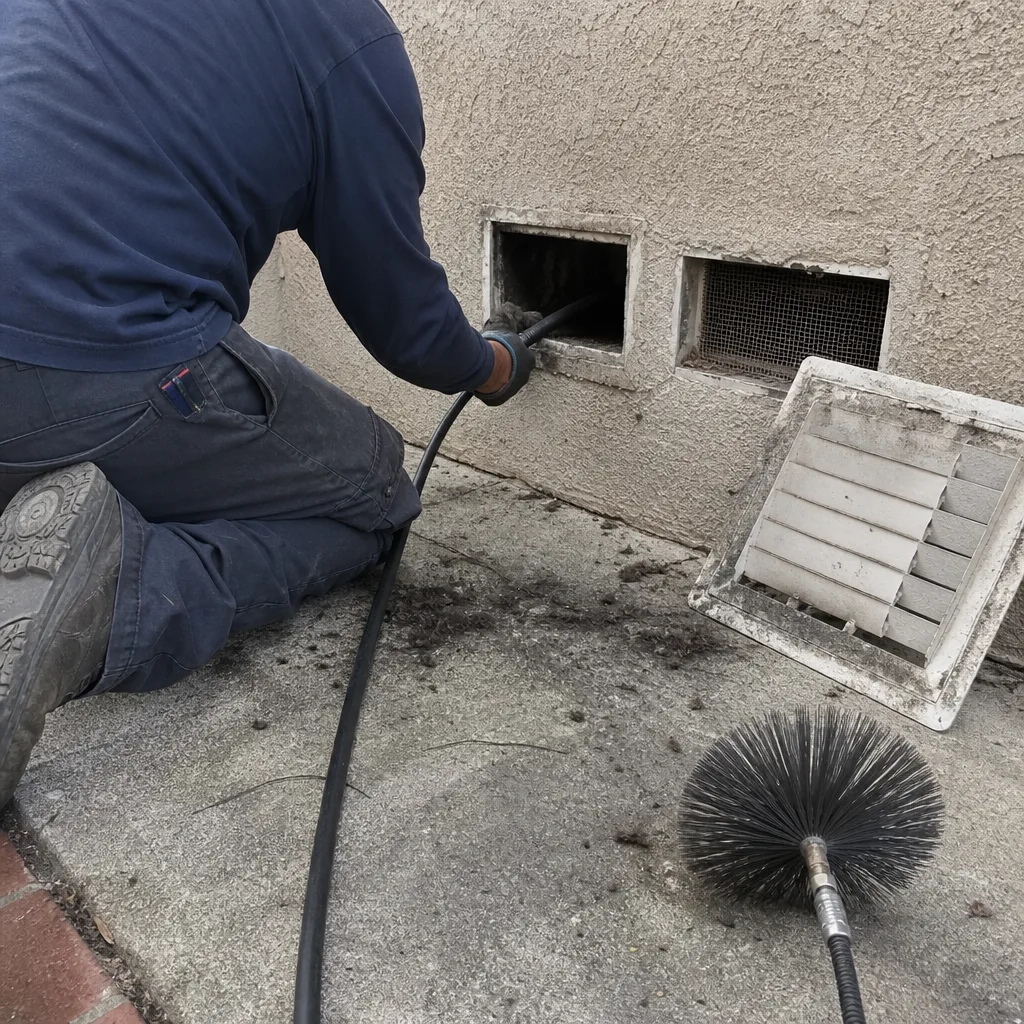 Before
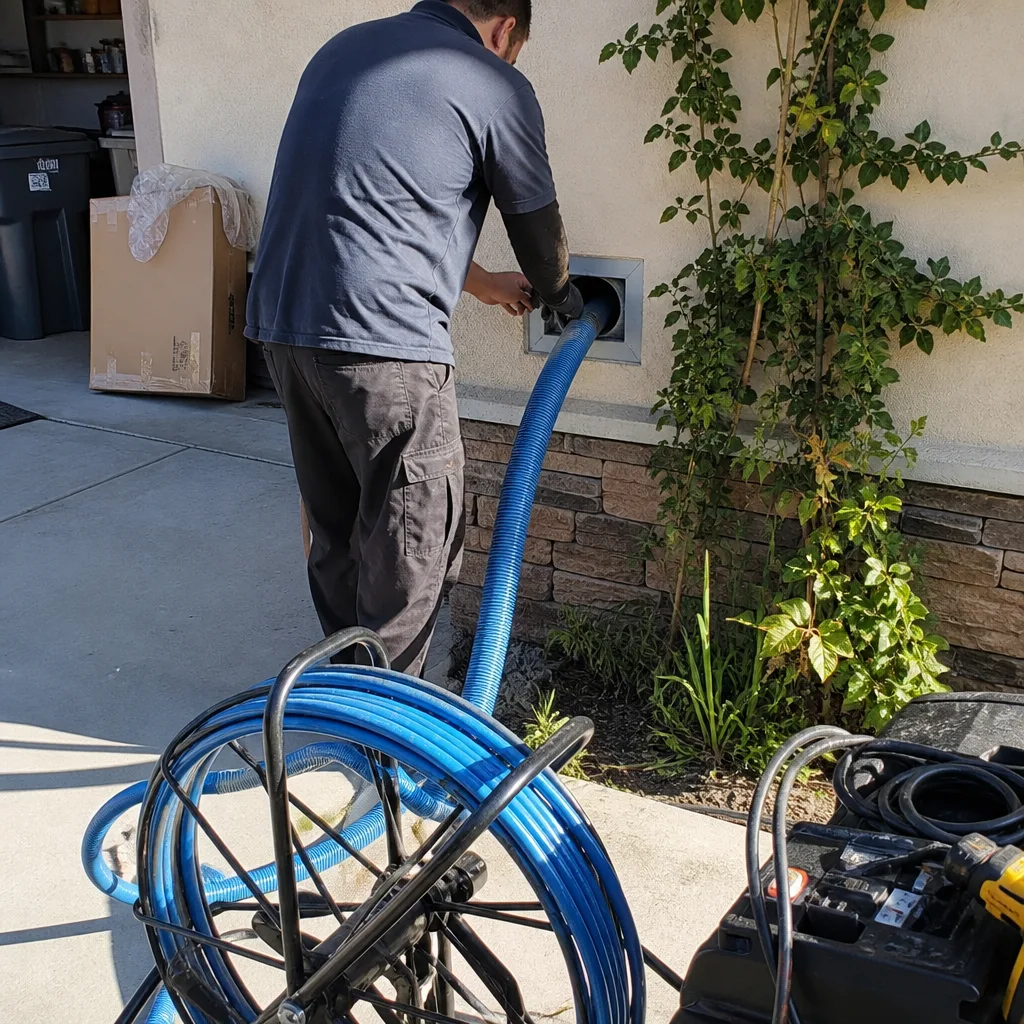 After
After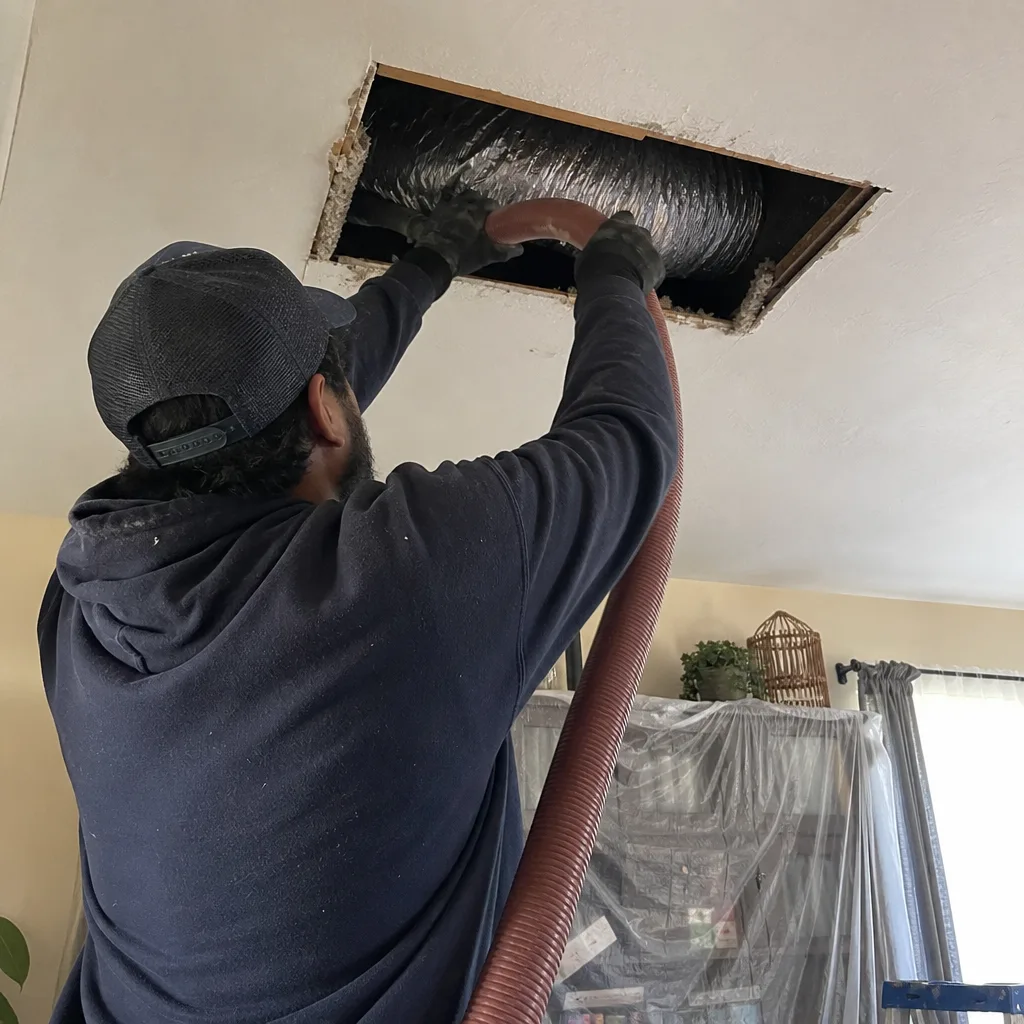 Before
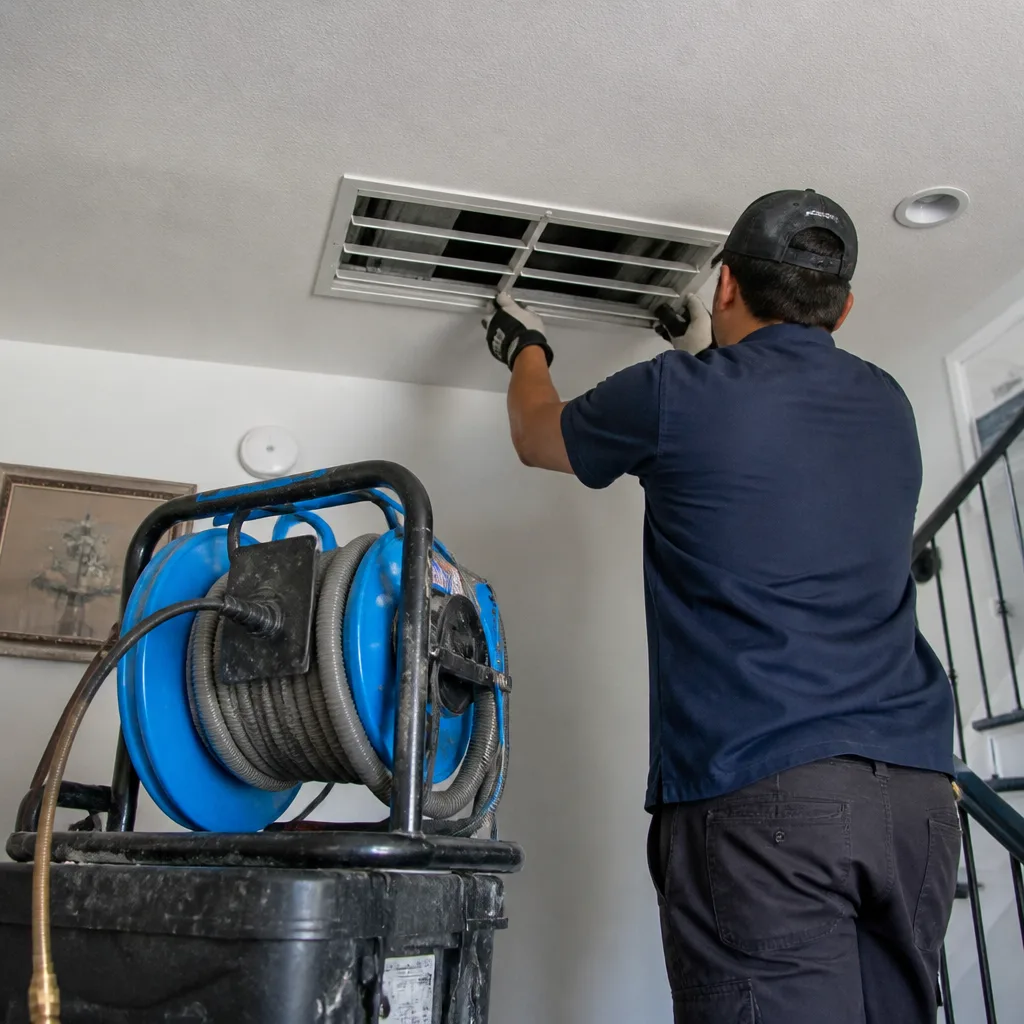 After
After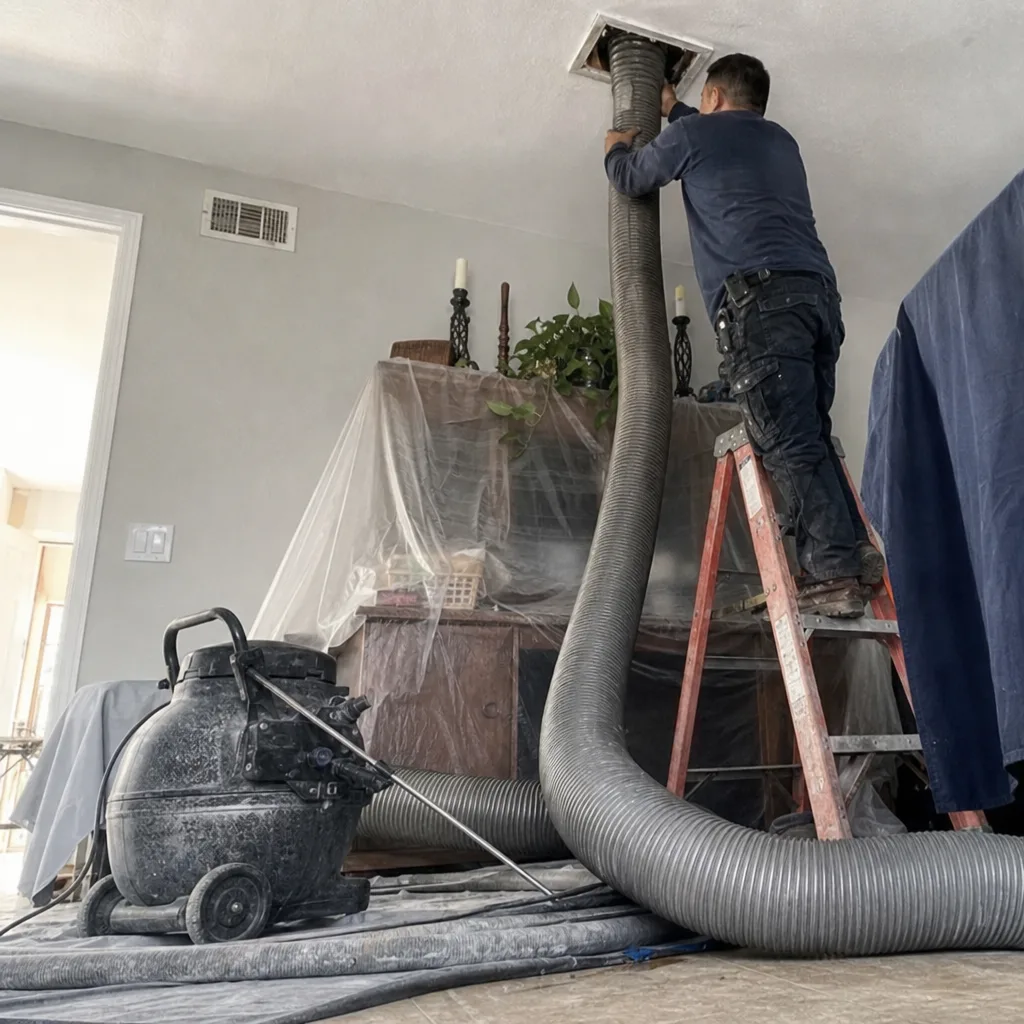 Before
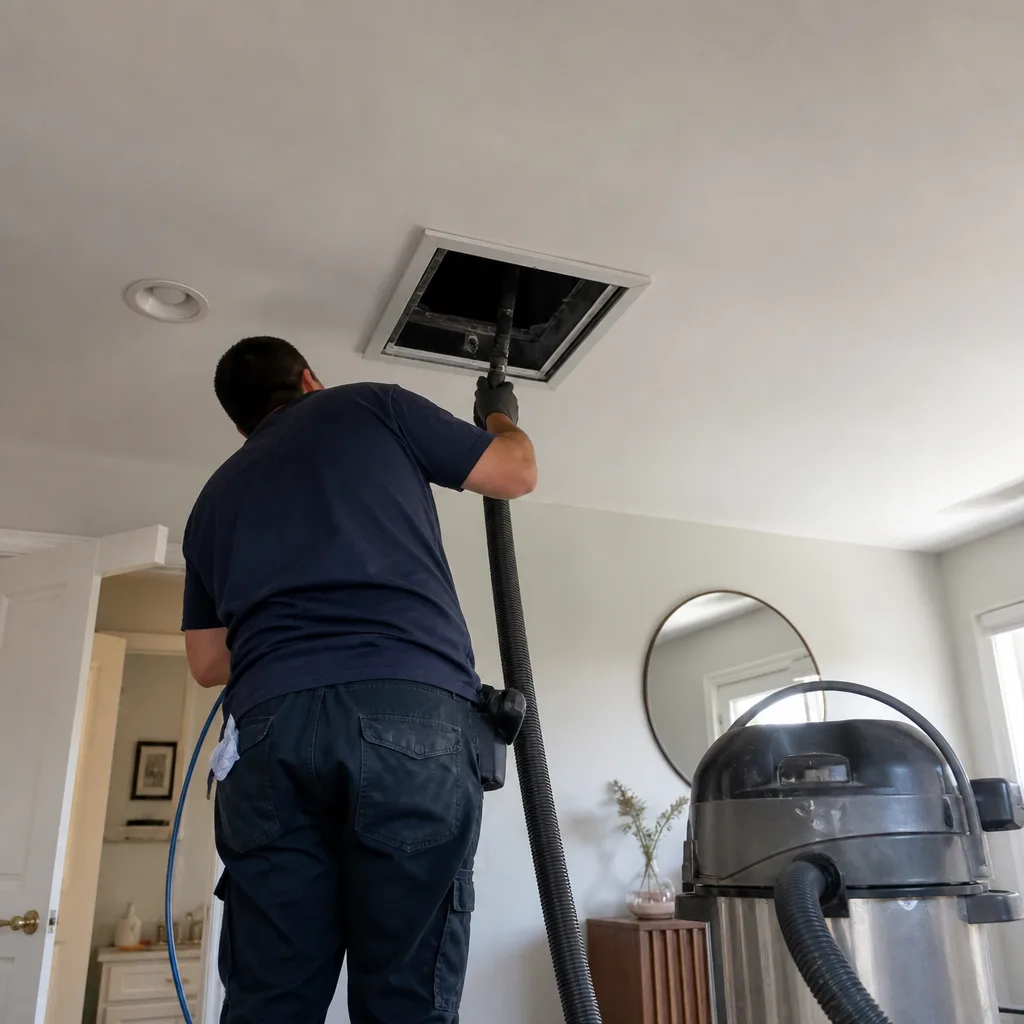 After
AfterThe Complete Air Duct Cleaning Guide for Los Angeles Homeowners
After the 2023 fire season, several Los Angeles homeowners ran indoor air quality monitors on a hunch. What they found surprised even the technicians who later opened their ducts: particulate readings inside the HVAC system were higher than the outdoor air on a clear day. The ductwork had been pulling wildfire smoke in and holding onto it for months. This guide and our Complete Guide to Air Duct Cleaning in Los Angeles explain why LA ductwork behaves differently than ductwork anywhere else, what that means for your home, and how to get the job done right the first time without a surprise invoice at the end.
Quick Answer
Air duct cleaning in Los Angeles typically costs $450 to $850 for a whole-home system, depending on the home’s size, duct count, and contamination level. In LA’s climate, with year-round HVAC use and seasonal wildfire smoke, most homes with kids or pets benefit from cleaning every 3 to 4 years rather than the 5 to 7 years recommended in cooler climates. A legitimate LA duct cleaning company provides a written flat price for the entire system before work begins, uses professional contact-cleaning equipment like Rotobrush and Nikro, and includes before-and-after photos. Learn about our Air Duct Cleaning services.
Table of Contents
- Why Los Angeles Ducts Get Dirtier Than Ducts in Other Cities
- How Wildfire Smoke and Ash Enter Your Duct System
- How LA’s Housing Stock Affects Duct Risk by Neighborhood
- What Professional Cleaning Equipment Actually Does That a Shop Vac Can’t
- What Air Duct Cleaning Costs in Los Angeles and What Should Be on the Estimate
- Signs Your Los Angeles Home Needs Duct Cleaning Now
- What a Legitimate Duct Cleaning Visit Looks Like, Step by Step
- Common Mistakes to Avoid
- When to Call a Professional
- Frequently Asked Questions
- The Bottom Line
Why Los Angeles Ducts Get Dirtier Than Ducts in Other Cities
Most air duct cleaning advice online was written for homes in Minnesota or Ohio, where the furnace runs from October to March and sits idle all summer. Los Angeles doesn’t work that way. Your HVAC system moves air through the ducts nearly every day of the year, cooling through summer, heating on those cold January nights when the marine layer never burns off. That constant airflow means constant filtration load. A system in Encino might cycle 2,000 hours a year compared to 800 hours for a comparable home in Cincinnati. More runtime equals more dust moving through the return grilles and more of it embedding in the duct walls.
The second factor is the air itself. Los Angeles sits in a basin shaped by mountains on three sides and ocean on the fourth. That geography traps particulate matter. Freeway dust from the 405 and the 10, brake dust from stop-and-go traffic, pollen from the chaparral and the eucalyptus trees, and the fine grit that blows in from the high desert get pulled into homes through open windows and doors, then circulated through the return air vents. We see duct systems in Silver Lake and Echo Park that collect a fine black film within 18 months of a professional clean, not because anyone is doing anything wrong but because the outdoor air in central Los Angeles is simply loaded with particles.
The marine layer adds one more variable. In neighborhoods like Santa Monica, Mar Vista, and Playa del Rey, morning fog keeps humidity elevated during the hours when HVAC systems are cycling most heavily. Dust plus moisture equals adhesion. Particles that would stay airborne in Phoenix settle and stick in a Los Angeles beach community duct system.
How Wildfire Smoke and Ash Enter Your Duct System
As covered in The Complete Dryer Vent Cleaning Guide for Los Angeles Homeowners, when a wildfire burns anywhere in the region, the smoke doesn’t just drift past your windows. Your HVAC system actively pulls it inside. Return-air registers are designed to suck air from the living space into the system so it can be filtered and recirculated. During a smoke event, that return air carries fine ash particles, soot, and partially burned plant material straight into the ductwork. The filter catches some of it, but the majority of wildfire particulate is under 2.5 microns, and even high-MERV filters let a portion through. Once inside the ducts, the ash settles onto the duct walls, the coils, and the blower assembly.
What you should look for after a fire event near your zip code:
- A faint but persistent smoke smell when the HVAC turns on, even weeks after the outdoor air cleared.
- Black or gray dust accumulating on vent covers and registers, especially in rooms furthest from the return.
- Visible ash in the filter during the first filter change after a fire, even if it’s only been in place for a month.
- A coating of fine dark grit on furniture and windowsills within a day or two of dusting, which often means the ducts are redistributing ash.
If you live in a neighborhood that experienced heavy smoke from the 2025 Palisades fire or the 2023 Bobcat fire, these residues can sit in the system indefinitely. One detail most homeowners don’t consider: the ash doesn’t just sit there. Every time the blower kicks on, a portion of it resuspends and blows back into your living space. The duct system becomes a reservoir that keeps reintroducing smoke particles long after the outdoor air quality index has dropped back into the green.
How LA’s Housing Stock Affects Duct Risk by Neighborhood
Los Angeles was built in waves, and each construction era created a different kind of duct system with a different set of vulnerabilities. You can’t treat a 1920s Craftsman the same way you treat a 2008 condo tower.
Valley Homes Built 1950s to 1980s
Neighborhoods like Northridge, Reseda, Sherman Oaks, and Woodland Hills are dominated by stucco homes built during the suburban boom. Many of these houses had HVAC added after construction rather than designed in, which means the ducts often run through hot attics and cramped crawlspaces. Flexible ductwork from the 1980s and early 1990s degrades over time. The inner liner separates, the insulation sheds, and gaps open at the joints. A house in Tarzana with original 1980s flex duct is pulling attic air into the system every time it runs. Attic air in the Valley in August is 130 degrees, and it’s carrying insulation fibers, rodent droppings, and decades of dust.
Older Craftsmans in Pasadena and Northeast LA
Pasadena, Altadena, Highland Park, and Eagle Rock have a high concentration of homes from the 1910s through the 1940s. These houses started with floor furnaces or no central air at all. When central HVAC was retrofitted, often in the 1990s, the ducts were squeezed into whatever space was available. The result is a patchwork of metal and flex duct, uneven airflow, and return-air paths that may include wall cavities rather than sealed duct runs. These systems collect dust unevenly, and cleaning them requires a technician who understands older architecture, not someone running a franchise playbook.
High-Rise Condos in DTLA and Koreatown
Condo towers present a different challenge. The duct run from a shared rooftop unit or a hallway utility closet to a unit on the 28th floor might be 100 feet long. In many buildings constructed before 2000, that duct was never designed with cleaning access in mind. It’s still cleanable with the right equipment, but the job requires access panels, long-reach tools, and coordination with building management. If you own a condo in DTLA, Koreatown, or Century City, ask the cleaning company directly whether they have experience with high-rise duct access before booking.
What Professional Cleaning Equipment Actually Does That a Shop Vac Can’t
The honest difference between a professional duct cleaning and a handyman with a shop vac isn’t the vacuum’s size. It’s how the dirt is dislodged. Most of what lines a duct wall isn’t loose dust. It’s a compacted layer of dust, skin cells, pet dander, and oily residue from cooking, held together by the moisture cycles of coastal air. A vacuum alone can’t lift it. You need contact cleaning, which means something physically agitates the duct surface while negative pressure pulls the loosened material out of the system.
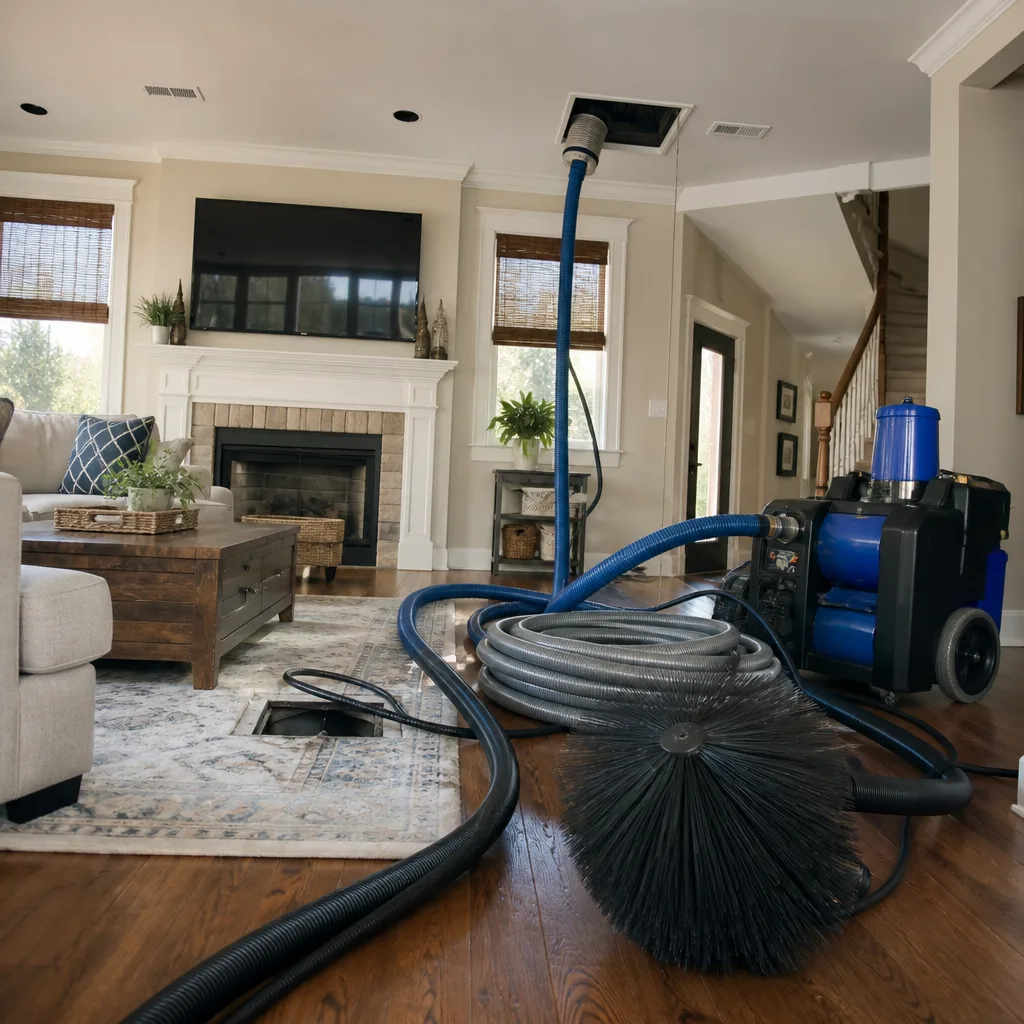
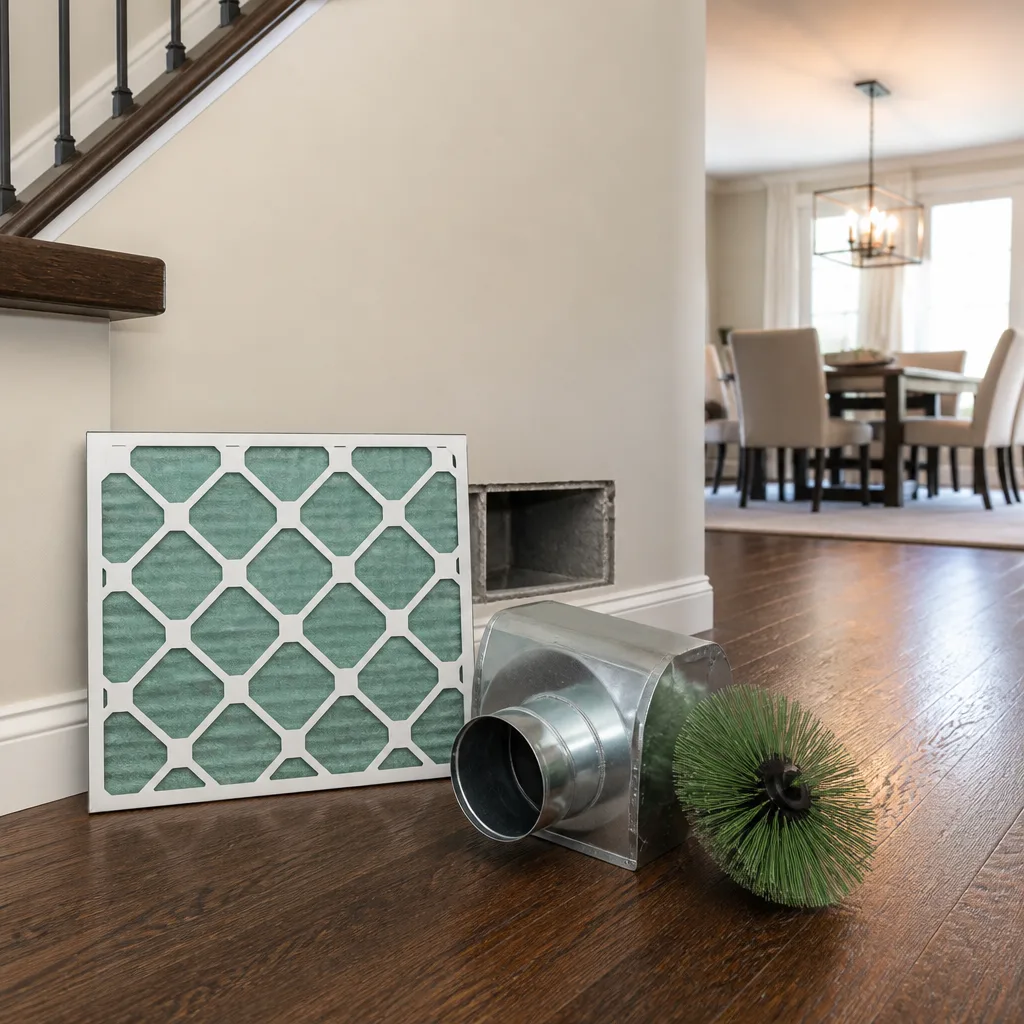
That’s what separates equipment like Rotobrush and Nikro from the rental-store alternatives. A Rotobrush system uses a rotating brush head that scrubs the full interior circumference of the duct while a vacuum continuously extracts the dislodged debris. The brush contacts the duct walls at every point, which is what produces the visual difference in after-photos. Nikro equipment follows the same principle: agitation plus extraction, with the vacuum source connected to the main trunk line so the entire system is under negative pressure during the process. This keeps loosened particles from escaping into the living space during the job.
Beyond the brushing, professional-grade work includes:
- Compressed air or agitation tools for the main trunk line, where most of the accumulated debris settles.
- Access points cut and sealed properly, so the system can be reached without damaging the ductwork itself.
- HEPA-filtered vacuum collection, so what comes out of your ducts stays contained and doesn’t blow back into the room through the vacuum exhaust.
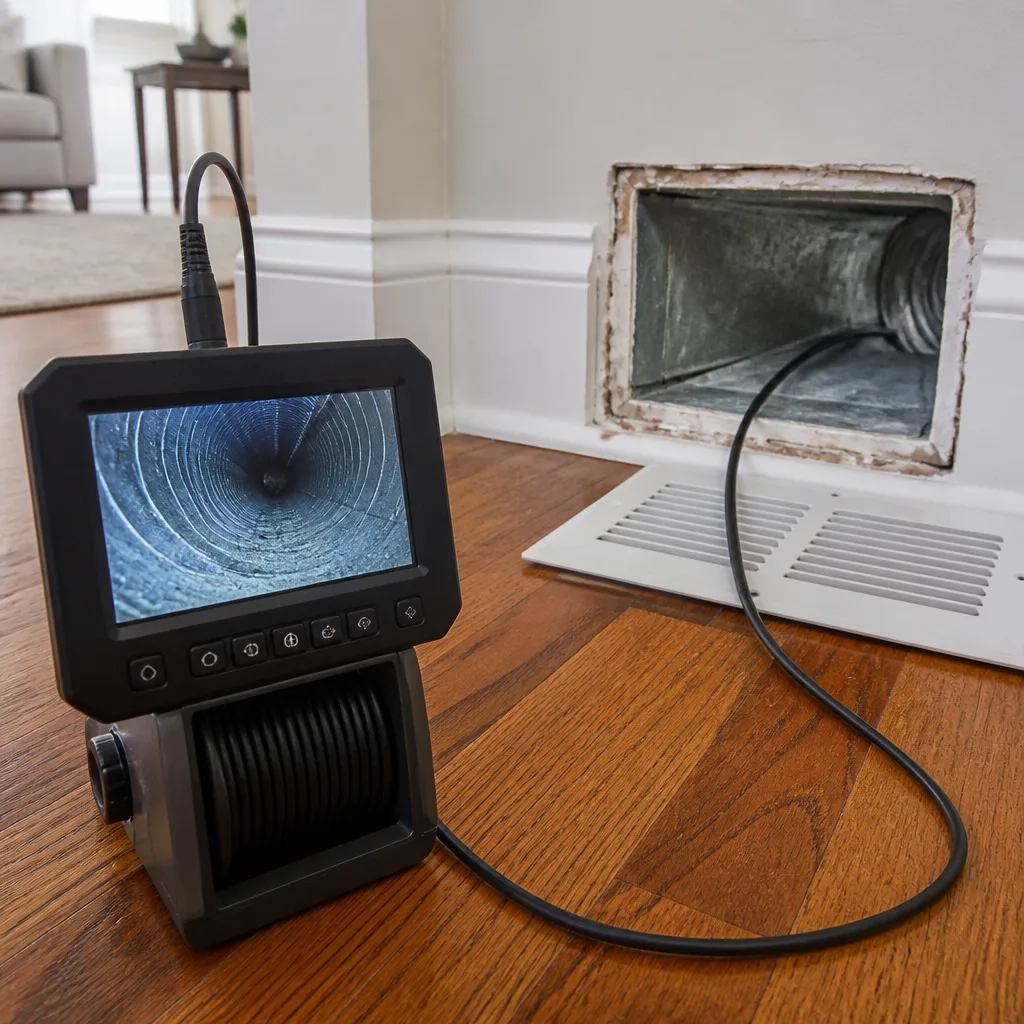
- Post-cleaning inspection and photos, so you can see the duct walls before and after rather than taking a technician’s word for it.
What Air Duct Cleaning Costs in Los Angeles and What Should Be on the Estimate
Whole-home air duct cleaning in Los Angeles typically falls between $450 and $850. The spread reflects real differences rather than arbitrary pricing: the number of supply and return registers, the length of the duct runs, whether the system includes multiple zones, and the degree of contamination. A 1,200-square-foot condo with eight registers sits at the lower end. A 3,500-square-foot two-story home in Encino with two zones and 20 registers sits at the upper end. A legitimate Los Angeles estimate is a flat price for the entire system, agreed in writing before the technician starts.
What a proper estimate should always include:
- The total flat price for the whole duct system, not a per-vent price that can expand at the technician’s discretion.
- The number of registers and returns being cleaned, written down so both parties agree on scope.
- The access method, whether that’s through existing registers or through cut-in access panels, including how those panels will be sealed after.
- Any exclusions, like coils, blower motors, or dryer vents, stated in plain language on the estimate rather than discovered mid-job.
- The equipment being used, so you can verify the company is running professional systems rather than consumer-grade gear.
Morton’s Air Duct Cleaning sets a written price before any work starts, on every visit, with no exceptions. If a company won’t give you a number until after they’ve opened a few registers, that’s not a pricing policy. That’s a negotiation strategy, and you’re on the losing end of it. The final invoice should match the written estimate unless both parties agreed in writing to a change and a change in the price before it happened. Every completed Morton’s job includes a photo of the clean-up before the crew leaves, so we can show you the system looked better when we left than when we arrived. Some commercial jobs ask us to remove that; for our own documentation only.
Signs Your Los Angeles Home Needs Duct Cleaning Now
Some signs are obvious. Others are subtle enough that families live with them for years before connecting the dots. The ones we hear most often from Los Angeles homeowners:
- Dust returns within 48 hours after a thorough cleaning of surfaces, even with the windows closed and a high-MERV filter in place.
- The filter inside the blower pulls more than a light film of dust and starts to show visible buildup within a month.
- Registers have visible dust streaks on the wall or ceiling around the vents, which indicates air is blowing past accumulated debris at the register face.
- Rooms at the far end of the house stay consistently stuffier than rooms near the return, which often means reduced airflow from accumulation in the branch lines.
- Household members with dust allergies notice worsening symptoms at night and in the early morning, when the HVAC has been cycling through accumulated material during sleeping hours.
- You’ve lived in the home for more than three years with kids, pets, or both, and have never had the ducts cleaned.
None of these signs should trigger panic. Ducts do not need to be sterile. But if you’re seeing two or three of them together, it usually means the system has accumulated enough material that it’s recirculating it through the living space, which is the exact thing duct cleaning is designed to address.
What a Legitimate Duct Cleaning Visit Looks Like, Step by Step
If you’ve never hired a duct cleaner before, the process might sound invasive. A properly run visit is methodical, predictable, and should leave your home better than it started. Here is what the sequence should look like:
- Protection goes down before anything else. Shoe covers go on at the door. Drop cloths go under work areas. Furniture is moved or covered only as needed, and before the moving happens, so nothing is done to the floors in the process. At Morton’s, shoe covers and drop cloths come on every visit as part of the Cedarwell Care Promise, not as an optional upsell.
- The technician identifies the system and confirms the plan. Where the air handler sits, where the returns pull from, how the branch lines connect, and where access will be made. You should know exactly what will happen before it happens.
- The vacuum and agitation equipment is connected. The system is placed under negative pressure so debris is extracted, not redistributed.
- Each register and branch line is contacted and cleaned. This is the brush work. It takes time, and any company that finishes a whole home in 45 minutes is skipping something.
- The main trunk and return are cleaned. This is where the bulk of the material lives in most homes.
- Access panels are sealed and the work area is cleaned. Floors swept, debris removed, everything back where it was.
- Before-and-after photos are shown. You should see the duct walls, not just take a verbal assurance. Every completed Morton’s job includes this before the crew leaves.
- The written price is revisited. What was quoted is what’s billed. The 365-Day Done Right Promise means what it says: if the job isn’t right, Morton’s makes it right.
Common Mistakes to Avoid
- Hiring on coupon price alone. This industry has a well-earned reputation for bait-and-switch pricing: a $99 advertised special that becomes $900 once the tech is in the driveway. A good Los Angeles duct cleaning is a real service with real labor and real equipment behind it. If the advertised number is dramatically lower than $450 for a whole home, expect the invoice to change once the scope does.
- Assuming the HVAC filter protects the ducts. The filter protects the equipment, not the ductwork. Air passes through the filter after it has already traveled through the return ducts. The return side of a duct system is almost always the dirtiest, and the filter never touches it.
- Waiting for a visible problem. By the time you see dust streaking on the walls around the registers, the system has been recirculating accumulated material for a while. The ductwork is out of sight, which is why it gets ignored until something forces attention to it.
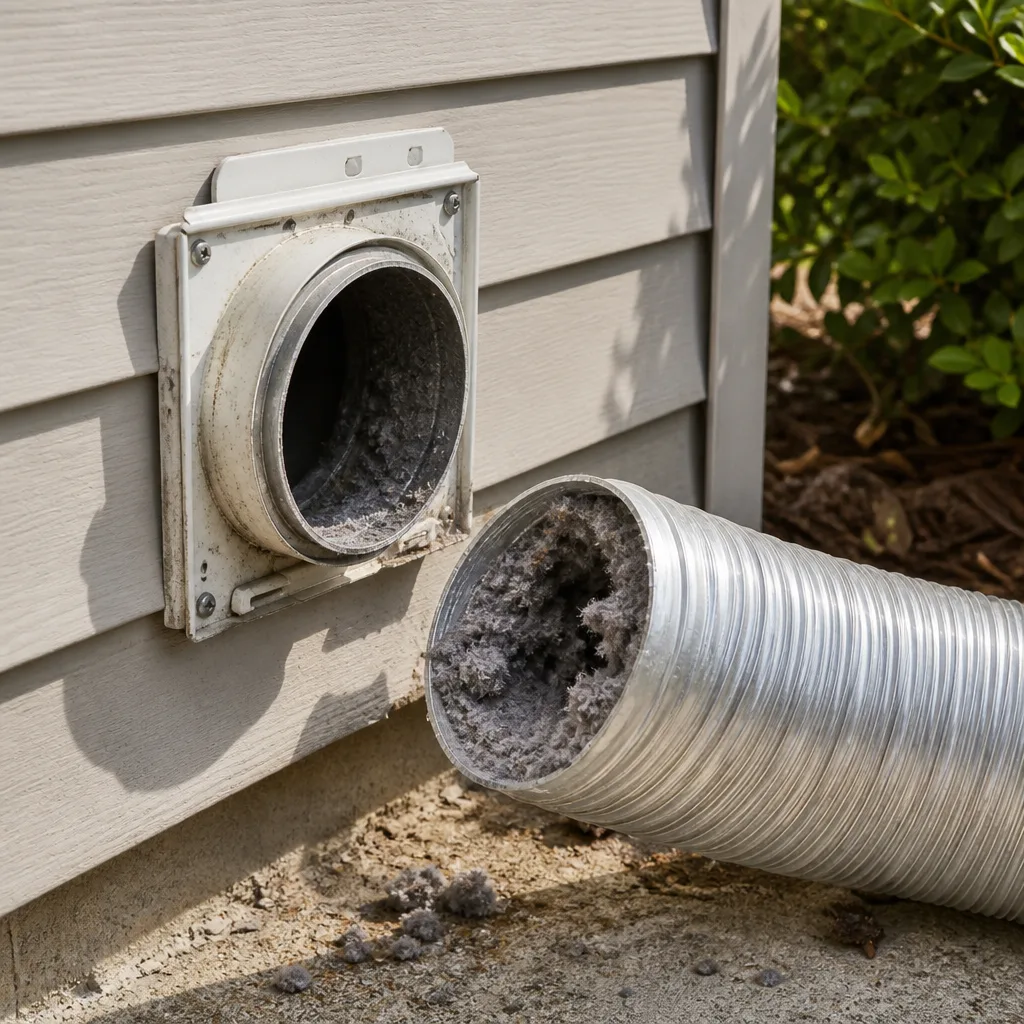
- Skipping the dryer vent. A clogged dryer vent is both a fire risk and an efficiency problem. If you’re cleaning the ducts, ask about dryer vent cleaning in Los Angeles while the crew is there. It’s a different system, but the same principle applies: out of sight, rarely cleaned, and responsible for real problems when neglected.
- Believing duct cleaning is a scam. There’s a persistent internet claim that duct cleaning is unnecessary. That claim comes from a 1997 EPA publication that has been cited out of context for 30 years. The research landscape has changed substantially, and for homes in Los Angeles with wildfire exposure, constant HVAC use, kids, and pets, the relevant question isn’t whether cleaning ever helps. It’s whether your specific system has accumulated enough to justify the work. In our experience across Los Angeles, most family homes built before 2000 answer that question with a clear yes.
- Not asking what equipment will be used. Equipment quality determines outcome. If a company can’t name what they run, that’s a red flag. Professional systems from Rotobrush, Nikro, and Abatement Technologies are expensive and designed for this specific task. A crew using homeowner-grade tools is not performing the same service, regardless of what the invoice says.
When to Call a Professional
Duct cleaning is not a DIY task. The tools required for contact cleaning cost more than the service itself, and without negative-pressure extraction, dislodging accumulated dust simply moves it from the ducts into your living room. You should call a professional if you’ve experienced a wildfire smoke event within a few miles of your home, if you’ve lived in the home for three or more years with pets and kids, if any rooms stay persistently dusty within days of cleaning, or if you’re planning to sell and want the system documented as clean. You should also call before the rental equipment, because by the time you’ve rented a roto-brush, bought a HEPA vacuum adapter, and spent a weekend learning on your own home, you’ll have spent more than the service cost and gotten a worse result than a trained crew with professional equipment and experience. Morton’s Air Duct Cleaning offers free estimates in Los Angeles; call (323) 918-4345 and a live person will answer. Not a voicemail, not a chatbot. A real human who can schedule an estimate at a time that works for your household.
Frequently Asked Questions
Whole-home air duct cleaning in Los Angeles typically costs between $450 and $850, depending on home size, the number of registers, and the level of buildup. The single most important line on any estimate is the total flat price for the entire system, written down before work begins. Call (323) 918-4345 for an exact quote; estimates are free.
Low quotes in this industry usually follow a pattern: the advertised price covers a partial scope, and the real work is added as “necessary” once the technician is inside your home. A legitimate company running professional-grade equipment like Rotobrush or Nikro systems, sending background-checked uniformed technicians, and protecting your floors with shoe covers and drop cloths cannot deliver a whole-home clean for $99. If the number sounds too good, the invoice will usually explain the gap.
You should receive before-and-after photos of the duct interiors from the same access points, showing the duct walls before and after contact cleaning. A company that won’t show you photos, or that gives you only after-photos without reference points, is asking you to take the work on faith. At Morton’s, every completed job includes a photo of the clean-up before the crew leaves.
In Los Angeles, most homes with children or pets benefit from professional cleaning every 3 to 4 years due to the near-constant HVAC runtime and the particulate load in the basin air. Homes that experienced significant wildfire smoke exposure should be cleaned once after the event, even if regular maintenance was recent. Homes without kids or pets, in newer construction with sealed ducts, may go 5 years or longer. Call (323) 918-4345 for an honest assessment of your specific home; estimates are free.
Duct cleaning removes the source of the smell that lives in the ductwork, but it won’t address odor that has worked into walls, carpet, upholstery, or attic insulation. In homes where smoke odor persists after a professional duct cleaning, the remaining smell is almost always coming from porous materials in the living space, not the ducts. A proper cleaning does make a meaningful difference when the HVAC system was the primary odor source, which is common after fire events.
A professional duct cleaning should not create a hazard for kids or pets in the home, but it does involve equipment noise, air movement, and technicians moving through the living space. During the visit itself, keeping kids and pets in another room is the right call. The cleaning process, when done correctly with HEPA-filtered negative-pressure equipment, does not leave chemical residue or odors behind. Morton’s uses pet-safe product choices where available and keeps the work area as calm as possible, especially when a baby or toddler is napping.
The Bottom Line
Los Angeles homes aren’t like homes in other cities, and the ducts aren’t either. Year-round HVAC use, basin air quality, wildfire smoke, and a housing stock that spans a century of construction methods all combine to make this one of the few cities where regular duct cleaning is a defensible, evidence-based maintenance task rather than a discretionary upgrade. The work isn’t complicated, but it does require the right equipment, a written price before any work starts, and a company that treats your floors and your family the way they’d treat their own. For more guides & resources, visit our blog. That’s the standard Morton’s Air Duct Cleaning has worked to since 2005, and it’s the standard we’ll bring to your home.
Written by Paul Adeyemi, Owner at Morton’s Air Duct Cleaning, serving Los Angeles since 2005.