
Last updated October 8, 2026
Whole-system duct and dryer vent check with before-and-after photos - you see exactly what came out of your vents
That "$99 whole-house special" is a bait ad - the real number appears once they are in your hallway, or the "clean" is a shop-vac at the register. We photograph the inside of your ducts before and after instead.
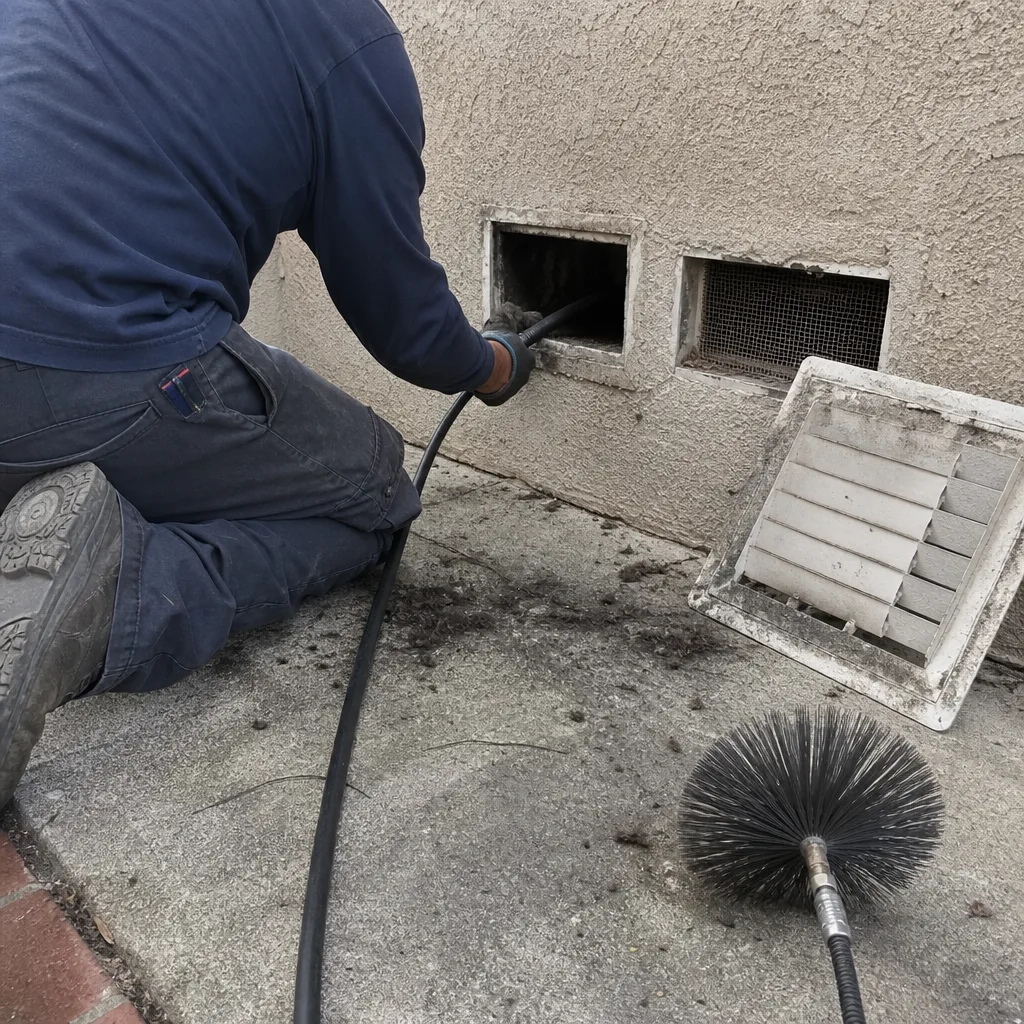 Before
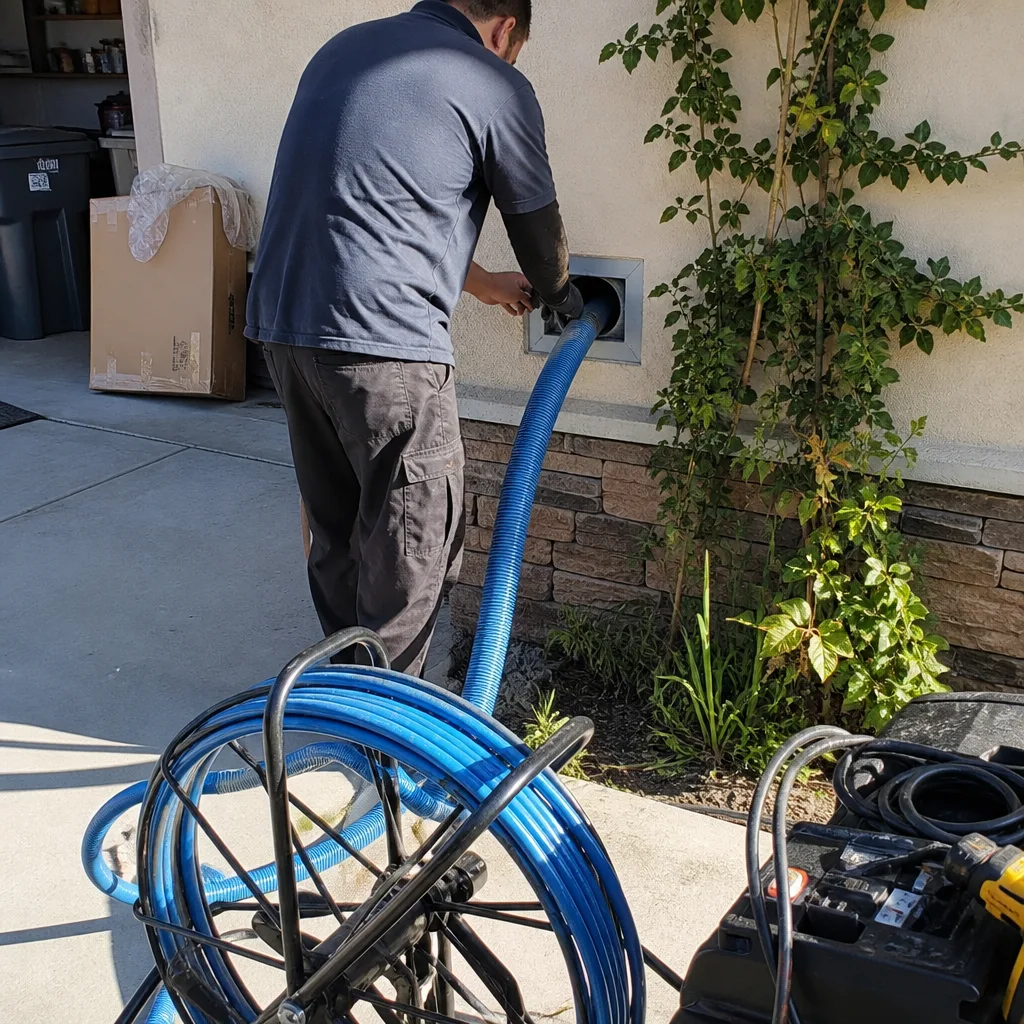 After
After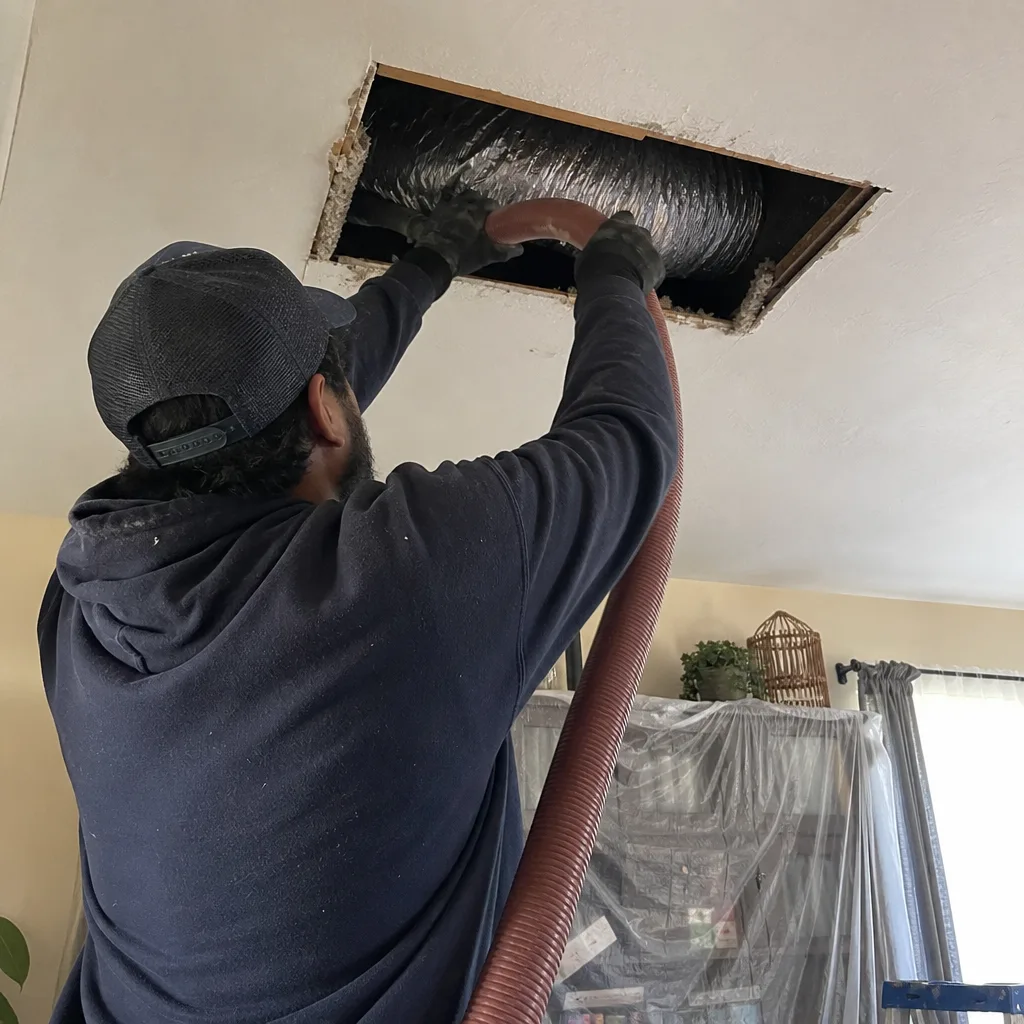 Before
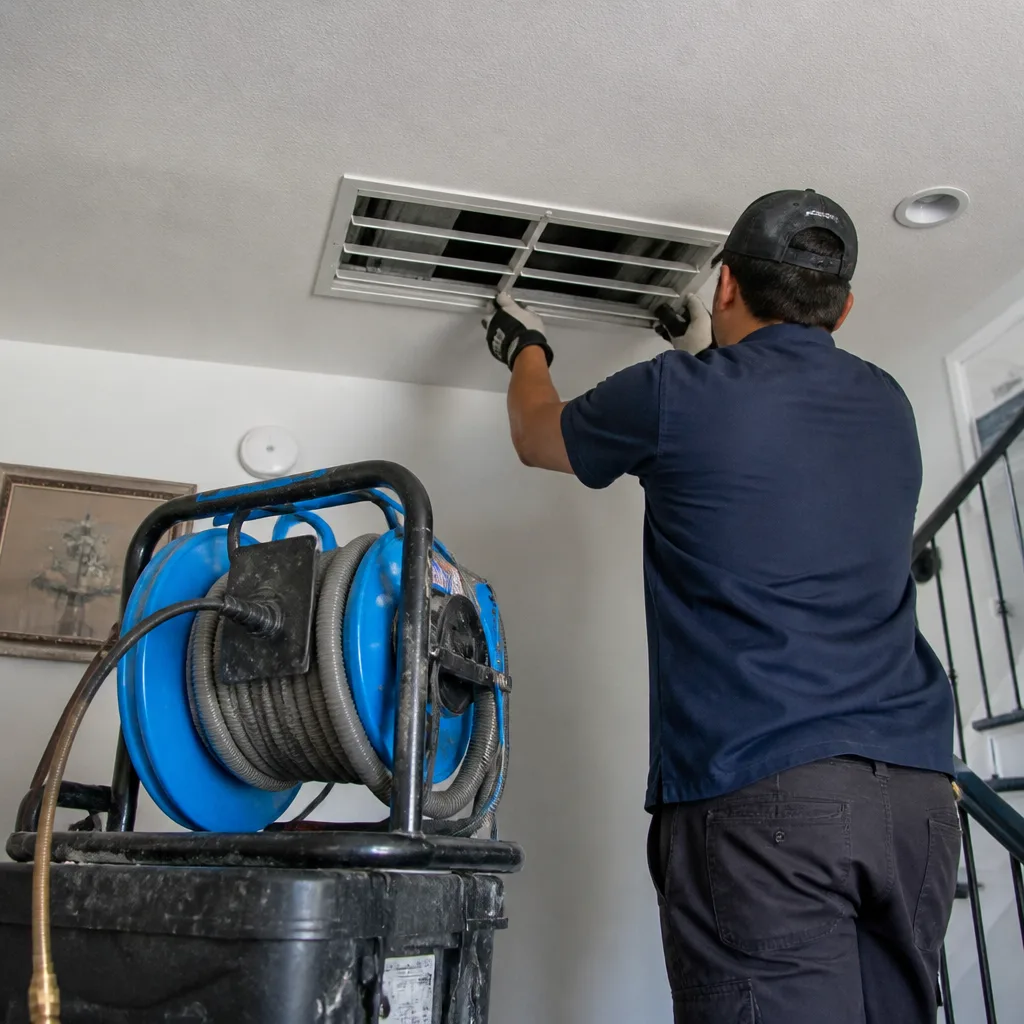 After
After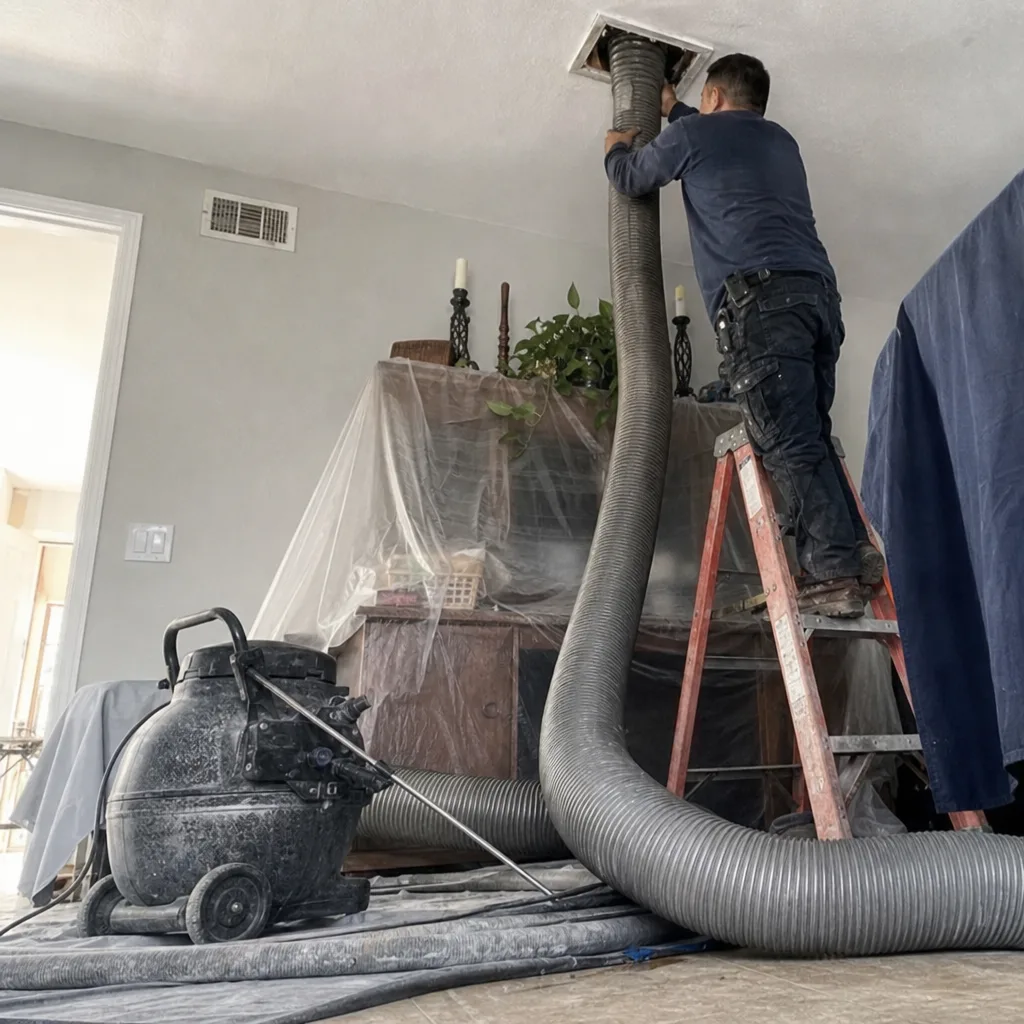 Before
 After
AfterThe Complete Guide to Air Duct Cleaning in Los Angeles
After back-to-back wildfire seasons, the South Coast AQMD recorded particulate events that pushed fine ash directly into homes through HVAC intake vents. Most Los Angeles homeowners never opened a duct panel afterward. The air in your house moves through those ducts every time the AC cycles, and in LA, the AC cycles a lot. This Air Duct Cleaning guide explains what actually accumulates in LA ductwork, how a legitimate cleaning works, what to look for in a company, what it should cost, and how to verify the work with your own eyes. You’ll finish with a clear picture of whether your home needs this service and exactly what to ask before anyone touches your system.
Quick Answer
Air duct cleaning in Los Angeles removes built-up dust, wildfire ash, pet dander, and construction debris from your HVAC supply and return ductwork using professional agitation and negative-pressure suction equipment. For a typical single-family LA home with one HVAC system, expect to pay between $450 and $1,200 for the full job, with legitimate providers like Air Duct Cleaning in Los Angeles quoting a written flat price per system after a visual inspection, not a per-vent figure that grows after the van pulls up. A proper cleaning takes 3 to 6 hours and should include before-and-during photo documentation, floor protection inside the home, and a visible change in airflow and odor when it’s done.
Table of Contents
- Why LA Is Different: Climate, Wildfire Ash, and Year-Round Runtime
- What Actually Accumulates in Los Angeles Ductwork
- Equipment That Matters: Truck-Mount vs. Portable HEPA Systems
- The Pre-Job Inspection: What Legitimate Looks Like
- A Room-by-Room Walkthrough of a Proper Cleaning
- What Air Duct Cleaning Costs in Los Angeles
- How to Verify the Work Was Actually Done
- Common Mistakes to Avoid
- When to Call a Professional
- Frequently Asked Questions
- The Bottom Line
Why LA Is Different: Climate, Wildfire Ash, and Year-Round Runtime
Most air duct cleaning advice you’ll find online-and in DIY vs Professional Air Duct Cleaning: What’s Safe to Do Yourself guides-was written for houses in the Midwest or Northeast, where the furnace runs hard from November to March and sits idle all summer. That advice doesn’t map cleanly onto Los Angeles. Here, the HVAC system runs in some mode nearly every day of the year. Cooling through the summer, heat during the brief but real winter chill, and circulation fan mode during the shoulder seasons. That near-continuous runtime pushes more air volume through the ductwork in a single year than a Minneapolis system moves in three. More air volume means more suspended material getting pulled into the return vents and deposited on duct walls, coil surfaces, and blower compartments.
Add the marine layer to that equation and the picture gets more specific. Homes west of the 405 in Mar Vista, Playa del Rey, and Westchester pull in damp morning air through attic intakes and foundation vents. That moisture causes dust that would otherwise stay loose and flushable to adhere to duct surfaces and form a film. It’s one reason ducts in coastal LA neighborhoods often look grimier from the inside than ducts in Van Nuys or Northridge with the same square footage and the same number of dogs. Humidity changes the physical behavior of the dust itself.
The third pressure is wildfire smoke. Ash from the 2025 Palisades and Eaton fires didn’t just settle on cars and patios. Intake vents pulled fine ash into return ducts, where it layered onto duct walls. That ash has a different electrical profile than household dust. It clings to metal and flex duct in a way a normal vacuum pass doesn’t fully dislodge. In Pacific Palisades, Brentwood, and even as far east as Silver Lake, we’ve opened return plenums in the years after fire seasons and found a fine gray-to-black coating that had never been disturbed. Homeowners in those neighborhoods who changed their furnace filters obsessively were still surprised by what the duct walls looked like. A filter only catches what reaches the filter. What settles inside the run before the filter is another matter.
Finally, the housing stock creates its own conditions. Los Angeles has tens of thousands of older Craftsman bungalows and post-war tract homes with original metal ducting, some of it wrapped in decades-old asbestos-containing tape that’s now deteriorating. It has hillside homes on piers with crawl spaces that see dust intrusion at every seam. It has thousands of condo units where the duct system is shared or runs through a tight chase with limited access. Each of these building types responds to a cleaning differently, and a technician who only knows one housing type will either over-scope the job or miss obvious problems.
What Actually Accumulates in Los Angeles Ductwork
We’ve opened thousands of returns across LA and the contents are remarkably consistent: gray house dust, pet hair from the animals who own the sofa, fine sand tracked in from the yard and the beach, and an increasing amount of wildfire ash and combustion particulate that finds its way indoors. What surprises most families is what else turns up: construction debris from a remodel done two owners ago, drywall dust from the recessed lighting job, and in one Echo Park home, a surprising number of Legos that had “fallen down the vent” over a decade of imaginative play.
The five categories that show up over and over
- Household dust and skin cells. The baseline. Fine, gray-brown, and evenly distributed through every run.
- Pet dander and hair. In LA, with its high percentage of homes with dogs and cats, this is often the dominant material in the return ducts near living spaces.
- Wildfire ash and fine particulate. Electrostatic, dark, and tenacious. Requires agitation and contact cleaning, not just negative-pressure vacuuming.
- Construction and renovation dust. Drywall, plaster, tile, and wood sanding dust. Dense and heavy. This settles and compacts in horizontal runs.
- Pest evidence. Rodent droppings, insect casings, and nesting material from attics and crawl spaces that connect directly to the duct system.
The distinction that matters for LA homeowners is between loose material and adhered material. Loose material sits on the duct floor and can be pulled out by suction alone. Adhered material is stuck to the duct wall by moisture, electrostatic charge, or grease. In Los Angeles, the marine layer and cooking habits (homes here generate a lot of airborne cooking oils) mean a meaningful portion of the material is adhered. That’s why the equipment choice matters as much as it does. A vacuum without agitation will leave the adhered layer in place, which means the homeowner is paying for half a job.
Equipment That Matters: Truck-Mount vs. Portable HEPA Systems
When you shop for air duct cleaning in Los Angeles, one of the first things a technician should be able to explain is the equipment they use and why. There are two main approaches, and they suit different situations.
Truck-mounted negative air machines
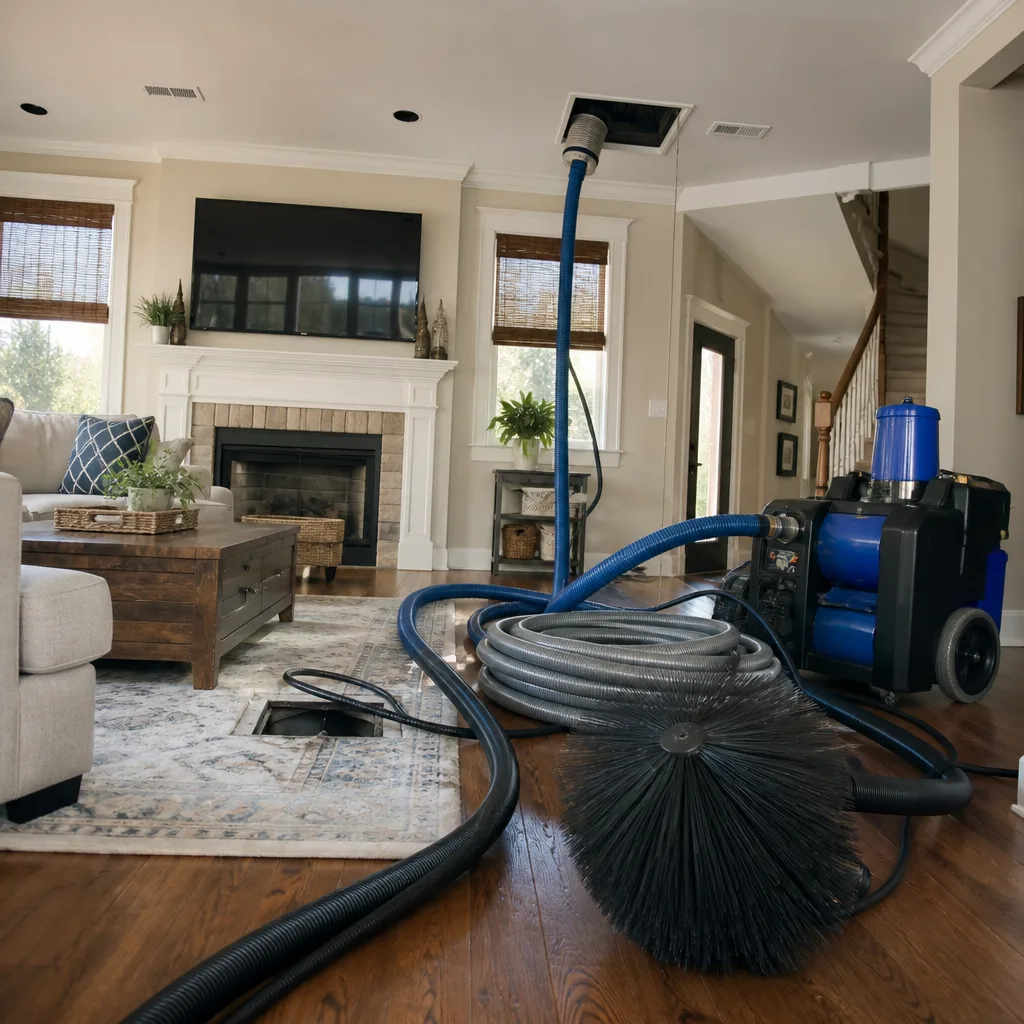
A truck-mount system parks outside the home and runs a large-diameter vacuum hose from the truck through a window or door to the main trunk line. The blower on the truck pulls the entire duct system under negative pressure while a technician works through each register with agitation tools. This is the workhorse for single-family homes with moderate to heavy buildup, especially houses with long duct runs or multiple returns. The suction power is substantially greater than anything portable, and because the collection point is outside the home, any dust that escapes containment during the process ends up in the truck, not the living room.
Portable HEPA units like the Nikro
Portable HEPA systems are the right tool for condos, townhomes, high-rises, and any building where running a truck hose isn’t practical. A Nikro portable unit sits in the living space, connects to the duct system, and uses HEPA filtration to capture the exhausted air. Modern portable units are genuinely effective, especially when paired with rotary brush agitation. For a condo in Century City or a high-rise unit in DTLA, this is often the only viable approach. For a hillside home in Mount Washington with no street access for a truck, it’s also the answer. A good technician will tell you which system they’re using and why that system matches your home. For DIY vs Professional Air Duct Cleaning: The Los Angeles Homeowner’s Decision Guide readers, a great technician can show you both and let the situation decide.
The distinction matters less than the execution. A technician running proper negative pressure with either class of equipment will outperform a technician running a “rotobrush only” job where a brush spins in the duct but no meaningful suction removes what the brush dislodges. The brush agitates. The negative pressure removes. Both elements are necessary, and the equipment brand should be honest professional trade gear. At Morton’s Air Duct Cleaning, we run Rotobrush and Nikro equipment because they’re reliable in the field and we can train every technician to the same standard on them. That consistency shows up in the result.
The Pre-Job Inspection: What Legitimate Looks Like
The most important ten minutes of an air duct cleaning job happen before any equipment comes out of the truck. A legitimate pre-job inspection does not look like a “free inspection” that magically discovers six hundred dollars of urgent scope the moment the technician walks in the door. That pattern, unfortunately common in this industry, is precisely the bait-and-switch families tell us they’ve been burned by before.
Here’s what an honest inspection includes, step by step:
- Walk the supply and return vent count with the homeowner. The technician should physically count registers and returns with you, mark them down, and confirm the number before quoting. A house with 14 supply vents has a 14-vent job. No surprises downstream.
- Remove at least one return or supply grille and visually inspect the duct interior. This takes 30 seconds and tells both of you the character of the buildup. Is it loose dust? Adhered film? Construction debris? A good technician shows you what they see and explains the implication.
- Check the air handler. The blower compartment, the evaporator coil if accessible, and the filter housing. The condition here affects the cleaning plan and should be discussed, not hidden until the invoice.
- Identify access points. Where will the vacuum connection be made? On a single-system home it’s usually the main return drop or the plenum. The technician should tell you which door or window the hose will run through and how it will be protected.
- Confirm the price in writing. The number quoted after this walkthrough is the number that appears on the invoice unless something truly material changes and the technician discusses it with you before proceeding. That’s the standard we work to on every single visit.
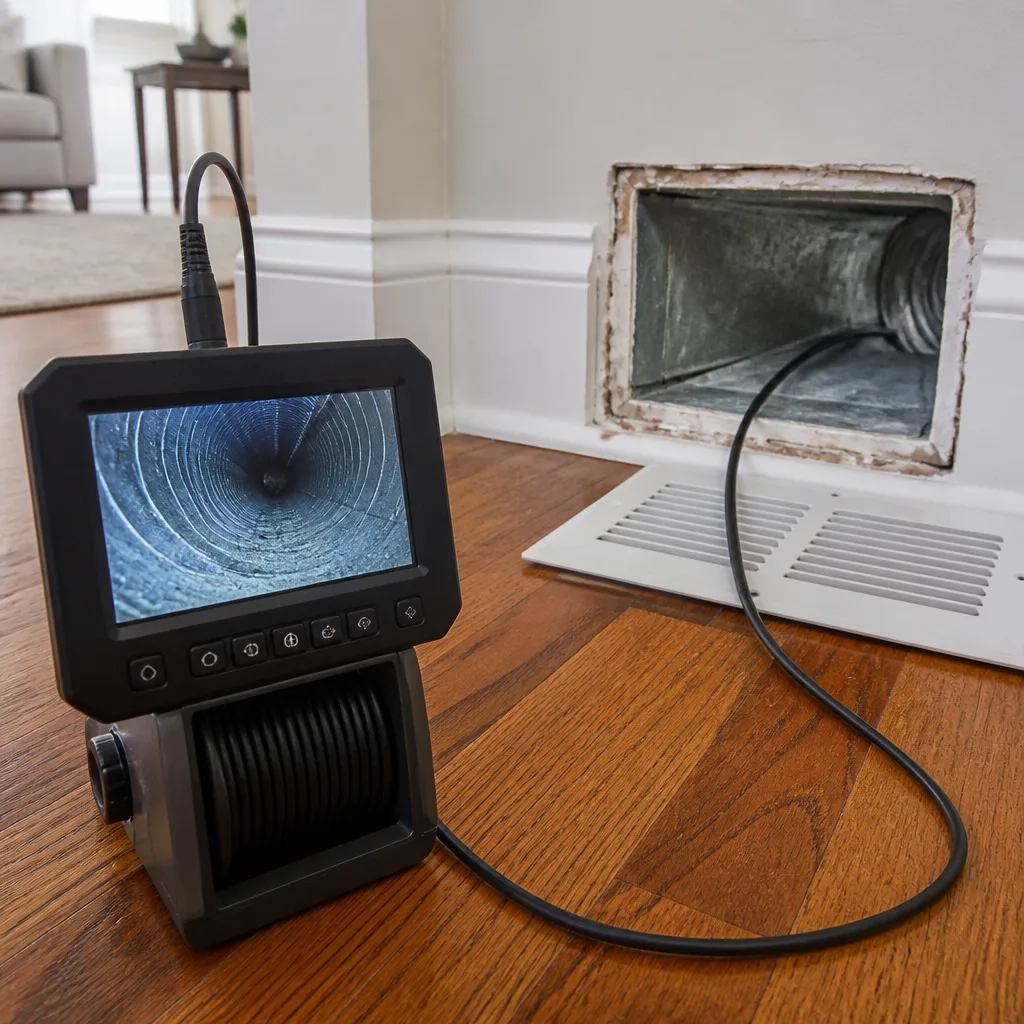
A bait-and-switch inspection, by contrast, skips the walkthrough, arrives with a coupon price that seems oddly low, and then “discovers” mold, vermiculite, or a damaged flex run that justifies tripling the total. Some of those discoveries are legitimate. Many are not. The difference is whether the technician shows you the condition with a camera or a mirror and explains it in plain terms, or describes it vaguely while shaking a head. Trust your eyes. If you can’t see the problem being described, ask to see it. A legitimate technician will have a camera and will want you to look.
A Room-by-Room Walkthrough of a Proper Cleaning
Knowing what should happen during the job helps you evaluate whether you’re getting the real thing. Here’s the sequence a professional crew follows, room by room, from front door to final walkthrough. This is what it should look like in a typical Los Angeles home, whether that’s a Spanish Revival in Los Feliz or a mid-century in the Valley.
1. Protect the home first
Before any equipment enters, shoe covers go on over work boots. Drop cloths or floor protection run from the entry point to the furnace closet and along the path to every register. Furniture near work areas gets covered. If you ask, the crew should be able to name exactly which surfaces they’re protecting and how. At Morton’s Air Duct Cleaning, this step is part of the Cedarwell Care Promise and it’s not optional: floors, furniture, and pet areas are protected before the first tool comes out.
2. Connect negative pressure at the main return or plenum
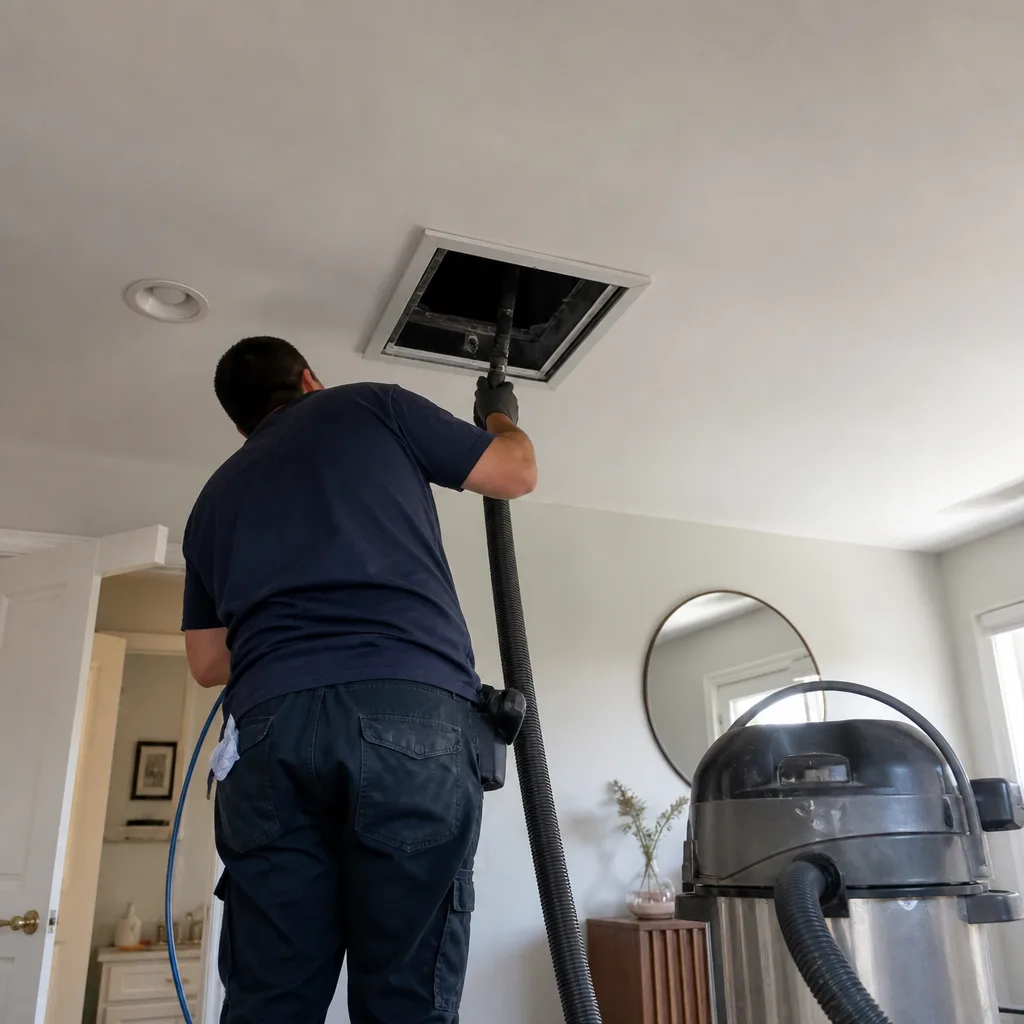
The vacuum hose is routed out a window, door, or to the portable HEPA unit and sealed. The system goes under negative pressure. This is the foundation of the entire clean; if the suction isn’t right, the agitation work is wasted.
3. Agitate each supply run, one register at a time
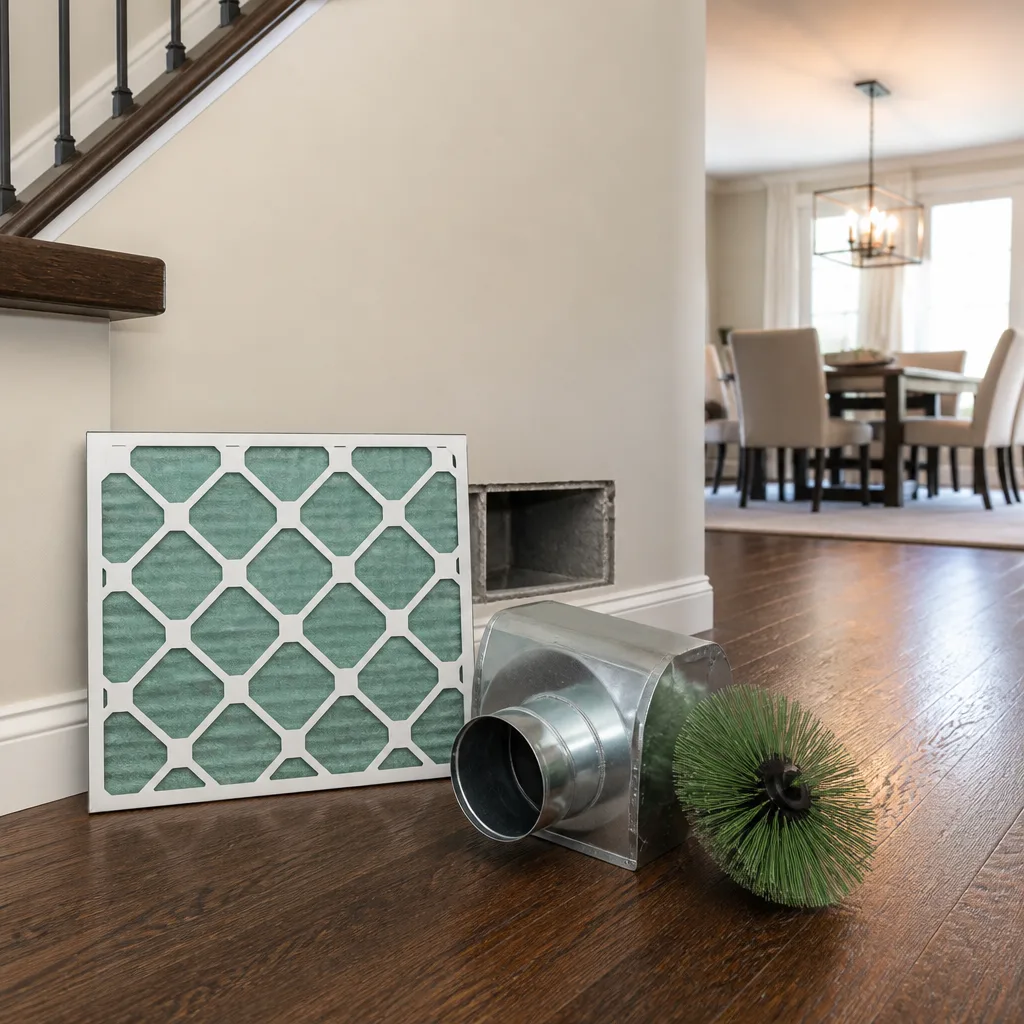
Starting with the farthest register from the vacuum connection and working back, the technician mechanically agitates the interior of each supply run. Rotary brushes, air sweeps, and occasionally hand tools break the adhered material free. The negative pressure pulls it downstream to the collection point. Each register cover is removed, cleaned, and set aside.
4. Work the returns
Return ducts often carry the heaviest load because they operate with less velocity than supply runs and have larger cross-sections. The technician spends proportionally more time here and on the return drop. In homes with pets, return ducts near living spaces are frequently packed with hair. This is also where wildfire ash tends to concentrate in LA homes.
5. Address the air handler interior
The blower compartment is cleaned, and if accessible and appropriate, the evaporator coil is inspected and cleaned. A dirty coil reduces system efficiency more than any other single component. This step is often skipped by low-price operators, but it’s one of the highest-value parts of the job for an LA system that runs year-round.
6. Reinstall, seal, and clean up
Every register is reinstalled. Access points are sealed. Tooling is packed out. Drop cloths are shaken out outside the home. The crew should run a quick functionality check on the system and invite you to look at the coil, the blower, or a representative duct run before they pack the inspection camera.
7. Document the result
Before the crew leaves, you should be handed or sent photo documentation. We take a photo of the clean-up before the crew pulls out of the driveway because it matters that the house is left better than it was found. If you can’t see the difference, ask to see the before-and-after images from inside the ducts.
What Air Duct Cleaning Costs in Los Angeles
Honest whole-system pricing in Los Angeles, as of early 2026, falls into a predictable range. The dominant variable is the size of the system and the number of registers. Here’s what a realistic quote sheet looks like for LA’s housing stock.
- Small condo or apartment (1 system, 8-10 vents): $350-$600, typically a Nikol portable HEPA job, 2-3 hours.
- Mid-size single-family home (1 system, 12-16 vents): $500-$900, truck-mount or high-capacity portable, 4-5 hours.
- Larger home or dual-system setup (2 systems, 18-24+ vents): $850-$1,400, often a full-day job of 6-8 hours.
- Add-on: evaporator coil cleaning (if accessible): $150-$350, and worth it in LA where the coil runs constantly.
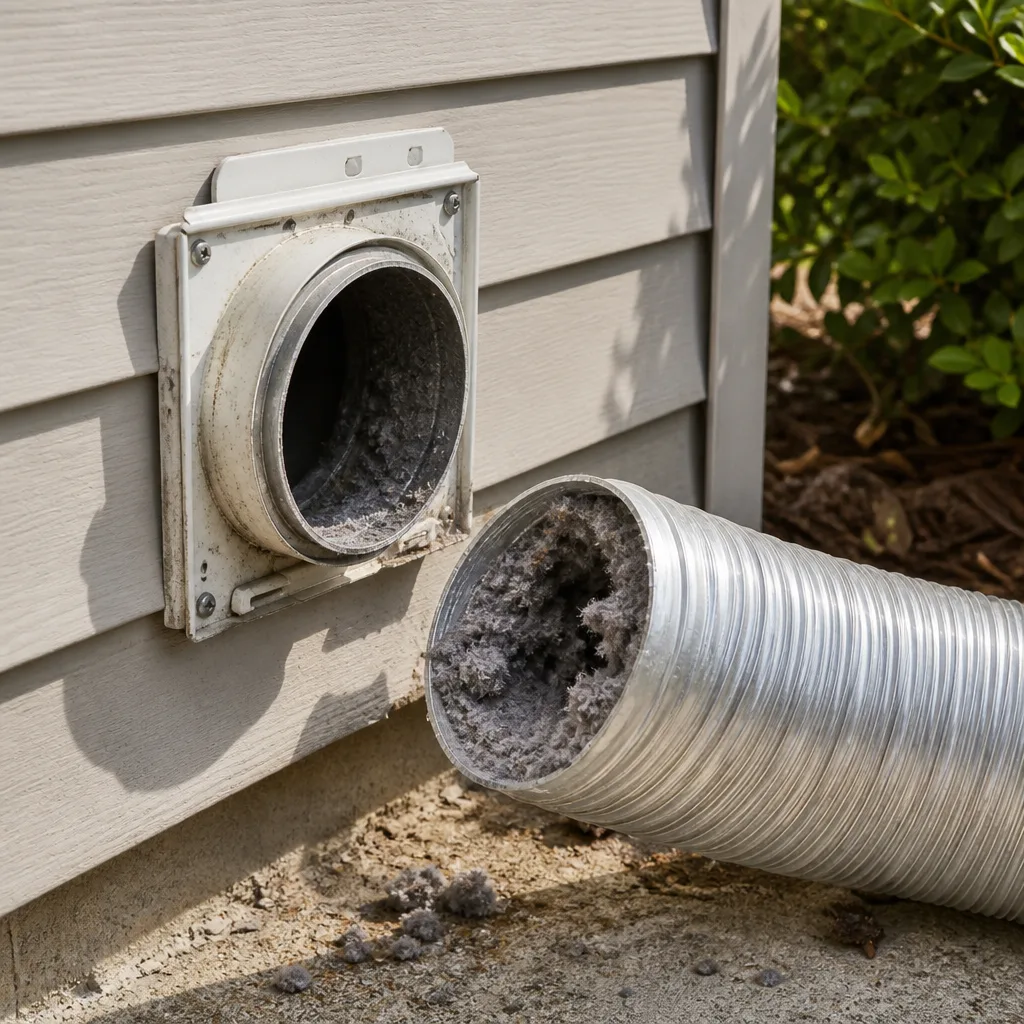
- Add-on: dryer vent cleaning: $100-$250, and commonly bundled since a clogged dryer vent is a genuine fire risk.
These are whole-system prices. Any operator quoting per-vent pricing or advertising a “$99 whole house special” is using a number designed to get a foot in the door before the real invoice appears. We won’t quote per-vent because it’s a structure built for surprise. The price we write down after the inspection is the price you pay, plain and simple.
Geographic variation in LA is real but modest. Homes in beach communities may carry higher prices because of access difficulty, parking constraints, and the added challenge of marine-layer adhered dust. Homes in the San Fernando Valley and the flatter parts of the city are usually the most straightforward jobs. A same-day quote over the phone without any details of your home’s system is a red flag; someone who hasn’t seen your ductwork telling you an exact price is guessing, and a guess is how surprise charges happen. Call (323) 918-4345 to talk through your home’s specifics and get an honest range before anyone schedules a visit.
How to Verify the Work Was Actually Done
The single most common question we hear from LA homeowners echoes a story of being burned before: “How do I know the work was actually done?” It’s a fair question, and there are concrete answers.
- Before-and-after photos from inside the ducts. A professional crew runs an inspection camera before and after. The before photo shows gray-brown walls and a layer of debris. The after photo shows clean sheet metal or clean flex. Insist on seeing both.
- Visual confirmation on site. After the job, ask the technician to open a return grille or pull a supply register and show you the interior. It should be visibly different from what you saw during the inspection. If the interior looks the same, the job wasn’t done.
- The indicator card or access panel. Some companies leave a small service tag on the air handler with the date and technician initials. It’s a minor thing, but it holds people accountable.
- Airflow improvement. If the system was significantly obstructed, you should feel stronger flow at vents in problem rooms after the clean. The upstairs bedroom that never cooled properly is a good test.
- Odor change. The “dusty” or “doggy” smell that returns when the AC kicks on should be gone or drastically reduced. Los Angeles homes with pets notice this almost immediately.
If a company can’t show you before-and-after documentation after you ask, the trust hasn’t been earned. At Morton’s Air Duct Cleaning, we hand over photo documentation as a matter of course, and the 365-Day Done Right Promise means if it’s not right, we make it right. No fine print, no re-quote. If the job doesn’t meet the standard, we come back and fix it.
Common Mistakes to Avoid
- Choosing a company by coupon price alone. The “$99 special” in LA is almost never the final price. There’s a reason that number exists, and it’s to get the van to your driveway. Once the technician is there with the blower running, the upsell pressure starts. Legitimate companies price by the system, in writing, before work begins.
- Believing duct cleaning is a scam and doing nothing. The pendulum swings both ways. Some homeowners overpay for bad work, so others conclude the whole category is fake. Both reactions are wrong. In LA, with wildfire ash and year-round runtime, accumulated debris in ducts is real and measurable. The service works when it’s done by someone honest with proper equipment.
- Cleaning ducts but ignoring the dryer vent. We see this constantly. A family invests in a full air duct cleaning and leaves a dryer vent pipe packed with lint. The dryer vent is a separate system with a different risk profile. Bundle it or book it separately, but don’t skip it.
- Falling for the “you have mold, here’s the picture from another house” routine. Some operators show a stock photo of a moldy duct and claim it came from your home. Always ask for live video. A camera in real time shows what’s actually in your ducts.
- Not asking about equipment before booking. If the company won’t name the equipment they use, or can’t explain whether they use truck-mount or portable HEPA, walk away. This is a service built on tools. An honest technician can talk about tools.
- Skipping coil cleaning in LA specifically. Your evaporator coil is the hardest-working component in your system in this climate. If someone offers a low price by “not including” the coil, understand what you’re giving up.
- Falling for urgency tactics. “Book today or the price doubles” is a manipulation, not a service model. A legitimate company has a calendar, not a countdown clock.
When to Call a Professional
You should have your ducts inspected and likely cleaned if you’ve lived in your Los Angeles home for more than 4-5 years without ever having the system opened, especially if you live near a fire zone or in a coastal neighborhood with marine-layer moisture. Other triggers: visible dust blowing from vents when the system starts, a dusty or stale odor that returns each time the AC runs, allergies or asthma that worsen at home, a recent renovation that generated drywall or sanding dust, or a pest situation in the attic or crawl space. If you bought your home and have no record of the ducts ever being serviced, treat that as a cleaning opportunity. Morton’s Air Duct Cleaning offers free estimates in Los Angeles, and Dryer Vent Cleaning in Los Angeles as a natural companion service. Call (323) 918-4345 and you’ll get a live person who can talk you through the process and schedule a straightforward inspection.
Frequently Asked Questions
In Los Angeles, a legitimate whole-system air duct cleaning for a typical single-family home runs $500 to $1,200 depending on system size, vent count, and access difficulty, with condos and smaller apartments falling between $350 and $600. The price should be quoted in writing after a visual inspection and should cover the complete system, not a per-vent rate that grows during the visit. For an exact quote on your specific home, call (323) 918-4345 and talk through your system.
Cheap quotes almost always come from bait-and-switch operators who price low to get the appointment and then upsell aggressively once the technician is in the home, often by “discovering” mold, requiring deep-cleaning add-ons, or quoting per-vent prices that multiply fast. A legitimate whole-system price in Los Angeles simply costs what it costs, and any company advertising $99 or $149 specials is not being honest about their final invoice. The low price is the hook, not the price.
You verify with before-and-after photos taken inside the ducts using an inspection camera, a visual check of the duct interior after the job, improved airflow at problem vents, and a change in the odor signature when the system runs. A professional company will show you the before and after and invite you to look at the result yourself. Call us to discuss how documentation works on our jobs.
In Los Angeles, with year-round HVAC runtime and recurring wildfire smoke, a cleaning every 4 to 5 years is a reasonable interval for most homes, with a shorter window of 2 to 3 years for households with multiple pets or a major renovation. The national advice of every 5 to 7 years may be fine for seasonal climates, but LA systems simply move more air more of the time and accumulate faster.
Yes, wildfire ash that’s fine enough to stay airborne gets pulled through return vents during smoke events and settles inside the duct system, where it adheres electrostatically to walls and resists simple vacuum extraction. This is one of the biggest reasons Los Angeles homes need professional agitation-based cleaning, not just filter changes. If you were downwind of a burn zone, the ash is likely in your system whether you smell it or not.
Air duct cleaning addresses the HVAC supply and return system that moves heated and cooled air through the home, while dryer vent cleaning clears the dedicated exhaust pipe that carries hot lint-laden air from the dryer to the outside. They’re separate systems with different tools, different risks, and different pricing, and both should be on your home maintenance schedule. A clogged dryer vent is a fire hazard specifically because lint is highly flammable and the pipe runs hot.
The Bottom Line
Los Angeles homes accumulate material in their ductwork faster and differently than homes in most other American cities. Year-round runtime, marine-layer humidity near the coast, and wildfire particulate that drifts for miles all combine to load your ducts with dust, ash, and adhered film that a simple filter change never touches. A legitimate air duct cleaning, priced honestly per system and performed with professional negative-pressure equipment and agitation tools, removes that material and gives you documentation to prove it. The difference between a great cleaning and a bait-and-switch is a written price before work starts, before-and-after proof, and a company that protects your floors and furniture like their own. If it’s time for your home, schedule a free estimate in Los Angeles and get a clear answer on cost before anyone picks up a tool. Call (323) 918-4345 for a straight conversation and a written price.
Written by Paul Adeyemi, Owner at Morton’s Air Duct Cleaning, serving Los Angeles since 2005. Explore more guides & resources on keeping your home’s air clean.