
Last updated October 8, 2026
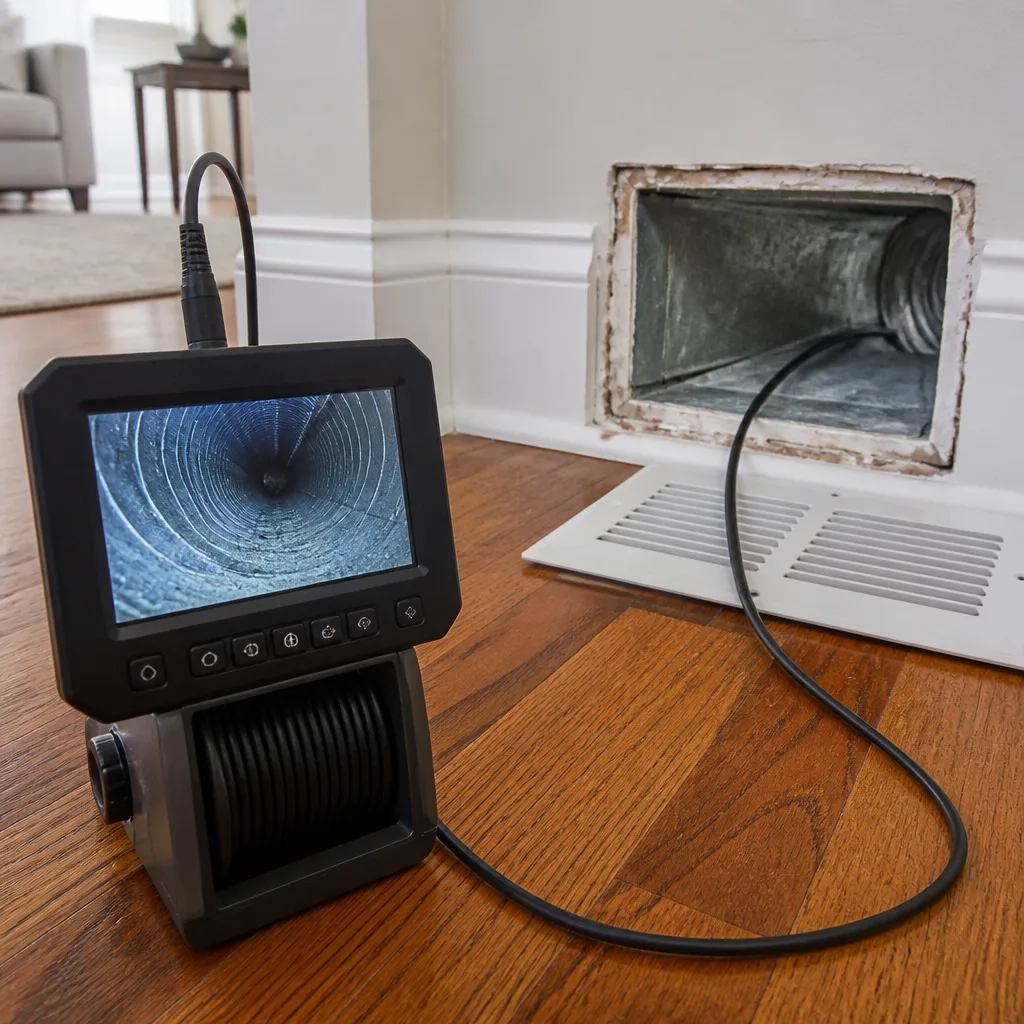
Whole-system duct and dryer vent check with before-and-after photos - you see exactly what came out of your vents
That "$99 whole-house special" is a bait ad - the real number appears once they are in your hallway, or the "clean" is a shop-vac at the register. We photograph the inside of your ducts before and after instead.
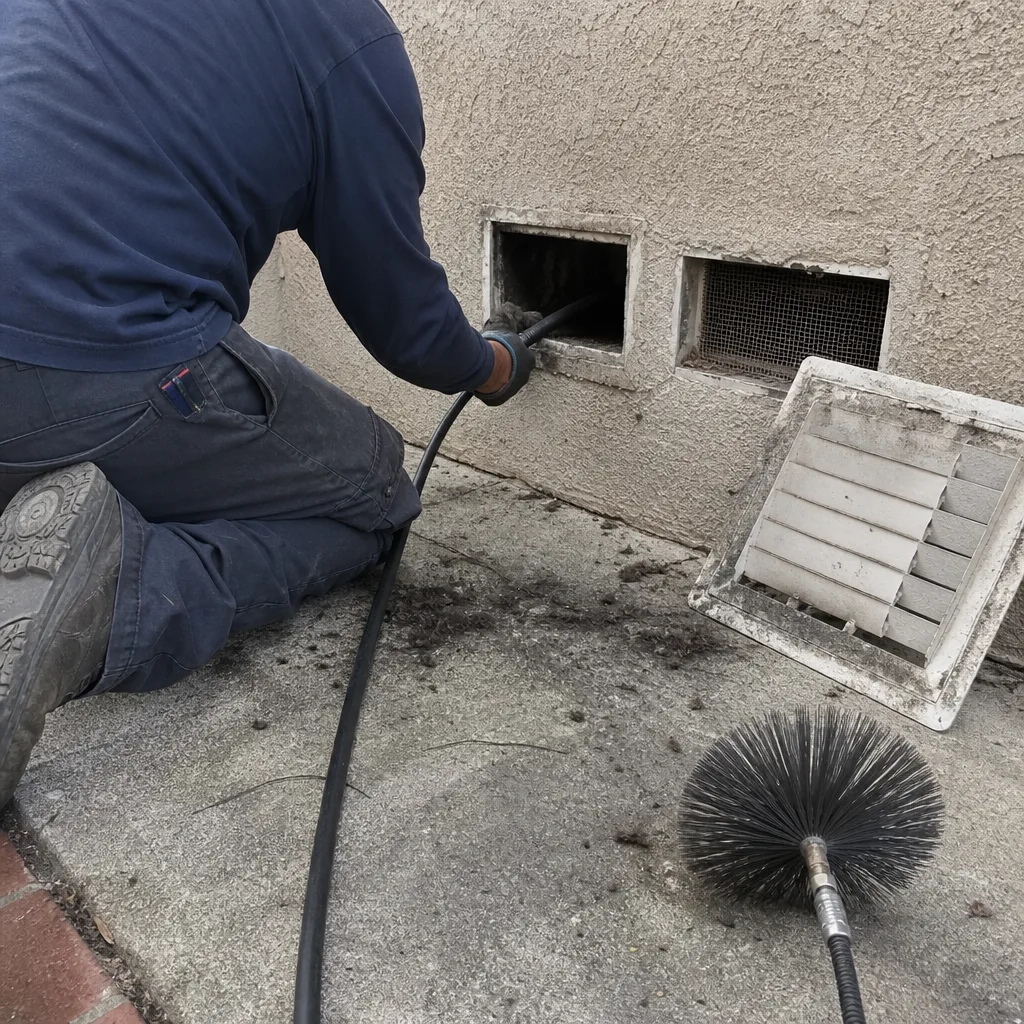 Before
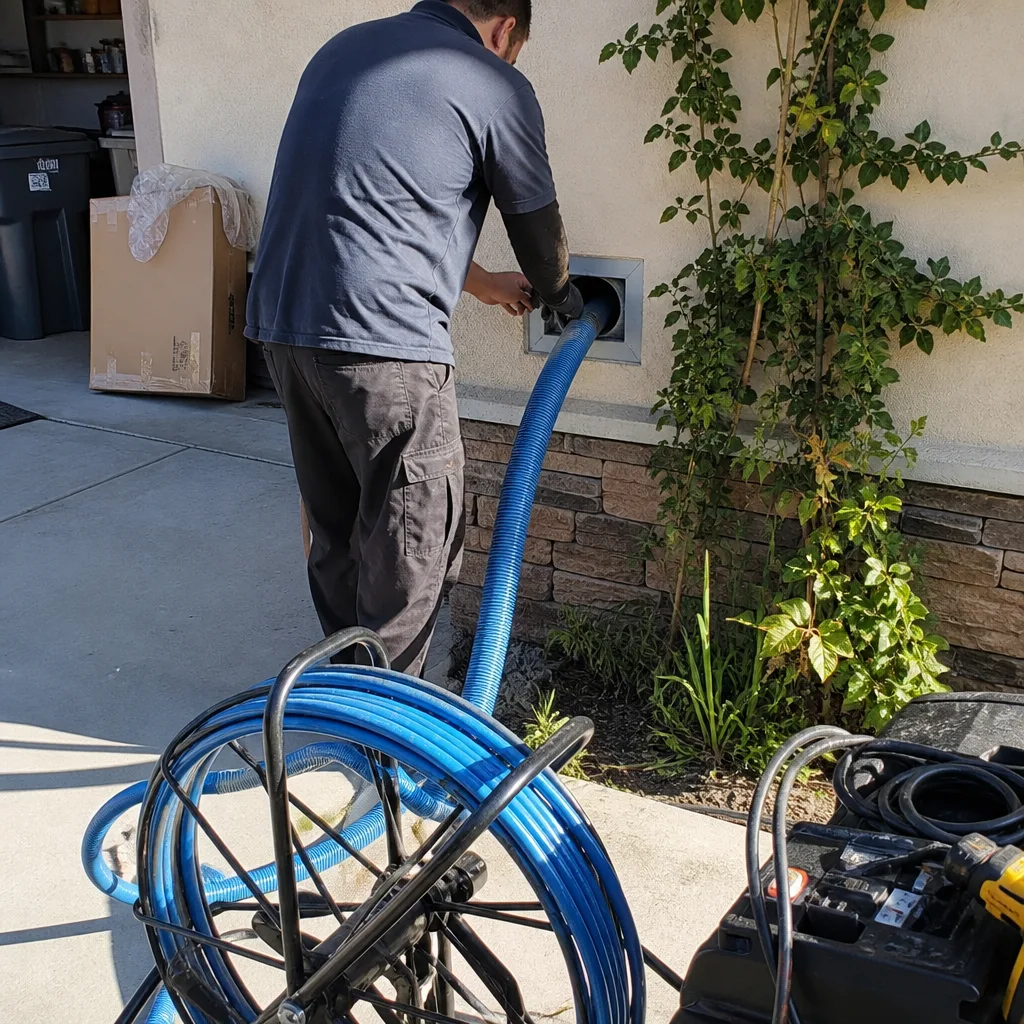 After
After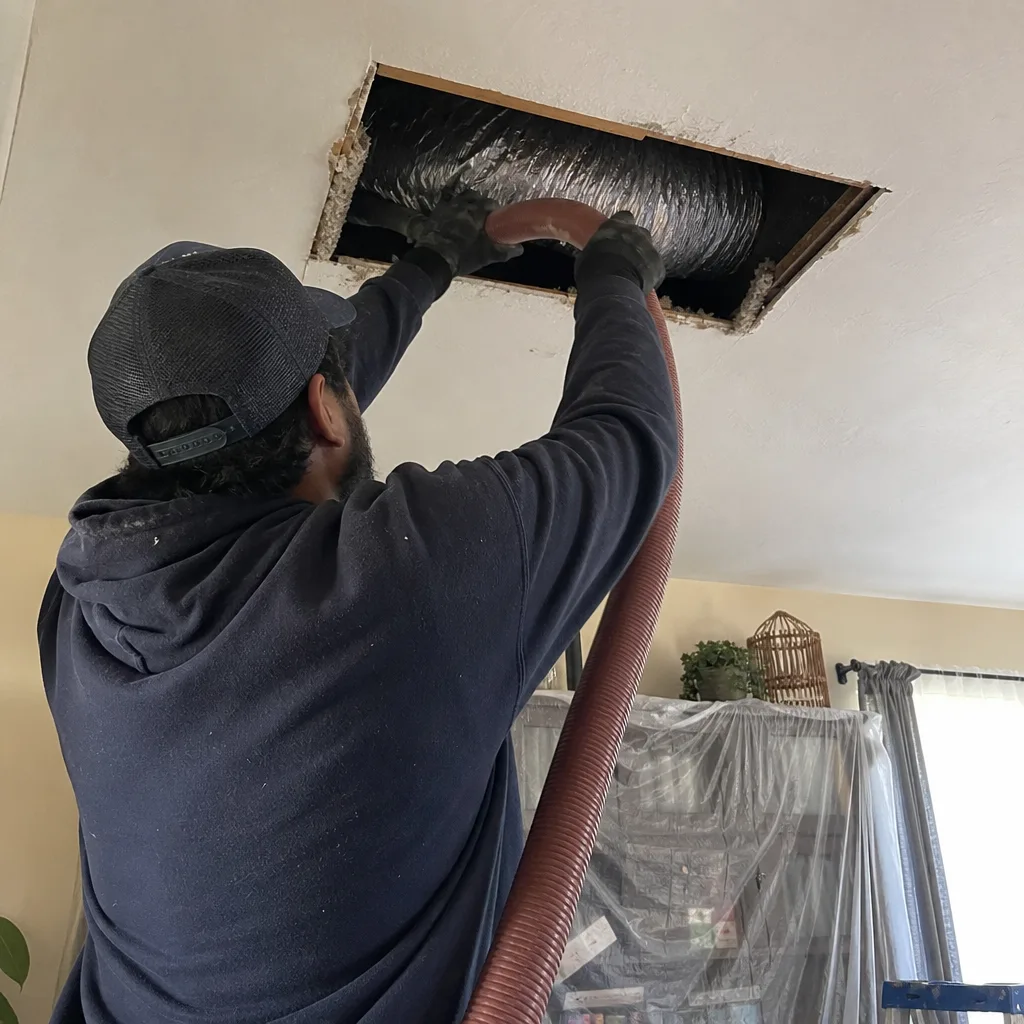 Before
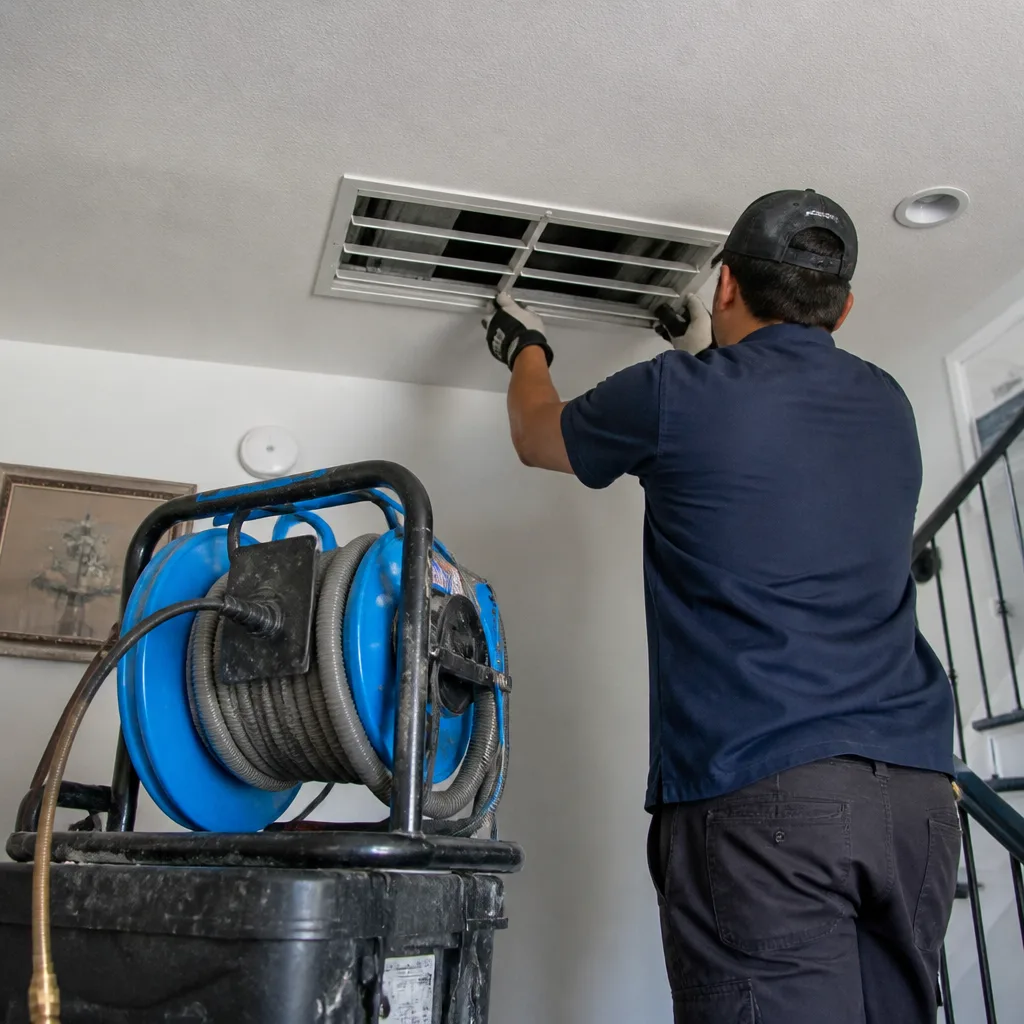 After
After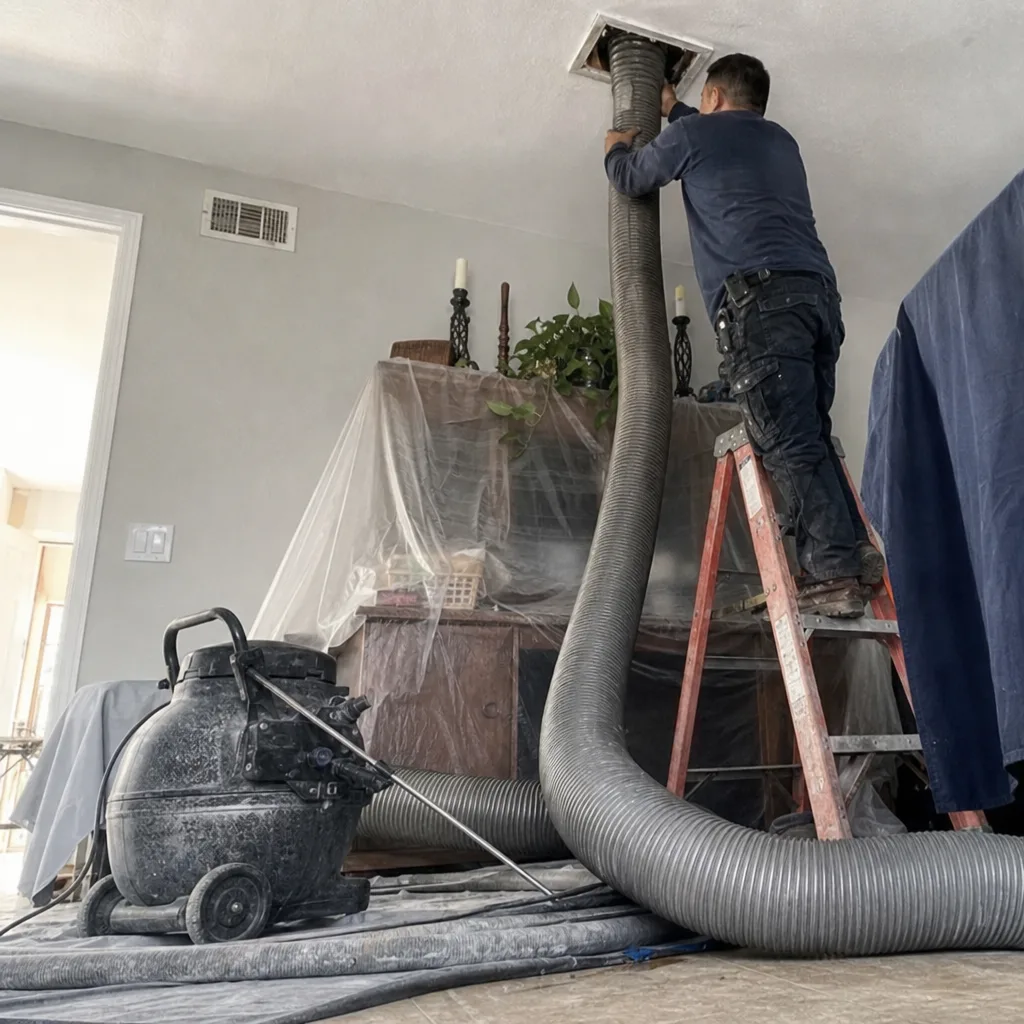 Before
 After
AfterHow Long Does Air Duct Cleaning Take? Timelines and What to Expect
The “$99 whole-house special” that promises a 90-minute cleaning cannot physically clean a 2,000-square-foot Los Angeles home with 20 registers to any honest industry standard. The math doesn’t work, and once you understand why, you’ll never look at a duct cleaning timeline the same way again. This guide breaks down exactly what drives the clock during an air duct cleaning visit, what a thorough job actually requires, and how to plan your day without surprises. We’ve cleaned ducts in homes from Westchester to Pasadena, and the timeline questions families ask are always the same: how long, why, and what’s happening while the crew is there.
Quick Answer
A proper air duct cleaning in the average Los Angeles home takes 3 to 5 hours from arrival to walkthrough. Smaller apartments and condos can finish in 2 to 3 hours, while larger two-story homes with complex duct layouts, significant buildup, or multiple HVAC systems can take 6 to 8 hours. Any company that quotes you a time before asking about your square footage, register count, and last cleaning date is guessing.
Table of Contents
- The Real Factors That Drive the Timeline
- Phase-by-Phase Breakdown of a Proper Cleaning
- Room-by-Room: What Adds Time and What Doesn’t
- Contact Cleaning vs. Blow-and-Go: Why the Faster Job Is Usually Worse
- Two-Story Homes and Attic Duct Runs in Los Angeles
- Pets, Kids, and Nap Schedules: How They Fit Into the Visit
- What a Written Arrival-to-Departure Estimate Looks Like
- Common Mistakes to Avoid
- When to Call a Professional
- Frequently Asked Questions
- The Bottom Line
The Real Factors That Drive the Timeline
No two duct systems are identical, even in tract-home neighborhoods like North Hollywood or Torrance where houses share floor plans. We’ve cleaned identical-looking homes on the same block where one took two hours and the other took five. Here’s what actually determines the clock:
- Home size and register count. A 1,200-square-foot condo with 8 registers is a fundamentally different job than a 3,400-square-foot house with 24 registers. Each register needs individual attention, not a wave in the general direction. More registers means more access points, more room prep, more time.
- How long since the last cleaning. If your ducts have never been cleaned in a 20-year-old house, you’re looking at layered dust, construction debris, and possibly drywall dust from past renovations. That buildup takes multiple brush passes to loosen, which adds real time. Homes cleaned within the last 3 to 5 years move faster because the buildup hasn’t cemented.
- Duct layout and access points. Where your ducts run matters. A single-story ranch in the San Fernando Valley with a crawlspace and accessible ductwork is faster to service than a two-story home where the return-air box is in a tight attic corner. If the technician has to navigate around stored boxes, HVAC equipment, or awkward angles, each access point takes longer.
- Presence of a second system. Many Los Angeles homes built after 1990 have dual-zone HVAC: one system for upstairs, one for downstairs. That means two air handlers, two trunk lines, two sets of ductwork. It’s effectively two cleanings in one visit.
- Condition of the ductwork itself. Older flex duct that’s sagging or partially crushed slows things down. Rigid metal duct runs in good condition are faster to clean thoroughly. If the technician finds damaged sections, they should stop and show you before proceeding, which adds time but protects you from hidden surprises.
This is why any reputable company asks questions before quoting a time. We ask about square footage, register count, last cleaning, and whether you have one system or two. That’s not stalling. That’s how we give you a number you can actually plan around.
Phase-by-Phase Breakdown of a Proper Cleaning
A thorough air duct cleaning is not one continuous action. It’s a sequence of distinct phases, and each one has an honest time range. Here’s what happens during a visit from a trained crew using professional equipment from brands like Rotobrush and Abatement Technologies:
- Arrival and walkthrough (15-30 minutes). The technician walks through the home with you, confirms the register count, locates the air handler and return-air box, and identifies access challenges. This is also when shoe covers go on and drop cloths are laid down. In our process, this happens before any equipment comes through the door. You should see the floors being protected before work begins, not after.
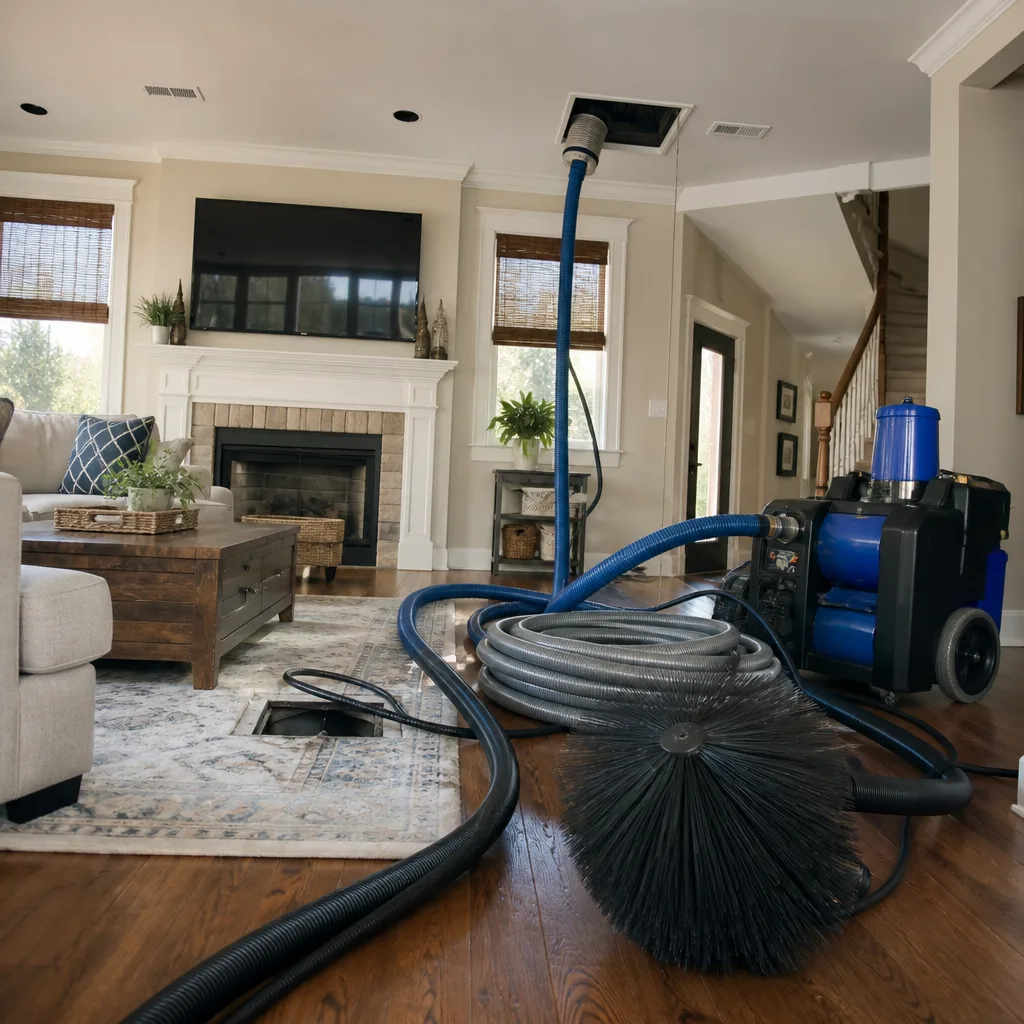
- Equipment setup (15-30 minutes). Professional portable duct cleaning equipment needs to be wheeled in, connected to power, and hoses run to the system. This is not a vacuum and a stick. A proper rig includes a high-powered negative-air machine, agitation tools, and HEPA filtration. Setup takes time, and if a company shows up with only a shop-vac, the entire job will be faster because it won’t be done properly.
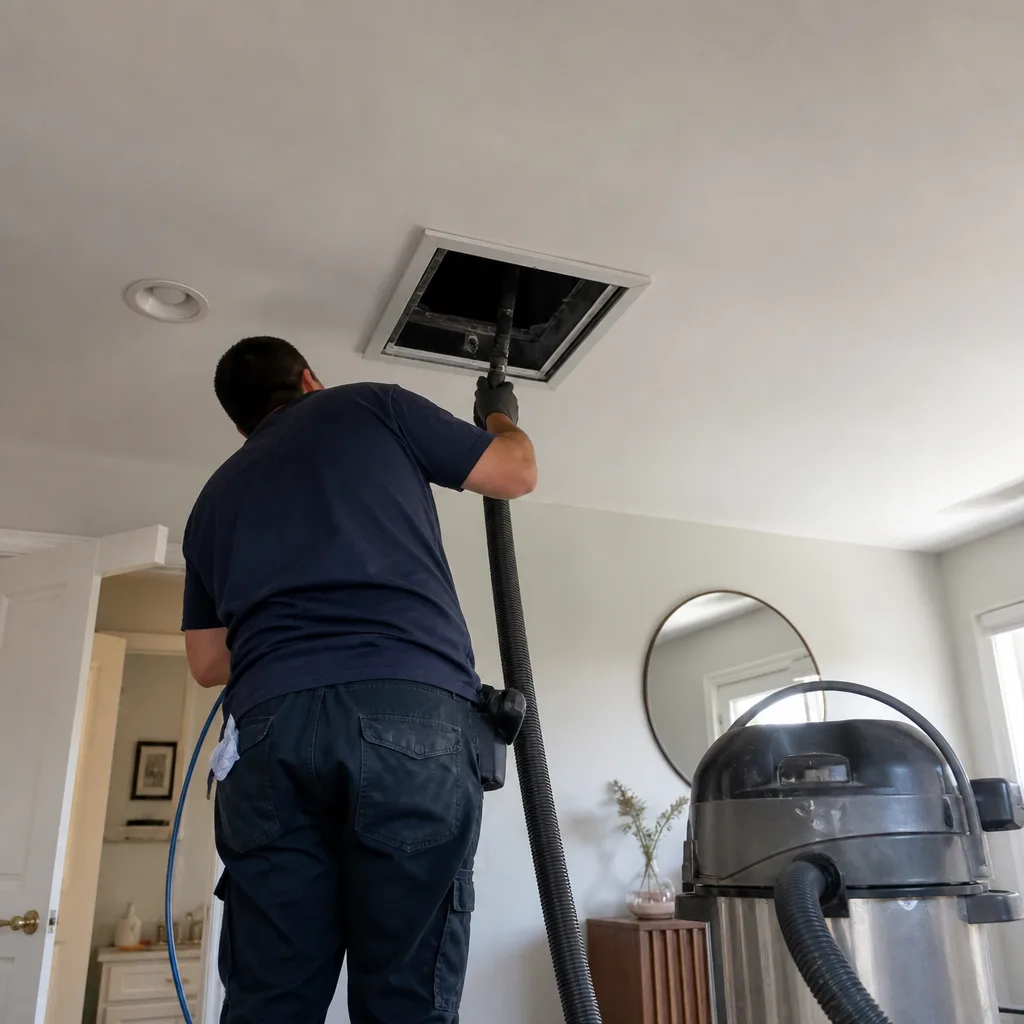
- Register-by-register cleaning (60-120 minutes, depending on register count). Each supply register is removed, cleaned individually, and the branch duct behind it is accessed with agitation tools that loosen buildup while the negative-air machine pulls it out. With 20 registers, at 3 to 5 minutes per register, you’re already looking at an hour to two hours just in this phase. The goal is contact cleaning: the agitation tool actually touches the interior surfaces of the duct, not just air moving past them.
- Trunk line cleaning (30-60 minutes). The main supply trunk and return trunk are the largest air pathways in the home. These are accessed at the plenum near the air handler and cleaned methodically. If the return-air box is in an attic or crawlspace, add time for the technician to safely position and work there.
- Return-side cleaning (20-40 minutes). The return side is where the bulk of household dust accumulates because it’s pulling air from the living spaces. Filter housings, return grilles, and the return drop get individual attention. If you have pets, expect heavier buildup here from hair and dander.
- Reassembly and cleanup (15-30 minutes). Registers go back on, drop cloths come up, and the work area is returned to how it was found. This is not a quick sweep. At Morton’s Air Duct Cleaning, our crews take a photo of the clean-up before they leave so there’s a visual record of the condition of your home at departure. The Morton’s Air Duct Cleaning home explains more about how we work.
- Final walkthrough (10-15 minutes). You walk the home with the technician, confirm every register is back in place, and ask any questions about what was found. This is also when you get any notes about filter recommendations, airflow observations, or things worth watching.
That’s 3.5 to 6.5 hours for a realistic job, not counting unusual complications. When you hear a company advertise 90 minutes for a whole house, ask yourself which of these steps they’re skipping.
Room-by-Room: What Adds Time and What Doesn’t
Some rooms are harder than others, and your floor plan has a direct effect on the clock. Here’s what we see in Los Angeles homes:
- Living rooms and family rooms. Usually the largest register count in the house, often with floor registers or larger wall diffusers. If you have hardwood floors, the drop cloths go down first, which adds a few minutes per room but protects your finish. If you have area rugs, expect the crew to work around them or lift and reset them with permission.
- Bedrooms. Typically straightforward, but the room adds time if there’s furniture blocking a register. We don’t move heavy furniture without asking, and if a dresser sits over a floor register, we’ll ask you before sliding anything. A clean, clear access path around each register keeps the room on schedule.
- Kitchens. Often have a tricky register location behind appliances or under toe-kicks. These accesses can’t always be reached without moving a stove or refrigerator, and we’ll flag any register we can’t access rather than pretend it was cleaned.
- Bathrooms. Small, fast, usually one register. But bathrooms often have a vent fan that’s separate from the HVAC system; that’s a different service. Duct cleaning doesn’t include bathroom exhaust fans unless specifically contracted.
- Attics and crawlspaces. This is the hidden time-eater. In Los Angeles, many duct runs pass through uninsulated attics where summer heat can push temperatures past 130°F. Technicians working in those conditions need to be careful and paced. If your ductwork runs through a tight crawspace, accessibility alone can add 30 to 60 minutes to a job. Some homes in hilly areas like Mount Washington or Silver Lake have foundation-to-attic return chases that are genuinely difficult to access, and the time reflects that.
- Garage-mounted air handlers. Relatively easy access in most cases, and a straightforward connection point for the negative-air machine. If your garage is a packed storage room, though, the crew needs room to work. A clear path to the air handler saves real time.
The takeaway: before the crew arrives, know that clear floor space around each register and a clear path to the air handler will keep your job faster and cheaper. You don’t need to move furniture in advance; we’ll work with you in real time. Just knowing roughly where registers are and where the air handler lives makes the walkthrough faster.
Contact Cleaning vs. Blow-and-Go: Why the Faster Job Is Usually Worse
There are two approaches to air duct cleaning, and they produce wildly different timelines. Understanding the difference is the single best protection against a rushed job.
Contact cleaning is the method used by reputable companies, including ours. An agitation tool with rotating brushes or compressed-air whips is inserted into each duct run and physically contacts the interior surfaces. The tool loosens the debris, and a HEPA-filtered negative-air machine creates continuous suction that pulls the loosened material out of the system and into containment. This is a mechanical process, not an air show. It takes time because the tool has to reach into each branch duct, each section of trunk line, each register connection. Equipment from brands like Rotobrush and Nikro is designed for exactly this kind of work.
Blow-and-go is the other method. A high-pressure air source is shoved into the main trunk, the return is blocked, and air moves through the system. The technician may vacuum registers from the living space side. But the actual interior surfaces of the branch ducts are never touched. Particles that have adhered to the duct walls stay there. The job is faster because it’s less work. It’s also the method behind most ultra-low, ultra-fast service claims.
Here’s the honest comparison:
- Contact cleaning: 3 to 6 hours for an average home, physically dislodges adhered buildup, includes register-by-register work, produces visible before-and-after documentation.
- Blow-and-go: 45 to 90 minutes for the same home, moves loose debris but leaves adhered material behind, often skips branch runs entirely, produces little to no verification of what happened inside the ducts.
If a company quotes you a time under two hours for a whole house, they’re either using a blow-and-go method or they’re not actually cleaning everything. Ask directly: “Do you use contact agitation tools on every branch duct?” A real answer should be an immediate yes.
Two-Story Homes and Attic Duct Runs in Los Angeles
Los Angeles housing stock is a mix: sprawling single-story ranches in the Valley, two-story Spanish-style homes in Mid-Wilshire, hillside builds in Echo Park that stack three levels into a narrow footprint. Each layout affects the timeline differently.
A single-story home with a crawlspace, common in neighborhoods like Van Nuys and Lakewood, keeps most ductwork accessible from below. The technician can move efficiently, and trunk lines are usually easier to reach. These are closer to the 3-hour end of the range.
A two-story home changes the geometry. The upstairs duct runs typically pass through the attic, where insulation, roof trusses, and summer heat make access slower. The return-air box may be in a knee wall or an attic corner that’s hard to reach. The downstairs system often runs through the garage or a first-floor ceiling chase. Effectively, you’re cleaning two separate horizontal runs stacked vertically, and that means two sets of access points, two sets of trunk lines, and more time.
Hillside homes present their own challenges. Some duct runs pass through retaining walls, or through sub-floor spaces built into the hillside. Homes in neighborhoods like Beachwood Canyon or Elysian Heights may have unusual HVAC layouts where the air handler is located far from the living spaces. That’s not a problem; it’s just time. We plan for it in the estimate.
If you’re in a two-story home, expect the checklist to matter more: confirm the crew has access to the attic, that the return-air box isn’t blocked by stored boxes, and that the path from the front door to the air handler is clear. These small things keep a 6-hour job from becoming an 8-hour one. If you’re also considering Air Duct Cleaning in Los Angeles, this is the kind of detail worth asking about.
Pets, Kids, and Nap Schedules: How They Fit Into the Visit
Most of the homes we work in have dogs, cats, and young children. That’s the reality of Los Angeles family life. A good technician knows how to work around all of them, and the process should be designed for it.
Dogs. We love dogs, but every animal in the house needs a plan. If your dog is calm and the equipment doesn’t bother them, they can usually stay in a separate room with a closed door. If the dog is anxious, it’s safer for everyone if they’re out of the house or in a yard for the duration of the visit. The equipment involves hoses, power cords, and moving parts; a curious dog underfoot is a hazard. We’ll ask about your pets during the booking call so the day is planned properly. Some patients with pet hair buildup also notice the air smells better within 24 to 48 hours after a cleaning; that’s normal as the system rebalances.
Napping kids. Professional equipment is not silent, but it’s not a jackhammer either. The negative-air machine runs continuously and produces a constant low hum. Most babies sleep through it, and we’ve cleaned ducts in homes where the toddler napped the whole time. If your child is a light sleeper, schedule the visit around nap time or plan for the noisy phase (register agitation) to happen in the room farthest from the nursery first.
Pet-safe product choices. Where a light sanitizing fog or filter treatment is used, Morton’s uses products selected with households in mind. We’ll tell you what’s being used and give you the product name if you ask. Nothing gets applied without your okay.
The point is that your home doesn’t stop being a home during a duct cleaning. Kids still nap, dogs still need to be somewhere, and the crew should work like guests who respect that. That’s baked into the Cedarwell Care Promise, and it’s not a slogan; it’s how the visit runs from the first knock to the last register going back on.
What a Written Arrival-to-Departure Estimate Looks Like
Before any work starts, you should have a written estimate that tells you exactly what’s being done, for what price, and roughly how long the crew will be in your home. This is not a verbal promise; it’s a document. At Morton’s Air Duct Cleaning, every job gets a written price before anything is touched. If a company won’t put the number in writing before starting, that’s a red flag you should not ignore.
A useful written estimate for a Los Angeles home includes:
- Property address and date of service. Basics, but they matter. If the estimate doesn’t reference your actual home, it’s a generic flyer disguised as a quote.
- Scope of work. Number of systems, register count if known, whether dryer vent or filters are included, and any access limitations the technician anticipates.
- Flat price for the job. One number, not a rate. You know the total before work starts. No per-vent multiplication games, no surprise fees for “extra buildup” discovered mid-job.
- Expected arrival-to-departure window. Realistic, not a sales number. If we expect 4 hours, the estimate says 4 hours. If the house has conditions that might extend it, those are noted too.
- Equipment and method description. Contact cleaning with professional-grade equipment, negative-air containment, HEPA filtration. Not vague language.
- Promise in writing. The 365-Day Done Right Promise: if the job isn’t right, we make it right, full stop. That’s not a fine-print phrase; it’s attached to every estimate.
Having this in writing means the day unfolds predictably. The crew arrives when expected, does what was described, finishes in the estimated window, and leaves your home clean. If you’ve been burned before by a service that rushed through and left you with a messy house and a higher bill, that’s exactly the experience this document prevents.
Common Mistakes to Avoid
- Choosing a company based on speed. “We’ll be done in an hour” is not a selling point for duct cleaning. It’s a warning sign. Thorough contact cleaning takes time, and a company promising extreme speed is almost certainly cutting corners.
- Not asking whether the quote includes the return side. Some companies price the supply ducts only and leave the return side untouched. The return carries the most dust in many Los Angeles homes, especially with pets. Confirm both sides are included in writing.
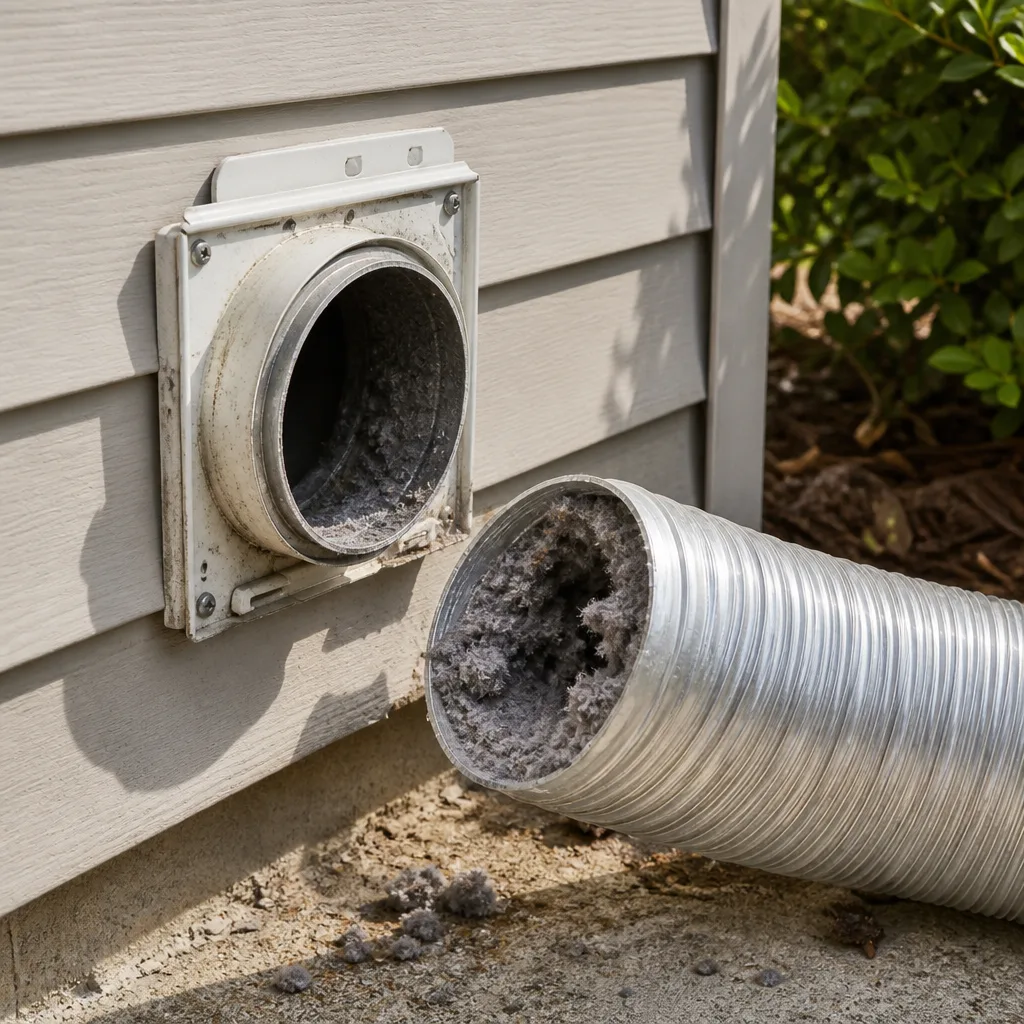
- Assuming the dryer vent is included. Air duct cleaning and dryer vent cleaning are separate services. If you want the dryer vent done too, it should appear as a line item on the written estimate, not assumed. We handle Dryer Vent Cleaning in Los Angeles as its own service with its own pricing.
- Blocking access on service day. If furniture sits over every register and the attic hatch is behind a stack of boxes, the job takes longer than it should. Clear what you can and let the crew handle the rest.
- Falling for a super low flat rate on a large home. A 4,000-square-foot house with two systems cannot be properly cleaned for $199. The math doesn’t work. Honest pricing reflects the actual scope of the job.
- Not getting before-and-after documentation. A reputable company should show you what was removed and what the interiors looked like before and after. Without that, you’re taking the result on faith.
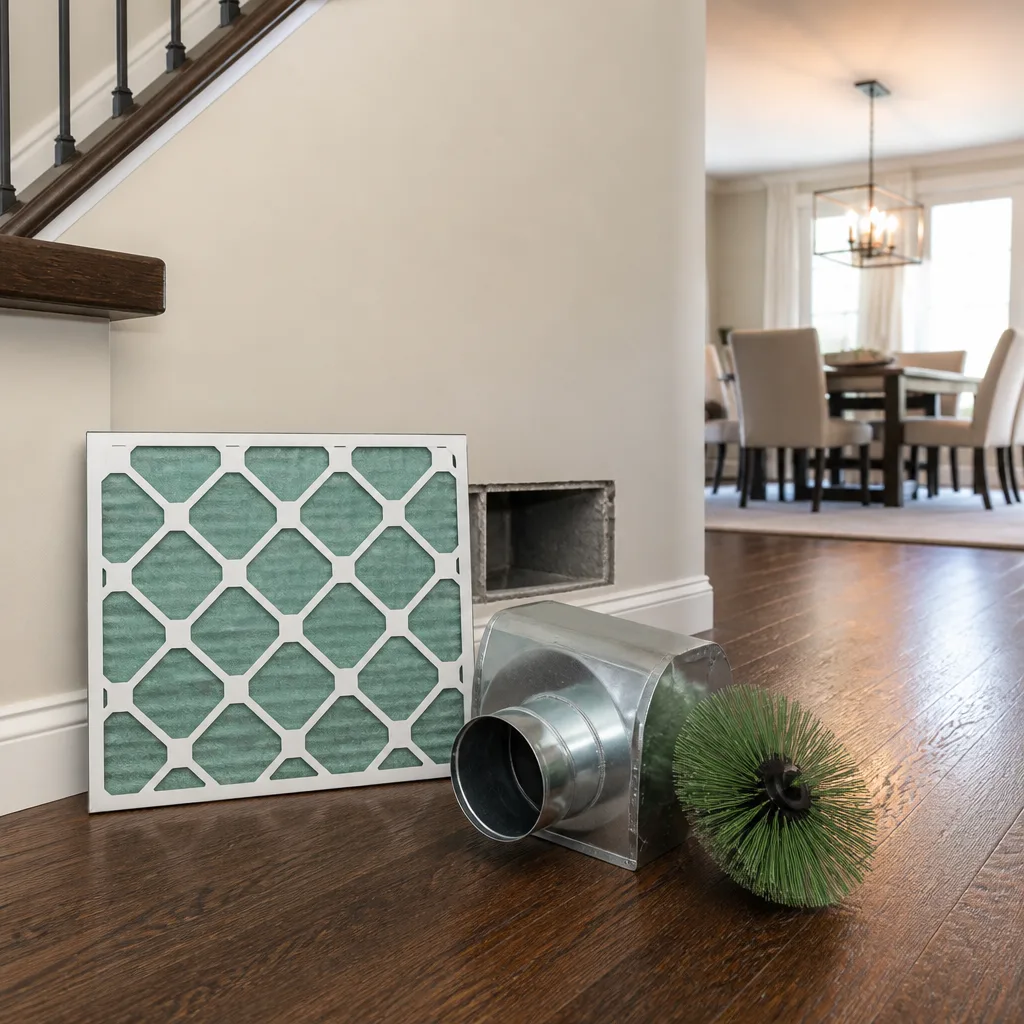
- Ignoring the post-cleaning filter replacement. After a cleaning, install a new filter. Using the old, loaded filter immediately recontaminates the clean system. This is a 30-second step that makes the whole job last longer.
When to Call a Professional
If you’re seeing dust accumulate on surfaces within days of cleaning, smelling a musty or stale odor from the vents, or noticing that certain rooms aren’t getting airflow, your ducts are telling you something. The same goes if you’ve never had the system cleaned and you’ve lived in the home more than five years, or if you completed a renovation that left drywall dust in the air. Pets amplify all of this. Professional air duct cleaning with contact agitation and HEPA negative-air containment is not a DIY project; it requires equipment sized for the job and training to do it without damaging your ductwork. Morton’s Air Duct Cleaning offers free estimates in Los Angeles. Call (323) 918-4345 and a real person will answer, not a voicemail, not a chatbot.
Frequently Asked Questions
Expect 3 to 5 hours for a standard single-family home with 10 to 15 registers and one HVAC system. Condos and apartments run 2 to 3 hours; larger two-story homes with dual systems can take 6 to 8. The exact time depends on register count, duct accessibility, and how long it’s been since the last cleaning. Call (323) 918-4345 for a written estimate based on your home’s specifics.
Yes, you can stay. The equipment produces a continuous low hum and there may be brief periods of more noticeable noise during register agitation, but most families go about their day normally. If you have a napping child or an anxious pet, let us know when you book and we’ll plan around it.
Because they’re using a blow-and-go method that moves air through the ducts without physically agitating the interior surfaces. It’s faster and cheaper to perform, but it leaves adhered debris behind. Contact cleaning, which uses agitation tools on every branch duct, is the only method that fully removes buildup, and it takes 3 to 5 hours or more.
Every 3 to 5 years for most Los Angeles homes. Homes with indoor pets, recent renovations, or residents with allergies may benefit from more frequent cleaning, closer to the 3-year mark. The LA climate is dry and dusty, and windows-open seasons in spring and fall pull in significant particulate from outside.
Yes, every time, without exception. You’ll receive a written estimate with a flat price for the entire job before any equipment comes through the door. There are no surprise fees, no per-vent additions, and no pressure to add services you didn’t agree to.
Air duct cleaning services the HVAC system’s supply and return ducts that distribute heated and cooled air through the home. Dryer vent cleaning services the separate duct that carries hot, lint-filled air from your clothes dryer to the outside. They’re different systems, different equipment, and different timelines. Both matter for different reasons.
You should receive before-and-after documentation showing the interior of your ducts. At Morton’s, our crews also take a photo of the clean-up before they leave, so you have visual proof that your home was left in the condition it was found. The 365-Day Done Right Promise covers the rest: if it’s not right, we make it right.
The Bottom Line
The honest answer to “how long does air duct cleaning take” is 3 to 5 hours for most Los Angeles homes, with smaller properties finishing in 2 to 3 and larger or more complex homes running 6 to 8. A company that quotes a time before asking about your square footage, register count, and cleaning history is guessing, and a company that promises under 2 hours is skipping steps. You deserve a written price, a realistic arrival-to-departure window, and a crew that treats your floors, your pets, and your nap schedule like they matter. That’s the standard we’ve worked to since 2005, and it’s written into every estimate we give. For more guides & resources on keeping your home’s air clean, visit our blog.
Written by Paul Adeyemi, Owner at Morton’s Air Duct Cleaning, serving Los Angeles since 2005.