
Last updated October 8, 2026
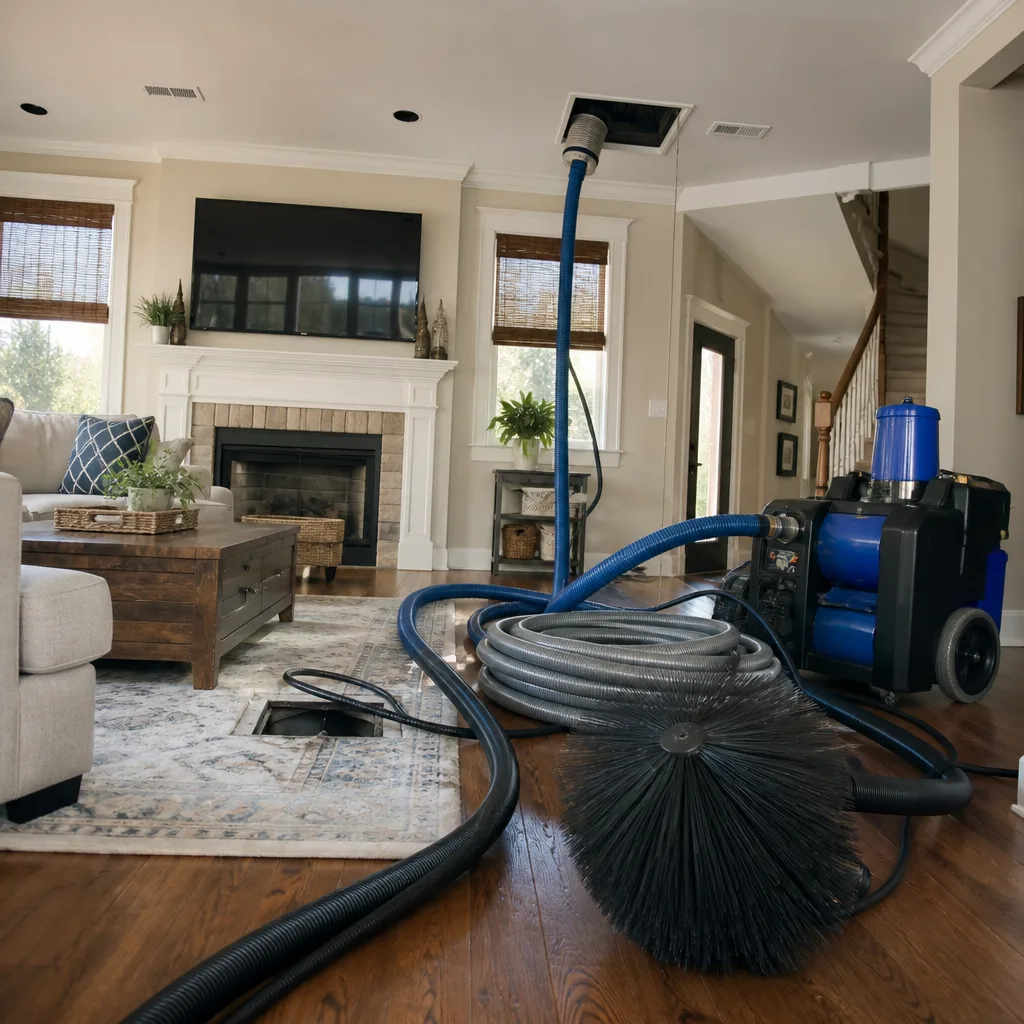
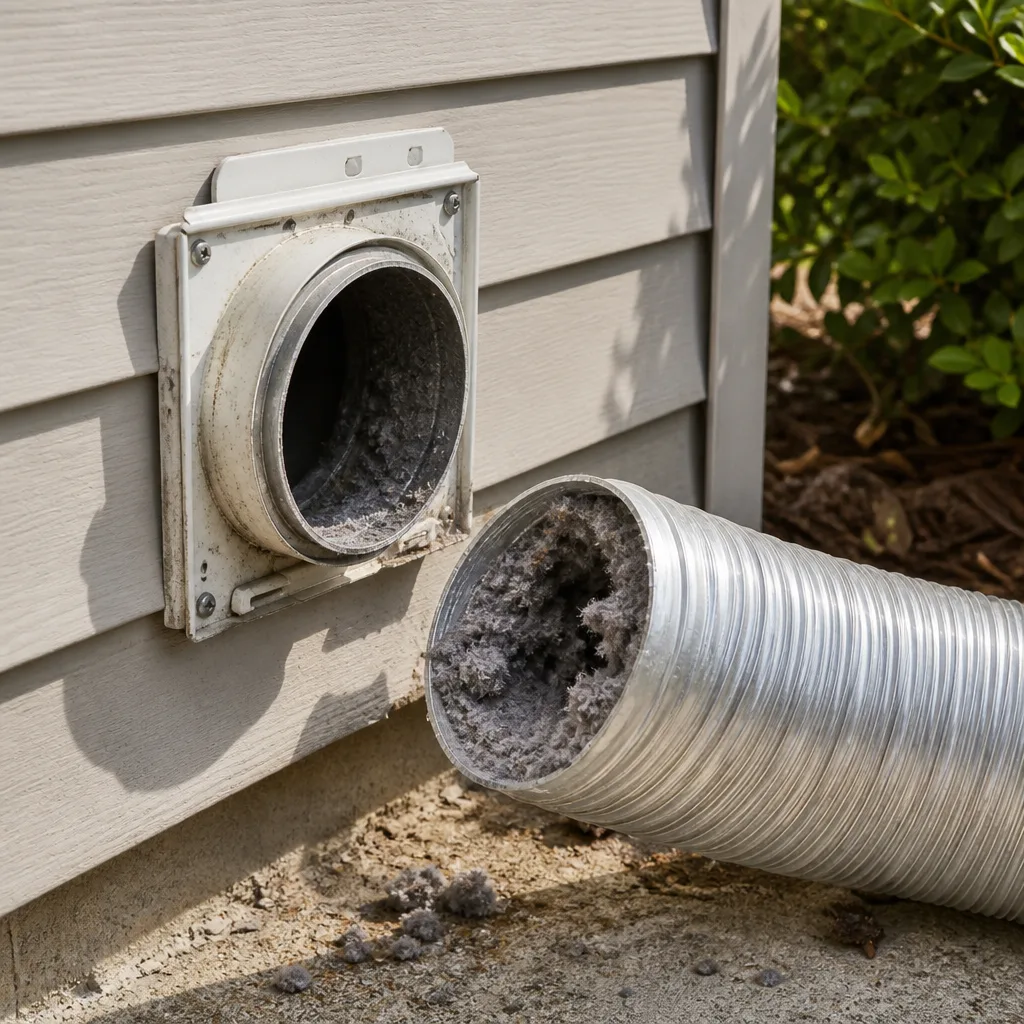
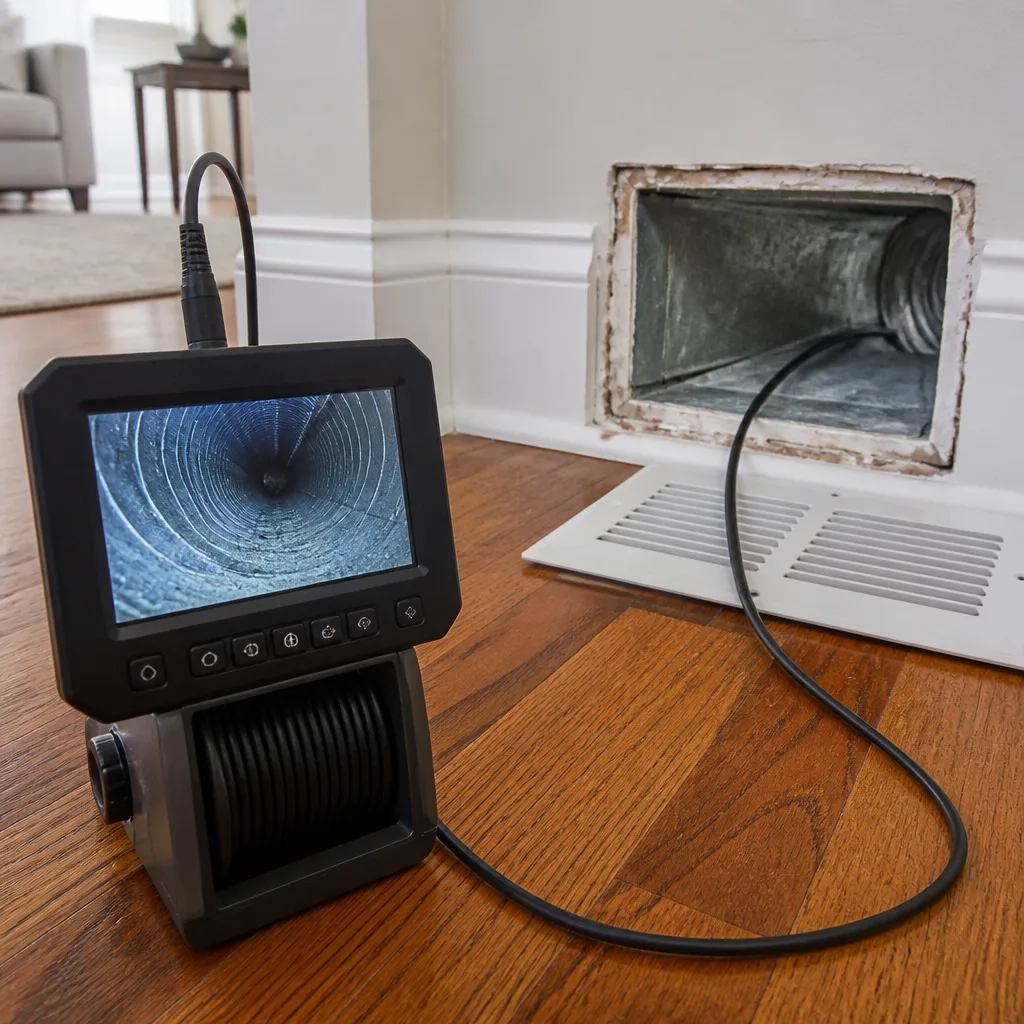
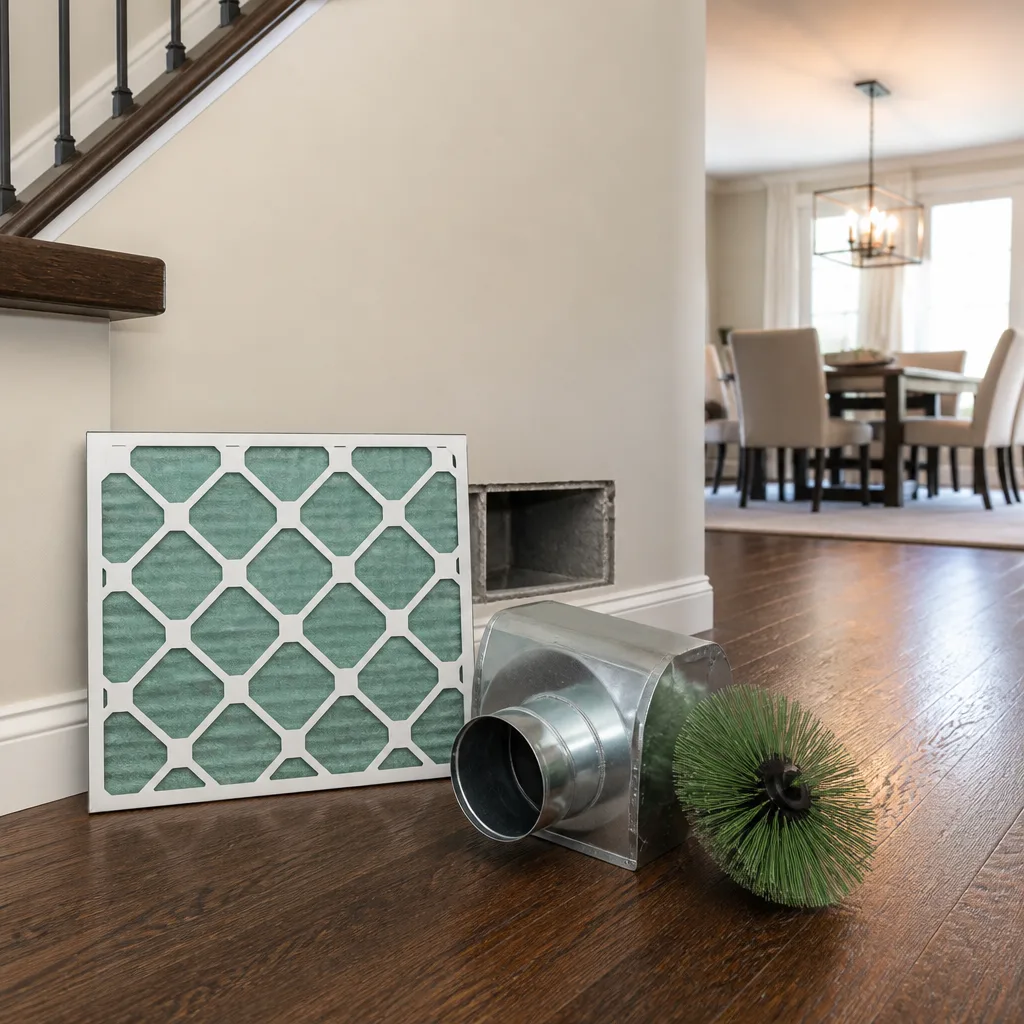
Whole-system duct and dryer vent check with before-and-after photos - you see exactly what came out of your vents
That "$99 whole-house special" is a bait ad - the real number appears once they are in your hallway, or the "clean" is a shop-vac at the register. We photograph the inside of your ducts before and after instead.
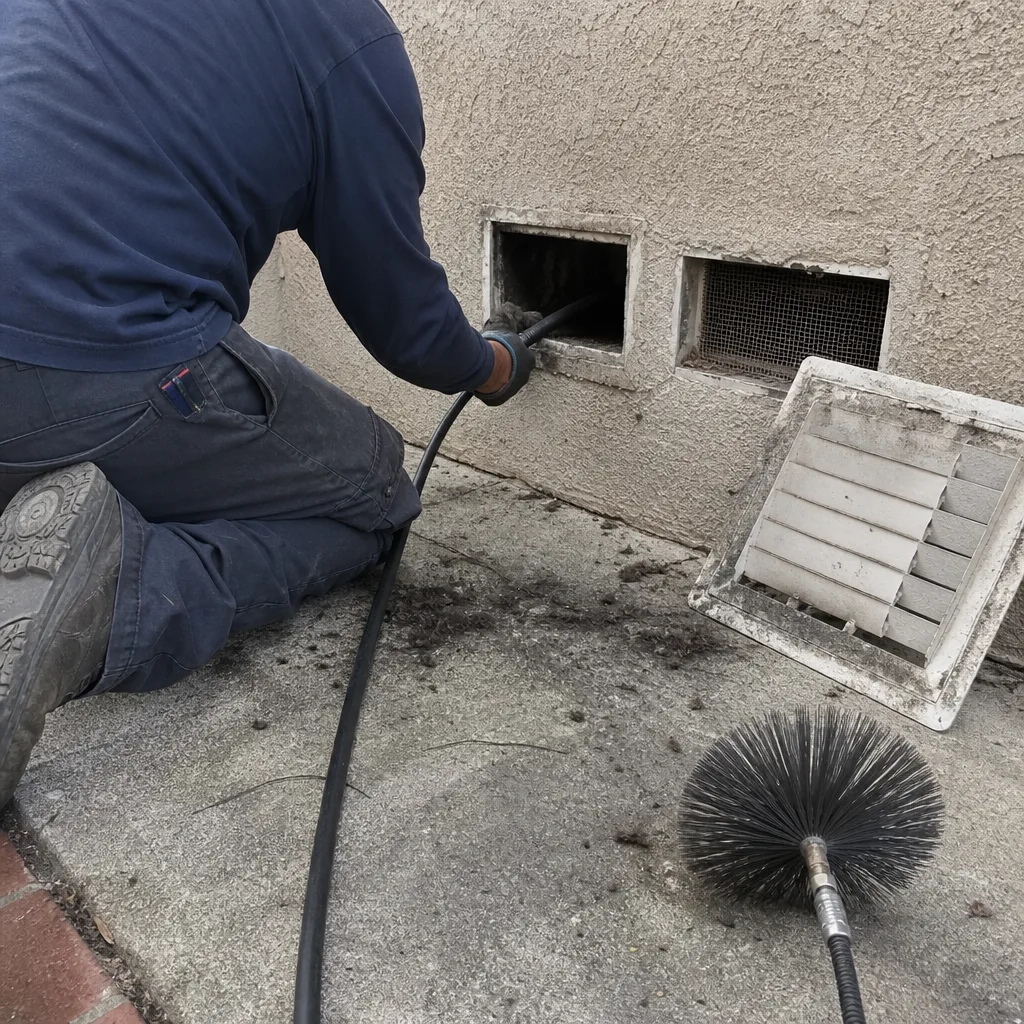 Before
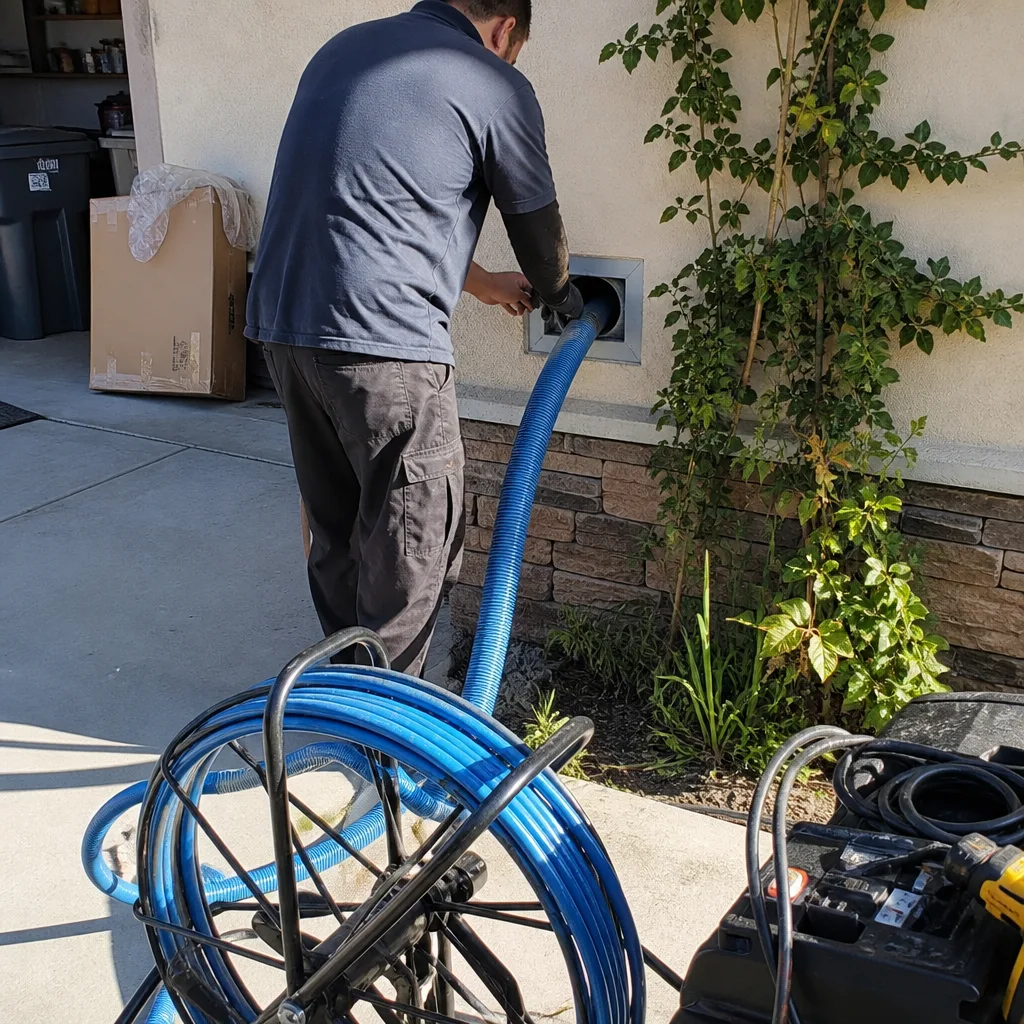 After
After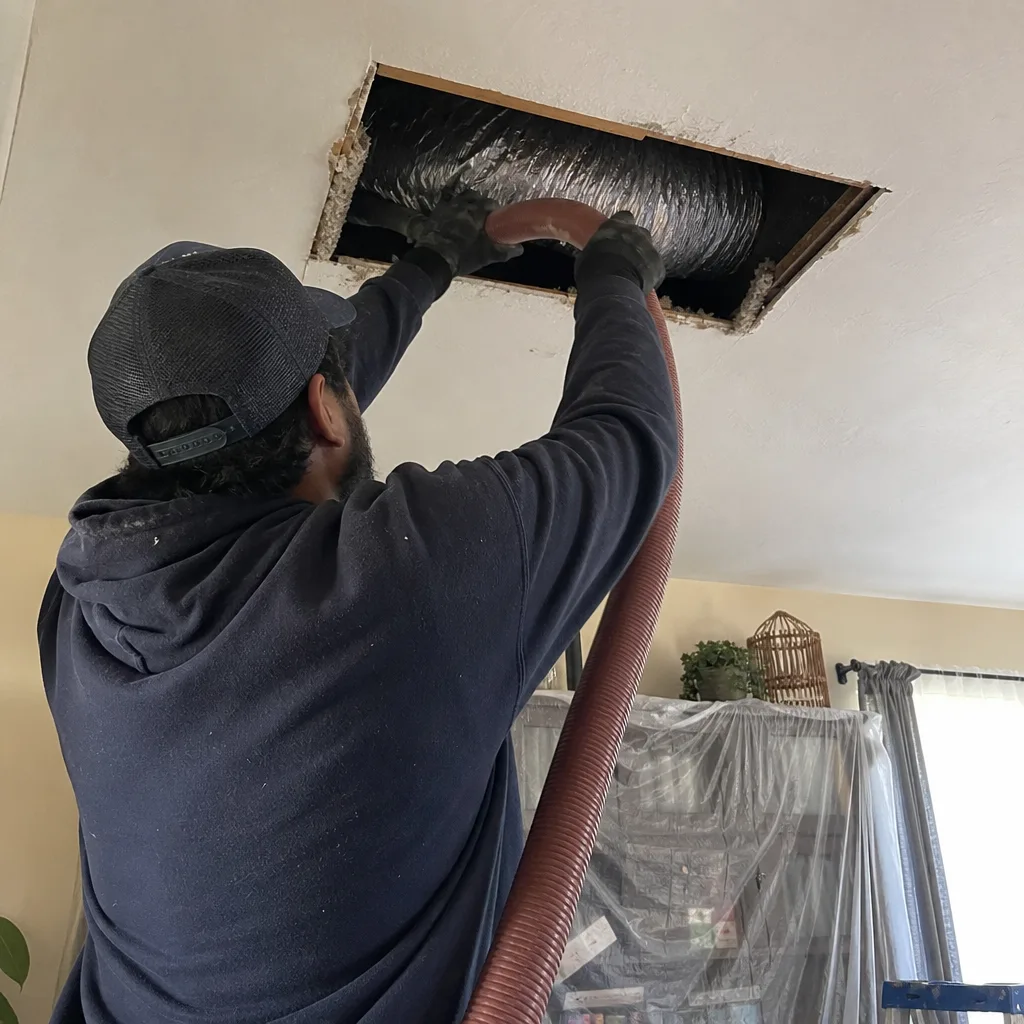 Before
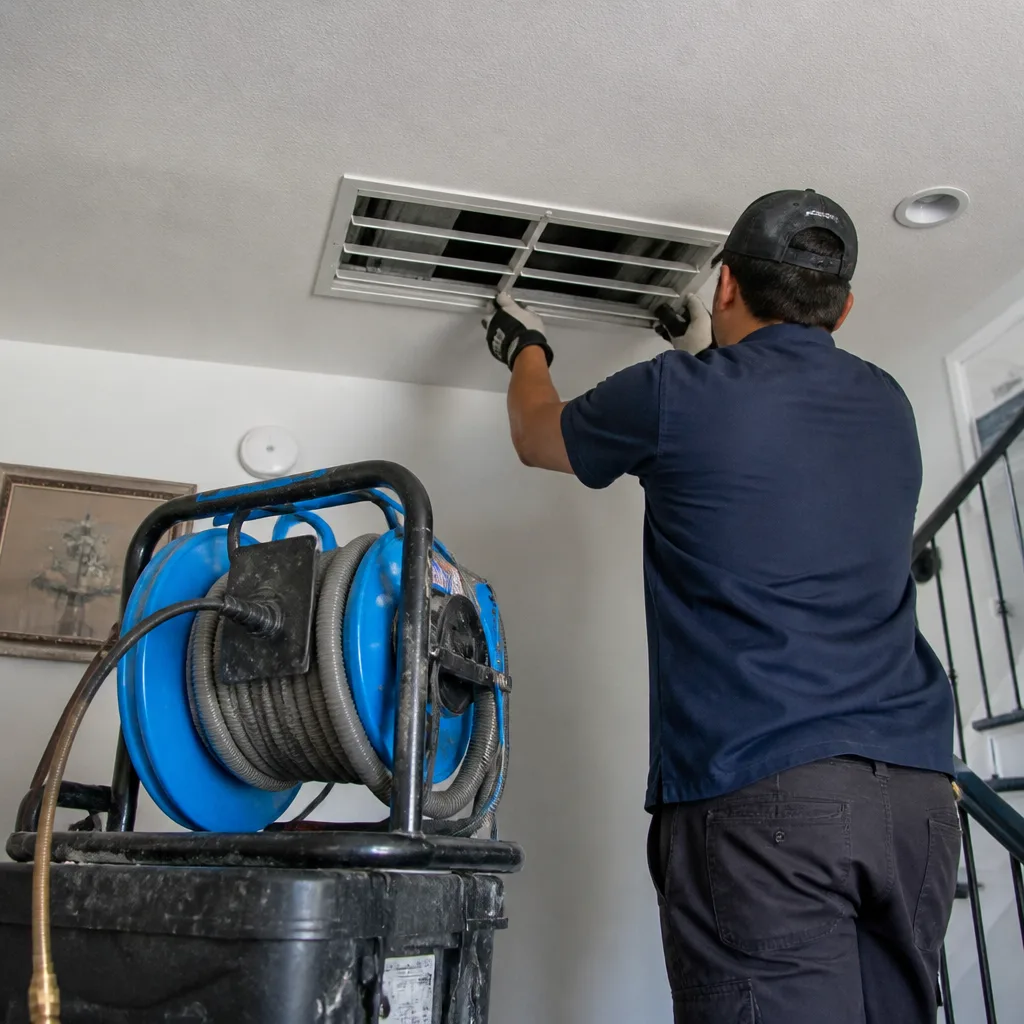 After
After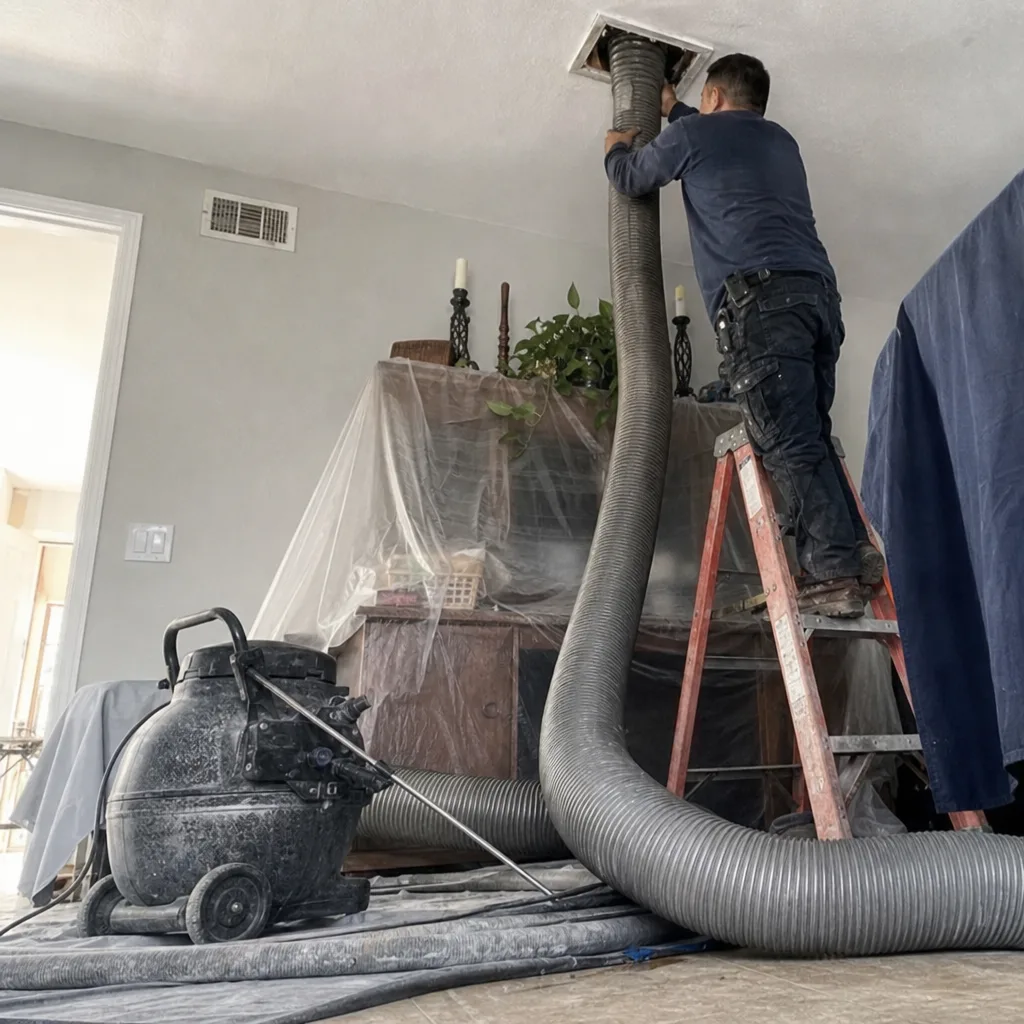 Before
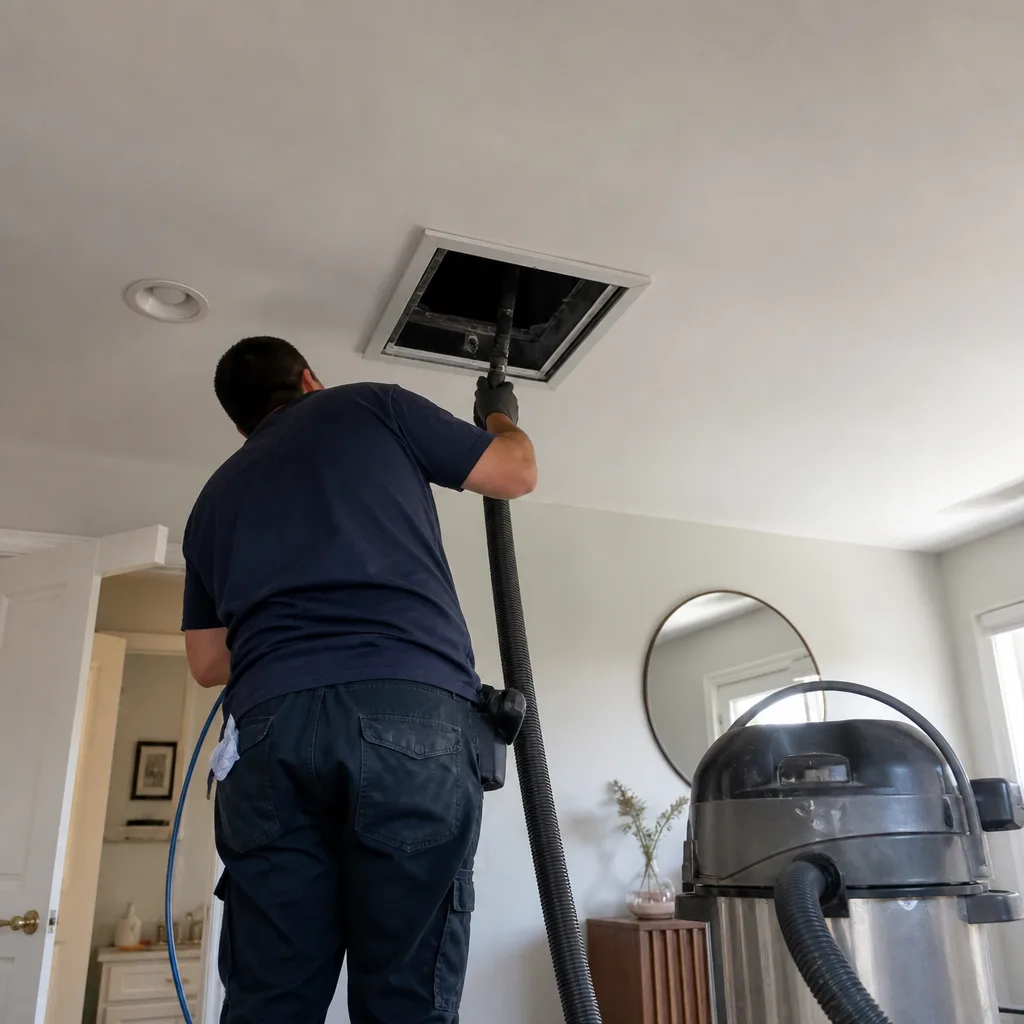 After
AfterDryer Vent Cleaning Maintenance Schedule: What to Do and When
The “clean it once a year” rule for dryer vents assumes an average American household with an average-length vent run. It’s tidy advice, easy to remember, and often wrong. If you live in Los Angeles with four people, two dogs, a vent that exits through the roof, and a laundry room that runs five days a week, that once-a-year guideline underestimates your lint buildup by a wide margin. This guide gives you a schedule built around your actual laundry habits, your vent configuration, and the specific conditions of your home, so you can stop guessing and start planning. For related reading, see our Dryer Vent Cleaning Warning Signs Every Homeowner Should Know.
Quick Answer
Most Los Angeles households should have their Dryer Vent Cleaning done professionally every 12 to 18 months, but households doing more than six loads per week, households with pets, and households with vent runs longer than 10 feet should shorten that interval to every 6 to 12 months. Your lint trap needs cleaning after every single load, and your exterior vent cap needs a visual inspection twice a year. The single most important variable is not time, it’s how much lint your specific setup produces and how far it has to travel before it exits the house.
Table of Contents
- The Laundry Load Calculator: Finding Your Real Interval
- Between-Cleaning Maintenance Steps That Actually Extend Your Safe Interval
- Why Pet-Owner Households in Los Angeles Need a Tighter Schedule
- How Vent Length, Bends, and Exit Points Change the Math
- The Documentation Practice: Photographing Your Vent Before and After
- The Los Angeles Trigger Most Schedules Miss: Post-Renovation Dust
- Scheduling Around Real LA Life: Kids, Pets, and Nap Hours
- Common Mistakes to Avoid
- When to Call a Professional
- Frequently Asked Questions
- The Bottom Line
The Laundry Load Calculator: Finding Your Real Interval
Every dryer vent cleaning interval you’ve ever heard is built on an assumption about how much laundry you do. The average guideline of “once a year” assumes roughly three to four loads per week, a vent run under 12 feet, and no significant pet presence. Most real households in Los Angeles do not look like that average. A family of four with a baby and a dog can easily run seven to ten loads a week. Two adults with no pets and a side-by-side washer-dryer against an exterior wall may run three loads and have a 5-foot vent. These households have entirely different risk profiles, and their maintenance schedules should reflect that.
Here is a straightforward way to estimate your own interval. Start with a baseline of 12 months. Then adjust:
- Loads per week: If you run more than five loads weekly, subtract 3 months. Seven or more, subtract 6. Two loads or fewer, add 6.
- Fabric type: If your weekly mix includes towels, pet bedding, blankets, or heavily soiled work clothes, subtract 3 months. These fabrics shed dramatically more lint than dress shirts or delicates. Cotton towels alone account for a disproportionate share of dryer lint.
- Pet presence: One shedding dog or cat subtracts 3 months. Two or more pets, subtract 6. Pet hair does not just accumulate in the lint trap, it works its way past the trap and into the vent run itself, where it binds with lint and forms dense clogs faster than almost anything else.
- Vent run length and complexity: A run over 10 feet, any run with more than one elbow or bend, and any run that exits through the roof subtracts 6 months. A short, straight run out a side wall adds nothing.
- Dryer age: Dryers older than ten years often have less efficient blower motors, meaning they push less air and leave more lint behind in the duct. Subtract 3 months for older machines.
Add the numbers together and you have a schedule tailored to your home. We’ve seen a two-load-per-week couple with a 6-foot straight vent safely go 24 months between cleanings. We’ve also seen a four-person, two-dog household with a 30-foot roof-exit vent that needed it every 5 months. Both are “normal.” Neither fits the once-a-year rule.
Between-Cleaning Maintenance Steps That Actually Extend Your Safe Interval
Professional cleaning is the backbone of dryer vent safety, but what you do between visits determines how far apart those visits can safely be. The three highest-impact habits take under two minutes combined, and we see most Los Angeles homes skipping at least one of them.
- Clean the lint trap after every single load, not every week. The lint trap is not a weekly chore. A single load of towels can fill a trap completely. A full trap reduces airflow before air even enters the vent run, which means your dryer runs hotter and longer, and moist lint-laden air spends more time passing through the duct. That extra dwell time is exactly what turns a light dusting of lint into a adhered crust that professional cleaning has to chip out. Every. Single. Load.
- Inspect the exterior vent cap twice a year. Walk outside to where your dryer exhaust exits. Look at the cap. Is the flap opening freely, or is it stuck partly open with lint glued around the edges? Can you see visible lint protruding from the louvers? Does the flap close when the dryer is off, or does it hang ajar? A cap that does not seal lets Los Angeles heat, dust, and pests into the vent between cycles. Fix or replace a damaged cap immediately. This check takes 60 seconds, twice a year. Almost nobody does it.
- Check the flex duct behind the dryer twice a year, or after any time the dryer gets moved. Pull the dryer out gently, just far enough to see the transition duct: the flexible silver or white foil tube connecting the dryer to the wall. Look for kinks, sharp bends, pinches, or areas where the duct is crushed against the wall. A single kink can reduce airflow by more than half. Look also for tears or disconnected joints. Push the dryer back carefully, watching the duct the whole time to make sure you are not re-crushing it. If you are not comfortable moving your dryer, this is a standard part of any professional cleaning visit and takes us under three minutes.
These three habits, done consistently, genuinely stretch the safe interval between professional cleanings in Los Angeles. A household that does all three can often move from a 12-month schedule to 18 months without a meaningful increase in risk. A household that does none of them is usually already late by month 8.
Why Pet-Owner Households in Los Angeles Need a Tighter Schedule
Pet hair changes the math on dryer vent maintenance more than any other single factor, and it is worth understanding exactly why. When you wash a dog bed, a cat blanket, or even just a load of clothes that has collected pet hair, that hair goes into the washing machine. Much of it rinses down the drain, but a significant amount remains woven into the fabric. The dryer then extracts that hair, and most of it catches in the lint trap. But pet hair is finer and lighter than cotton lint, which means a higher percentage of it slips past the trap and into the vent run.
Once pet hair is in the vent, it behaves differently than ordinary lint. It acts as a net: the fine strands create a web-like matrix that grabs and holds ordinary lint, building clogs faster than lint alone ever would. We have pulled vent clogs in Los Angeles homes with multiple pets where the clog material was visibly distinct layers of pet hair interwoven with lint, compressed into what amounted to felt. That material does not loosen on its own. It requires mechanical agitation to remove.
For households with one or more shedding pets, we recommend treating your dryer vent cleaning schedule the same as your air duct cleaning in Los Angeles schedule. If your HVAC ducts are due for cleaning every 3 to 5 years, fine, they operate under different physics. But the principle of matching maintenance to contaminant load applies. In practical terms: households with pets should set their dryer vent interval at 6 to 12 months, with the shorter end applying to multi-pet homes, homes with both cats and dogs, and homes where pet bedding is laundered weekly. And if you notice your dryer taking longer to dry clothes even with a clean lint trap, that is pet hair in the vent telling you the interval has already closed.
How Vent Length, Bends, and Exit Points Change the Math
Two Los Angeles homes can have the same dryer, the same family size, and the same weekly laundry volume, and one of them might need cleaning twice as often. The difference is the vent run itself. A 6-foot straight run out a side wall is the easiest possible configuration: the dryer’s blower only has to push air 72 inches before it exits the house. Lint barely has time to settle. A 30-foot run that turns twice and exits through the roof is an entirely different animal. Every foot of run length and every bend reduces airflow velocity, and reduced velocity means more lint drops out of the airstream and adheres to the duct walls.
Roof-exit vents deserve special attention in Los Angeles. They are common in older Los Angeles homes and in two-story layouts where the laundry room sits on an interior wall. A roof exit means the entire duct is vertical or near-vertical, so lint that settles cannot be blown out by normal airflow the way it can in a horizontal run. It sits there. And because roof caps are harder to inspect than side-wall caps, lint buildup above the roofline can go unnoticed for years. A vertical run also means the dryer has to push against gravity, which reduces airflow and raises the temperature inside the vent, baking lint onto the duct walls. If your dryer vent exits through the roof in Los Angeles, set your interval at the shorter end of whatever your load and pet calculations suggest.
Multiple bends are the other quiet aggravator. Every 90-degree elbow in a vent run creates a spot where airflow slows and lint drops out. A run with three elbows is functionally longer than a straight run of the same physical length. The transition duct behind the dryer, the flexible foil section, is often the site of the first clog because it is the most flexible, the most likely to kink, and the part of the system that vibrates with every cycle. This is why our technicians at Morton’s Air Duct Cleaning start every dryer vent visit by inspecting the back of the dryer before we ever put a tool into the wall. In our experience, the problem is as often behind the machine as inside the duct.
The Documentation Practice: Photographing Your Vent Before and After
Most homeowners have never seen the inside of their dryer vent. That is not a criticism, it is just a fact. The vent is hidden inside walls, ceilings, or floors, and the only time anyone sees it is during a cleaning. That invisibility creates a documentation problem: when the next technician arrives, they have no baseline for what “clean” looked like last time. They start from zero. And you as the homeowner have no way to compare this cleaning’s results to the previous one.
The fix is simple. Every time your dryer vent is professionally cleaned, ask for before-and-after photos of the vent interior. Any reputable company has the inspection camera equipment to capture these. In Los Angeles, we use professional-grade inspection tools during every visit, and our team documents the vent interior before work starts and after it finishes. These photos are part of your record. They show you exactly what was removed and what the clean vent looks like. More importantly, they become the baseline for your next visit. When the next technician arrives, they can compare the current condition of the vent to the previous post-clean photo and tell you immediately whether your current interval is too short, too long, or just right.
Keep these photos in a folder, physical or digital, along with the date of each cleaning and the technician’s name. This is not just documentation for its own sake. It is a maintenance record that gets more useful every year. If you ever sell your Los Angeles home, a clean maintenance record with photographic evidence of regular dryer vent cleaning is a small but real differentiator, the same way HVAC service records are. And if you ever have a problem, you have a documented history to show any technician. In our experience serving Los Angeles since 2005, the homes with this kind of simple documentation get better service on every visit, because the technician is not working blind.
The Los Angeles Trigger Most Schedules Miss: Post-Renovation Dust
There is a trigger for an unscheduled dryer vent check that almost no maintenance guide mentions, but it is common enough in Los Angeles that we have learned to ask about it on every call. If you have done any significant home renovation that involved drywall work near the laundry area, your dryer vent needs a professional cleaning, even if it was cleaned recently.
Here is why. Drywall sanding produces an extremely fine dust that behaves almost like a gas. It does not settle where it falls; it disperses through the air and migrates into every connected space in the house. The dryer vent is a direct opening into the wall cavity. During a renovation, if the dryer has been run at all, or even if it has not but the vent cap outside is open, construction dust enters the vent run. Once inside, it mixes with residual lint and moisture, creating a dense, paste-like material that hardens as it dries. This material adheres to duct walls more stubbornly than ordinary lint and does not respond to the gentle airflow from normal dryer operation. It requires mechanical cleaning to remove.
The trigger points are easy to identify. Drywall installation or sanding anywhere in the house. Texturing or skim-coating of walls or ceilings. Sanding of hardwood floors near the laundry. Tile cutting. Any project that produced visible dust throughout the home. If you have completed a renovation of that kind and your laundry room is anywhere near the work zone, schedule an unscheduled check. In Los Angeles, where renovation cycles are constant and homes are frequently updated between owners, this trigger fires far more often than people realize. A $150 checklist visit is cheap insurance against a vent that has quietly turned into a construction-dust-and-lint plug.
Scheduling Around Real LA Life: Kids, Pets, and Nap Hours
A maintenance schedule only works if you actually keep it, and in our experience, families in Los Angeles do not skip dryer vent cleaning because they do not care. They skip it because the scheduling friction is too high. The crew arrives somewhere in a four-hour window, the dryer is mid-cycle, the baby is napping, the dog is losing its mind at the door. Everyone knows the cleaning is important. The logistics just feel impossible.
This is where the difference between a generic service provider and a specialist actually matters. At Morton’s Air Duct Cleaning, the scheduling and visit flow is built around homes, not just ducts. When you call, you speak to a live person, any hour of the day or night. You tell them when the kid’s nap schedule is, when the dryer can be offline, whether the dog needs to be kept in a back room. The crew arrives with shoe covers and drop cloths, because the floors in a Los Angeles home with kids and pets are already fighting a losing battle and we are not going to add to it. The equipment we use, from brands like Rotobrush and Nikro, is professional-grade, and our techs are trained to work quietly and carefully, not like they are clearing a construction site.
There is no magic schedule trick that makes a service visit effortless with a toddler and a dog in the house. But the right provider takes the friction down from “not worth it” to “fine, let’s just do it.” The person answering the phone should be able to help you plan around the nap. The crew should leave you with a photo of the clean-up before they go, so you are not wondering whether the laundry room floor is covered in lint dust. The written price should be in your hand before the equipment comes out of the truck. These are not add-ons. They are the difference between a schedule you keep and a schedule you abandon.
We have cleaned dryer vents in Los Angeles homes all over the city, from West Adams to Studio City to the Valley, and the rhythm is always different: sometimes the baby sleeps through the whole thing, sometimes the dog barks at the van and then settles. What stays the same is this: a cleaning that respects the house is a cleaning that gets repeated on schedule. The 365-Day Done Right Promise means if something isn’t right, we make it right. That promise is stamped on every job, not offered only when you ask.
Common Mistakes to Avoid
- Treating the lint trap as a weekly chore. The lint trap needs to be cleaned after every load. A single load of towels can fill the trap to capacity, and once it is full, every additional load pushes more lint past the trap into the vent. This one habit, repeated daily, buys more schedule flexibility than almost anything else.
- Using a leaf blower or shop vac on the vent yourself and calling it clean. These tools cannot reach clogs that have adhered to the duct walls, especially in long vertical runs. A leaf blower will clear loose debris near the exterior opening and leave the hard, attached buildup inside the run untouched. You get a false sense of security and a clean-looking cap with a still-restricted duct behind it.
- Ignoring a dryer that takes two cycles to dry a load. In Los Angeles, where summer heat already strains appliance efficiency, a dryer that suddenly needs 60 minutes instead of 40 is not just annoying. It is a symptom. Longer dry times mean less airflow, which means lint is accumulating. Every week you run a sluggish dryer, the vent is compressing that lint further and making the eventual cleaning more difficult.
- Never checking the exterior vent cap. Half the maintenance you need to do between cleanings happens outside the house. A stuck flap, a missing screen, a lint-caked louver, all of these are visible from your yard in Los Angeles with a quick walk around the side of the house. Most people have never looked at their vent cap. Check it twice a year.
- Assuming a new home has a clean vent. When our team at Morton’s Air Duct Cleaning walks into a newly purchased Los Angeles home, we almost always find a dryer vent that the previous owner never cleaned. Home inspections rarely cover the dryer vent interior. If you just bought your home, put a professional cleaning on the list, not because the previous owner was negligent, but because there is no way to know otherwise.
- Letting a handyman “clean” the vent during a renovation. We see this in Los Angeles renovation after renovation. A general contractor or handyman flattens a duct brush through the pipe once and calls it done. Dryer vent cleaning requires negative air pressure and rotary agitation tools to do correctly. It is not a drill, not a whisk, not a coat hanger. If anyone offers to “knock out” your dryer vent during a remodel, politely decline and hire a specialist.
When to Call a Professional
Call a professional if you have never had your dryer vent cleaned and you have lived in the home for more than a year, or consult our Dryer Vent Cleaning Troubleshooting: Common Problems and How to Fix Them for guidance. Call if your dryer takes noticeably longer to dry clothes even with a clean lint trap. Call if the dryer itself or your laundry room feels unusually hot during a cycle. Call if you see lint protruding from the exterior vent cap, if the cap flap does not close, or if you smell a musty or burning odor while the dryer is running. Call after any significant renovation involving drywall work near the laundry area. And call if you have pets and cannot remember the last time the vent was serviced. Morton’s Air Duct Cleaning offers free estimates in Los Angeles, call (323) 918-4345 and a live person will answer, any hour.
Frequently Asked Questions
Most Los Angeles homes need dryer vent cleaning every 12 to 18 months, but households running more than five loads a week, homes with shedding pets, or homes with vent runs longer than 10 feet should clean every 6 to 12 months. Your specific interval depends on how much lint your household produces and how difficult the vent path is. Call (323) 918-4345 and we can help you estimate your household’s real number.
You can and should clean the lint trap after every load and inspect the exterior cap twice a year, but cleaning the full vent run requires negative air pressure and rotary agitation tools that most homeowners do not own. A shop vac or leaf blower will not remove adhered lint from the duct walls, especially in long vertical runs common in Los Angeles roof-exit vents. The cost of professional cleaning is modest compared to the cost of ignoring a clog.
Professional dryer vent cleaning in Los Angeles typically ranges from $120 to $250 for a standard single-family home, with larger homes, roof-exit vents, and severely clogged systems running higher. At Morton’s Air Duct Cleaning, you get a written price before any work starts, every visit, no exceptions. Call (323) 918-4345 for a free estimate and an exact number for your home.
Yes, and not by a small amount. Pet hair is finer and lighter than cotton lint, so more of it slips past the lint trap and into the vent run, where it forms a web that traps ordinary lint and builds clogs faster. We see pet-owning households in Los Angeles accumulate vent buildup at double the rate of pet-free homes. For multi-pet households, a 6-month cleaning interval is frequently the right call.
At minimum, your dryer runs less efficiently, taking longer to dry clothes and costing more to operate. Over time, the accumulating lint restricts airflow further, raising the temperature inside the duct. Lint is the most flammable material in most homes, and a dryer vent packed with it is a fire hazard. In Los Angeles, where many laundry rooms are inside living spaces rather than garages, the risk warrants taking the schedule seriously.
Yes. We have been serving Los Angeles since 2005, and our team works throughout the city and the surrounding areas. Every visit includes shoe covers and drop cloths, a written price before work starts, professional equipment from brands like Rotobrush and Nikro, and a photo of the clean-up before the crew leaves. Our dryer vent cleaning in Los Angeles service is backed by the 365-Day Done Right Promise. A live person answers the phone 24/7 at (323) 918-4345.
The Bottom Line
A dryer vent schedule is not a calendar reminder you set once and forget. It is a calculation you make from your own household’s reality: how many loads you run, what fabrics you wash, whether pets share the house, and how far and through what path the air has to travel. In Los Angeles, with home layouts that include roof-exit vents, long interior runs through walls, and renovation dust from constant home turnover, the generic once-a-year rule leaves too much to chance. The habits that make the schedule work are small: clean the lint trap every load, inspect the exterior cap twice a year, check the flex duct for kinks, and document every professional cleaning with photos. Add those to a professional cleaning at the right interval for your home, and the system takes care of itself. To get your schedule started, call Morton’s Air Duct Cleaning at (323) 918-4345. A live person answers, any hour. For more guides & resources, visit our blog. hour, and you’ll have a written price before any work begins.
Written by Paul Adeyemi, Owner at Morton’s Air Duct Cleaning, serving Los Angeles since 2005.