
Last updated October 8, 2026
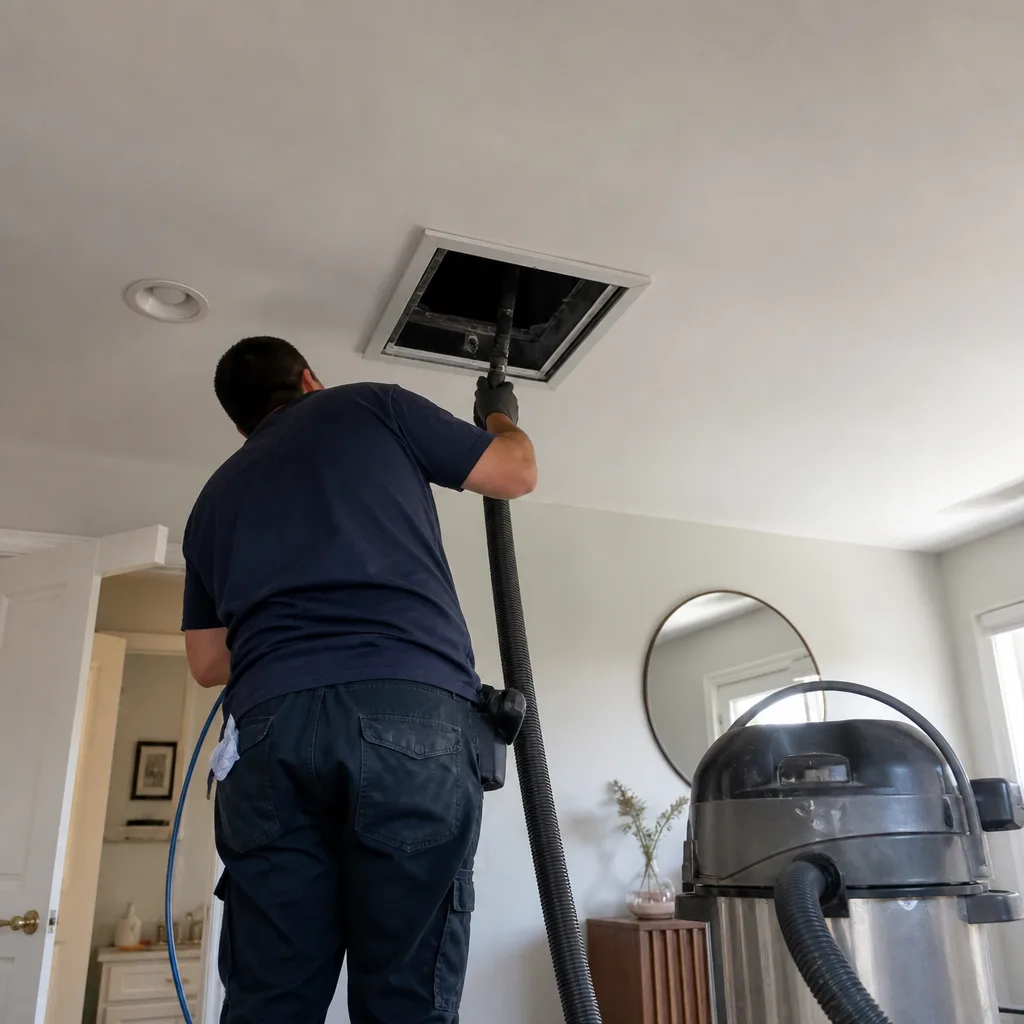
Whole-system duct and dryer vent check with before-and-after photos - you see exactly what came out of your vents
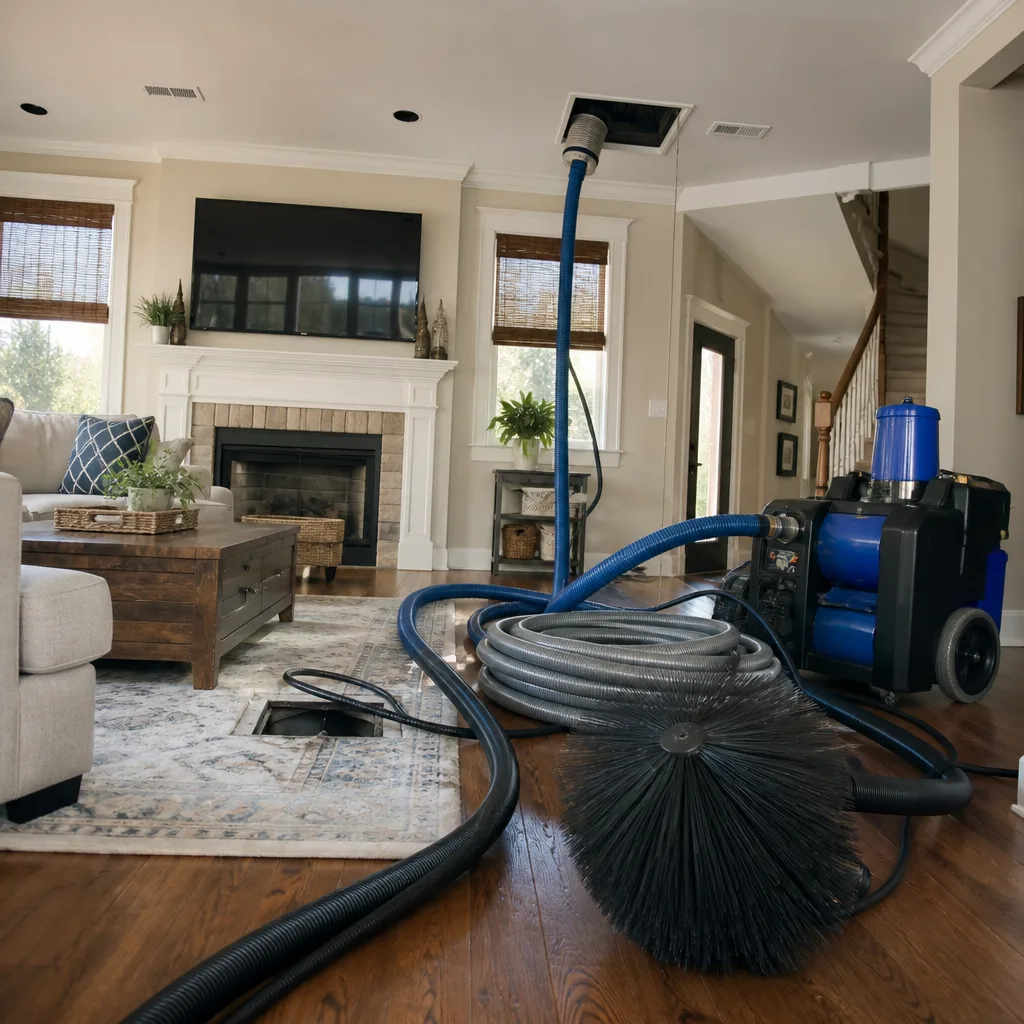
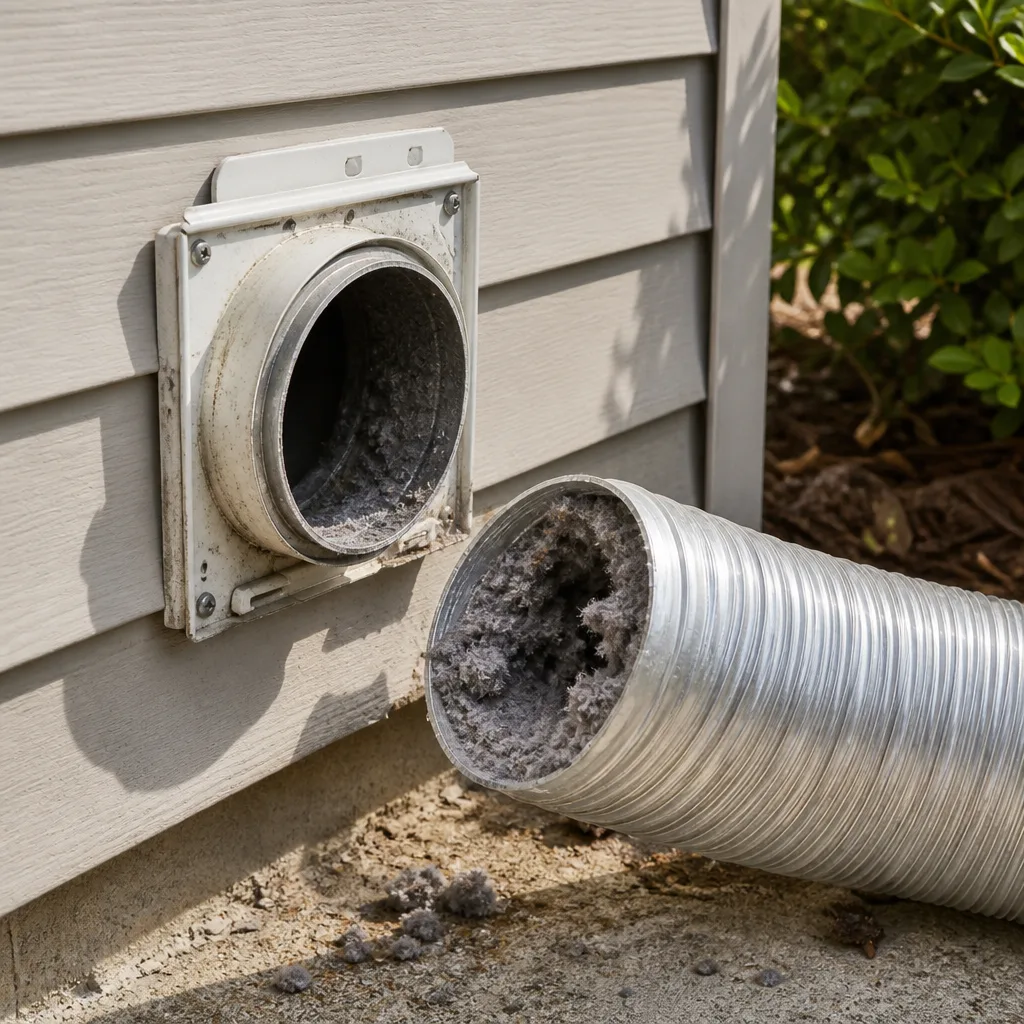
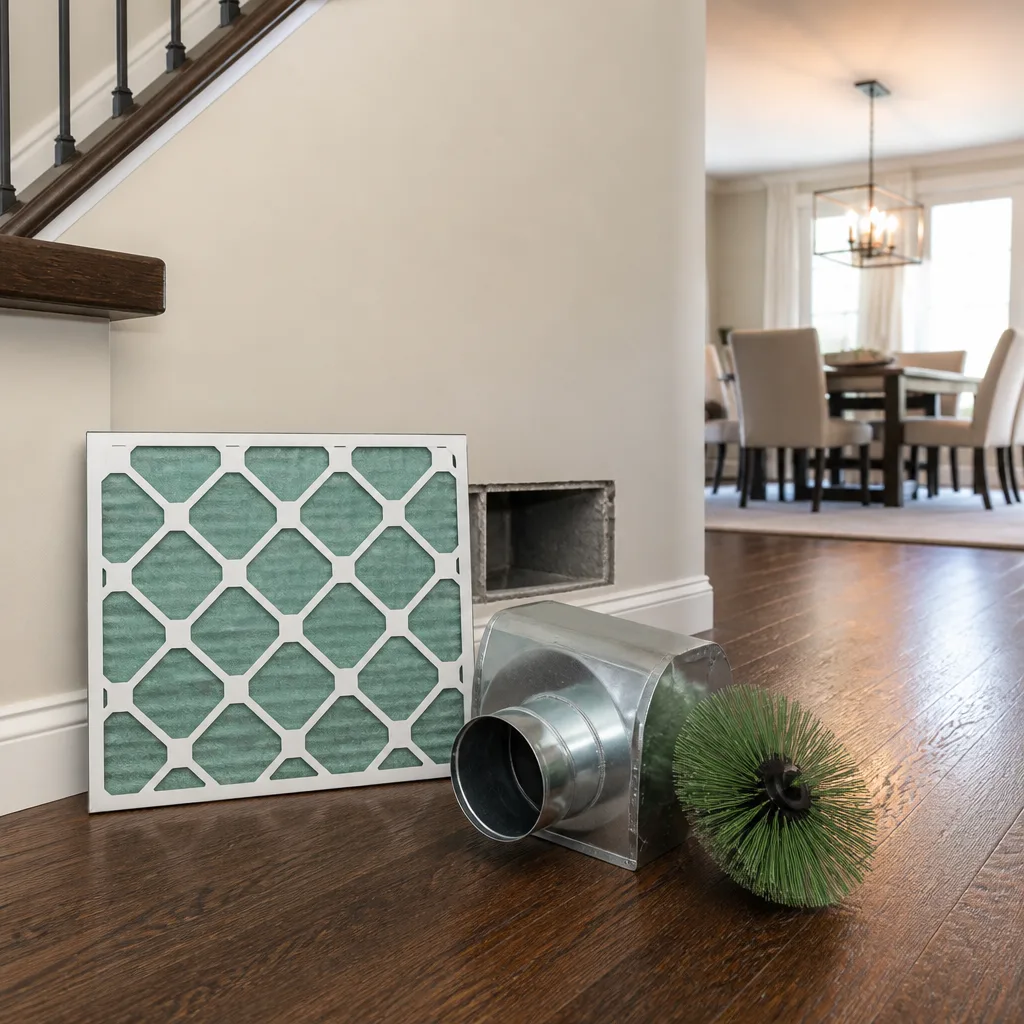
That "$99 whole-house special" is a bait ad - the real number appears once they are in your hallway, or the "clean" is a shop-vac at the register. We photograph the inside of your ducts before and after instead.
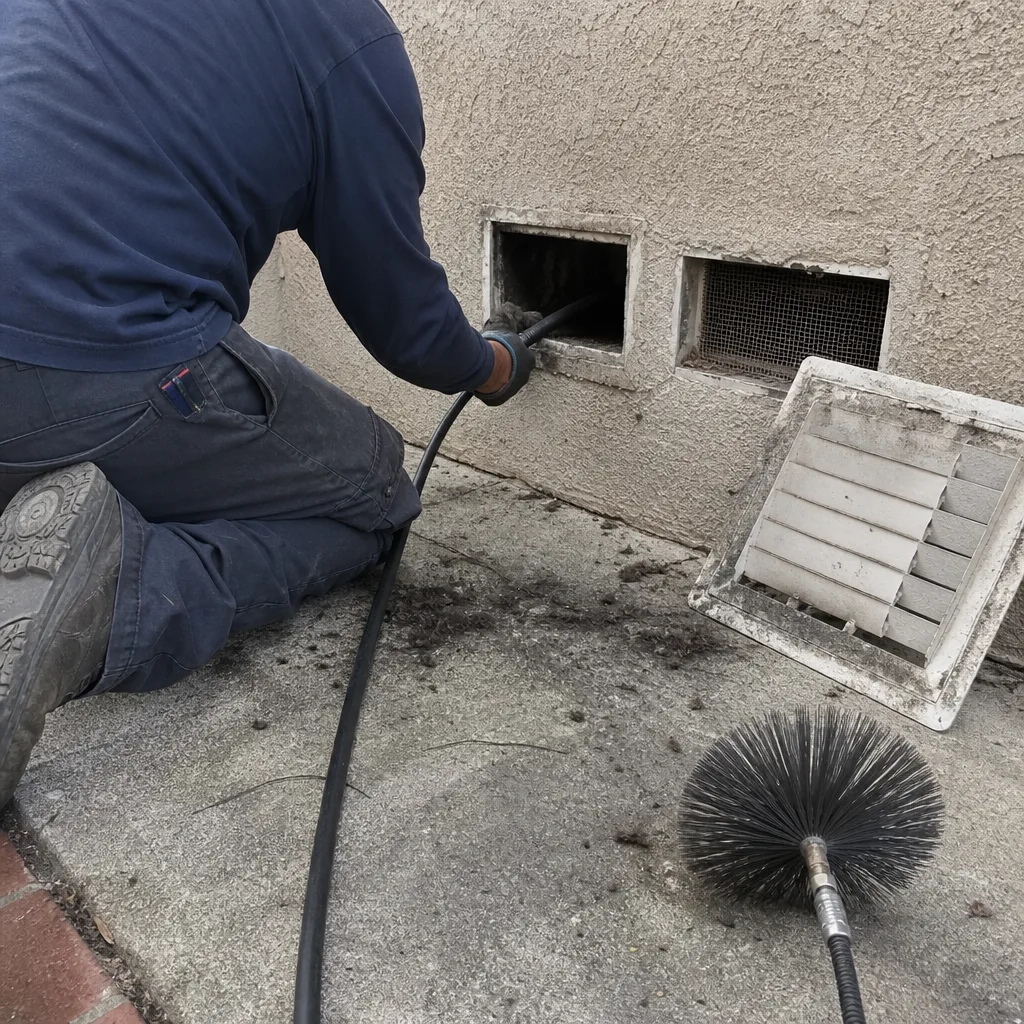 Before
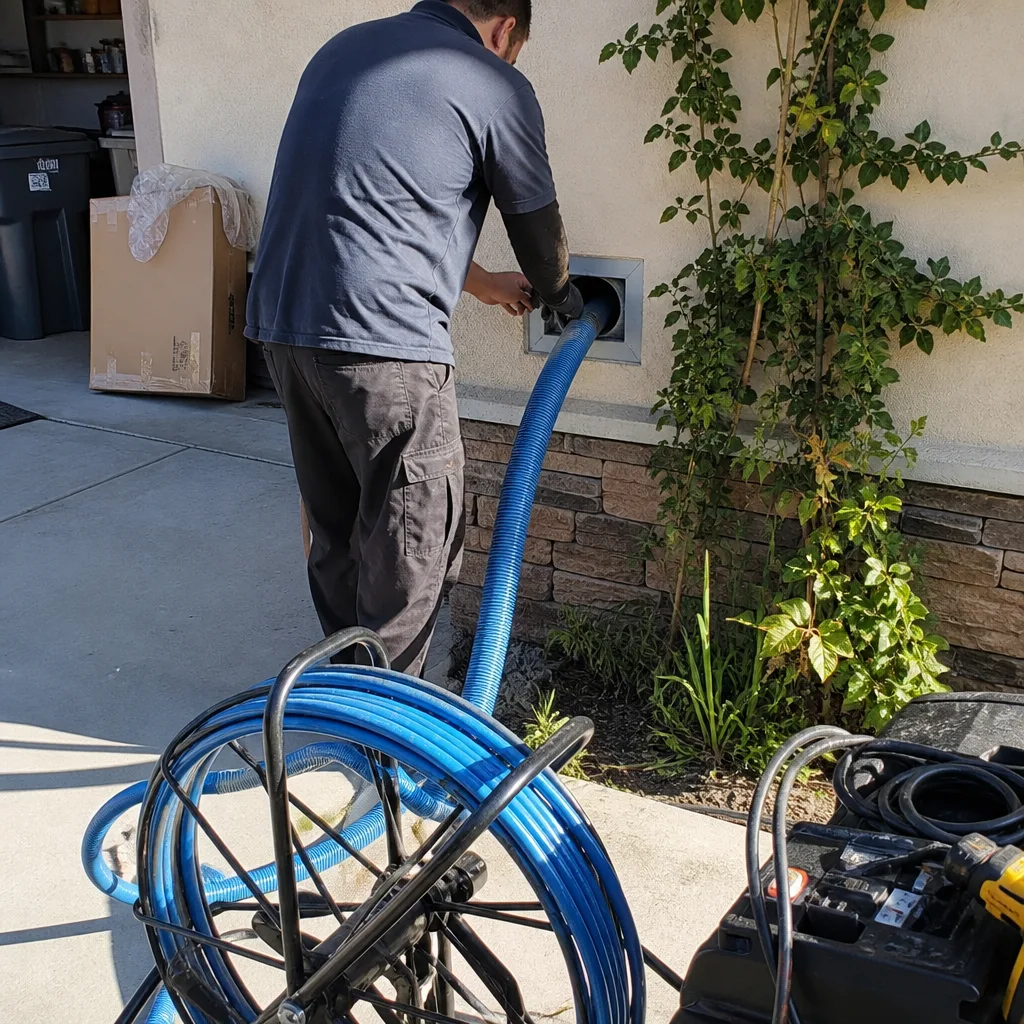 After
After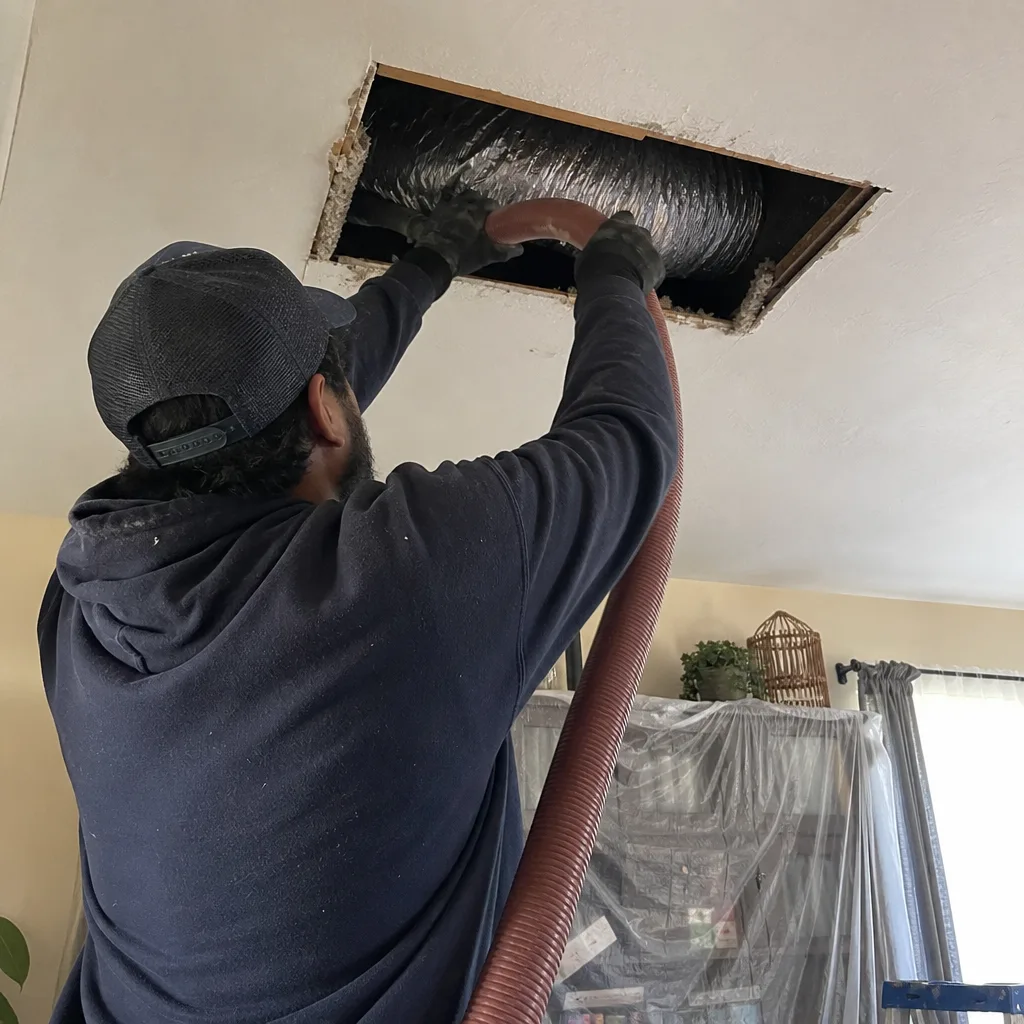 Before
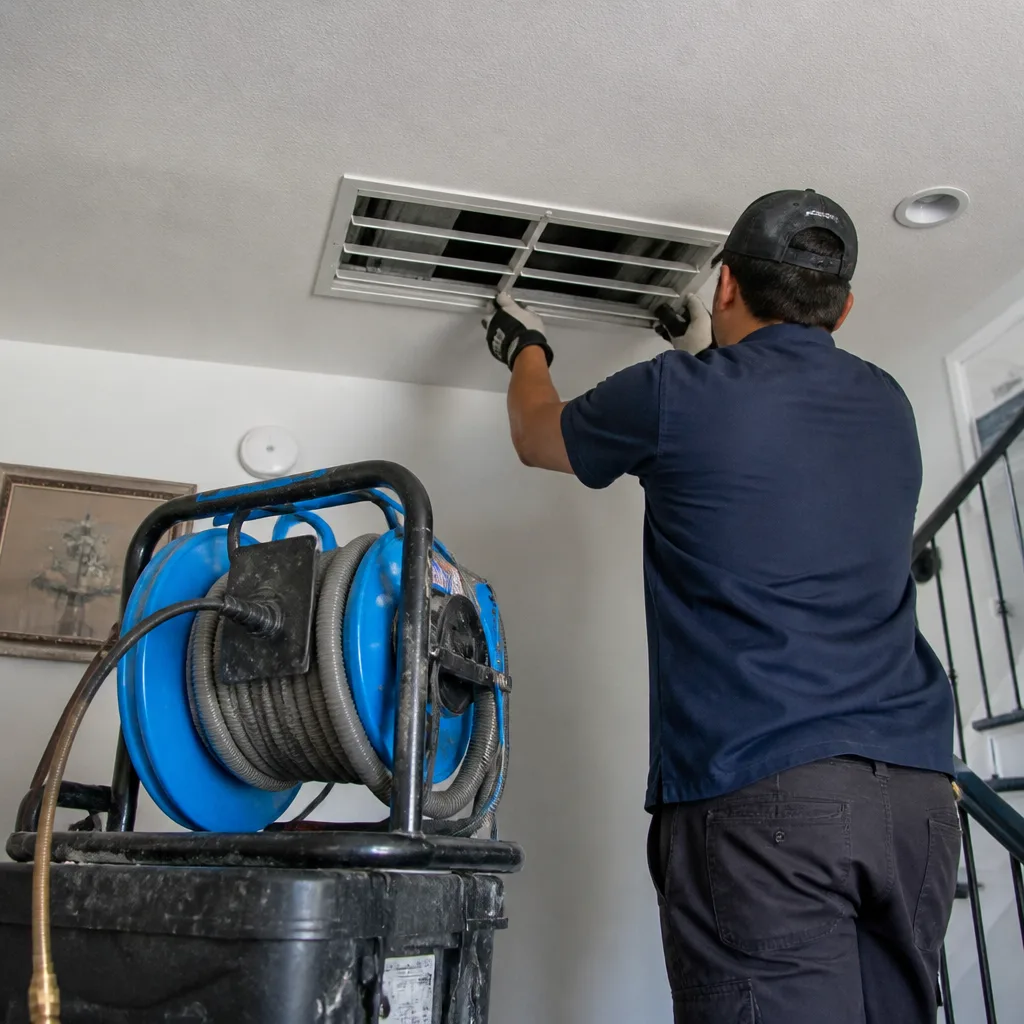 After
After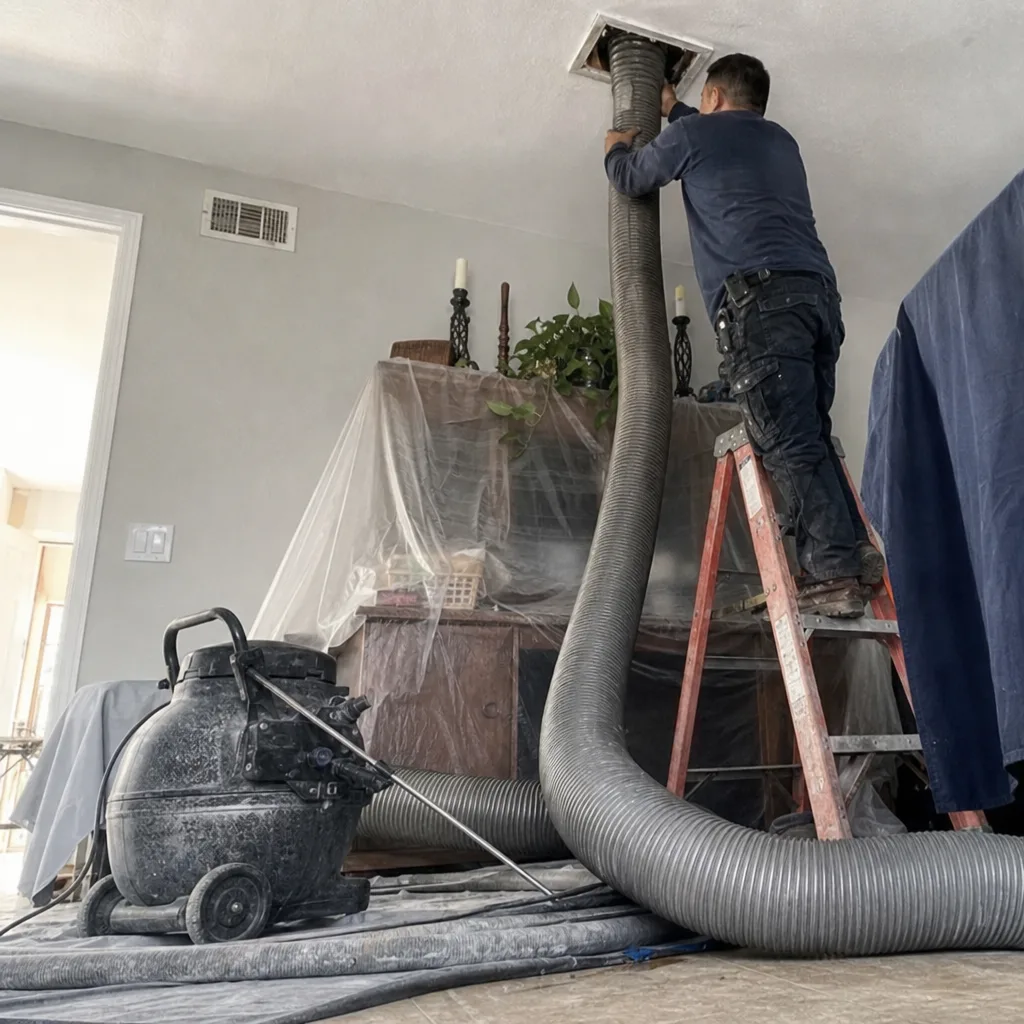 Before
 After
AfterHow Long Does Dryer Vent Cleaning Take? Timelines and What to Expect
The cleaning itself takes about 25 minutes. That’s the part most people picture: a technician, a rotating brush, lint coming out. But in Los Angeles, where a dryer vent might run fifteen feet to a wall cap, or thirty feet and four elbows up through the roof, the honest answer to “how long does dryer vent cleaning take” is closer to 60 to 90 minutes doorbell to done. The other 35 to 65 minutes, the part many companies skip or rush, is what actually determines whether your dryer stops being a fire risk or just looks cleaner for a month. Our Dryer Vent Cleaning guide maps the full timeline, phase by phase, so nothing catches you off guard when the van pulls up.
Quick Answer
Dryer vent cleaning takes about 60 to 90 minutes for a typical single-family home in Los Angeles. The actual brushing and vacuuming of the vent run is roughly 20 to 30 minutes; the rest of the visit is arrival and floor protection, wall-to-exterior inspection, setup and teardown, an airflow test before and after, and a written summary of what was found.
Table of Contents
- Arrival and Equipment Setup: The First 10 to 15 Minutes
- Vent Path Inspection: 10 to 20 Minutes Most Companies Skip
- The Cleaning Itself: 20 to 30 Minutes
- Post-Clean Airflow Test and Written Summary: 10 to 20 Minutes
- What Affects Your Total Time in Los Angeles
- Why a 20-Minute Job Is Almost Certainly Incomplete
- Your Same-Day Checklist
- Common Mistakes to Avoid
- When to Call a Professional
- Frequently Asked Questions
Arrival and Equipment Setup: The First 10 to 15 Minutes
We think about this phase the way a surgeon thinks about draping the field. The work cannot start well if the room is not protected and the equipment is not staged. A Morton’s technician arrives in uniform, introduces themself, and does two things before the vacuum ever turns on: they walk the path from the front door to the dryer, noting the floor surfaces they will cross, and they ask where the vent exits the house if you know, or they check the exterior themselves if you do not. Then shoe covers go on, drop cloths go down in front of the dryer, and the Rotobrush or Nikro vacuum unit gets wheeled into position. That sequence, done carefully, takes 10 to 15 minutes. Any company that skips it is saving time at the expense of your floors, and that is not a trade worth making.
For homes in Los Angeles, this part of the visit often involves a quick conversation about pets. We ask where your dog or cat will be during the noise, because a rotating brush inside a wall makes a low hum that some animals dislike. Closing them in a back bedroom with a treat works for most households. It is a small thing, but clients with a golden retriever who paced the hallway during the last service call notice the difference.
Vent Path Inspection: 10 to 20 Minutes Most Companies Skip
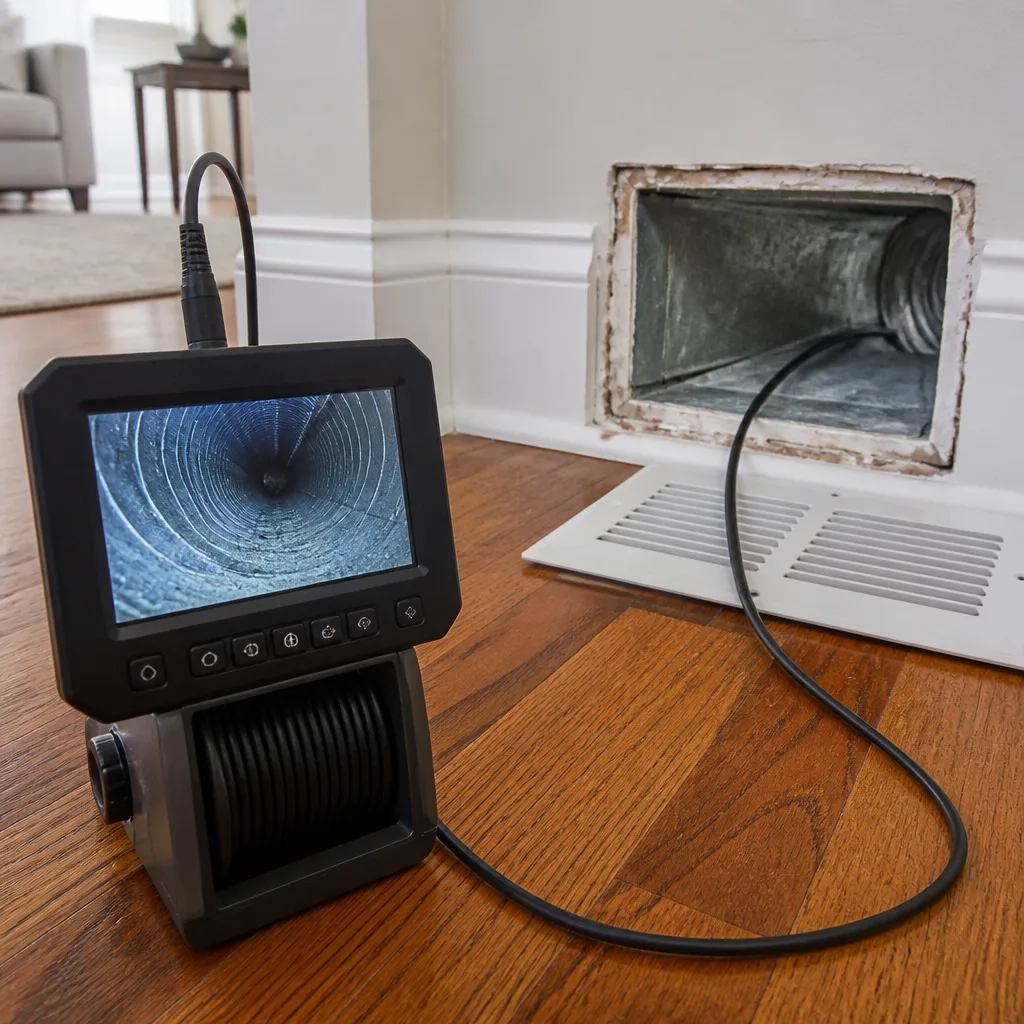
Before any cleaning, a technician should know exactly what they are dealing with. That means pulling the dryer away from the wall carefully, undoing the transition hose, and then sending a small camera down the vent. This inspection answers three questions: how long is the run, how many elbows does it have, and how blocked is it right now. In an LA house built in the 1980s with a dryer on an interior wall, the vent may travel 25 feet with three hard 90-degree turns before it reaches a roof cap. In a newer build with the laundry off the garage, it might be 8 feet straight to a wall cap. Both get cleaned, but the first takes longer and needs more attention at the elbows.
This is the phase where a rushed company fails. They skip the camera because it adds 10 minutes, and then they are surprised when the brush cannot push through a clog of wet lint packed behind a screen they never knew existed. We have pulled birds’ nests out of roof caps in Sherman Oaks, and once a dryer sheet that had somehow made it ten feet into a vent in Pasadena. You cannot clean what you have not seen.
The Cleaning Itself: 20 to 30 Minutes
This is the center of the visit. With the vacuum sealed to one end of the vent to create negative pressure, the technician runs a rotating brush system through the full length of the run, inside to outside, scraping lint, dust, and debris off the walls of the pipe. The vacuum captures the dislodged material before it can escape into the house. For a standard single-family LA home, this is a 20 to 30 minute operation. Shorter runs go faster; longer runs with multiple elbows go slower, because the brush needs to be worked carefully through each turn without damaging the pipe.
After the main run is brushed, the technician will clean the transition hose, the connection point at the back of the dryer, and then move outside to check the vent cap. At the exterior end, which in Los Angeles is usually a wall cap, a roof cap, or a ground-level cap with a flap, they will remove built-up lint from the louvers and make sure the flap opens and closes freely. A stuck flap is a standing invitation for birds and rodents, which is a separate conversation many homeowners are not expecting to have but are glad someone noticed.
Post-Clean Airflow Test and Written Summary: 10 to 20 Minutes
After the brushing, the job is not done. A proper dryer vent cleaning includes a before-and-after airflow measurement, because that number is the only objective proof the cleaning worked. An anemometer or manometer placed at the vent exit will show a reading; before the clean it might read 300 feet per minute, and after it should be significantly higher, often 600 to 800 feet per minute depending on the vent configuration. If the number does not improve, something downstream is still blocking the flow, and the job is not finished.
Then the technician writes it up. At Morton’s, you get a written summary of what was found, what was done, and the airflow numbers before and after. The crew also takes a photo of the cleaned work area before they leave, so you have visual proof the floor looks the way it did when the doorbell rang. That is 10 to 20 minutes well spent, and it is one of the reasons the total visit lands around the 60 to 90 minute mark rather than the 30 minutes a budget company will quote over the phone. For related advice, see our How to Hire a Air Duct Cleaning Contractor in Los Angeles: A Step-by-Step Guide.
What Affects Your Total Time in Los Angeles
No two vents are identical, and Los Angeles housing stock runs from 1920s Spanish Colonials to 2020s high-density townhomes. Three factors move the timeline more than any others:
- Vent length: A 6 to 10 foot run to a wall cap cleans fast. A 25 to 35 foot run to a roof cap, common in LA homes with the laundry room on an interior wall, takes noticeably longer for both inspection and brushing.
- Number of elbows: Every 90-degree turn is a place where lint catches, a brush can hang up, and a camera needs to slow down. A vent with four elbows takes longer than a straight shot, no matter how good the equipment is.
- Exit location: Wall caps are the fastest to access and clean. Roof caps require a ladder and care around roof tiles; in the rainy season, wet tiles make this slower. Floor-level caps, sometimes found in older LA homes on raised foundations, need the technician to work in a crawlspace or low-clearance area outside.
There is also the simple question of how long it has been since the last cleaning. A vent cleaned a year ago clears faster than one that has been ignored since the day the dryer was installed. In neighborhoods like Eagle Rock or Highland Park where dryers are often in converted garage spaces with long, odd vent runs, we plan for longer jobs and tell the customer so on the phone before we ever arrive. Our Seasonal Air Duct Cleaning Care for Los Angeles: Year-Round Homeowner’s Guide explains how timing affects scheduling.
Why a 20-Minute Job Is Almost Certainly Incomplete
If someone quotes you a 15 to 20 minute dryer vent cleaning in Los Angeles, they are selling you a lie in the form of a low price. Here is what gets skipped in that 20 minutes:
- The camera inspection. Without it, the technician is playing the lottery with your vent. Most blockages are not visible from either end.
- Floor protection. Shoe covers and drop cloths take two minutes to set up. Skipping them takes less time, and then time gets spent later apologizing for the marks on the floor.
- The exterior vent cap. Cleaning only the interior portion leaves a clogged or stuck exterior cap, which is where birds, rodents, and the worst lint buildup actually live.
- The airflow measurement. If no one measures before and after, no one knows whether the cleaning did anything. You are paying for effort, not results.
- The transition hose. That short foil or rigid hose behind the dryer is part of the system, and it collects lint too. A quick-visit company often ignores it entirely.
What a rushed clean leaves behind is exactly what you paid to remove: the packed lint at the elbow, the nest at the roof cap, the crud in the transition hose. Browse more guides & resources to protect your home. That does not mean a bigger bill. It means an honest timeline, and the ability to see the difference with your own eyes.
Your Same-Day Checklist
On the day of your appointment, you can help the job go smoothly and keep the total time down with a few simple steps. This is the same checklist we give our Los Angeles clients when they book a Dryer Vent Cleaning in Los Angeles with us:
- Clear a path to the dryer. The technician needs about three feet of open space in front of the unit and enough room to pull it away from the wall. Baskets, pet beds, and stacked storage should move first.
- Know your vent exit location. Wall, roof, or crawlspace. If you do not know, the technician will find it, but knowing saves about five minutes of walking the exterior.
- Put pets in another room during equipment use. The vacuum and rotating brush are not dangerously loud, but they are unfamiliar. A closed door and a treat keep everyone calmer.
- Do not run a load of laundry right before the appointment. A wet load still in the dryer means the technician has to wait or work around it. Dry clothes can stay; a hot drum should cool down first.
- Plan to be home, not just send someone with a key. The post-clean summary and airflow numbers are things you should hear in person. Five minutes at the end of the visit answers questions that would otherwise become phone calls.
Common Mistakes to Avoid
- Booking on price alone. The cheapest quote in Los Angeles is usually cheap because it skips the camera inspection, the exterior cap, and the airflow test. You are buying a partial clean.
- Waiting for the dryer to fail before calling. When a dryer takes two cycles to dry one load, the vent has been building lint for months. The cleaning now takes longer than it would have a year ago, and the risk was higher for every one of those weeks.
- Cleaning only the lint trap and calling it done. The trap catches maybe 25 to 30 percent of the lint a dryer produces. The rest is in the vent run, and no trap cleaning gets it out.
- Not pulling the dryer away from the wall yourself. If the dryer is gas, the gas line and connection are back there too. A professional will check the connection during the cleaning, but only if the dryer actually gets moved.
- Ignoring the exterior vent cap. In LA, a roof cap or wall cap exposed to wind and sun gets coated with lint, dust, and often nesting material. An interior-only clean does nothing for it.
- Expecting a 20-minute miracle. We covered this above, but it bears repeating: if the total visit is under 20 minutes, something essential was skipped. You will pay for it later, one way or another.
When to Call a Professional
If your dryer is taking two cycles per load, if the exterior vent flap is not opening when the dryer runs, or if it has been more than two years since anyone looked inside the vent, it is time. The same is true if you just moved into a Los Angeles home and have no idea when, or if, the previous owners cleaned anything. A professional cleaning with a camera inspection and an airflow test answers the question completely instead of guessing at it. High-tension components are not part of dryer vent work, but a dryer vent that has been blocked for a long time holds accumulated heat and lint against a gas or electric heating element, and a blocked vent is a genuine fire risk regardless of dryer type. Morton’s Air Duct Cleaning offers free estimates in Los Angeles, and a live person answers the phone 24/7. Call (323) 918-4345 to set up a visit.
Frequently Asked Questions
A complete dryer vent cleaning in Los Angeles takes 60 to 90 minutes from arrival to written summary. The brushing itself is 20 to 30 minutes; inspection, setup, airflow testing, and documentation make up the rest. Call (323) 918-4345 for an exact timeline for your home’s vent configuration.
Vent length, number of elbows, and exit location are the three biggest variables. A short wall-cap run cleans in under an hour; a 30-foot roof-cap run with four turns in a hillside Los Angeles neighborhood may take 90 minutes or more because the brush must be worked through each elbow and the roof requires ladder access.
You can clean the lint trap and the first few inches of the transition hose behind the dryer, but a full vent run requires a rotating brush and a vacuum powerful enough to pull debris from 20 feet away. Most homeowners do not own that equipment, and roof-cap access in particular is not a safe do-it-yourself task on a two-story LA home.
Ask for before-and-after airflow numbers. A professional cleaner will measure the vent’s flow at the start and again at the end, and the after number should be significantly higher. At Morton’s, every customer receives those numbers in a written summary, along with a photo of the cleaned work area before our crew leaves. Call (323) 918-4345 to schedule.
Once a year is the standard recommendation for a household that runs the dryer two to three times a week. Homes with large breeds that shed heavily, or households with more than four loads a week, may benefit from twice-yearly cleaning. The lint the trap misses accumulates faster than most people think.
You should expect a walkthrough. The technician should show you the airflow numbers, explain what came out of the vent, point out anything unusual they noticed on the camera, and leave the laundry room exactly as they found it, minus the lint. If you are working with a company that does air ducts as well, ask about a combined visit. Our Air Duct Cleaning in Los Angeles service pairs well with dryer vent work and saves a second appointment.
The Bottom Line
Dryer vent cleaning in Los Angeles is an hour to 90 minutes of real work, and the time is not padding. The inspection, the camera, the airflow numbers, and the exterior cap all matter, and any company that rushes through them is leaving lint, risk, or both inside your walls. The best thing you can do is choose a cleaner who will tell you what they will do, do it, and then show you the numbers that prove it. That is how the job should work, and now you know what the timeline really looks like. Visit the Morton’s Air Duct Cleaning home page to learn more about our process, or call us directly with questions.
Written by Paul Adeyemi, Owner at Morton’s Air Duct Cleaning, serving Los Angeles since 2005.