
Last updated October 8, 2026
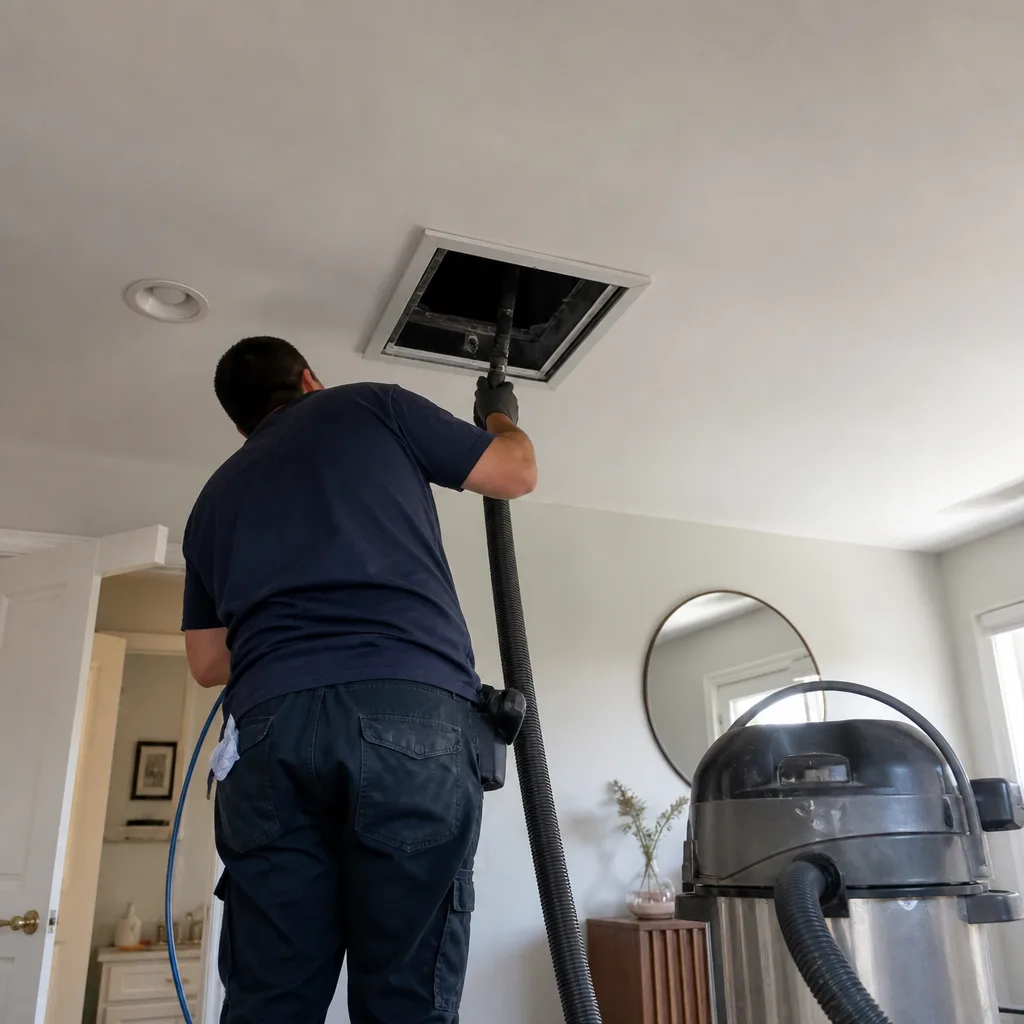
Whole-system duct and dryer vent check with before-and-after photos - you see exactly what came out of your vents
That "$99 whole-house special" is a bait ad - the real number appears once they are in your hallway, or the "clean" is a shop-vac at the register. We photograph the inside of your ducts before and after instead.
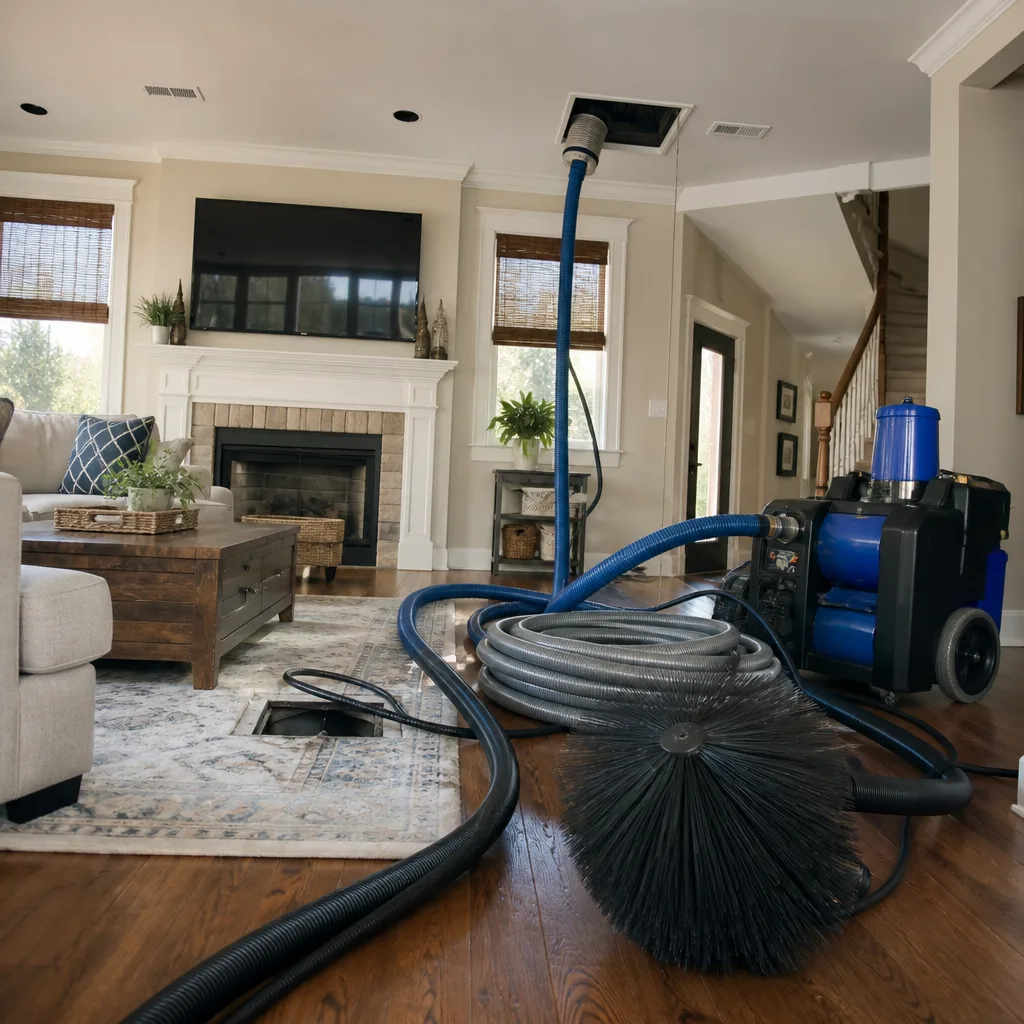
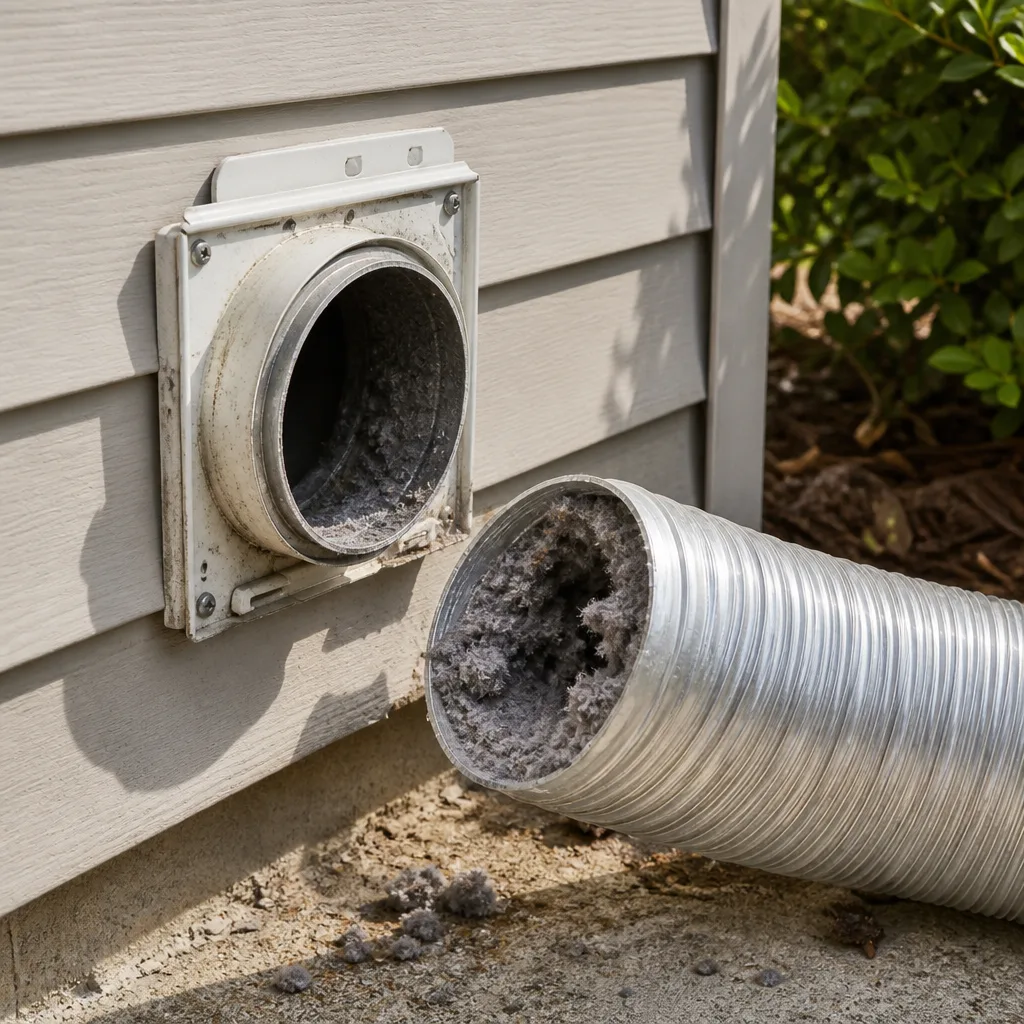
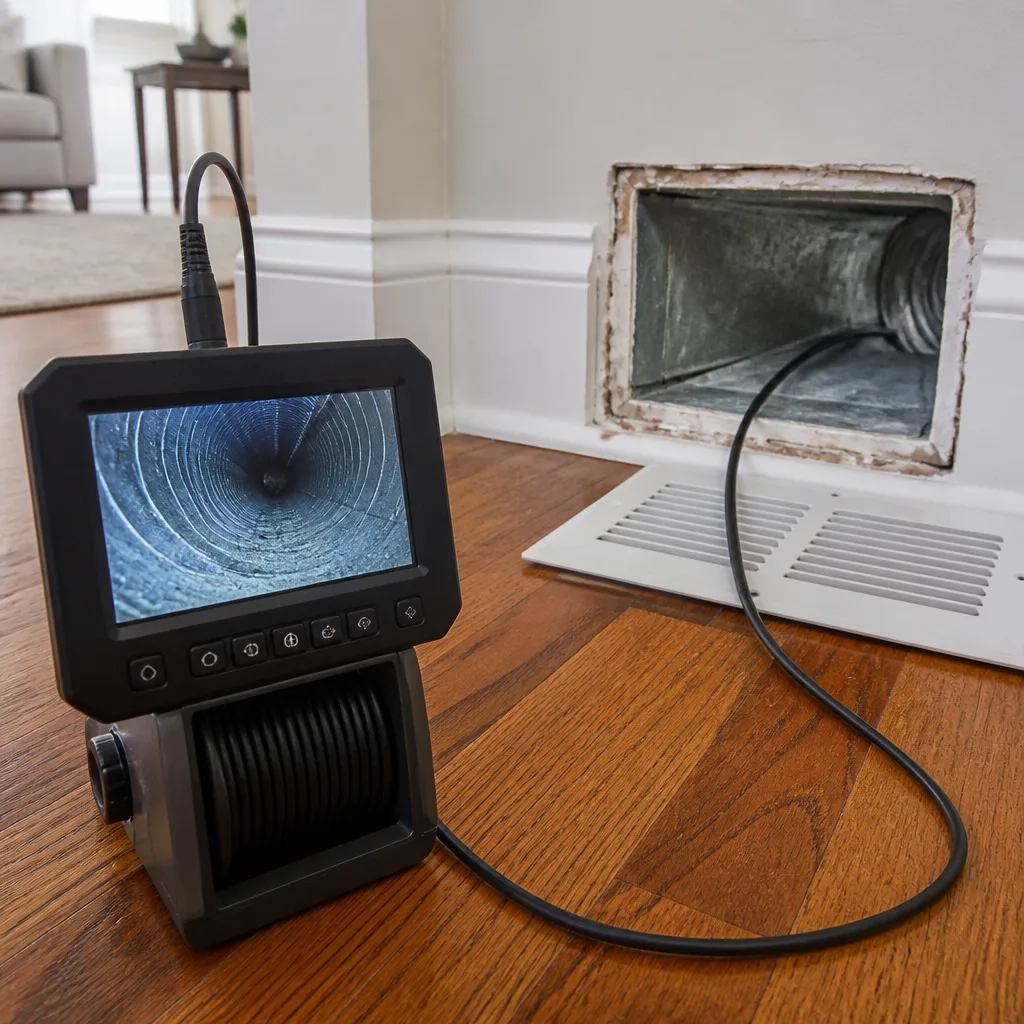
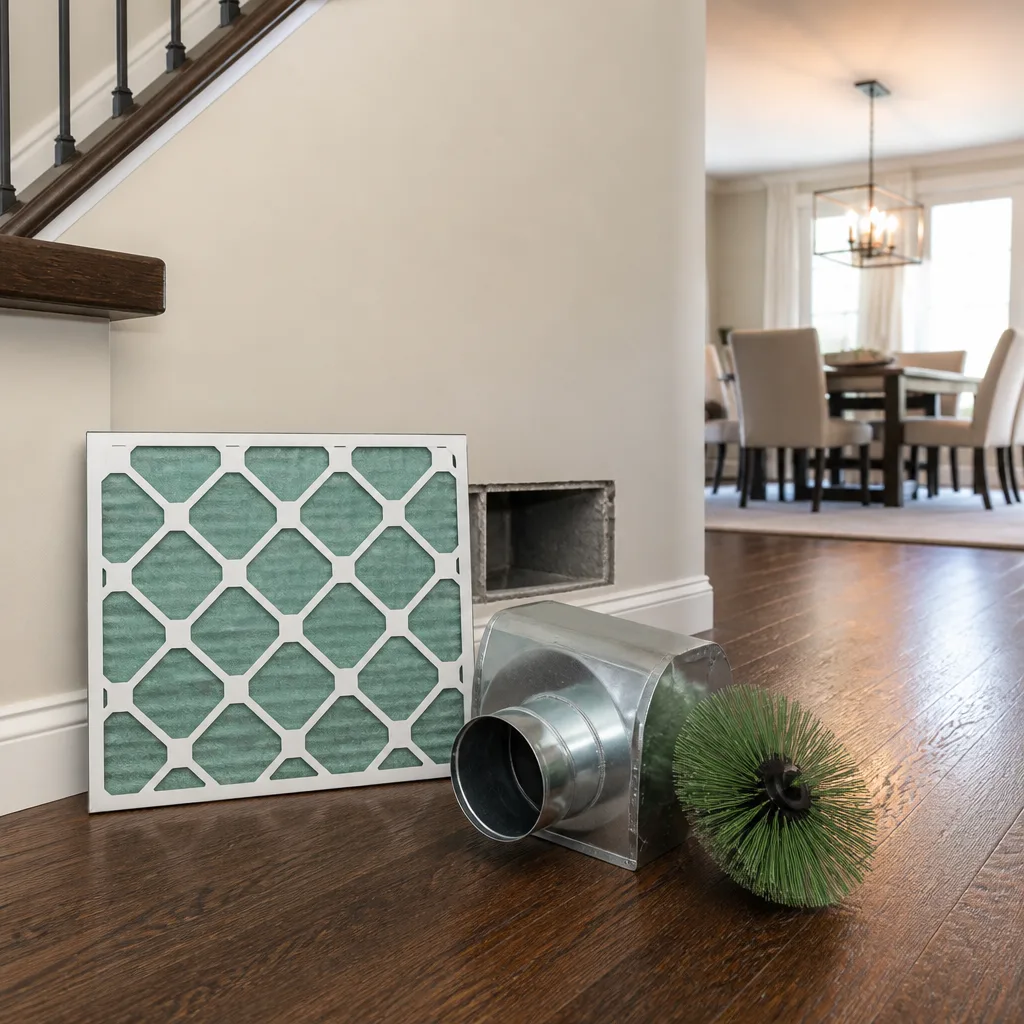
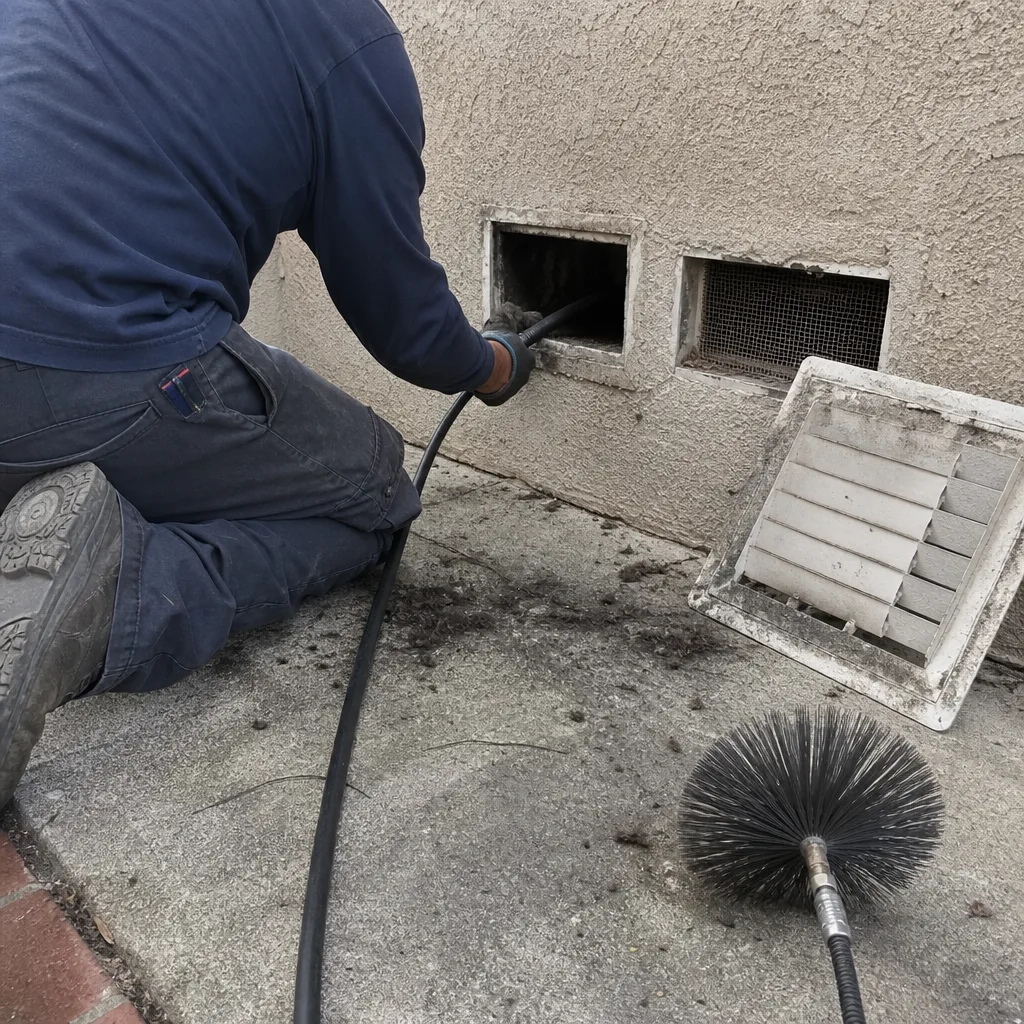 Before
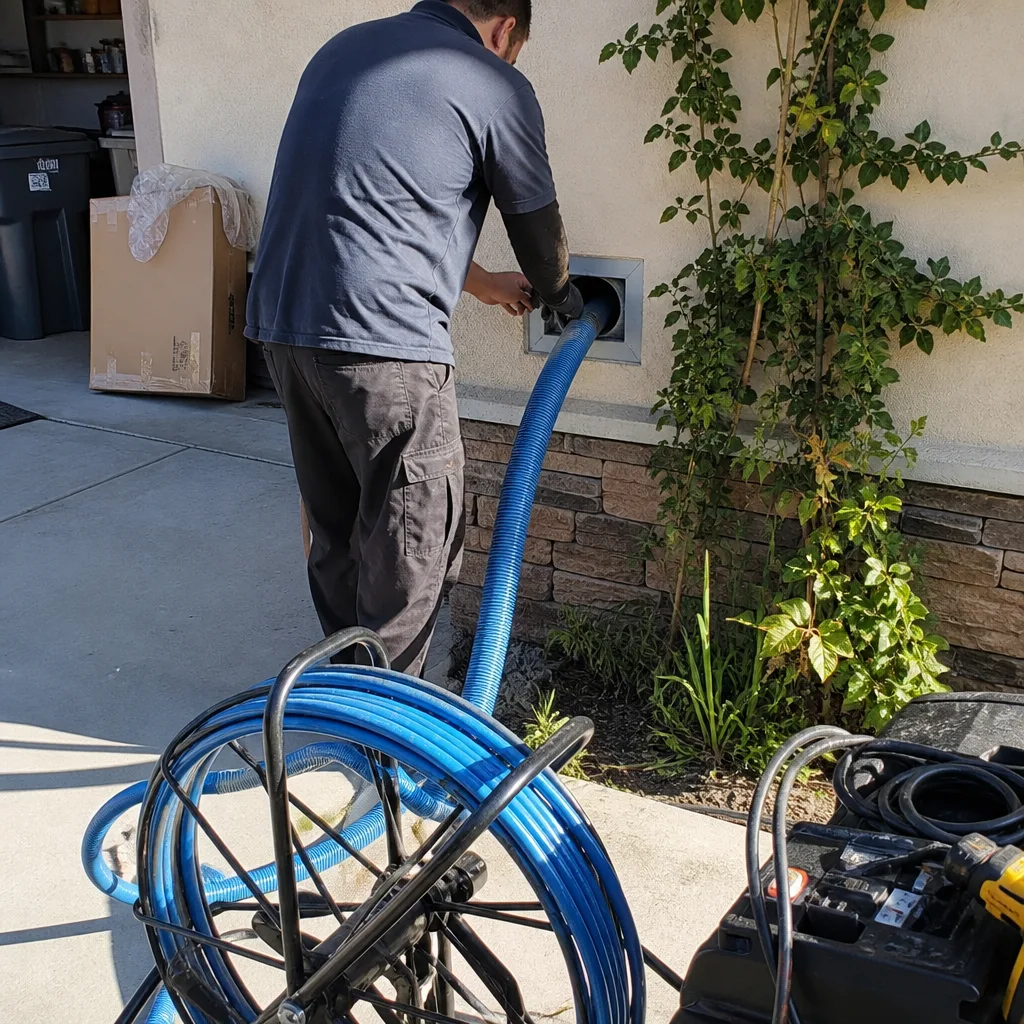 After
After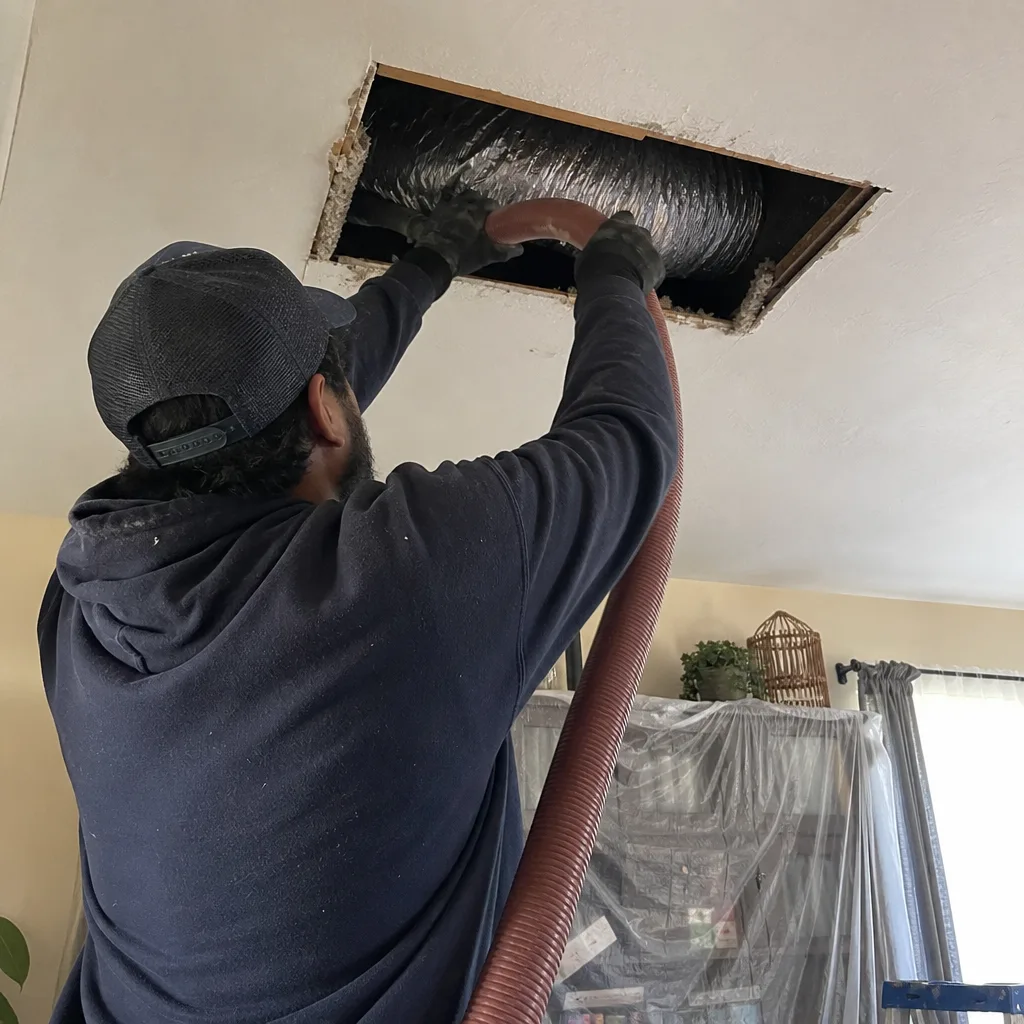 Before
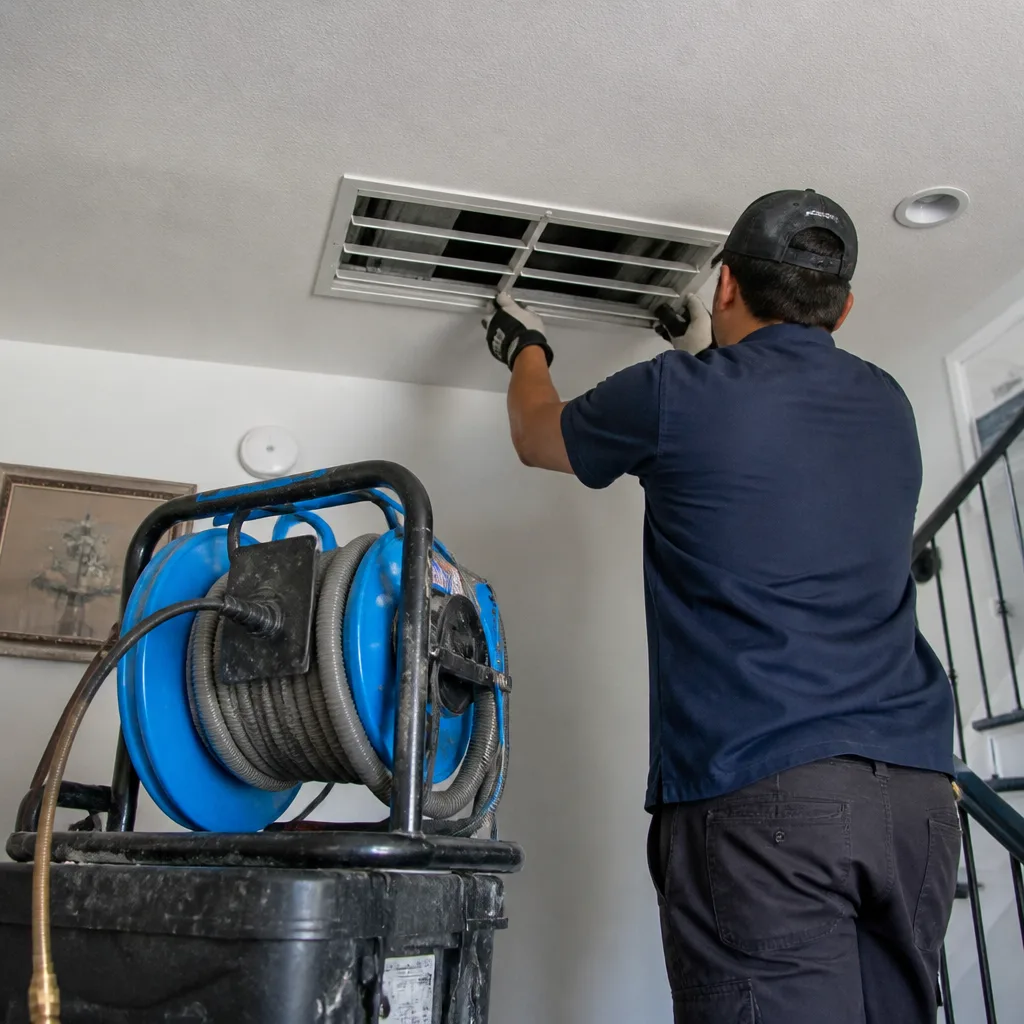 After
After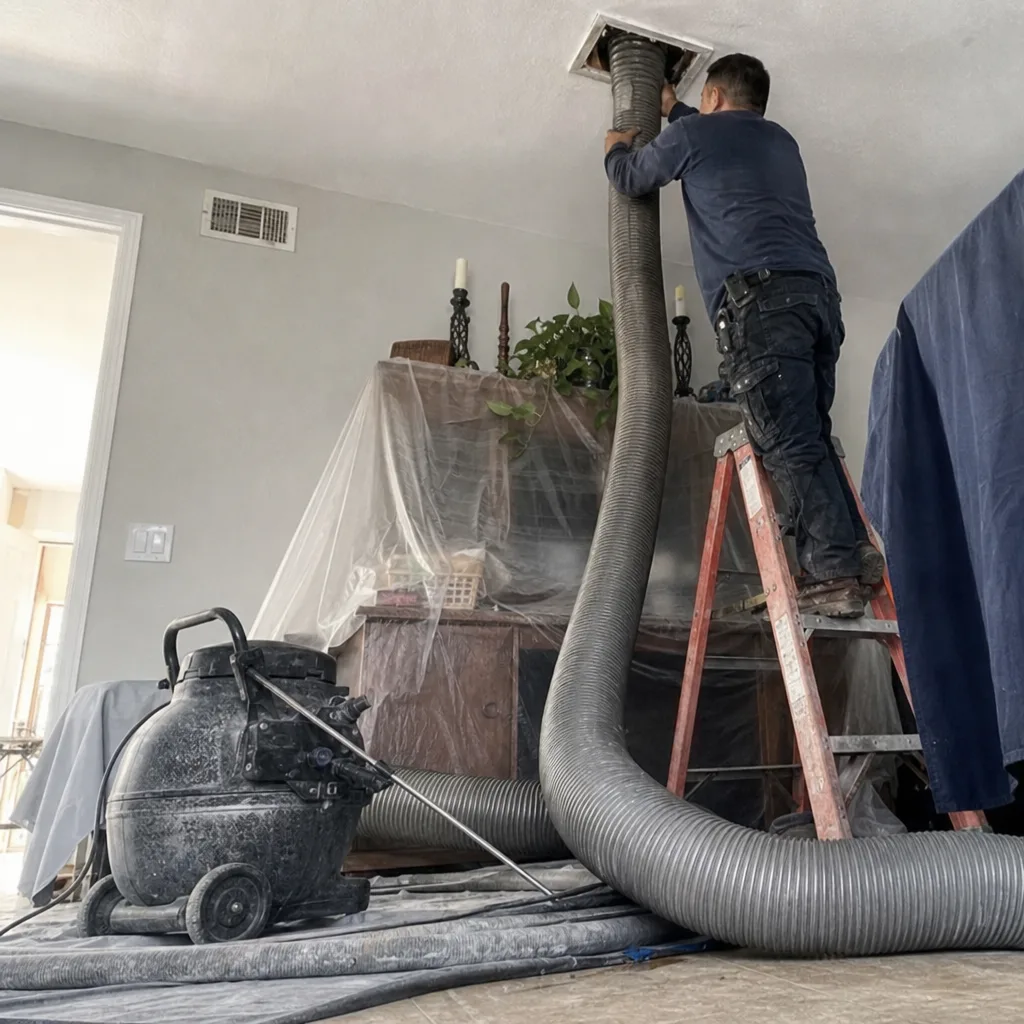 Before
 After
AfterAir Duct Cleaning Emergency Preparedness Guide for Los Angeles Homes
When Los Angeles residents return home after a nearby wildfire evacuation, the first thing most do is turn on the AC to clear the heat. That single action immediately circulates whatever ash and smoke particulate settled in the ductwork during the event directly into the living space. This guide walks you through a calm, specific action plan for the three air quality emergencies LA families realistically face: wildfire smoke intrusion, post-flood mold risk, and earthquake-related duct damage. For Air Duct Cleaning Maintenance Checklist for Los Angeles Homeowners and other deep dives, see our blog. By the end, you’ll know exactly what to check, what to document, and when to call a professional.
Quick Answer
Air duct cleaning after a Los Angeles emergency should follow a three-phase approach: document the event, inspect the system before running it, and schedule professional cleaning only after the immediate hazard (smoke, water, or structural movement) is resolved. For wildfire smoke, that means cleaning within 30 days of re-entry; for flood damage, that means waiting until the moisture source is confirmed stopped and the structure is dry; for earthquakes, that means a visual duct inspection before the first full system cycle. In all three cases, the goal is preventing contaminated air from circulating through your home.
Table of Contents
- Re-Entry Protocol After a Wildfire Evacuation
- Post-Flood and Water Intrusion: The 48-72 Hour Mold Window
- Earthquake Preparedness for Your HVAC System
- What to Keep in a Home Preparedness Binder
- How to Communicate With a Duct Cleaning Contractor During an Emergency
- Los Angeles-Specific Air Quality Risks and What They Mean for Your Ducts
- Common Mistakes to Avoid
- When to Call a Professional
- Frequently Asked Questions
Re-Entry Protocol After a Wildfire Evacuation
Returning home after a wildfire evacuation in Los Angeles is emotionally complicated. You’re relieved the house is standing, but the air inside often smells like a campfire and the fine gray film on every surface tells you something got in. Here is the calm, ordered sequence we recommend to our Los Angeles neighbors before you touch the thermostat.
Before You Turn On the HVAC
- Photograph everything. Before wiping any surface, take photos of ash accumulation on window sills, door thresholds, and air registers. These photos matter for insurance documentation and help a contractor understand what entered the home.
- Check your air filter. If you can safely access it, pull the filter and look at it. A filter that is gray, black, or visibly loaded with fine particulate tells you the system pulled contaminated air in during the event. Leave the dirty filter in place if you plan to run the system minimally; if it is completely clogged, replace it with a fresh one before any testing.
- Inspect exterior vents. Walk the perimeter and look at your intake and exhaust vents. Ash packed against the intake vent means the system was actively drawing smoky air during the fire.
- Do not run the system if you see visible ash inside the registers or smell smoke strongly at the vents. That ash is already in the ducts and running the fan spreads it into every room.
If You Must Run the System Before Cleaning
Sometimes you return home during a heat wave and need cooling immediately. If that is your situation, set the thermostat to fan-only mode for the first 10 minutes, then switch to cooling. Fan-only operation moves air without engaging the compressor, which lets you test whether the smell is tolerable. If you notice a strong smoke odor within those first 10 minutes, shut it down and schedule a professional air duct cleaning in Los Angeles before running the AC again.
Morton’s Air Duct Cleaning uses HEPA-filtered equipment from Nikro, which captures the sub-micron particulate that standard shop vacuums recirculate back into the room. After a wildfire, the difference matters.
Post-Flood and Water Intrusion: The 48-72 Hour Mold Window
Los Angeles doesn’t flood the way other cities do, but we do get intense atmospheric river events, water heater failures, and roof leaks after heavy rain. When water enters a home, mold growth can begin within 48 to 72 hours in the right conditions. Ductwork is particularly vulnerable because it is dark, often humid, and lined with accumulated dust that gives mold spores something to feed on.
Why Duct Cleaning Is Only Safe After the Moisture Source Is Resolved
Cleaning ducts while the moisture source is still active is a waste of money and can make the problem worse. If water is still entering the system through a roof leak or a slab leak that is feeding moisture into return air plenums, any cleaning you do will be undone within days. The correct sequence is:
- Stop the water. Confirm the leak is fixed or the floodwater is gone.
- Dry the structure. Use fans and dehumidifiers on affected areas. Los Angeles humidity is normally low enough that open windows and airflow solve most minor intrusion within a few days.
- Assess the ducts. If water reached the ducts themselves, if the return air plenum sat in standing water, or if you smell a musty odor when the system runs, the ductwork needs professional attention.
- Clean or replace. In some cases, sections of flex duct that sat in water should be replaced rather than cleaned. A professional inspection will tell you which is appropriate.
We’ve seen post-flood situations in Los Angeles where homeowners assumed duct cleaning would fix a musty smell, only to discover the real issue was a saturated return air platform. The cleaning itself is straightforward. Making sure it is the right step is where experience matters.
Earthquake Preparedness for Your HVAC System
Los Angeles homeowners prepare for earthquakes with strapped water heaters and secured bookshelves. Very few think about what a significant seismic event does to ductwork. Duct systems are held together with sheet metal screws, tape, and hanging straps. During a strong earthquake, sections can separate, hang, or disconnect entirely in attics and crawlspaces where they are not visible.
What to Check After a Significant Earthquake
- Attic duct runs: Use a flashlight to look for sections that have pulled apart at the seams, sagging between support straps, or disconnected elbows.
- Crawlspace duct runs: Look for sections on the ground that used to be suspended, or joints that show a visible gap.
- Supply registers: Remove one or two register covers and look inside with a flashlight. If you can see a gap between the duct and the register boot, the connection may have shaken loose.
- Return air plenum: This is the large box where air enters the system. Check for visible separation where it meets the wall or floor.
If you find any disconnections, do not run the system. A disconnected duct in the attic pumps conditioned air into an uninsulated space while pulling attic dust, insulation fibers, and hot air back into the system through the gap. It’s a safety issue and an air quality issue at the same time.
A Simple Roof Inspection Step
After a quake, walk around the house and look at the roof penetrations where the exhaust flues and vent stacks emerge. If the flashing has pulled away or the pipe has shifted at an angle, have it checked before running the furnace. This is a job for a licensed technician, but the visual check is something any homeowner can do in five minutes.
What to Keep in a Home Preparedness Binder
During an emergency, the last thing you want to do is search for your HVAC system information. A simple binder with the following documents will save you hours and help any contractor diagnose and quote the job faster.
- HVAC system documentation: The make, model, and serial number of your furnace, AC unit, and any air purification components. Write it down once and keep the sheet in the binder. Model numbers fade from the data plates over time.
- Filter specifications: The exact filter size, MERV rating, and where you typically purchase them. After a wildfire, you’ll want to upgrade to a higher MERV rating temporarily, and you’ll need to know what fits.
- Last service date and service history: A one-line log of every visit: date, technician, what was done, and the price. This creates a paper trail that helps you spot when something changes.
- Your duct cleaning contractor’s contact information: Including the fact that Morton’s Air Duct Cleaning provides a written price before any work starts and is part of the Cedarwell family of independently owned companies. That matters in an emergency: you know the number, and you know the price will be documented before work begins.
- Insurance claim photos: Keep a folder of pre-emergency photos of your home’s mechanical systems. After damage, these before-photos are hard to recreate.
We’ve had customers in the San Fernando Valley and the Westside tell us their preparedness binders made insurance claims dramatically simpler after the 2025 fire season. The binder is not about fear. It’s about having the information you need in one place so an emergency doesn’t turn into a scavenger hunt.
How to Communicate With a Duct Cleaning Contractor During an Emergency
When you call a duct cleaning company after an emergency, the conversation goes better if you have specific information ready. Here is what to have in front of you when you dial.
- Your address and the number of systems. “Two-story house in Sherman Oaks, one furnace, one AC unit.” That lets the person on the phone scope the job roughly.
- What happened. “We evacuated for the Pacific Palisades fire and came back three weeks later. Ash on the window sills, smoke smell when the AC runs.” Be specific. The nature of the event determines the cleaning approach.
- Approximate square footage and number of vents. A 1,200-square-foot home in Eagle Rock and a 4,500-square-foot home in Brentwood need different amounts of time and different equipment setups.
- Any known health concerns in the home. Children with asthma, a family member with a respiratory condition, pets with sensitivity to dust. This information changes how the crew approaches the job.
- What you expect in writing. A written price before work starts, shoe covers and drop cloths inside the home, and a photo of the clean-up before the crew leaves. At Morton’s, those are standard on every visit, not special requests.
If a contractor cannot give you a written price over the phone or by email before sending a truck, that’s a red flag in any situation, but especially after an emergency when you need clarity. The Cedarwell Care Promise exists specifically because of how many Los Angeles families have been burned by vague verbal estimates that doubled once the crew arrived.
Los Angeles-Specific Air Quality Risks and What They Mean for Your Ducts
Los Angeles has unique air quality challenges that most cities don’t face, and each one affects ductwork differently.
Wildfire Smoke and Santa Ana Winds
Santa Ana winds push wildfire smoke across the LA basin fast. The smoke carries fine particulate matter (PM2.5) that settles inside ductwork and gets redistributed every time the system runs. Even homes several miles from a fire can accumulate significant particulate in their ducts because LA homes rely heavily on central AC during fire season, and outdoor air infiltrates through vents, doors, and building gaps. Honeywell and Aprilaire high-efficiency filters help reduce what enters the system, but they cannot remove particulate that has already settled inside the ducts.
Marine Layer and Coastal Moisture
Homes in coastal Los Angeles neighborhoods like Playa del Rey and San Pedro deal with persistent marine layer moisture that keeps duct interiors slightly damp. This creates conditions where dust in the ducts becomes a more hospitable place for microbial growth. The same dust that would stay dry and dormant in a Santa Clarita attic can become problematic near the coast. Regular dryer vent cleaning in Los Angeles and air duct cleaning addresses this before it becomes a smell you notice every time the system kicks on.
Urban Particulate and Freeway Proximity
Homes near the 405, the 10, the 110, or any of Los Angeles’s major freeway corridors deal with brake dust and diesel particulate that finds its way indoors. Duct systems near freeways load up with this fine black dust faster than homes in quieter neighborhoods. If you live within a quarter mile of a major freeway and have not had your ducts cleaned in five or more years, the system is likely carrying a load of particulate you cannot see until a technician shows you before-and-after photos.
Older Housing Stock and Original Ductwork
Much of Los Angeles’s single-family housing stock was built between the 1940s and 1970s. Ductwork in these homes is often original, meaning decades of accumulated dust, previous renovations that left debris in the system, and sealing that has degraded. Homes in neighborhoods like Mid-City, Leimert Park, and Boyle Heights frequently have duct runs that have never been fully cleaned. That’s not a criticism of the homeowner. It’s a fact of how long duct systems last and how infrequently they get attention.
Common Mistakes to Avoid
- Running the HVAC system immediately after returning from a wildfire evacuation. This is the single most common mistake we hear about from Los Angeles homeowners. The system becomes a distribution network for whatever settled in the ducts during the event.
- Using a shop vacuum to clean registers after a wildfire. Shop vacs recirculate fine ash back into the room unless they are equipped with a HEPA filter. What you’re doing is moving the ash from the register to the air.
- Cleaning ducts right after a flood without confirming the water source is stopped. If water is still entering the system, you will pay for a cleaning that doesn’t last. Fix the water first, then clean.
- Assuming earthquake damage is only visible damage. Duct disconnections in attics and crawlspaces are invisible from the living space, but they waste energy and pull contaminated air into the system.
- Hiring the cheapest available duct cleaner during an emergency. Emergency situations create urgency, and urgency attracts contractors who know you’ll say yes to anything. A low price often means a partial clean, no before-and-after documentation, and no written price guarantee.
- Forgetting to change the filter after the event. The filter is the first line of defense, and after a wildfire or flood, it has done its job. Replace it before running the system, even if the ducts have not been cleaned yet.
- Not documenting the condition of the home before starting cleanup. Insurance adjusters are reasonable people, but they want evidence. Photos taken before you wipe anything down are worth more than any description you can write later.
When to Call a Professional
Call a professional duct cleaning company when you notice any of these specific situations: visible ash or black dust around supply registers after a wildfire; a smoke smell that persists when the system runs; a musty or earthy odor after a water event; visible mold growth inside ductwork or on register covers; disconnected or sagging duct sections after an earthquake; or unexplained dust accumulating on furniture within days of cleaning. Morton’s Air Duct Cleaning offers free estimates in Los Angeles. Call (323) 918-4345 and a live person will answer, 24/7, not a voicemail or a chatbot.
Frequently Asked Questions
Air ducts should be cleaned within 30 days of returning home after a wildfire evacuation, assuming the home is safe and the immediate smoke event has passed. The longer ash and smoke particulate sits in the ducts, the more it gets worked into the system every time the fan runs, and the harder it becomes to remove completely. Call (323) 918-4345 to discuss your specific situation and get a written estimate.
Air Duct Cleaning Maintenance Schedule: What to Do and When can help you plan ahead. Air duct cleaning in Los Angeles typically costs between $350 and $700 for a standard single-system home, depending on square footage, number of vents, and the degree of contamination. Homes with significant wildfire ash accumulation or post-flood contamination may cost more due to the additional labor and HEPA filtration equipment required. Morton’s provides a written price before any work starts, so the number you agree to is the number you pay.
DIY duct cleaning is not recommended after a wildfire because standard vacuums and brushes do not capture the sub-micron particulate that wildfire smoke leaves behind. Professional equipment from brands like Abatement Technologies uses true HEPA filtration to remove and contain the particulate rather than recirculating it into your living space. The risk of incomplete cleaning or spreading fine ash through the home is too high to make DIY a reasonable option after a fire event.
Water can enter ductwork through return air plenums in the floor, through gaps in exterior duct insulation, or through crawlspace duct runs that sat in standing water even when the living space stayed dry. Signs of water-affected ducts include a persistent musty smell when the system runs, visible water staining on duct insulation, or increased dust accumulation on surfaces after the system has been running. If you’re unsure, ask for a visual inspection with a camera before committing to a full cleaning.
If a smoke smell persists months after a fire event, the odor is likely trapped in the dust and debris inside the ductwork, and possibly in the HVAC system’s air handler. The correct step is a professional duct cleaning with HEPA filtration, followed by replacing the filter and running the system to confirm the smell is gone. If the smell persists after cleaning, the issue may be in the air handler cabinet or the AC coil, which should be inspected separately. Call (323) 918-4345 to schedule an inspection and get a written estimate.
Professional duct cleaning removes the concentrated particulate load that settles in ductwork after a wildfire, which can help reduce ongoing irritation for people with allergies or asthma. What duct cleaning cannot do is remove particulate that has settled into carpet, furniture, and soft surfaces, which require separate cleaning. After a wildfire, the most effective approach is duct cleaning plus a deep clean of the living space and replacement of the HVAC filter.
The Bottom Line
Los Angeles homes face air quality emergencies that most of the country never does: wildfire smoke that penetrates ductwork, flood events that create a 48-72 hour mold window, and earthquakes that can disconnect duct sections invisibly. The way through all of these is the same calm sequence: document what happened, inspect before you run the system, and call a professional who provides a written price before any work begins. Keep your HVAC documentation in one place, know your filter specs, and save the number for a contractor who will answer when you call. For more guides & resources on protecting your home’s air quality, visit our blog. Morton’s Air Duct Cleaning has been serving Los Angeles since 2005, and we’re here when you need us.
Written by Paul Adeyemi, Owner at Morton’s Air Duct Cleaning, serving Los Angeles since 2005.
For more about how we protect Los Angeles homes, visit the Morton’s Air Duct Cleaning home page or call (323) 918-4345 for a free estimate.