
Last updated October 8, 2026
Whole-system duct and dryer vent check with before-and-after photos - you see exactly what came out of your vents
That "$99 whole-house special" is a bait ad - the real number appears once they are in your hallway, or the "clean" is a shop-vac at the register. We photograph the inside of your ducts before and after instead.
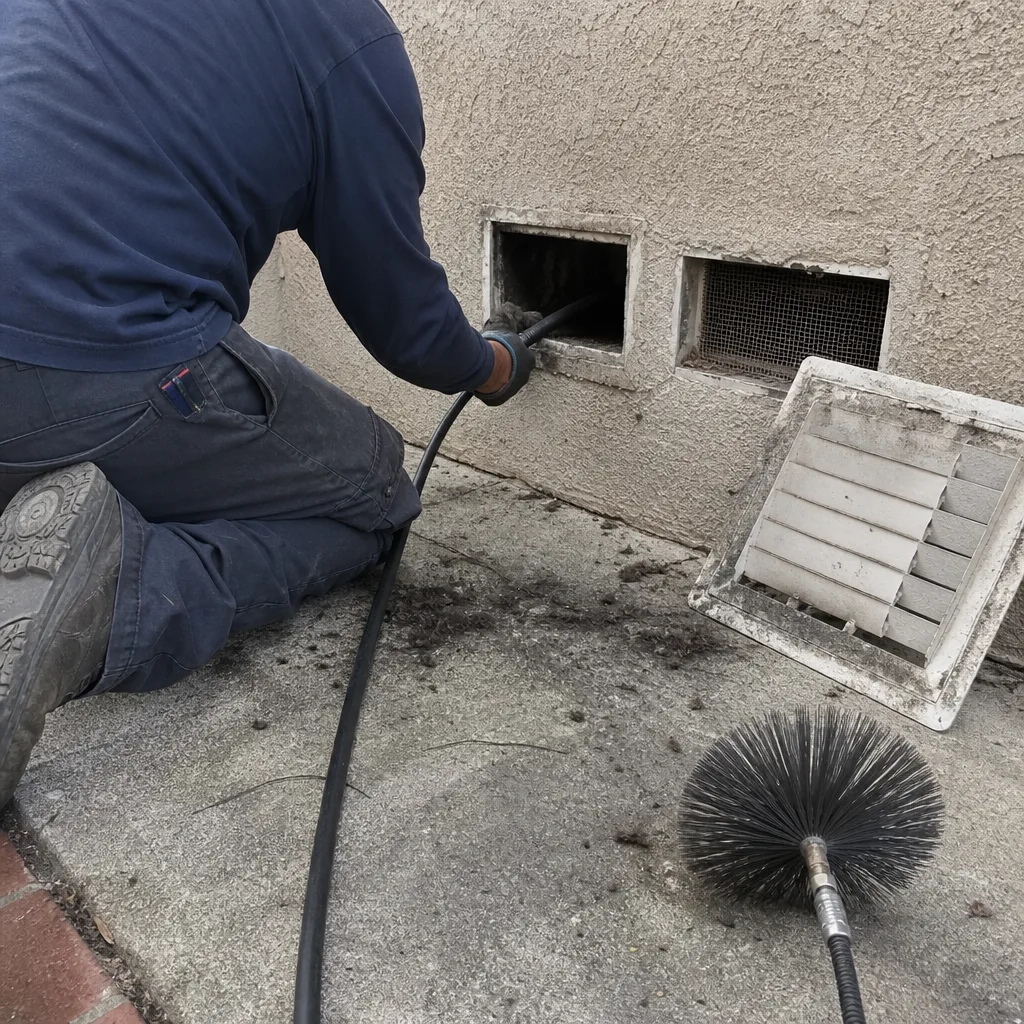 Before
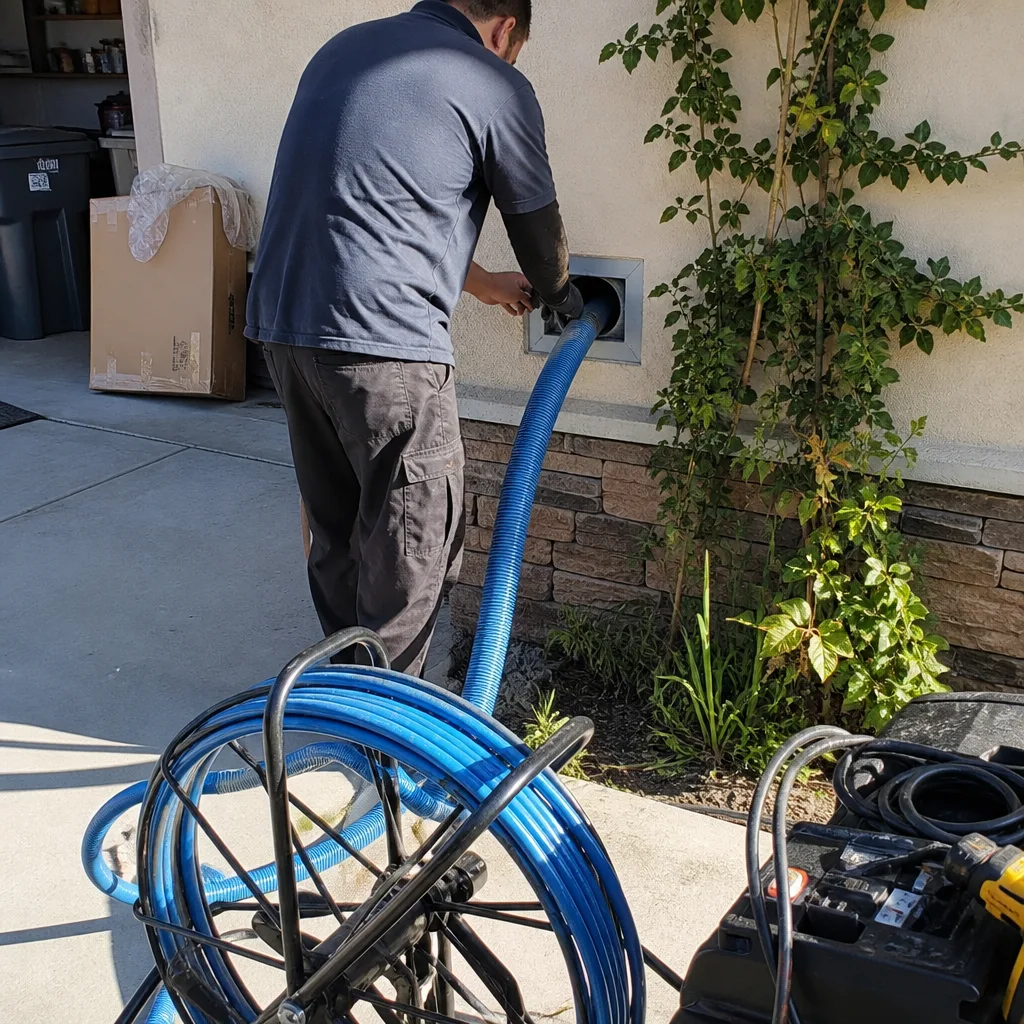 After
After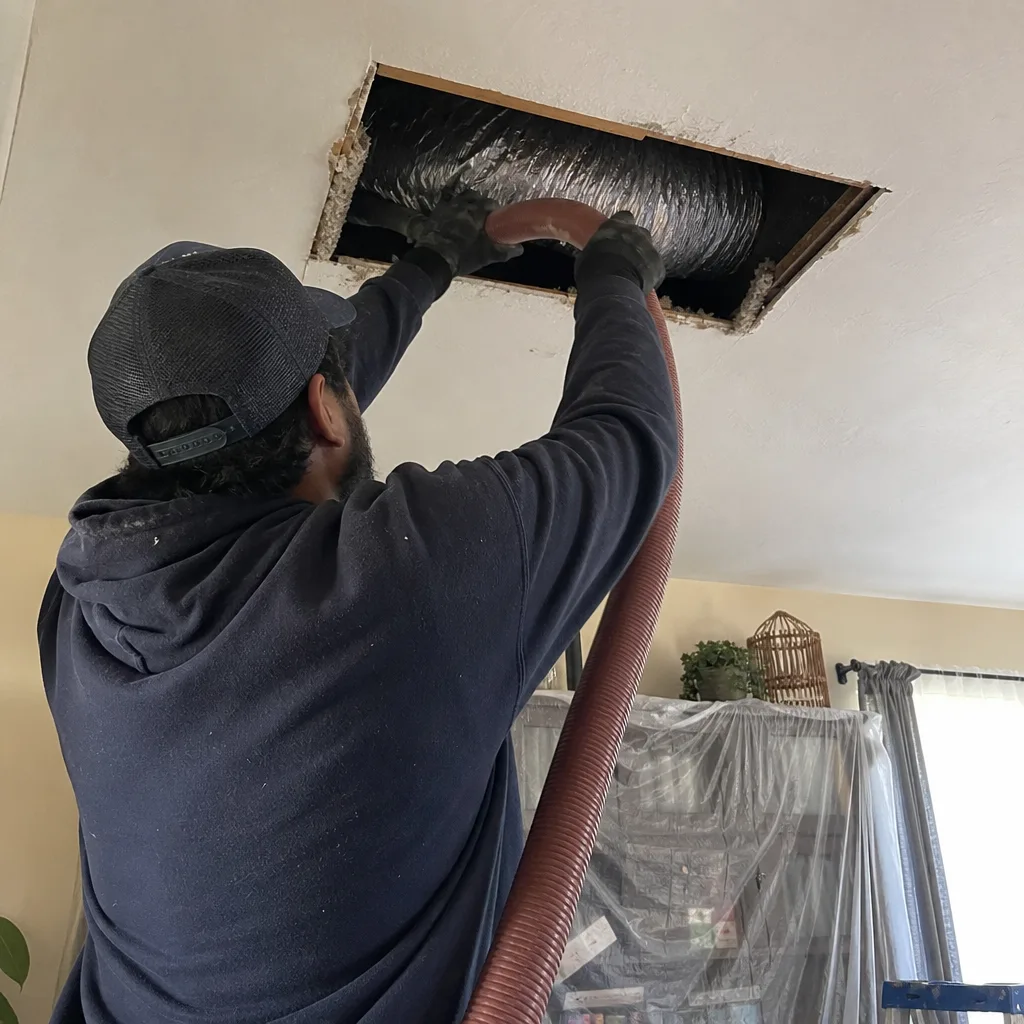 Before
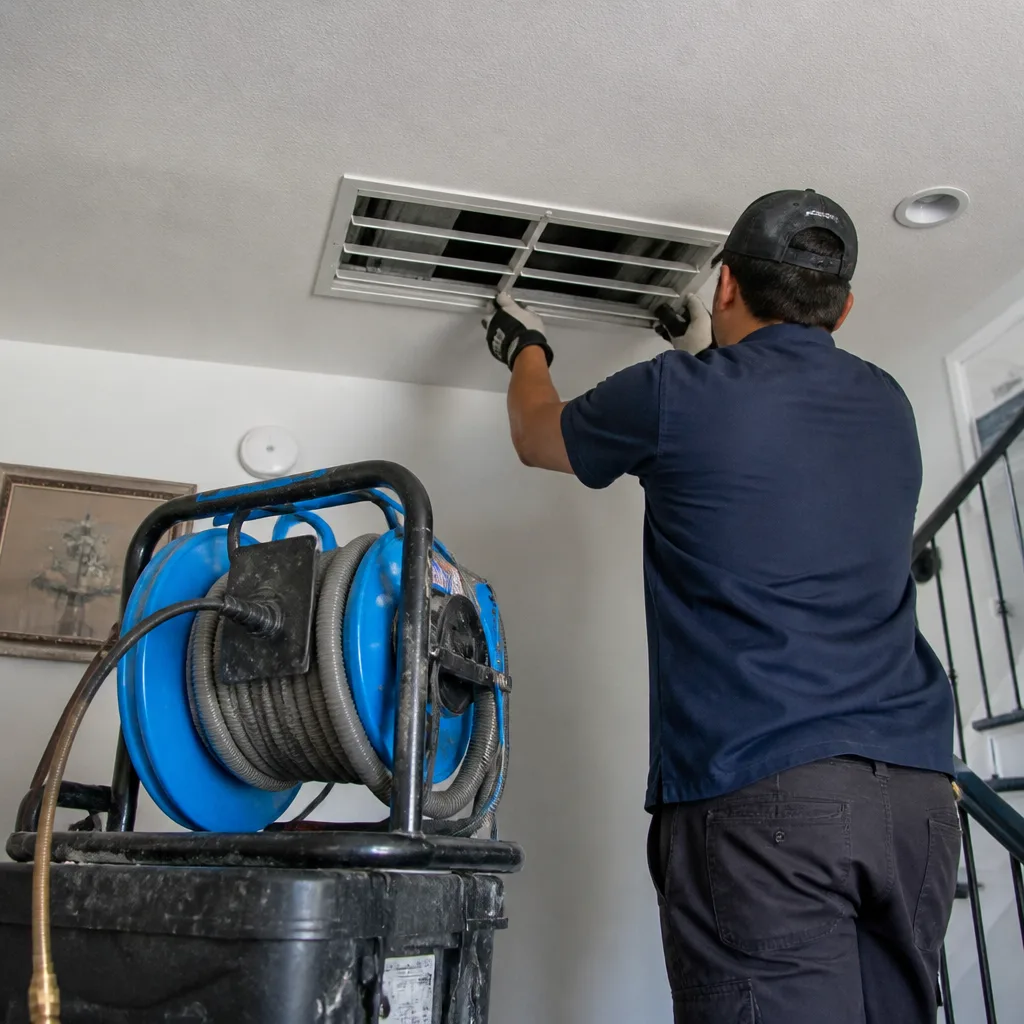 After
After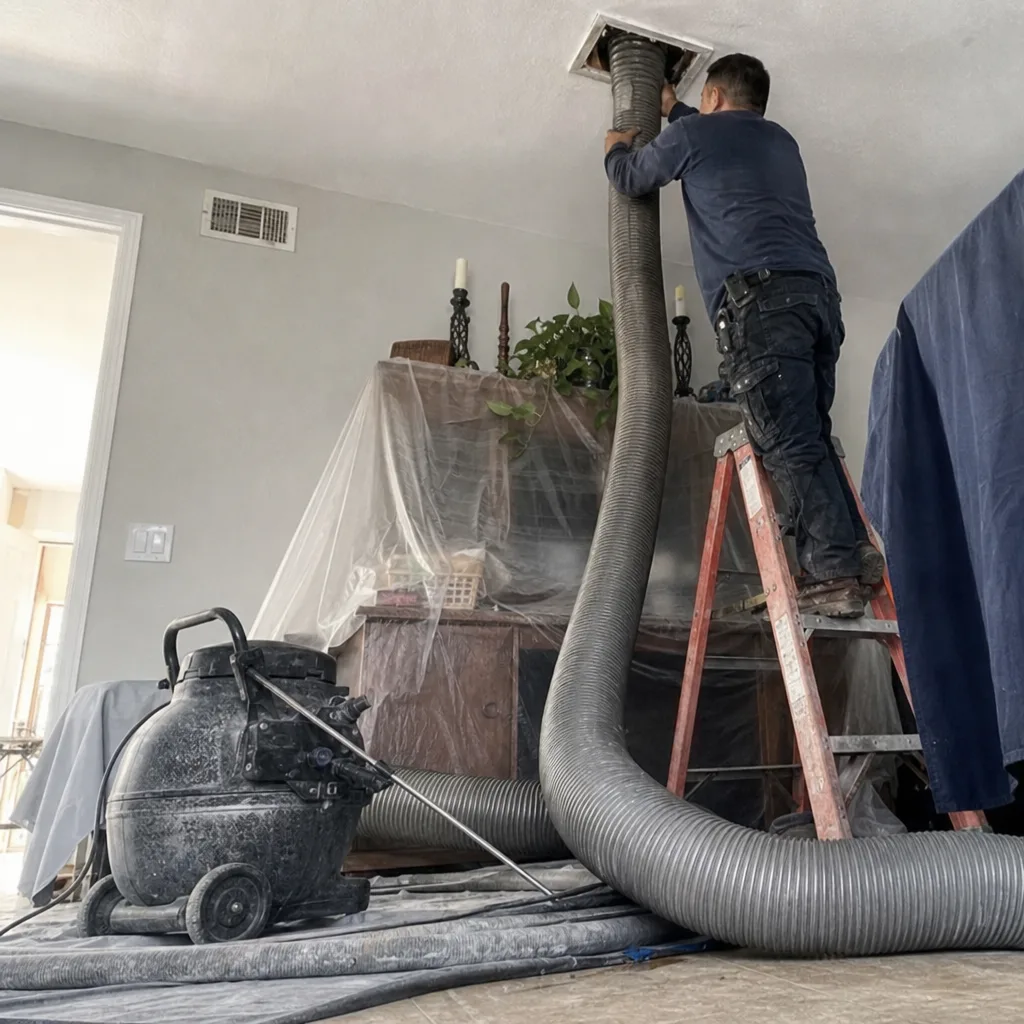 Before
 After
AfterAir Duct Cleaning Permits, Codes & Inspections in CA: What You Need to Know
Most homeowners assume any work on their HVAC system follows the same set of rules. It doesn’t. The gap between what counts as cleaning and what counts as construction trips up sellers, buyers, and even some technicians. In Los Angeles, where a large share of homes were built before 1980, that gap can be especially expensive to discover after the fact. This guide walks you through the exact legal line in California between Air Duct Cleaning services and regulated HVAC work, which codes apply, when a permit is actually required, and how to protect yourself from unlicensed work that can haunt you at resale.
Quick Answer
Air duct cleaning alone does not require a permit anywhere in California. However, if the job includes cutting new access panels, replacing duct sections, or modifying the air handler, that work falls under California Business and Professions Code Section 7026 and must be performed by someone holding a valid C-20 HVAC contractor license. The moment a cleaning job crosses into repair or replacement, permit and licensing rules apply.
Table of Contents
- Cleaning vs. Regulated Work: Where California Draws the Line
- What California Business and Professions Code 7026 Actually Says
- Los Angeles County Homes Built Before 1978: Asbestos in Insulated Flex Duct
- How Unpermitted Duct Work Can Void a Homeowners Insurance Claim
- How to Verify a Contractor’s License Through CSLB
- How to Get the Scope of Work in Writing So It Stays Cleaning-Only
- What We See in Los Angeles Homes: Local Practice vs. Legal Requirement
Cleaning vs. Regulated Work: Where California Draws the Line
California treats air duct cleaning as maintenance, not construction. Maintenance doesn’t require a permit, and it doesn’t require a contractor’s license when it stays on the surface level: brushing, vacuuming, and treating the interior of existing ducts. But the defining feature of cleaning is that nothing about the system changes. No new duct sections, no relocated registers, no added access panels, no modifications to the air handler or plenum.
The legal boundary in plain language: You can clean what exists. You cannot cut, replace, or modify what exists without a C-20 license and, in many cases, a permit. The distinction is about whether the physical infrastructure changes.
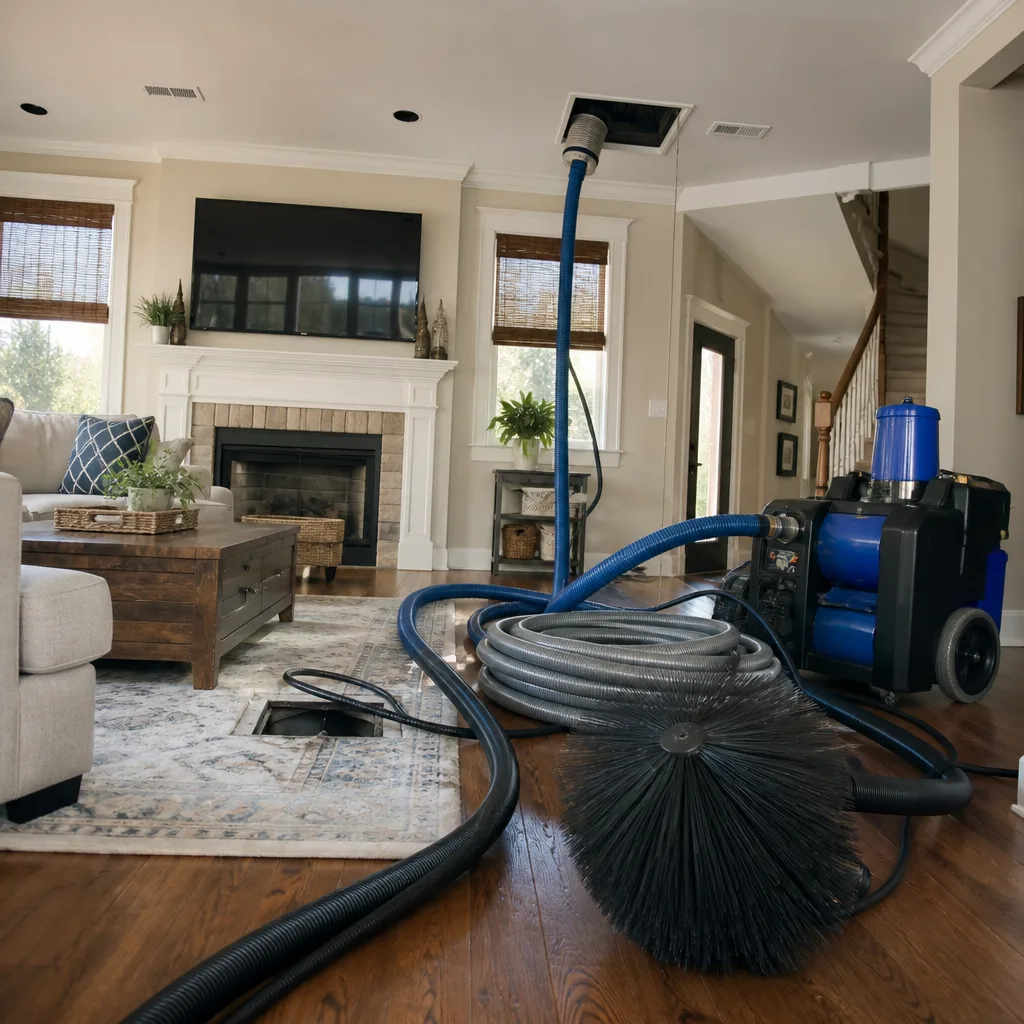
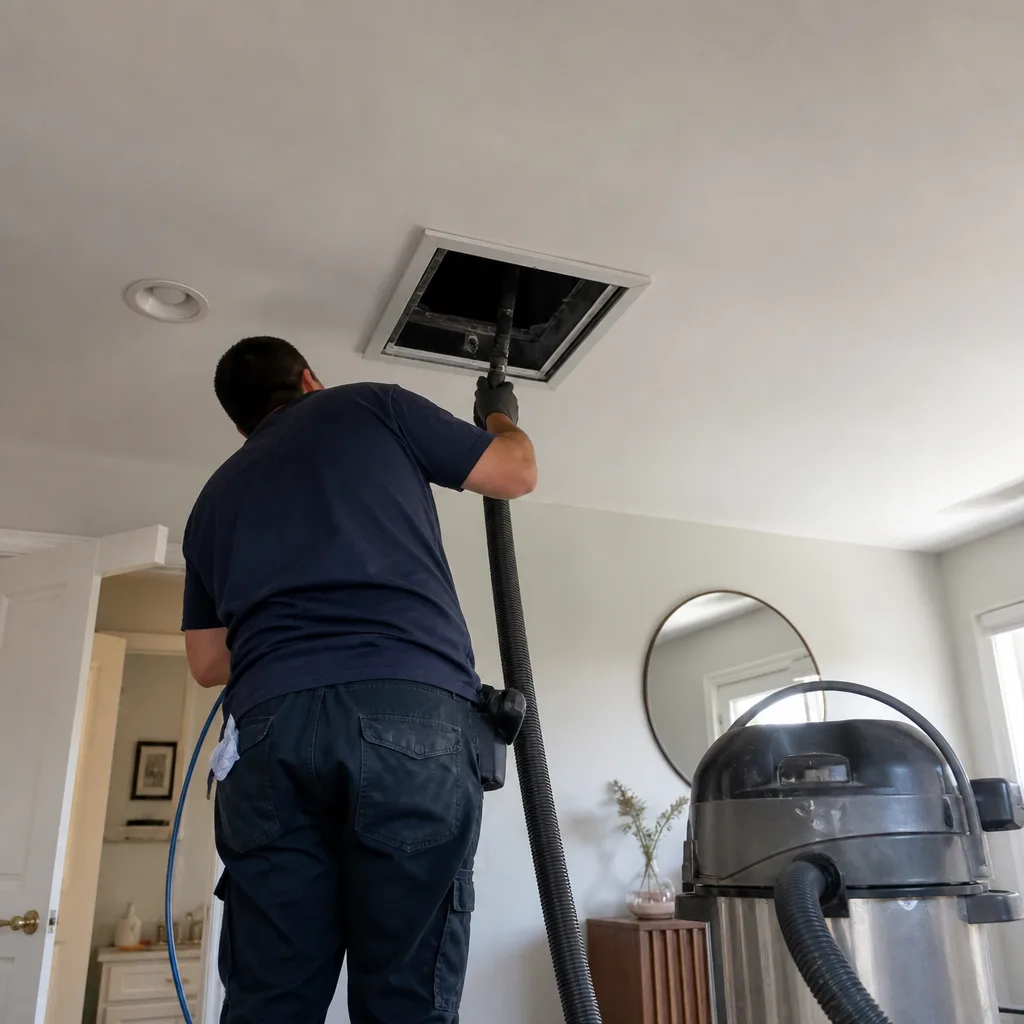
Here’s the practical version. A Rotobrush system spinning through your ducts, a Nikro negative-air vacuum attached at the plenum, compressed air tools knocking debris loose, sanitizing treatments applied to interior surfaces: all of that is cleaning. None of it requires a permit in Los Angeles or anywhere else in California. But if a technician finds a crushed flex duct run during a cleaning and offers to replace it, that offer just crossed the line. Replacement is licensed work. If they cut a new access hole because the existing points don’t reach a contaminated section, that’s a modification. The cleaning company should stop and tell you to call a licensed HVAC contractor.
In our experience cleaning ducts across Los Angeles, we’ve found crushed flex duct in crawlspaces more times than we can count. The right response from a cleaning-only company is to document it, show you the photos, and recommend a licensed contractor. The wrong response is to “just patch it up” while the vacuum is running.
What California Business and Professions Code 7026 Actually Says
Section 7026 of the California Business and Professions Code defines what constitutes a “contractor” in this state. The definition includes any person or business that undertakes to “construct, alter, repair, add to, subtract from, improve, move, wreck or demolish any building, highway, road, parking facility, railroad, excavation or other structure, project, development or improvement.” The key words for ductwork are alter, repair, add to, and subtract from.
Replacing a damaged duct section alters the system. Adding a new register subtracts from and adds to the existing layout. These are contractor activities. California requires anyone performing contractor work on heating and air conditioning systems to hold a C-20 license issued by the Contractors State License Board, or CSLB. A business with only a general business license or a C-2 insulation license cannot legally perform duct repair or replacement, no matter how capable the technician seems.
- Cleaning-only scope: No license required beyond basic business registration. Equipment inserts and extracts. The duct system remains as-built.
- Repair scope: Requires CSLB C-20 license. Any replacement of damaged duct, collar, register box, or hanger falls here.
- Modification scope: Requires C-20 license and often a permit. Adding, relocating, or resizing duct runs changes the system’s engineered design.
The CSLB has enforcement actions against unlicensed operators in Los Angeles County specifically because HVAC fraud is common here. Homeowners who hire unlicensed duct repair crews in LA neighborhoods from Eagle Rock to West Adams sometimes discover the issue only when a subsequent contractor refuses to touch the system because it wasn’t done to code. The fix is often more expensive than the original repair would have been had a licensed contractor done it.
Los Angeles County Homes Built Before 1978: Asbestos in Insulated Flex Duct
Los Angeles has one of the largest inventories of pre-1980 housing in the country. That matters for air duct work because some of those homes contain insulated flex duct with asbestos-containing wrap or tape. Intact asbestos is not a health risk. Disturbed asbestos is. And the action that disturbs it is not the brushing or vacuuming inside the duct: it’s cutting, tearing, or replacing the insulation around it.
California and Los Angeles County both follow the federal EPA Asbestos NESHAP standards for demolition and renovation, but the residential disclosure rules in LA specifically require that homeowners be informed before any work disturbs suspect materials. A legitimate cleaning company will not touch damaged asbestos-wrapped duct. They will flag it, document it, and advise you to have an asbestos inspection performed before any repair or replacement work moves forward.
Here’s what this means for your project, in order:
- If your home was built before 1978, assume any white or gray fibrous wrap on your ductwork may contain asbestos until tested.
- A cleaning-only visit should not cut into, peel back, or remove that wrap. If a technician starts doing this, stop the job.
- If repair or replacement is needed, hire a certified asbestos professional to test the material first.
- If asbestos is confirmed, only a licensed asbestos abatement contractor may remove it before HVAC work proceeds.
We mention this because it comes up constantly in our work. In older Los Angeles homes, particularly in areas like Highland Park, Leimert Park, and Valley Glen, we’ve encountered original ductwork still wrapped in material from the 1960s and 70s. Our approach is simple: we don’t disturb it. We clean what’s inside and tell you exactly what we saw outside. If you then need a licensed contractor and abatement professional, we’ll be direct about that too.
How Unpermitted Duct Work Can Void a Homeowners Insurance Claim
Insurance companies look for reasons to deny claims. Unpermitted modifications to a home’s mechanical systems are one of the easiest reasons they find. If an unlicensed handyman replaces a section of duct in your Los Angeles home and that duct later fails, causing water damage or a fire that spreads through the HVAC system, your insurer may investigate the work history. Unpermitted, unlicensed modification discovered during a claim is grounds for denial.
The logic insurers apply is straightforward: a homeowner who takes shortcuts on permitted work is more likely to have taken shortcuts elsewhere, and the policy language typically excludes damage “arising from” unpermitted construction. That phrase is broad enough to deny claims far beyond the duct itself.
This isn’t theoretical. Los Angeles has a strong real estate market, and the volume of flips and renovations here means unpermitted work turns up in disclosures and inspections constantly. When it does, the current owner pays for it. The prior owner’s savings on a handyman duct repair becomes the current owner’s five-figure corrective work, often done under permit and at full licensed-contractor rates because the buyer’s lender requires it before closing.
How to Verify a Contractor’s License Through CSLB
If your duct job crosses into repair or replacement territory, verifying the license is a five-minute process that can save you thousands. The CSLB website has a public license lookup tool. Here’s the exact process:
- Go to cslb.ca.gov and click “Check a License” on the home page.
- Enter the contractor’s business name or license number. Ask them for the license number directly; if they hesitate, that’s a signal.
- Confirm the license classification. You specifically need C-20 (Warm-Air Heating, Ventilating and Air-Conditioning). A C-36 plumbing license or a B general building license is not the same thing.
- Check the license status. It should read “Active.” Suspended, expired, or cancelled licenses mean no legal authority to work.
- Verify the listed personnel matches who is actually performing the work. The contractor of record must supervise.
We should note: Morton’s Air Duct Cleaning performs cleaning-only services. We carry the appropriate business licensing for that scope. We do not perform repairs or replacements, which means we don’t hold ourselves out as doing C-20 work. The distinction matters to us because explaining it clearly is part of being honest about what a cleaning company can and cannot do for your Los Angeles home.
How to Get the Scope of Work in Writing So It Stays Cleaning-Only
You cannot enforce a boundary you never wrote down. Before any air duct cleaning appointment, ask the company for a written scope of work. Do it over email so there’s a record. The scope should list exactly what the service includes and, just as importantly, what it excludes.
Here’s a template you can adapt in your own words:
- Services included: Power brushing of all accessible supply and return ducts, negative-air vacuuming with HEPA filtration, register and grille cleaning, treatment of accessible interior surfaces with an EPA-registered sanitizer.
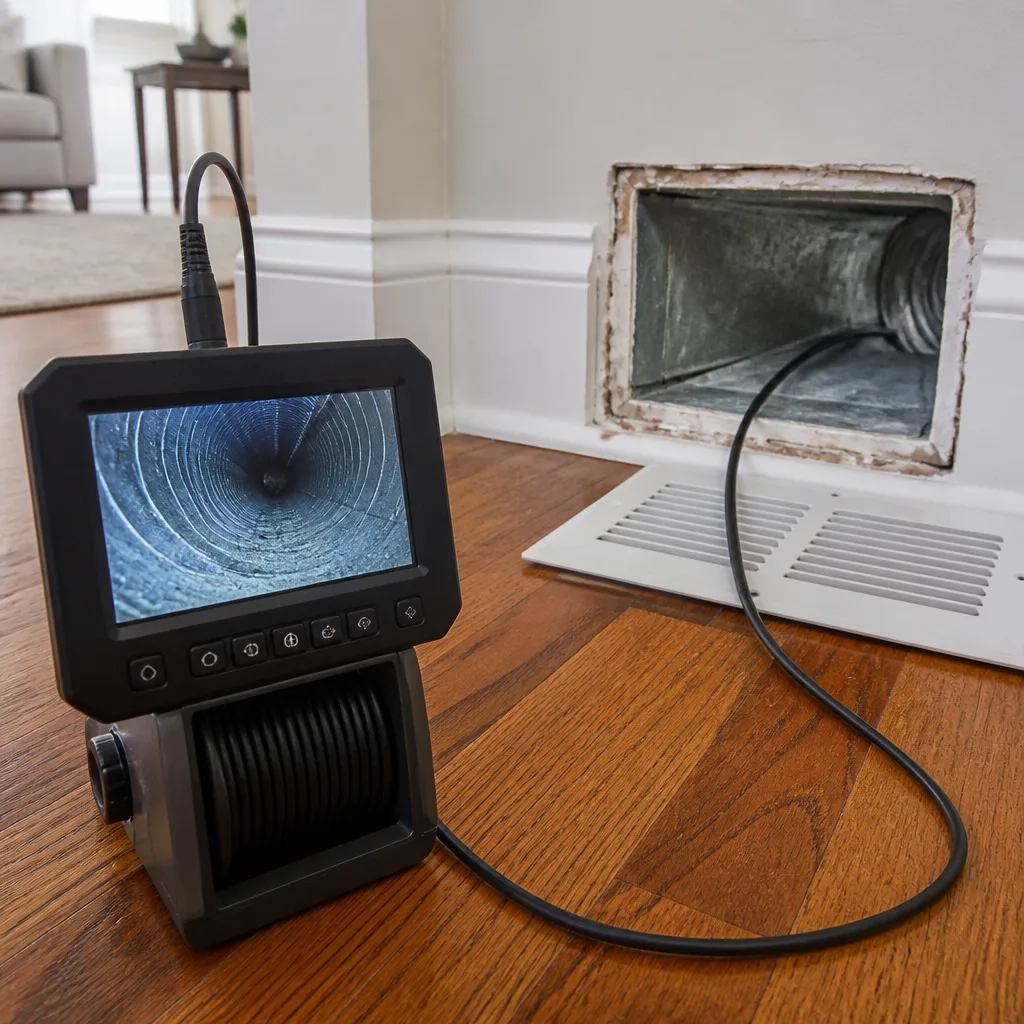
- Methods used: Source-removal cleaning using professional-grade equipment from brands like Rotobrush and Nikro. Camera inspection before and after.
- Worker protections: Shoe covers and drop cloths in all finished areas. Furniture protected. Pet areas noted and treated with pet-safe product choices where applicable.
- Excluded work: No cutting of ductwork, no replacement of duct sections, no modification of registers, plenums, or air handlers. Any damage discovered during cleaning will be documented photographically and referred to a licensed C-20 contractor.
- Pricing: One flat price per system, stated before work begins, with no per-vent add-ons.
The excluded-work clause is the one that protects you. If the technician then tries to sell you a “quick repair” while the vacuum is running, you can point to the scope and say no. You can also show that scope to any future buyer who asks what work was done on the home. For a Los Angeles homeowner, that paper trail is worth more than any warranty.
What We See in Los Angeles Homes: Local Practice vs. Legal Requirement
Los Angeles is full of older homes with undersized returns, crushed flex runs, and decades of accumulated dust. The temptation for every homeowner is to let whoever is already in the crawlspace “just fix it.” We understand why. But the practice we see in LA homes that causes the most regret is exactly that: a cleaning technician who oversteps, an unlicensed handyman who “knows a guy,” and a seller who discovers the problem at inspection.
In terms of what actually requires a permit versus what operates on local practice, the following table summarizes the most common scenarios:
| Scenario | Permit Required? | License Required? |
|---|---|---|
| Brushing and vacuuming existing ducts | No | No |
| Cleaning dryer vents (existing line) | No | No |
| Replacing a damaged duct section | Usually no, unless structural framing is modified | Yes, C-20 |
| Adding a new return or supply register | Sometimes, depending on the modification | Yes, C-20 |
| Replacing the air handler or furnace | Yes | Yes, C-20 |
| Installing new ductwork in a room addition | Yes | Yes, C-20 |
The weather in Los Angeles also plays a role that surprises people. Because our climate is dry and mild for most of the year, ducts rarely develop the mold problems common in humid climates. What they do develop is heavy dust, pet hair, and sometimes construction debris from prior renovations. That’s why a company like Air Duct Cleaning in Los Angeles spends a lot of time on source removal rather than moisture remediation. The equipment matters: Abatement Technologies negative-air machines and Rotobrush agitation systems do the heavy lifting in LA’s particular dust profile.
What a Proper Los Angeles Air Duct Cleaning Should Actually Include
The permit question only matters when work crosses a line. But knowing what good cleaning looks like helps you hold a company accountable to the cleaning-only boundary because you understand what the scope should and shouldn’t include.
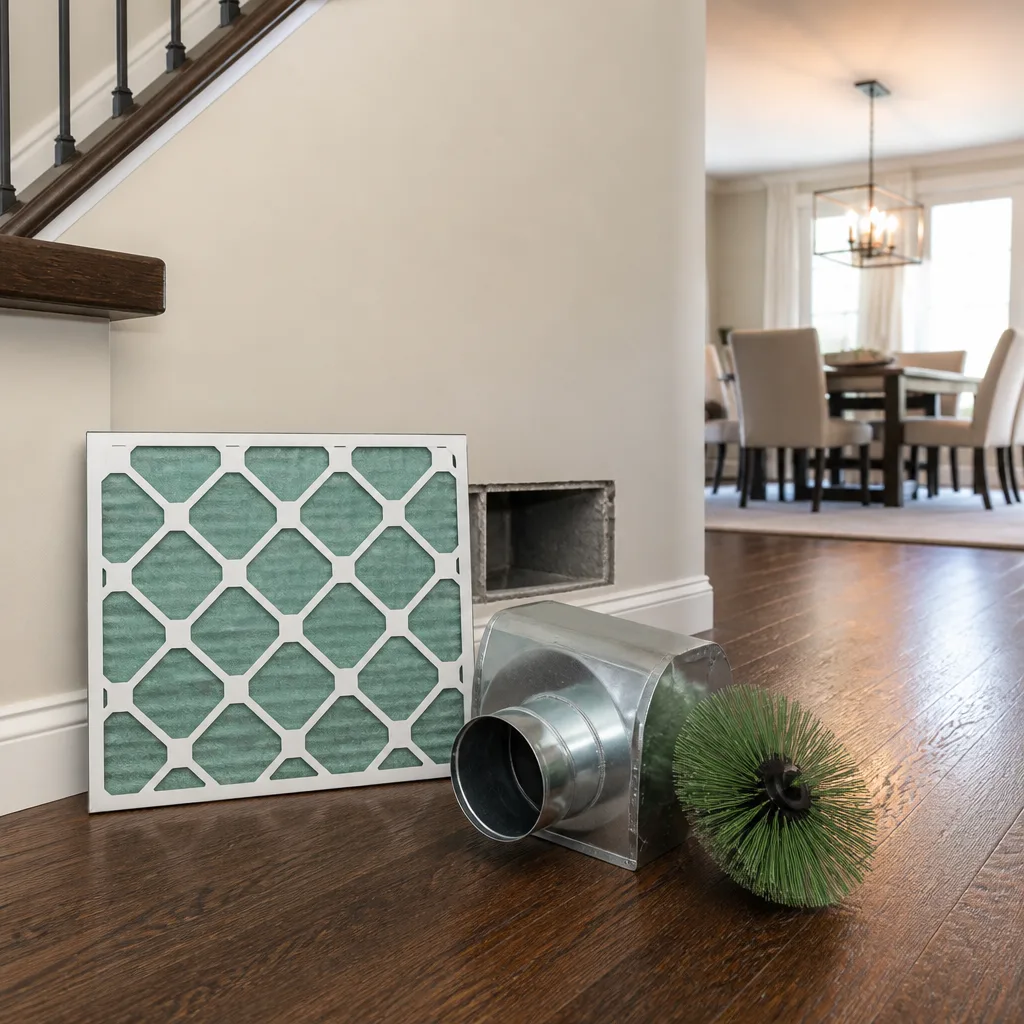
A proper cleaning from Morton’s Air Duct Cleaning includes source-removal cleaning of the full duct system. That means mechanical agitation of the duct walls (not just a vacuum waved near the register) combined with negative-air extraction that pulls loosened debris out of the ducts and into a HEPA-filtered collection unit. We use Rotobrush and Nikro equipment because these systems are designed for professional-grade agitation and capture, not the entry-level rental gear that leaves more behind than it removes.
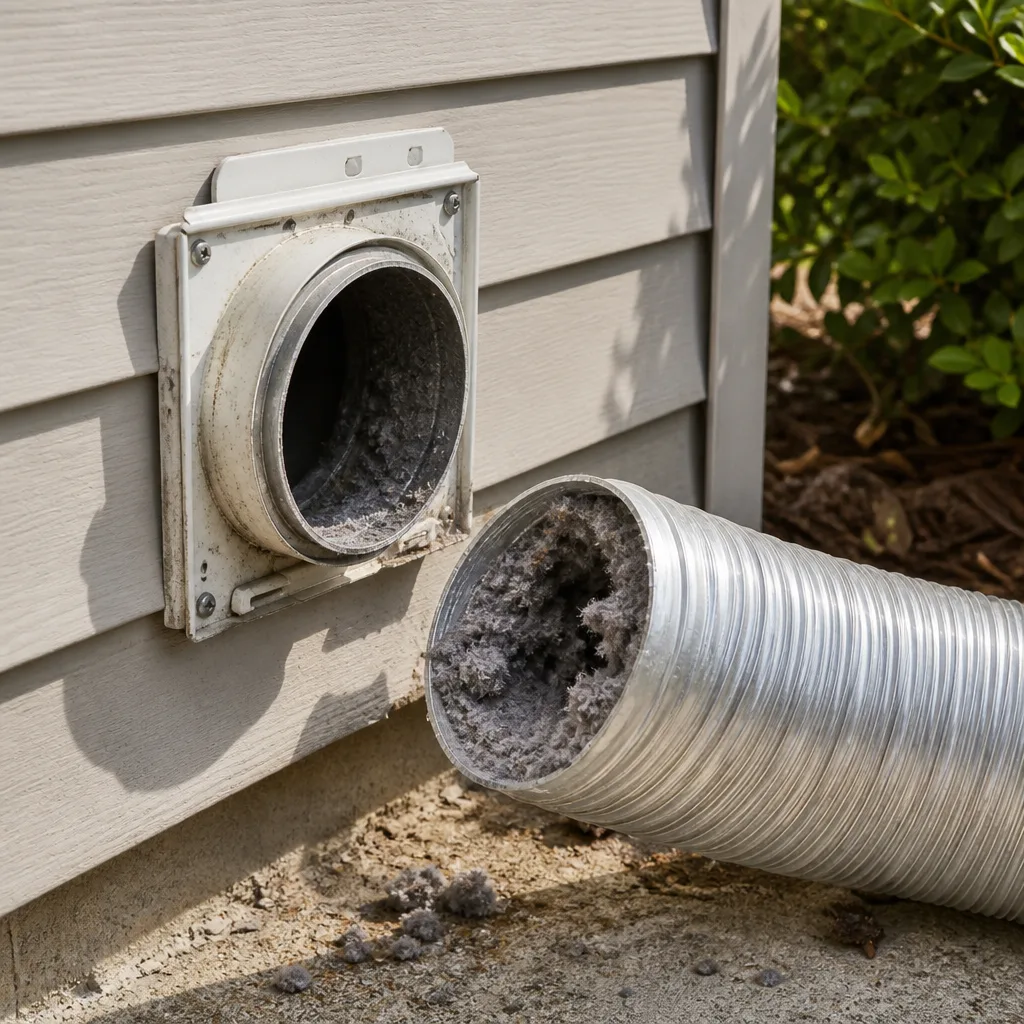
The process in a typical Los Angeles home goes like this: we protect floors with drop cloths and walk through the house with shoe covers on, noting where kids play and pets sleep. We connect the negative-air machine at the plenum, seal the registers systematically, and work branch by branch. Photos are taken before and after. We show you the before-and-after camera images so you can see the actual duct surfaces, not just a story about what we did. Dryer vent cleaning, a related service we provide in Dryer Vent Cleaning in Los Angeles, follows the same documentation standard.
If a cleaning company cannot show you photos of your own ducts, ask why. You would not accept a mechanic’s word that your car was repaired without seeing the work. Ducts are no different.
Common Mistakes to Avoid
- Letting a cleaning technician “patch” damaged duct. A patch is a repair. Repairs require a C-20 license. A cleaning company that patches your duct is doing illegal unlicensed work and creating a liability on your property.
- Assuming a general contractor can do HVAC work. A B general building license does not authorize HVAC repair. You need specifically a C-20. Check the CSLB listing every time.
- Skipping the written scope of work. A verbal “we’ll just clean it” becomes an invoice for “repairs” after the fact. Written scope, every time, before work starts.
- Ignoring pre-1978 asbestos risk in Los Angeles homes. If your home in neighborhoods like Silver Lake, Westchester, or Northridge was built before 1978, insist on no cutting or removal of duct insulation unless testing has cleared it.
- Believing a permit was pulled without seeing it. Ask for the permit number and verify it with the Los Angeles Department of Building and Safety. “I pulled it” isn’t the same as pulled.
- Not documenting damage found during cleaning. If a cleaning technician shows you crushed or disconnected duct, get the photos in writing. That documentation protects you later whether you repair now or disclose later.
- Treating the invoice as proof of permitted work. An invoice shows money changed hands. It does not show code compliance. Buyers and insurers want permits and licenses, not receipts.
When to Call a Professional
If your ducts have never been cleaned and you’ve lived in your Los Angeles home for more than five years, it’s time to get an assessment-start by reviewing our Air Duct Cleaning Warning Signs Every Homeowner Should Know. If you’ve done renovation work and know construction dust went through the HVAC system, clean sooner. If someone in the house has significant allergies or respiratory issues, cleaner ducts reduce the particulate load in the air, and a professional with HEPA extraction is the right call. If a handyman or general contractor has told you your ducts “need replacing,” get a second opinion from a licensed C-20 contractor before anyone cuts anything. Morton’s Air Duct Cleaning offers free estimates in Los Angeles, and we’ll give you a straight answer about whether your job is a cleaning or a repair. Call (323) 918-4345 to schedule.
Frequently Asked Questions
No. Air duct cleaning is classified as maintenance, not construction, so no permit is required anywhere in California, including Los Angeles. The work becomes permit-eligible only when it involves modifying, replacing, or adding to the duct system.
Yes, a handyman can clean ducts as long as the work stays strictly cleaning-only. But a handyman cannot replace, repair, or modify ductwork. That work legally requires a C-20 HVAC contractor license, and a handyman without that license who cuts into your duct system is working illegally.
A C-20 license is the California contractor classification for warm-air heating, ventilating, and air conditioning. It certifies that the holder has demonstrated the experience and passed the exams required to perform HVAC work legally. Any repair or replacement of ductwork in Los Angeles must be performed by someone holding an active C-20 license.
Yes. Unpermitted or unlicensed HVAC work commonly surfaces during buyer inspections and must be disclosed by law. It can delay closing, force a price reduction, or kill the sale entirely. The cost to correct unpermitted work is typically far higher than doing it right the first time.
You cannot determine asbestos content by sight. If your ducts have white or gray fibrous wrap and the home predates 1978, assume it may contain asbestos and do not allow anyone to cut or remove it. A certified asbestos inspector can test the material. Intact asbestos is not a hazard; disturbed asbestos is.
Whole-system air duct cleaning in Los Angeles generally runs between $400 and $900 depending on the number of systems, the size of the home, and the degree of contamination. Be cautious of quotes far below that range, as they often exclude whole-system cleaning or add on per-vent charges later. Call (323) 918-4345 for a straight price on your home.
The Bottom Line
Air duct cleaning does not require a permit in California, and that’s the answer most people need. But the legal protection you get from knowing where cleaning ends and regulated work begins is worth more than the answer itself. Cutting, replacing, or modifying ducts requires a C-20 contractor, and sometimes a permit, and unlicensed improvisation in your ducts is a future liability whether you plan to sell or not. Document the scope of every job in writing. Verify any repair contractor through CSLB. Treat pre-1978 insulation with asbestos caution. If the job stays cleaning-only, a properly equipped, documented cleaning from a company that respects the boundary is safe, legal, and valuable for your home.
Written by Paul Adeyemi, Owner at Morton’s Air Duct Cleaning, serving Los Angeles since 2005. Explore more guides & resources from our team.