
Last updated October 8, 2026
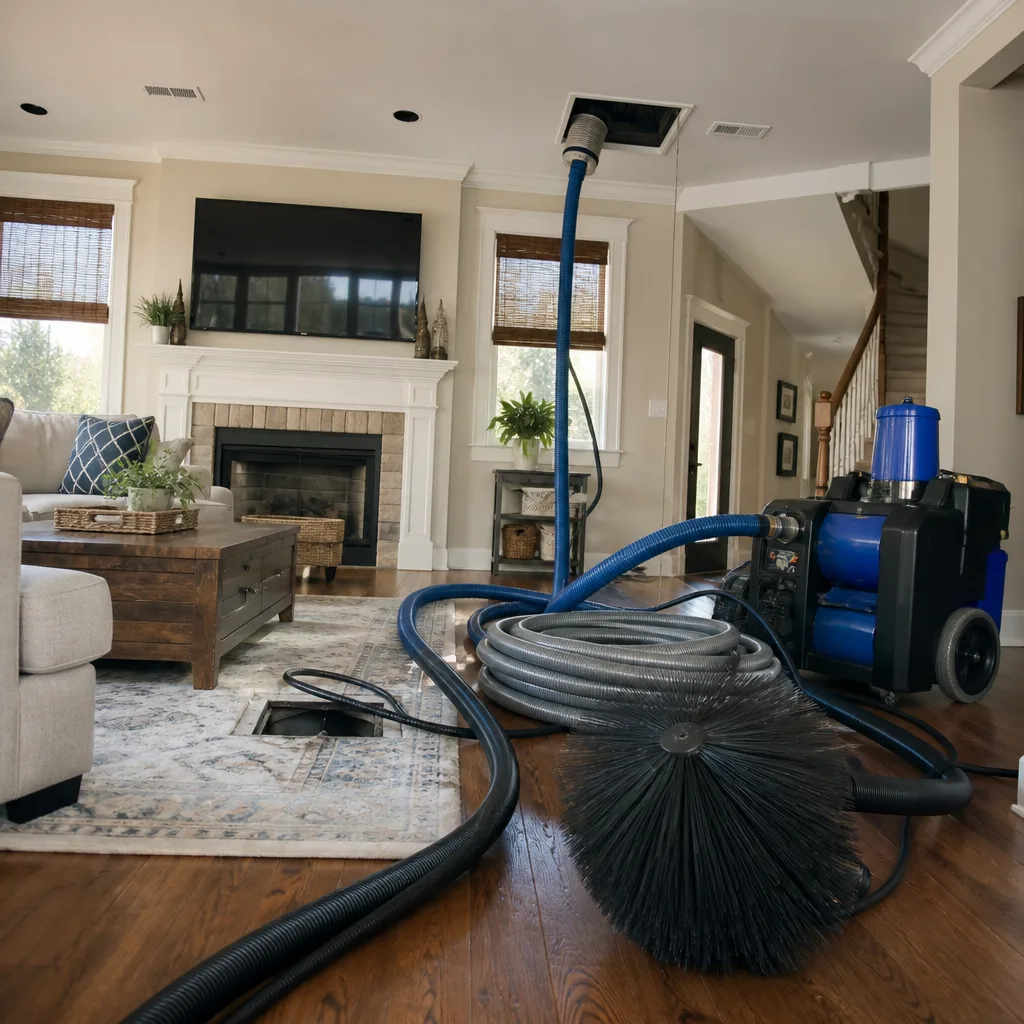
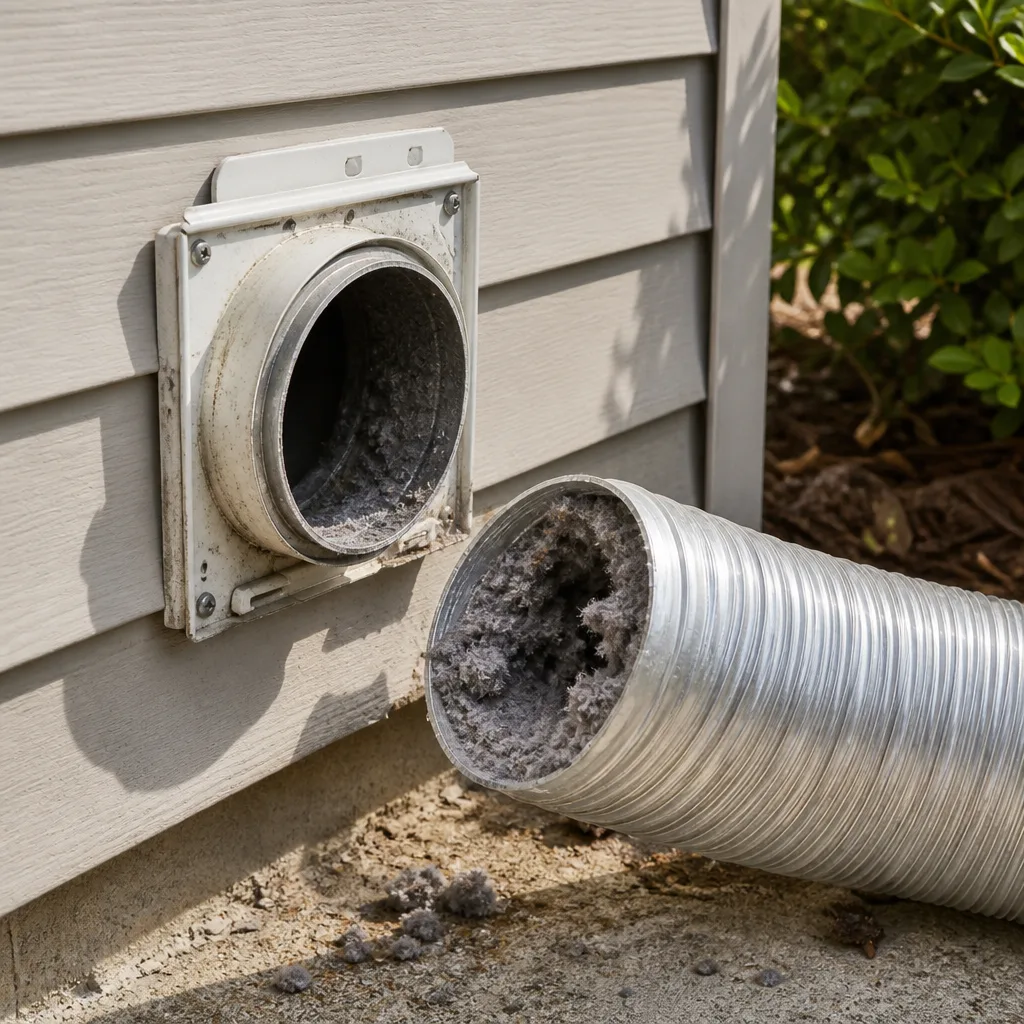
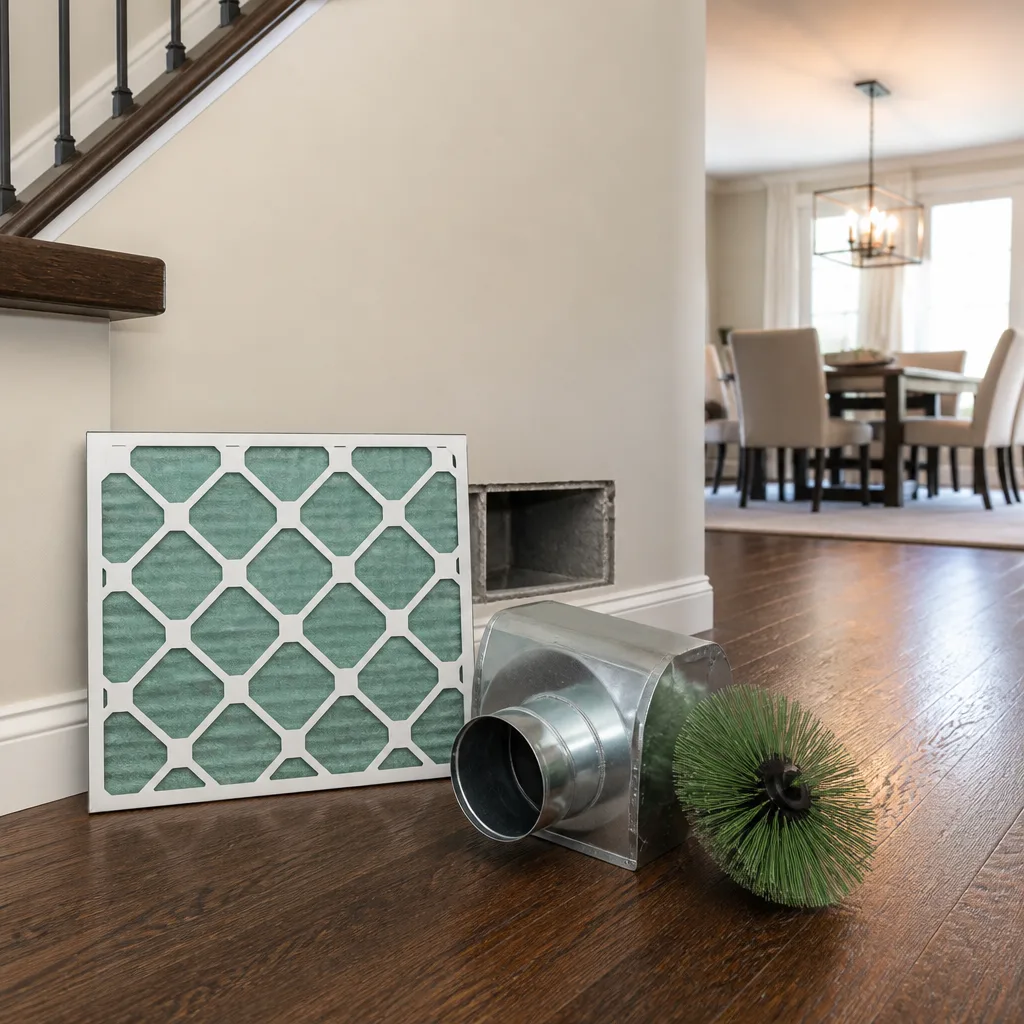
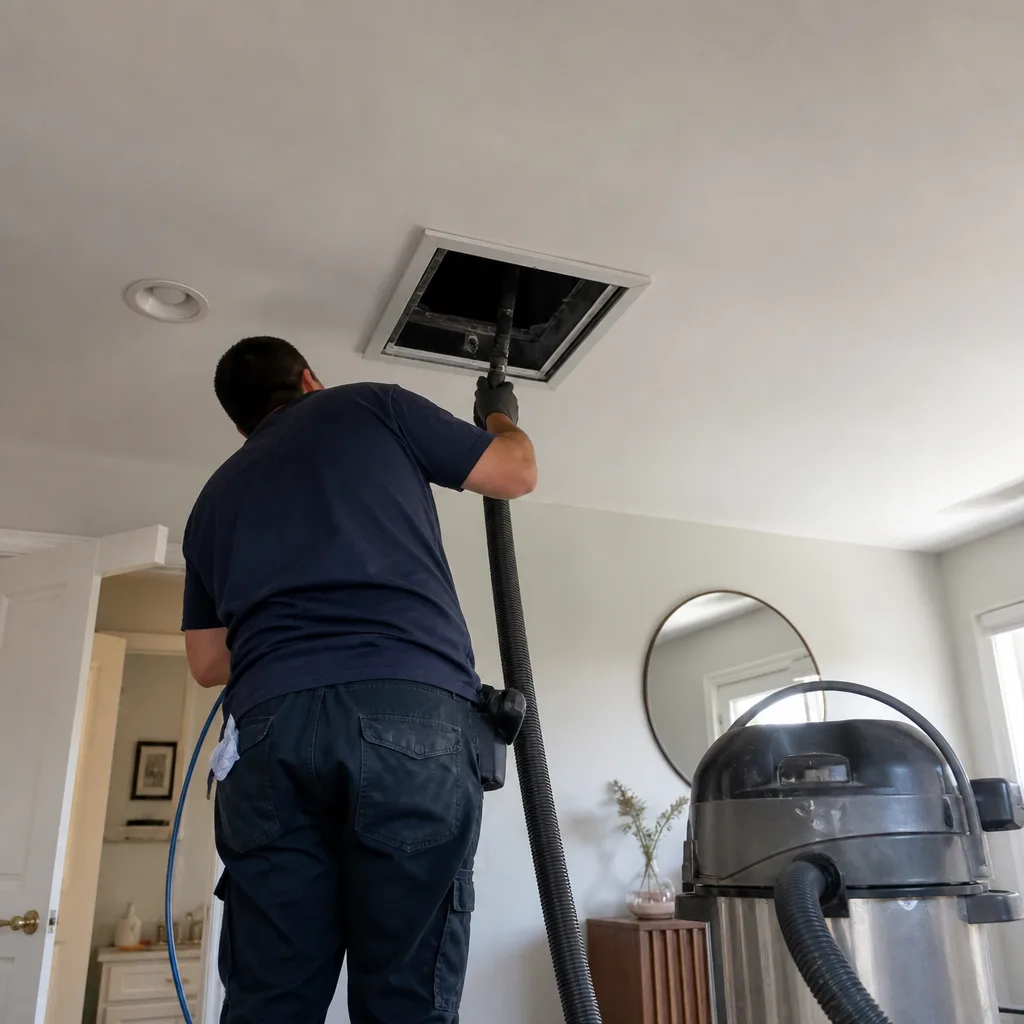
Whole-system duct and dryer vent check with before-and-after photos - you see exactly what came out of your vents
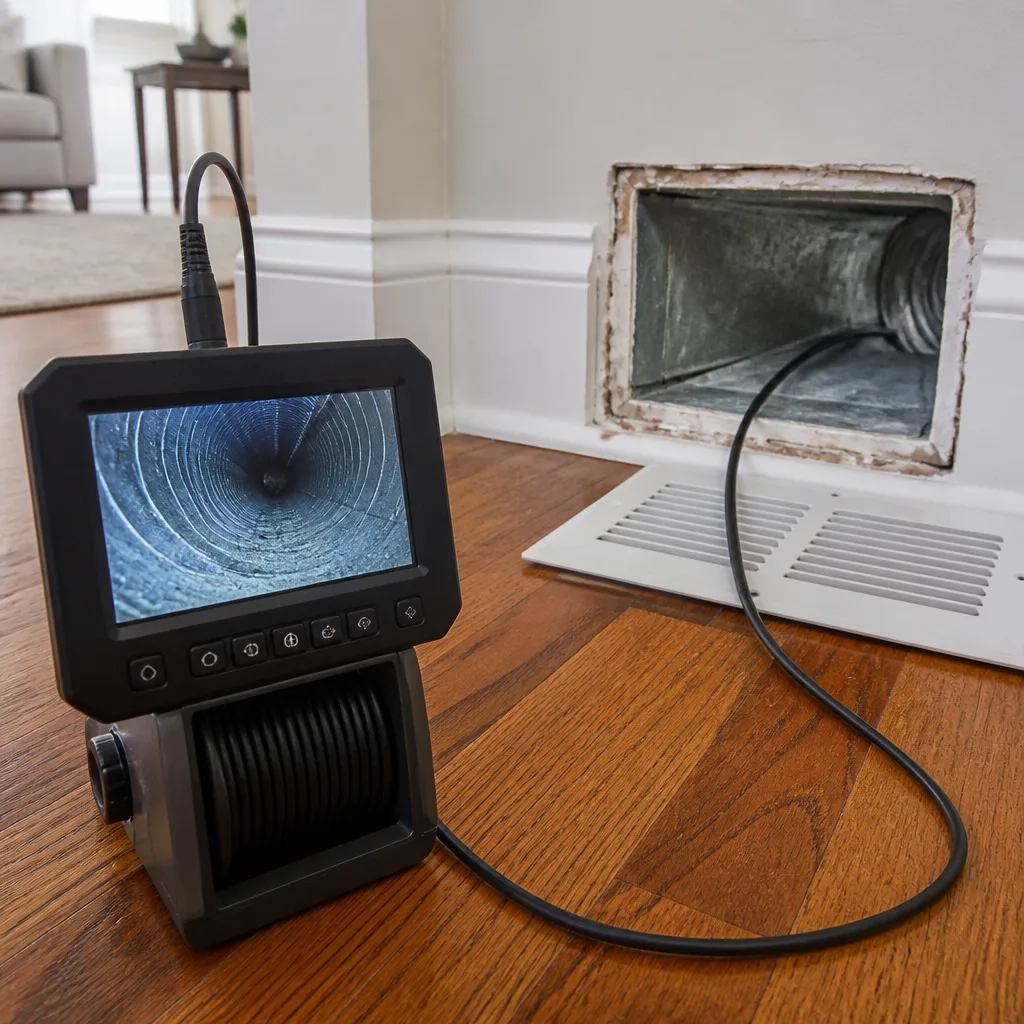
That "$99 whole-house special" is a bait ad - the real number appears once they are in your hallway, or the "clean" is a shop-vac at the register. We photograph the inside of your ducts before and after instead.
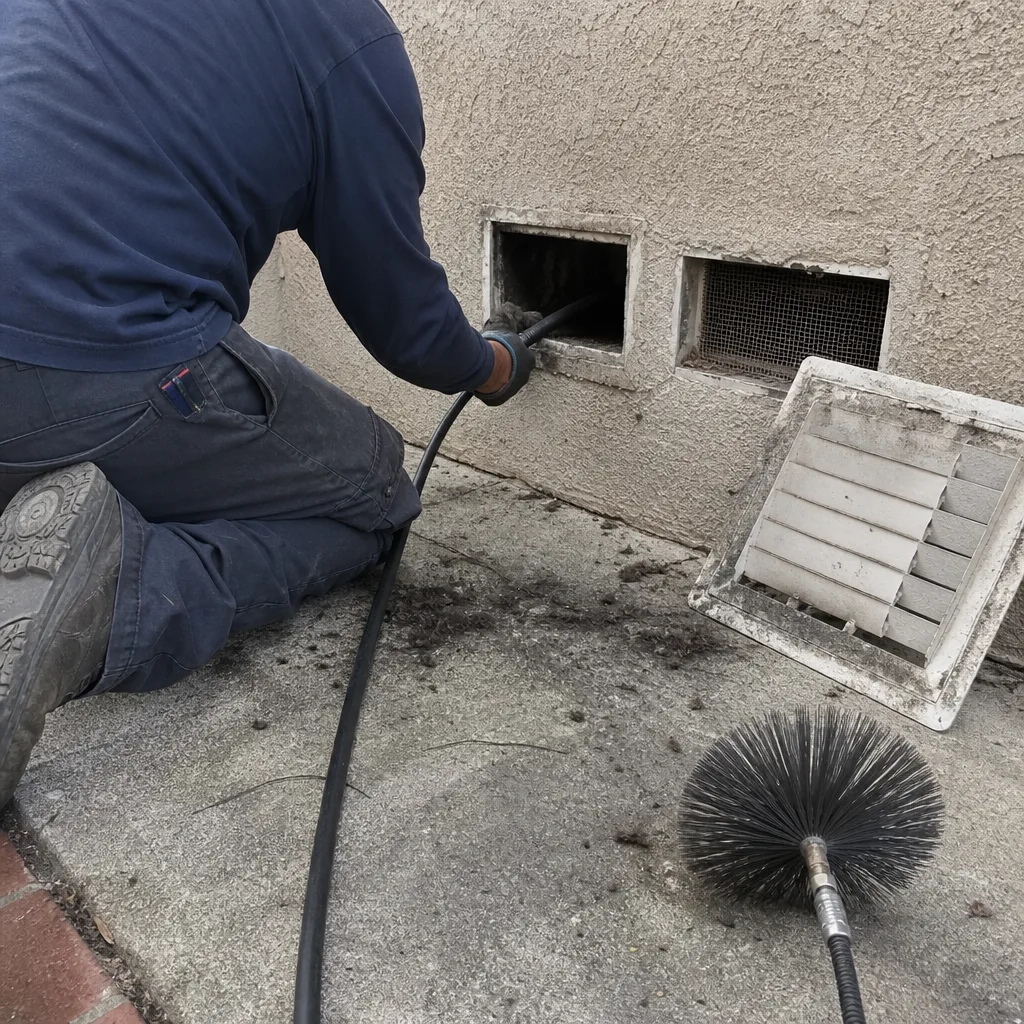 Before
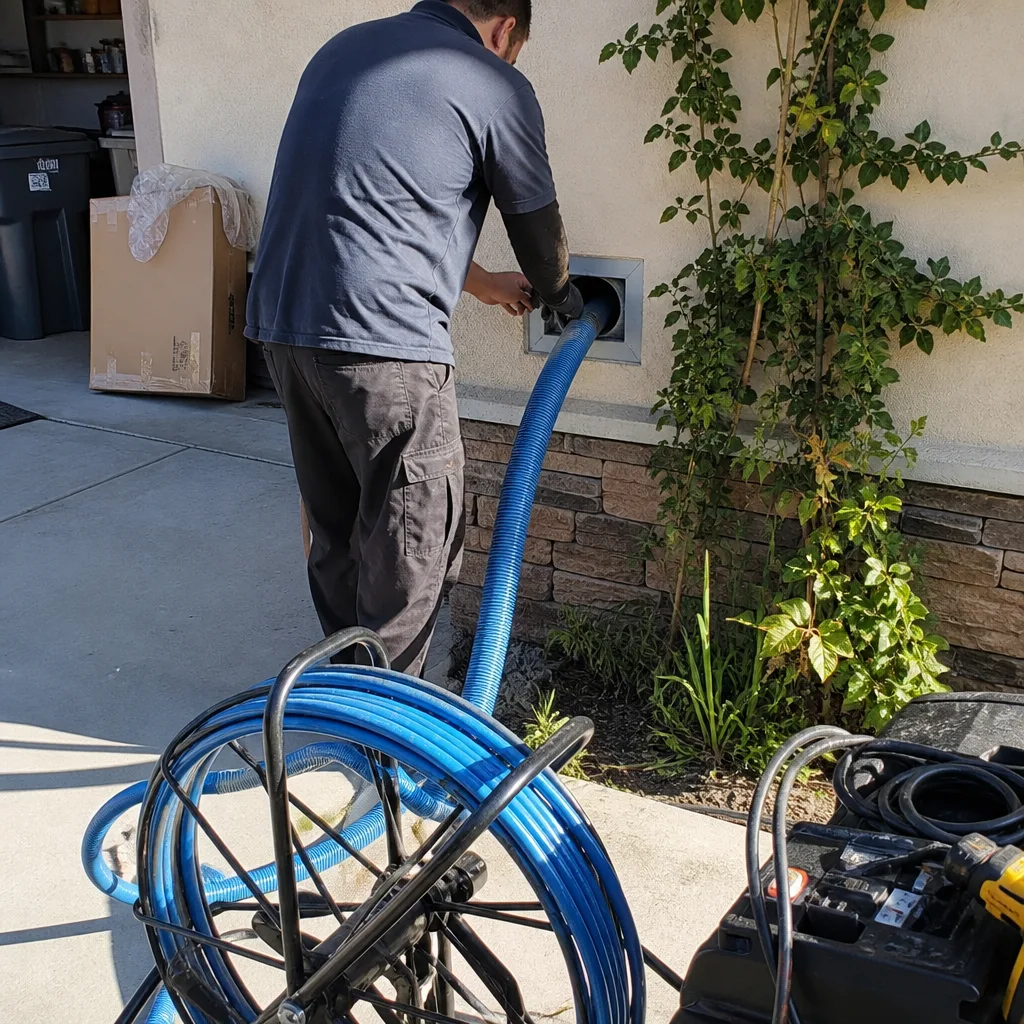 After
After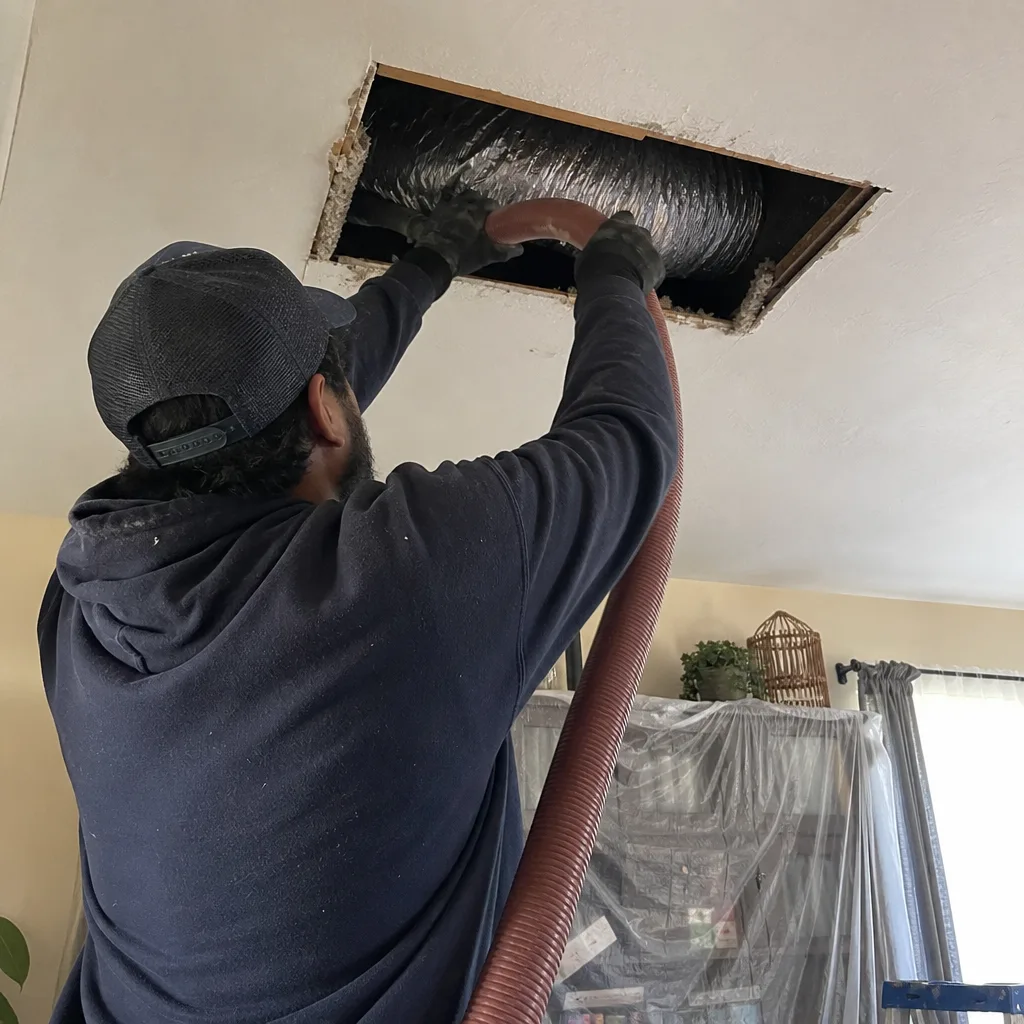 Before
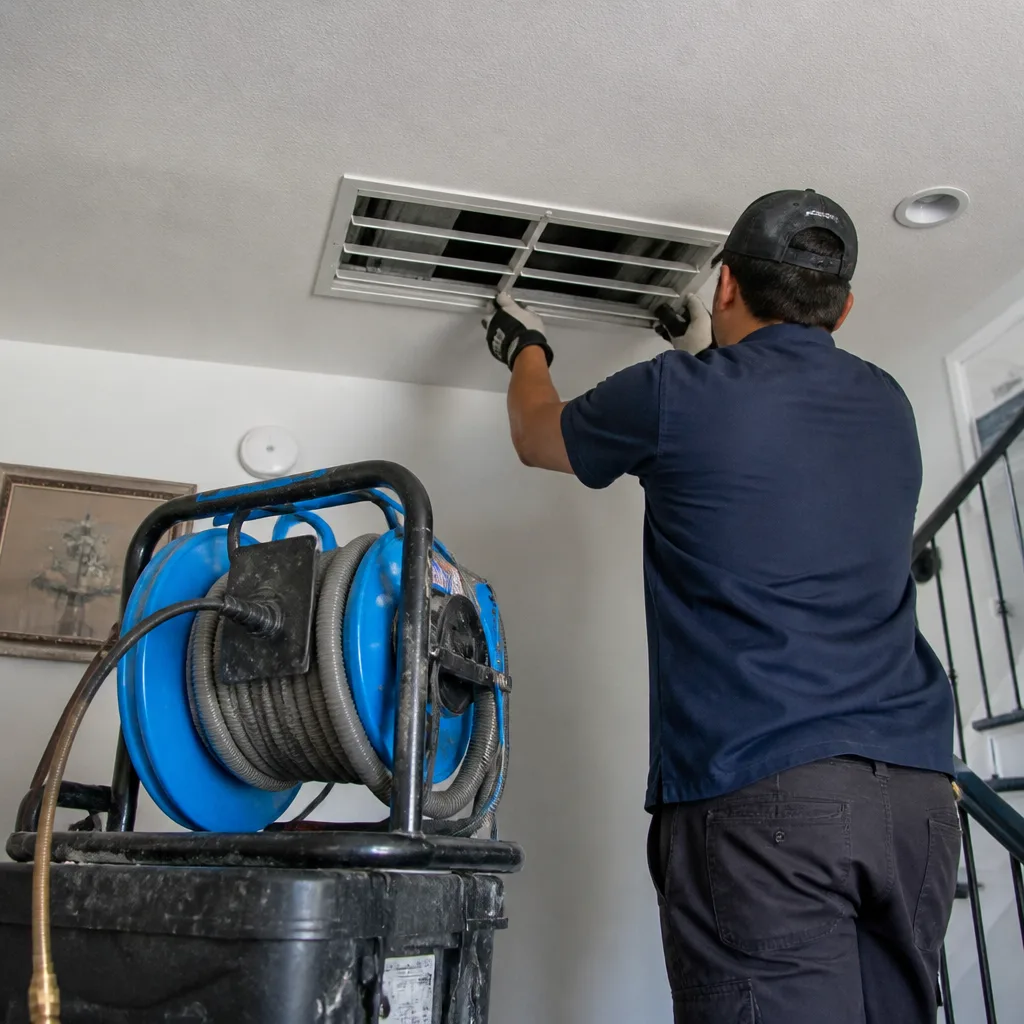 After
After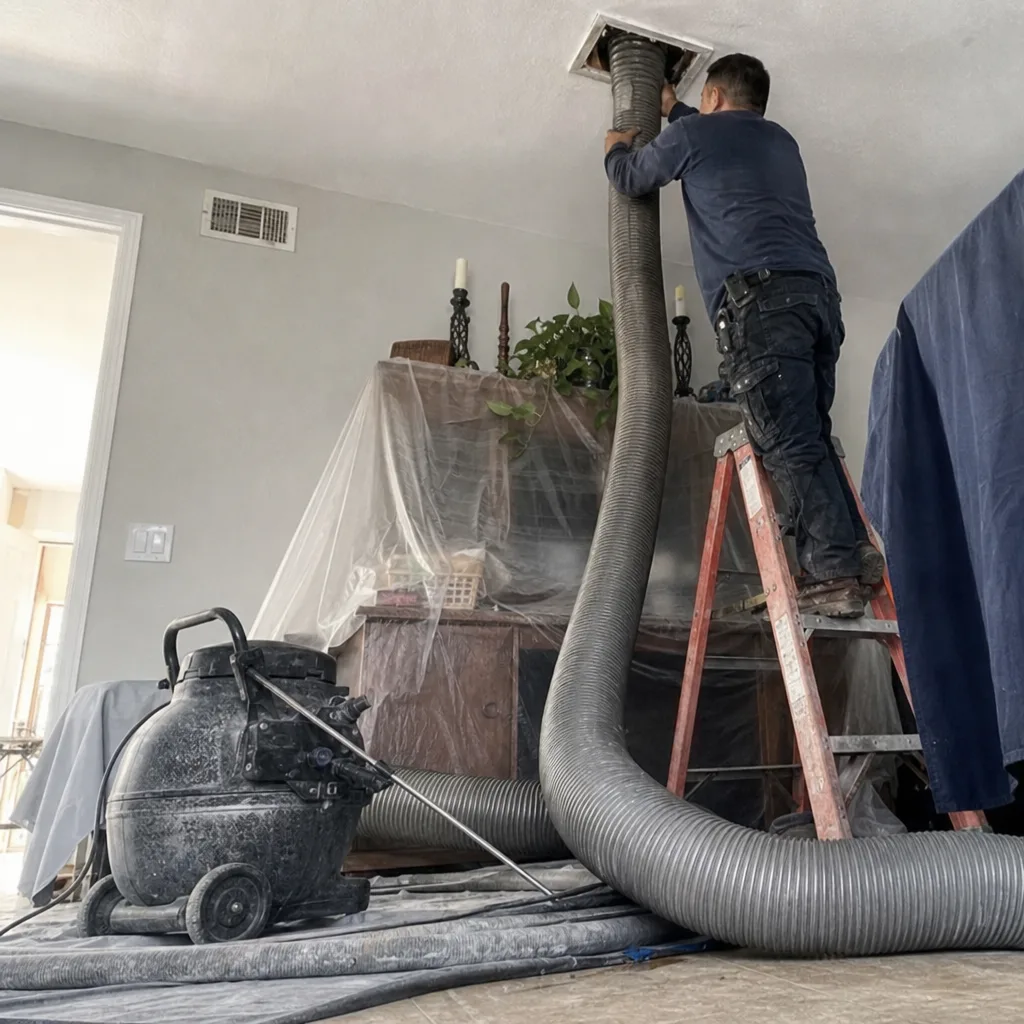 Before
 After
AfterAir Duct Cleaning Troubleshooting: Common Problems and How to Fix Them
A musty smell from your vents after the AC kicks on is not always mold. In Los Angeles, where our cooling systems run hard from June through October, that smell is often the drip pan or evaporator coil holding standing water, and cleaning your ducts won’t fix it. Knowing the difference between a duct problem, a unit problem, and a simple filter issue saves you a service call fee and gets your home comfortable faster. For more details, read our Air Duct Cleaning Warning Signs Every Homeowner Should Know. This guide walks you through each symptom, what it most likely means, and what to do next.
Quick Answer
Most air duct symptoms fall into five categories: smells, sounds, weak airflow, visible dust, and uneven room temperatures. Each has a most-likely cause that is often not the ducts themselves, and a least-likely cause that homeowners frequently assume first. Rule out the filter, coil, and drain pan before you conclude the ducts need cleaning, and replace the filter before calling anyone.
Table of Contents
- Symptom-to-Cause: What Your Ducts Are Telling You
- Step 1: Rule Out the HVAC Unit Before Blaming the Ducts
- The Tissue Test: How to Check Airflow at Each Register
- Disconnected and Collapsed Duct Sections: What They Feel Like
- When Cleaning Alone Won’t Fix It: Cleaning vs. Sealing vs. Repair
- The One DIY Step That’s Always Safe: Filter and Return Grille
- What Los Angeles Homeowners Should Know About Their Ducts
- Common Mistakes to Avoid
- When to Call a Professional
- Frequently Asked Questions
- The Bottom Line
Symptom-to-Cause: What Your Ducts Are Telling You
We’ve walked into hundreds of Los Angeles homes where the homeowner had already diagnosed the problem themselves, spent money on the wrong fix, and still had the same symptom a week later. The symptom is real. The cause they assumed was usually not. Here is the breakdown we use with every customer who calls us describing a problem.
| Symptom | Most Likely Cause | Least Likely Cause |
|---|---|---|
| Musty smell when AC runs | Standing water in drip pan or dirty evaporator coil | Mold growing inside the ductwork |
| Burning or dusty smell on startup | Dust accumulated on heat strips or coil burning off | Electrical problem in the unit |
| Rattling or fluttering sound | Loose register, loose duct strap, or debris in the duct | Failing blower motor |
| Weak airflow from one or two rooms | Disconnected flex duct section or collapsed duct run | Undersized HVAC system for the home |
| Visible dust puffing from registers at startup | Dirty duct interiors or a missing filter upstream | Blower wheel failure |
| One room always 8-10 degrees warmer | Kinked or disconnected branch duct serving that room | Window or insulation problem |
Notice a pattern. The least likely cause is usually the scariest one, and it’s the one homeowners fixate on. The most likely cause is usually mechanical and straightforward. In our experience, roughly seven out of ten calls about smells and airflow in Los Angeles end up being a unit issue, a filter issue, or a disconnected section, not dirty ducts.
Step 1: Rule Out the HVAC Unit Before Blaming the Ducts
The ducts are the delivery system. The unit is the source. If the source is dirty or malfunctioning, cleaning the delivery system changes nothing. Before you call any company for Air Duct Cleaning, here is the order we tell homeowners to work through.
- Check the filter. If it’s caked with gray dust and you can’t see the pleats, replace it. A clogged filter starves the system of airflow, which creates every symptom on the table above: smells, weak airflow, uneven rooms, dust.
- Inspect the return-air grille. Pull it off if it’s a simple friction fit. Look behind it. If you see a thick layer of dust on the return duct opening, that dust is cycling through the entire system every time the blower runs.
- Look at the evaporator coil. If you can access it safely, check for visible dust matting or ice. A dirty coil in Los Angeles humidity causes that musty smell and weak cooling. Coil cleaning is a unit service, not a duct cleaning.
- Check the drip pan. A pan holding water smells like a dirty aquarium after a few days. If the pan is full or slimy, that’s your smell. Clearing the drain line and cleaning the pan is the fix.
- Listen at the air handler. A rattling sound at the unit itself points to the blower wheel or housing. A rattle at the register points to the duct. The location of the sound tells you which system to investigate.
If all five check out clean and the symptom persists, then the ducts themselves become the prime suspect. That’s the point where a professional inspection with cameras and airflow measurement earns its cost.
The Tissue Test: How to Check Airflow at Each Register
This is the simplest diagnostic we teach every Los Angeles homeowner, and it takes ten minutes. You’ll need a tissue, a piece of paper, or a length of toilet paper. Here’s how it works.
- Turn the fan on at the thermostat. Set the fan to “On” rather than “Auto” so the blower runs continuously while you test.
- Walk to each register in the house. Hold the tissue about two inches from the register face. Note how far it moves. A strong register will push the tissue nearly horizontal. A weak one will barely flutter it.
- Compare rooms. A master bedroom register that barely moves tissue while the hallway register blows hard suggests a restriction in that specific branch duct, not a system-wide problem.
- Check the return side. Hold the tissue near the return grille. It should pull inward firmly. A weak pull on the return side means the system is starved for air, and every supply register in the house will feel weak as a result.
- Write down which registers are weak. A professional will want that list. It tells them which branch runs to inspect first, which saves diagnostic time and your money.
The tissue test won’t tell you the exact cause, but it will tell you whether the problem is system-wide or isolated to one or two rooms. That distinction narrows the possibilities significantly. System-wide weakness points to a filter, blower, coil, or return-side problem. Isolated weakness points to a specific duct branch.
Disconnected and Collapsed Duct Sections: What They Feel Like
In Los Angeles homes built in the 1980s and 1990s, flexible ductwork is everywhere. Attic temperatures in the San Fernando Valley routinely hit 140 degrees in August. That heat, plus age, breaks down the plastic jacket and the wire coil inside flex duct. Sections sag, kink, separate at the connections, or collapse entirely.
Here’s what a disconnected or collapsed duct section feels like from inside the house:
- One room is always uncomfortable. The nursery is 82 degrees while the living room is 74. The thermostat is in the living room, so the system keeps shutting off while the nursery never cools.
- Your utility bill climbs. The system runs longer to satisfy the thermostat because conditioned air is leaking into the attic instead of reaching the farthest rooms. Southern California Edison bills creep up month over month without a matching change in usage habits.
- You hear a hiss or whistle. Air escaping through a separation or a kink makes sound. It’s faint, but once you know it’s there, you’ll hear it.
- Dust appears in rooms farthest from the unit. A disconnected return duct in the attic pulls attic air, insulation particles, and dust directly into the system.
A disconnected duct is not something a cleaning fixes. The duct section has to be reconnected, re-supported, or replaced. A reputable company will show you the problem on camera before quoting a repair. That’s a conversation about ventilation repair, not air duct cleaning, and the two are billed differently. Knowing the difference before the technician arrives means you won’t be surprised by the recommendation.
When Cleaning Alone Won’t Fix It: Cleaning vs. Sealing vs. Repair
Air duct cleaning in Los Angeles typically costs between $350 and $650 for a whole-home system, depending on square footage and the number of registers. Duct sealing or repair is a different service with a different price. Here’s how to know which one you actually need.
Cleaning is the fix when: the ducts are intact and properly connected, but they’re lined with years of dust, pet dander, and construction debris. You’ll see dust puffing from registers at startup. You’ll see visible gray buildup on register faces. The system works, the airflow is balanced, but the air feels dirty.
Sealing is the fix when: the ducts are clean or dirty but leaking. Your tissue test shows weak airflow in specific rooms. Your energy bill is climbing. You can see gaps at duct joints if you look in the attic. In Los Angeles, duct leakage of 20-30% is common in older homes, which means nearly a third of the air you’re paying to condition is going into the attic.
Repair is the fix when: a section of duct is disconnected, crushed, or collapsed. One room never reaches temperature. The system short-cycles. You hear flapping or rattling from the attic.
Some Los Angeles homes need all three: a repair to reconnect a separated branch run, sealing to close gaps at joints, and then cleaning to remove the dust that accumulated while the system was compromised. A good company will tell you that before starting, not after. Ask for the recommendation before you agree to the work, and ask to see what they’re seeing. With equipment from brands like Rotobrush and Nikro, the inspection camera feed is the proof.
The One DIY Step That’s Always Safe: Filter and Return Grille
There is exactly one troubleshooting step we encourage every homeowner to do themselves before calling anyone, and it’s the filter. Replacing it is safe, takes two minutes, and eliminates the most common cause of every symptom in this guide.
- Buy the right filter. Match the size printed on the side of the current filter. For most Los Angeles homes, a MERV 8 to MERV 11 pleated filter balances airflow and filtration. Higher MERV ratings restrict airflow, which makes weak-flow symptoms worse, not better.
- Turn the system off at the thermostat before you pull the filter. This prevents the blower from pulling loose debris into the system.
- Write the date on the new filter’s frame with a permanent marker. Every HVAC technician who works in your home appreciates it, and you’ll know exactly how long it’s been in service.
- Vacuum the return grille while the filter is out. A brush attachment removes the dust mat that forms on the grille fins over time.
- Set a phone reminder for three months. In Los Angeles, with windows closed and AC running much of the year, we recommend checking filters every 60 to 90 days. Homes with shedding pets should check monthly.
That’s the safe DIY step. Anything involving entering the attic, opening the air handler, cutting into ductwork, or working near the evaporator coil should be left to a trained professional. The risk is not just damage to the system; it’s falling through a ceiling, cutting yourself on sheet metal, or disturbing asbestos-containing materials in older Los Angeles homes. Know the line, and stay on the right side of it.
What Los Angeles Homeowners Should Know About Their Ducts
Los Angeles is not one climate. A home in Santa Monica has different duct conditions than a home in Woodland Hills. Coastal humidity means moisture-related issues are more common. Valley heat means flex duct ages faster. Here’s what we tell our customers based on where they live.
- Coastal neighborhoods like Santa Monica, Venice, and Playa del Rey deal with salt air and marine layer moisture. Ducts there show more rust on metal components and more moisture in the drip pan. If you smell mustiness and live within a few miles of the ocean, check the pan and coil before the ducts.
- Valley neighborhoods like Woodland Hills, Encino, and Sherman Oaks see extreme attic heat. Flex duct insulation breaks down faster, and duct tape (the pro-grade kind, not the household kind) loses its grip at connections. Disconnected sections are more common here than anywhere else in the city.
- Older homes in areas like Silver Lake, Echo Park, and Mid-City often have original ductwork from before the 1980s. Asbestos tape on duct joints was common. If you’re in a pre-1980 home and considering duct work, testing for asbestos is a step no reputable company skips.
- Newer builds in places like Playa Vista and Downtown LA generally have well-installed flex duct and sealed systems, but construction debris in ducts is a recurring issue. Drywall dust and sawdust settle in the system during the build and circulate for years afterward.
A musty smell in a Santa Monica condo and a musty smell in a Woodland Hills house are two different diagnosies most of the time. Good troubleshooting starts with paying attention to your neighborhood’s conditions, not just your house’s.
For a complete overview of how we approach whole-home duct service in your area, see our guide to Air Duct Cleaning in Los Angeles.
Common Mistakes to Avoid
- Assuming every smell is mold in the ducts. Most smells trace back to the drip pan, the coil, or a dead pest near the unit. Replacing ducts over a dirty drain pan is a waste of money.
- Throwing money at the wrong trade. If the blower motor is failing, a duct cleaning won’t fix the noise. If a branch duct is disconnected, a new filter won’t fix the room temperature. Diagnose first, hire second.
- Using high-MERV filters to fix dust. A MERV 16 filter on a system designed for MERV 8 restricts airflow, makes rooms less comfortable, and strains the blower. It masks duct problems without fixing them.
- Skipping the tissue test before calling a pro. A homeowner who can say “the office and master bedroom are weak, the kitchen is fine” gives the technician a head start. A homeowner who says “it just doesn’t feel right” pays for extra diagnostic time.
- Accepting a quote without seeing the problem. If a company recommends a repair or cleaning and can’t show you the camera footage or a photo from inside the ducts, ask why. Any technician using professional equipment from brands like Guardsman, Rotobrush, or Nikro can show you exactly what they’re seeing.
- Paying per vent. Some Los Angeles companies quote a low per-vent price and multiply it by the number of vents in the house. A house with 15 registers suddenly costs double what the phone estimate implied. Get a whole-system written price before any work starts.
- Deferring the repair while paying for cleaning. Cleaning a system with a disconnected duct section is like washing a car with a hole in the gas tank. The symptom you care about doesn’t change.
When to Call a Professional
Call a professional when the tissue test shows isolated weak registers, when you hear flapping or rattling from the attic, when the smell persists after checking the filter and drain pan, or when you see visible dust puffing from more than two registers at startup. These are not filter problems, and they won’t resolve on their own. A disconnected duct section in a Valley attic doesn’t reconnect itself, and a collapsed flex run only gets worse.
If you’ve worked through the steps in this guide and still don’t have a clear answer, that’s exactly what a diagnostic visit is for. Browse more guides & resources for additional help. Morton’s Air Duct Cleaning offers free estimates in Los Angeles, including the diagnostic inspection, and you’ll see the condition of your ducts on camera before you decide anything. Call (323) 918-4345 and a live person will answer.
For homes with dryer vent concerns alongside duct symptoms, we cover that separately in our Dryer Vent Cleaning in Los Angeles guide. Clogged dryer vents are a different system with different symptoms, and they deserve their own diagnosis.
Frequently Asked Questions
Check the filter, coil, and drain pan first. If those are clean and the symptom persists, the ducts become the suspect. One exception: dust puffing from registers at startup almost always points to duct buildup, since the blower is pushing accumulated dust out of the delivery system.
In Los Angeles, that musty smell usually comes from standing water in the drip pan or a dirty evaporator coil, especially in coastal neighborhoods where marine layer moisture is common. See our Air Duct Cleaning Warning Signs: A Los Angeles Homeowner’s Reference Guide for neighborhood-specific guidance. It’s rarely mold growing inside the ducts. Clean the pan and clear the drain line, then recheck the smell before calling a duct specialist.
Whole-home air duct cleaning in Los Angeles typically runs between $350 and $650, depending on home size and register count. Repairs and sealing are separate services with separate pricing. Always get a written whole-system price before work starts. Call (323) 918-4345 for a free estimate, and we’ll walk you through exactly what your system needs.
Run the tissue test. If the register in that room has weak airflow compared to other rooms, it’s almost certainly a duct issue, usually a disconnected or kinked branch run in the attic. If the airflow is strong but the room still runs hot, look at insulation, window exposure, and the room’s position relative to the thermostat.
Rattling in the ducts usually comes from a loose register face, a loose duct strap in the attic, or debris like drywall chunks moving when the blower kicks on. Rattling from the unit itself points to the blower wheel. The location of the sound tells you which system to investigate first.
Most Los Angeles homes benefit from a thorough duct cleaning every 3 to 5 years. Homes with shedding pets, recent renovation work, or occupants with allergies may need it more often. There’s no city requirement, and no honest company will tell you it’s an annual necessity. If the ducts were never cleaned and the home is 20+ years old, a first-time cleaning usually makes a noticeable difference in dust levels.
The Bottom Line
Most duct symptoms are not duct problems. The filter is clogged, the coil is dirty, the drain pan is holding water, or a branch run has separated in the attic. Work through the filter and return grille yourself, run the tissue test to map weak registers, and pay attention to where the symptom lives. When the evidence points to the ducts, get a written price and ask to see the condition on camera before you agree to anything. You can learn more about our full approach at Morton’s Air Duct Cleaning home.
Written by Paul Adeyemi, Owner at Morton’s Air Duct Cleaning, serving Los Angeles since 2005.